Best Time to Visit Phu Quoc 2026: Month-by-Month Weather
 By Jimmy Nguyen, Founder & Director of Asia Travel Expert Co., Ltd.
The best time to visit Phu Quoc is December to March, when the island averages only 27–61 mm of rain a month, the west-coast sea is flat and clear, and 4-island boat trips run every day. November and April are good shoulder months. May to October is the rainy south-west monsoon (281–486 mm a month): the west coast gets rough, but the east coast stays calm and prices fall.
Status (checked November 2026): Phu Quoc is now the Phu Quoc Special Zone of An Giang Province (since 1 July 2025). The 2026–27 dry season has just begun. Tet 2027 falls on 6 February (public holiday 4–10 February), and Phu Quoc hosts the APEC 2027 Economic Leaders’ Week in November 2027, with exact dates still to be announced. Foreign visitors arriving directly on Phu Quoc get a 30-day visa exemption – see our Phu Quoc visa guide.
Quick answer – when to go to Phu Quoc:
- Best overall: December to March – dry, sunny, calm west coast, best snorkelling.
- Best value: late April–May and October–early November – shoulder weather, lower hotel rates.
- Wettest: July to September (about 420–490 mm a month); August is the peak.
- Busiest: Christmas–New Year, Tet (4–10 Feb 2027) and Vietnamese summer holidays (June–August).
- Rainy-season tip: stay on the west coast for sunsets, but swim on the sheltered east coast, for example at Khem Beach.
Phu Quoc Weather at a Glance
| Climate | Tropical monsoon; warm all year (average highs 29.5–32.5°C, lows 23–26°C) |
|---|---|
| Dry season | About November/December to April (driest December–March) |
| Rainy season | May to October (south-west monsoon); wettest month August, about 486 mm |
| Annual rainfall | About 2,900–3,000 mm, more in the northern hills |
| Hottest months | April and May (highs up to about 35°C on hot days) |
| Sea temperature | Warm enough to swim all year |
| Best for snorkelling | December to April (November–April in most years) |
| Typhoon risk | Low – the island lies in the Gulf of Thailand, away from the main storm tracks |
Phu Quoc Weather Month by Month
The table uses the long-term climate averages for Phu Quoc (Vietnam building-code climate data, as published on Wikipedia). Rain figures are monthly averages; individual years vary, and most rainy-season rain falls in heavy showers rather than all-day drizzle.
| Month | Rain (avg mm / rainy days) | West coast sea (Long Beach, Ong Lang) | East coast sea (Khem, Ham Ninh) | Crowds | Verdict |
|---|---|---|---|---|---|
| January | 28 mm / 5 days | Calm, clear | Usually fine, can be breezy | High | Excellent |
| February | 27 mm / 4 days | Calm, clear | Usually fine, can be breezy | Very high around Tet (4–10 Feb 2027) | Excellent – book early |
| March | 61 mm / 7 days | Calm, clear | Usually fine | Medium–high | Excellent – often the best month |
| April | 148 mm / 12 days | Mostly calm; hottest month (avg high 32.5°C) | Calm | Domestic peaks mid-April and 30 April–1 May | Very good, hot |
| May | 281 mm / 19 days | Swell starts building | Calmer | Low after early May | Fair – good value |
| June | 382 mm / 21 days | Often rough, red flags on some days | Calm, best side for swimming | Vietnamese school holidays | Fair |
| July | 419 mm / 23 days | Rough | Calm | Domestic summer peak | Fair – wet |
| August | 486 mm / 24 days | Roughest of the year | Calm | Domestic summer peak | Wettest – poor for boat trips |
| September | 474 mm / 23 days | Rough | Calm | Low (busier around Korea’s Chuseok) | Poor for boat trips |
| October | 354 mm / 22 days | Settling late in the month | Calm | Low–medium (China’s 1–7 Oct holiday) | Fair, improving |
| November | 164 mm / 14 days | Calming down | Wind turns north-east | Rising; APEC in Nov 2027 | Good |
| December | 59 mm / 6 days | Calm, clear | Usually fine, can be breezy | Very high at Christmas–New Year | Excellent |
In short: December to April together bring about 320 mm of rain – less than August alone.
Dry Season vs Rainy Season in Phu Quoc: What Is the Difference?
Dry season (November/December – April)
The north-east monsoon brings dry air and light winds on the west coast, so Long Beach, Ong Lang and the southern islands have their clearest water and most reliable sunsets. Daytime highs sit at 30–32°C, with cooler nights in December and January. March and April are hotter and more humid, so plan beach time for the morning and late afternoon.
Rainy season (May – October)
The south-west monsoon brings short, heavy downpours, usually in the afternoon or overnight, with sunny spells in between. Rain falls on 19–24 days a month from May to October, so a trip will not be rain-free, but full washout days are less common than the numbers suggest. Hotel rates drop, beaches are quieter and the island turns green. Theme parks, the Hon Thom cable car and indoor attractions keep running, apart from short pauses in strong wind.
Which Side of Phu Quoc Is Calmer in the Rainy Season?
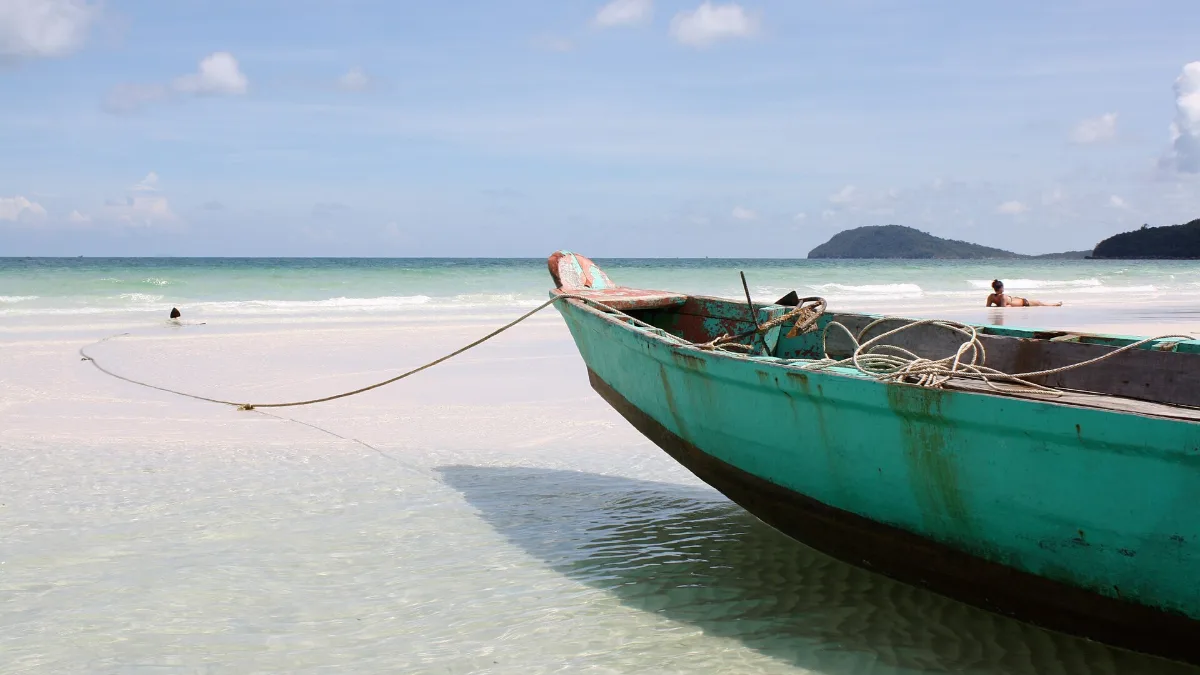
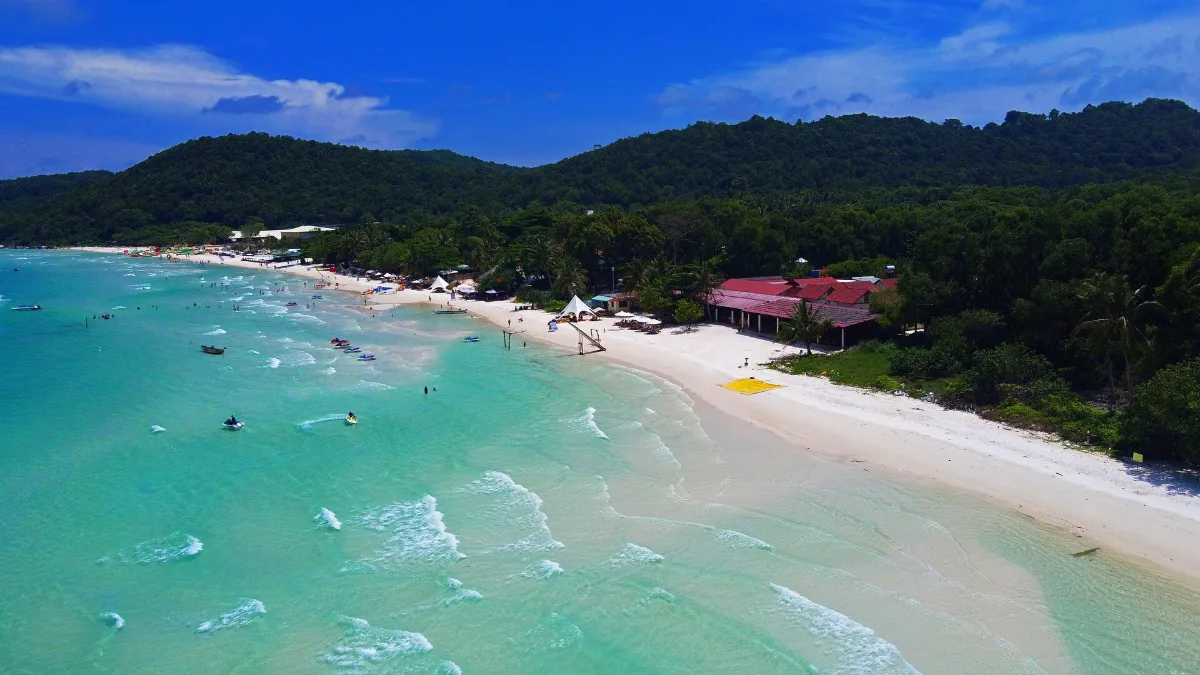
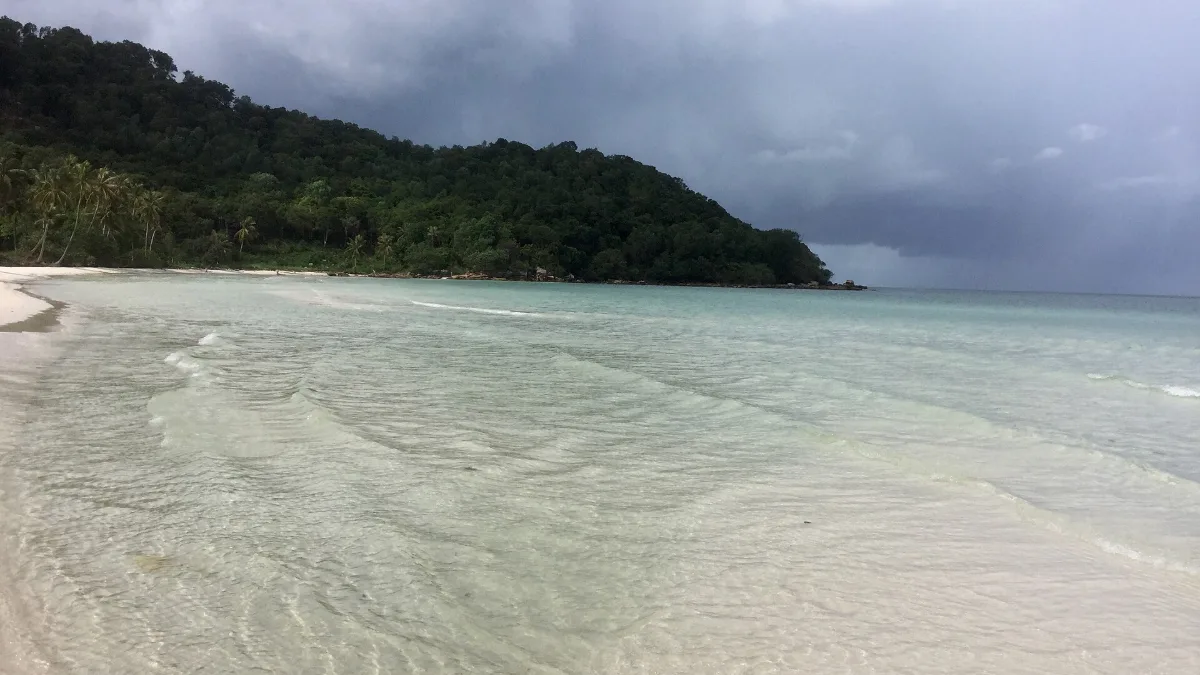
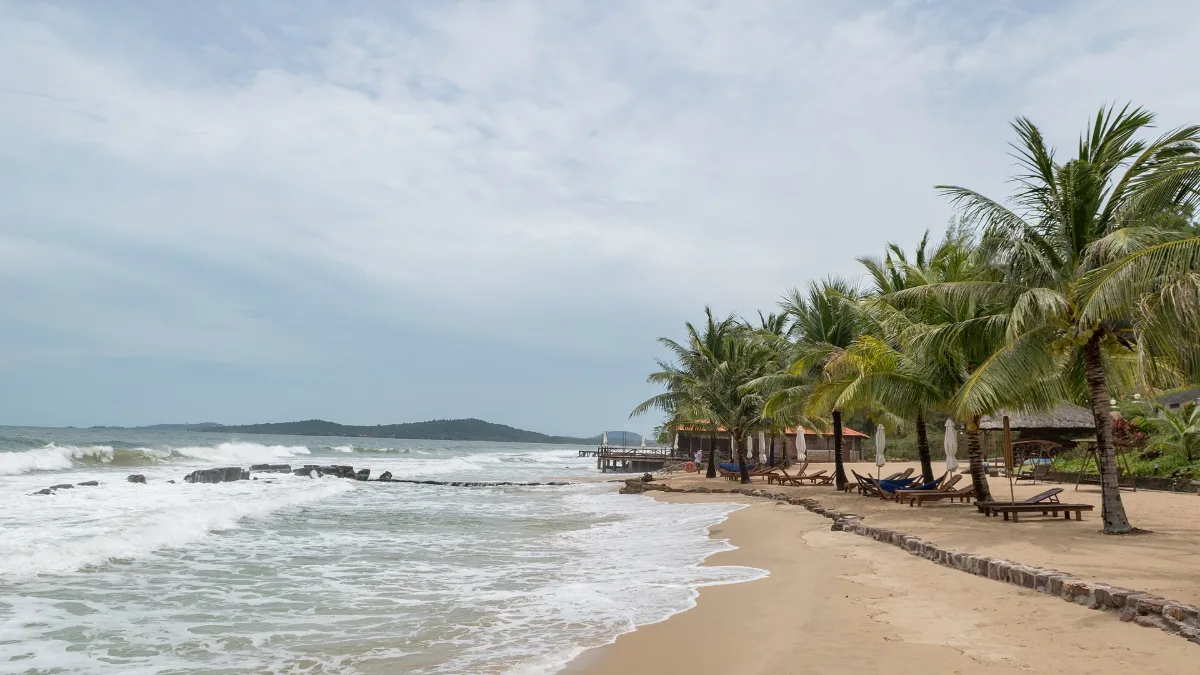
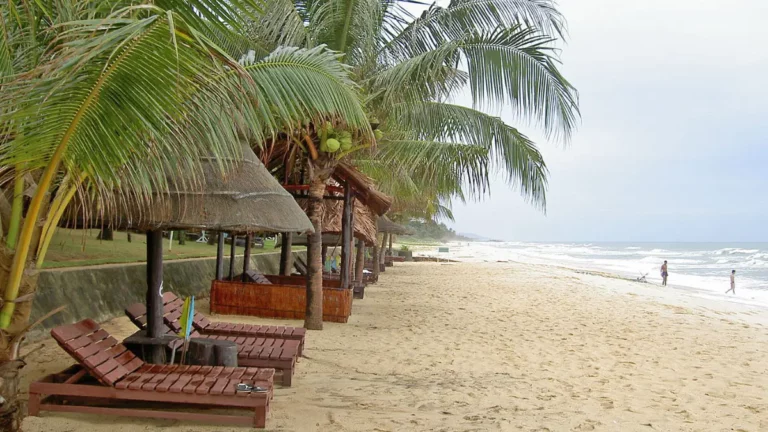
The monsoon decides where the sea is calm. From May to October the south-west wind pushes waves onto the west and south-west coasts, so Long Beach (Bai Truong), Ong Lang and the Duong Dong beaches often have swell, rip currents and red flags. The east coast is sheltered from that wind: Khem Beach (Bai Khem), in an enclosed bay in the south-east, stays swimmable through the rainy season, and the Ham Ninh side is generally flat.
From November to April the pattern reverses. The west coast is calm and clear, while the east side can be breezier when the north-east monsoon is strong. If you travel between May and October, choose a hotel on the west coast for sunsets and restaurants, and take a short drive to the east coast for swimming.
When Is the Best Time for Snorkelling and the 4-Island Boat Trip?
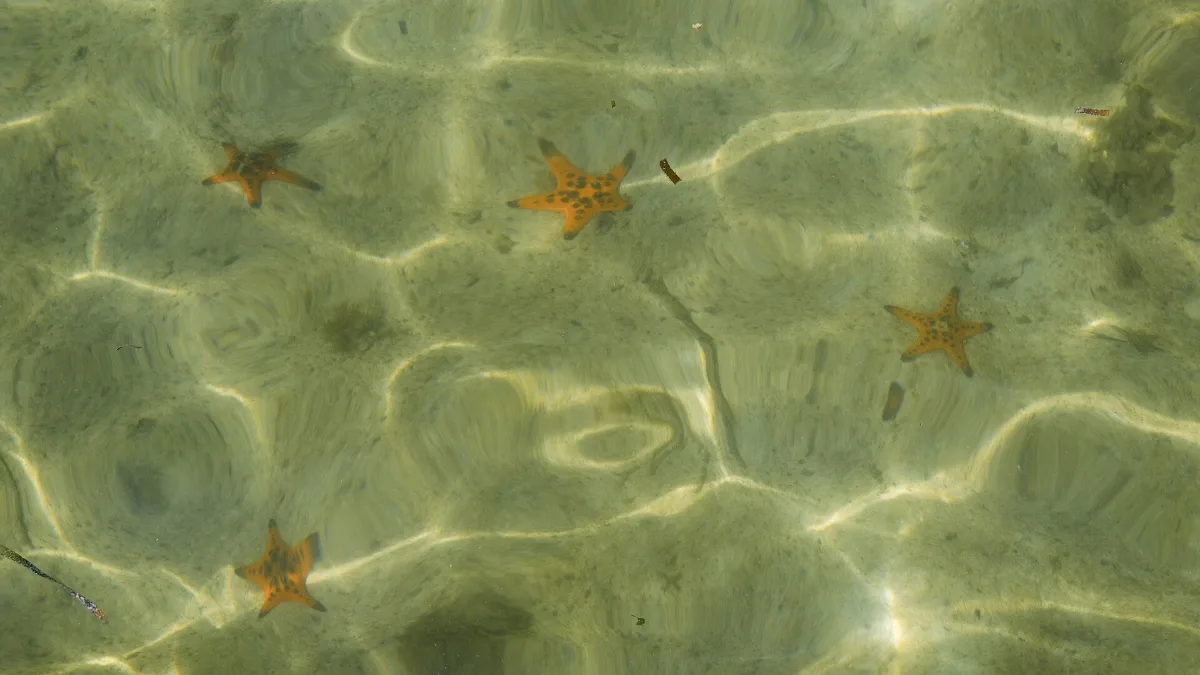
The best months for snorkelling and island-hopping around the An Thoi islands – Fingernail Island (Hon Mong Tay), Gam Ghi, May Rut and Hon Thom – are November to April, and especially December to April, when the sea is flat and visibility is best. Around 100 species of hard coral grow in the waters of the Phu Quoc National Park marine area.
From May to October, waves and murky water reduce visibility, and speedboats are often rescheduled or cancelled for safety. Morning departures have the best chance of calm water in every season. Our Phu Quoc 4 Islands Snorkelling Tour (private speedboat, from US$95 per person) runs best in the dry season; in the rainy months we confirm sea conditions the day before.
When Is Phu Quoc Busiest? Peak Periods in 2026–2027
Phu Quoc received about 6.8 million visitors from January to July 2026, up 30% on 2025, including more than 1.5 million international visitors. South Korea, China and Taiwan are among the biggest overseas markets, so their holidays add to the domestic peaks. Book flights and hotels early for these dates:
| Period | Dates (2026–2027) | What to expect |
|---|---|---|
| Christmas – New Year | about 20 Dec 2026 – 3 Jan 2027 | Highest hotel rates of the year; book 3–4 months ahead |
| Tet (Lunar New Year) | holiday 4–10 Feb 2027 (Tet day 6 Feb) | Domestic travel peak, full flights, some local shops closed for 3 days |
| Hung Kings Day and 30 April – 1 May | mid-April and 30 Apr – 3 May 2027 (approx.) | Short domestic rush; Vietnamese families fly in |
| Vietnamese summer holidays | June – August | Busy with domestic families despite the rain |
| Korean Chuseok / Chinese National Day | about 14–16 Sep 2027 / 1–7 Oct 2027 | Extra charter flights and demand at big resorts |
| APEC 2027 Economic Leaders’ Week | November 2027 (exact dates not yet announced) | Security zones, road closures and hotel blocks near the venue |
Peak surcharges vary from hotel to hotel, so compare rates for your exact dates. The quietest months are May, September and October, outside the holiday weeks.
APEC 2027 on Phu Quoc
Vietnam hosts APEC in 2027, and the Economic Leaders’ Week will be held on Phu Quoc, expected in November 2027. A new convention centre, a second airport runway and a new terminal are being built for it. If you plan to travel in November 2027, expect hotel blocks, security zones and possible road closures during summit week, and check the confirmed dates before booking.
Does Phu Quoc Get Typhoons?
Direct typhoon hits on Phu Quoc are rare. Most storms that affect Vietnam form in the western Pacific and track towards central and northern Vietnam or China; Phu Quoc lies deep in the Gulf of Thailand, shielded by the Ca Mau peninsula, Cambodia and Thailand. Storms that do enter the gulf usually weaken first. Distant storms and tropical depressions can still bring strong wind, heavy rain and rough seas, mainly from August to November, which can stop boat trips and the Rach Gia and Ha Tien ferries for a day or two. Flights are rarely affected for long.
Best Time to Visit Phu Quoc for Your Travel Style
Families with children
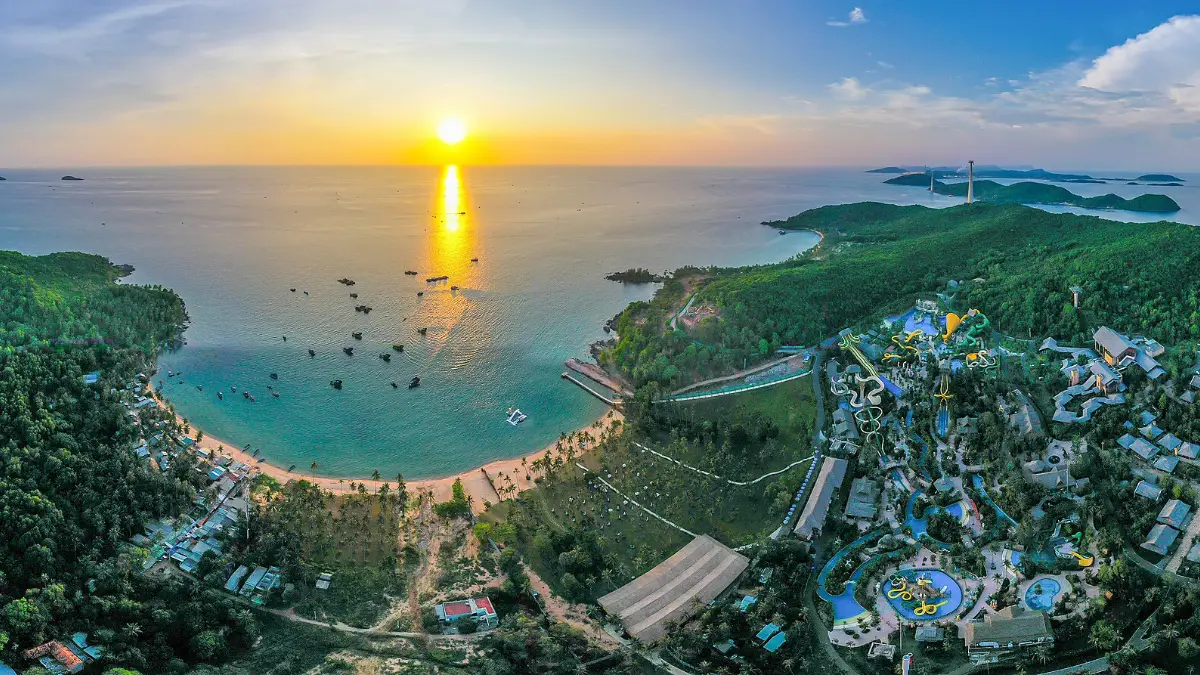
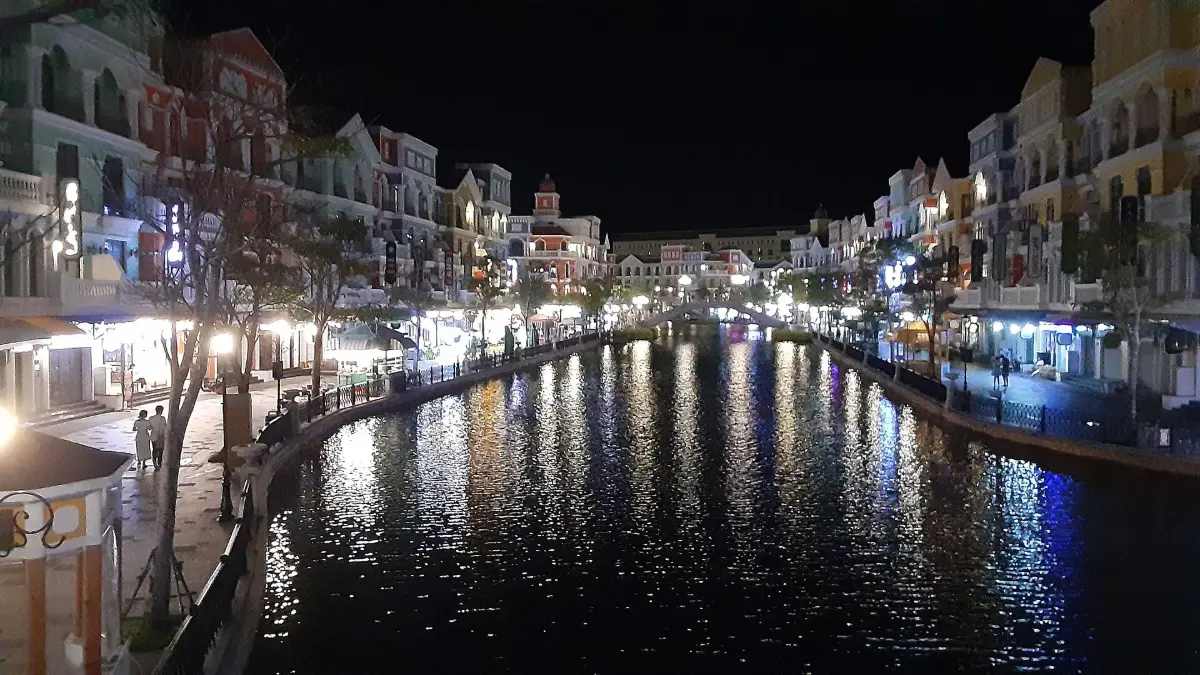
December to March gives calm, shallow water on the west coast and reliable days for VinWonders, Vinpearl Safari and the Hon Thom cable car with Aquatopia water park. If school holidays mean June–August, it still works: base yourself near the theme parks in the north or near Sunset Town in the south, and swim at Khem Beach on the east coast.
Honeymooners and couples
Late November to early December and March to mid-April combine dry weather with lower rates than the Christmas–New Year and Tet peaks. Sunset Town and the west coast give the best sunsets in the dry season.
Divers and snorkellers
Go between December and April. Visibility around the An Thoi islands is best then, and boat schedules are fullest. From May to October, waves and run-off reduce visibility, so underwater trips are less rewarding.
Budget travellers
May, September and October have the lowest hotel rates. Choose a flexible plan: book theme parks, the night market and the cable car for showery days, and keep one free day for a boat trip if a calm morning comes.

How Does Phu Quoc Fit into a Wider Vietnam Trip?
Phu Quoc’s dry season matches southern Vietnam (Ho Chi Minh City and the Mekong Delta, dry December–April), so a beach finish works well after Saigon and the Mekong in the same months. From December to February, northern Vietnam is cool, so pack layers for Hanoi and Ha Long Bay before your beach days. From May to August, the central coast (Da Nang, Hoi An) is drier than Phu Quoc. Our best time to visit Vietnam guide compares every region, and the Phu Quoc itinerary shows how to plan 3–5 days on the island.
Flights take about 1 hour from Ho Chi Minh City and 2 hours 10 minutes from Hanoi; ferries from Rach Gia and Ha Tien can be cancelled in rough weather – see how to get to Phu Quoc.
Local Expert Tips
From more than ten years of organising Phu Quoc trips for international travellers:
- For Christmas, New Year or Tet 2027, book flights and hotels by September–October; the cheapest rooms go first.
- In the rainy season, plan the 4-island boat trip for early in your stay so there is a spare morning if it is postponed.
- Do the Hon Thom cable car in the morning: the light is better for photos, and afternoon storms are more likely from May to October.
- On the west coast, always obey red flags from May to October – rip currents form even on sunny days.
- Sunset Town’s Kiss of the Sea show is outdoors; in the rainy season check on the day whether it is running before buying tickets.
- If you are mixing Phu Quoc with mainland Vietnam, note that the 30-day Phu Quoc exemption covers the island only; you need a Vietnam visa for the rest of the country.
Plan Your Phu Quoc Trip with Vietnam Tour Expert
Ready to choose your dates? Start with our Phu Quoc travel guide and Phu Quoc travel tips, then see the Phu Quoc Tour 4 Days 3 Nights (private, from US$385 per person without hotel) or the Phu Quoc South Island Tour (from US$95 per person). We will match the plan to the season and sea conditions on your dates.
Contact Vietnam Tour Expert Team
Frequently Asked Questions about the Best Time to Visit Phu Quoc
1. What is the best month to visit Phu Quoc?
March is often the best single month for Phu Quoc: it is dry (about 61 mm of rain), the west-coast sea is calm and clear, and the Christmas and Tet crowds have gone. December, January and February are equally dry but busier.
2. When is the rainy season in Phu Quoc?
Phu Quoc’s rainy season runs from May to October, brought by the south-west monsoon. Rain peaks in August (about 486 mm) and usually falls in heavy showers rather than all day.
3. Is it worth visiting Phu Quoc in the rainy season?
Yes, if you are flexible. Hotel rates are lower and the island is quieter; theme parks, the cable car (outside storms) and markets keep running, and the east coast, such as Khem Beach, stays calm for swimming. Boat trips and snorkelling are less reliable.
4. Which beach in Phu Quoc is calm in the rainy season?
Khem Beach (Bai Khem) in the south-east of Phu Quoc is the most reliable choice from May to October because it sits in a sheltered bay away from the south-west monsoon. West-coast beaches such as Long Beach and Ong Lang are often rough in those months.
5. When can I do the 4-island snorkelling trip in Phu Quoc?
The An Thoi 4-island snorkelling trip is best from November to April, especially December to April, when the sea is flat and visibility is good. From May to October trips run on calm days only and may be cancelled.
6. Does Phu Quoc get typhoons?
Direct typhoon hits on Phu Quoc are rare because the island sits in the Gulf of Thailand, away from the main storm tracks. Distant storms can still bring strong wind and rough seas that suspend boats and ferries for a day or two.
7. Is Phu Quoc too hot in April and May?
April and May are Phu Quoc’s hottest months, with average highs of about 32°C and hot days reaching 35°C. Plan beach time for the morning and late afternoon and choose indoor or shaded activities at midday.
8. Is Phu Quoc good to visit in December?
Yes. December in Phu Quoc averages only about 59 mm of rain, the west coast is calm and sunsets are reliable. The Christmas–New Year week is the most expensive of the year, so book early.
9. Is Phu Quoc busy during Tet 2027?
Yes. Tet 2027 falls on 6 February, with a public holiday from 4 to 10 February, and Phu Quoc is a top domestic destination for it. Expect full flights, higher hotel rates and some family-run shops closed on the first days of Tet.
10. Will APEC 2027 affect a trip to Phu Quoc?
Possibly, if you travel during the APEC 2027 Economic Leaders’ Week on Phu Quoc, expected in November 2027. Expect hotel blocks, security zones and road closures around the venue; check the confirmed dates before booking.
11. What is the best time to visit Phu Quoc with kids?
December to March is best for families in Phu Quoc, with calm, shallow water and dry days for VinWonders, Vinpearl Safari and the Hon Thom water park. In June–August, swim on the sheltered east coast and plan theme parks for the mornings.
12. What is the cheapest time to visit Phu Quoc?
May, September and October are usually the cheapest months in Phu Quoc, outside the holiday weeks. Avoid Christmas–New Year, Tet and Vietnamese summer holidays if price matters most.
13. Can I swim in Phu Quoc all year?
The sea around Phu Quoc is warm enough to swim all year. From May to October swim on the east coast or in hotel pools when the west coast flies red flags, and always follow lifeguard advice.
14. When is the best time to combine Phu Quoc with Ho Chi Minh City and the Mekong Delta?
December to April suits Phu Quoc, Ho Chi Minh City and the Mekong Delta together, because all three are in their dry season. Ho Chi Minh City to Phu Quoc is about a 1-hour flight, so the island makes an easy beach finish.
Related Posts
Phu Quoc Food Guide 2026: What to Eat, Where & Prices
Where to Stay in Phu Quoc 2026: Best Areas & Hotels by Budget

Phu Quoc with Kids 2026: Family Guide, Tickets & 5-Day Plan
Phu Quoc vs Phuket 2026: Honest Comparison for Your Beach Holiday
Best Beaches in Phu Quoc 2026: 10 Beaches Ranked by Season