Call or WhatsApp Us: +84 88 626 1368

Central Vietnam
Imperial Hue, lantern-lit Hoi An, the beaches of Da Nang and the giant caves of Phong Nha
Central Vietnam is where the country’s history and its most beautiful coastline meet. Within a short drive of each other are the imperial city of Hue, the lantern-lit Hoi An Ancient Town, the beach city of Da Nang, the Cham temples of My Son and the giant caves of Phong Nha-Ke Bang. Four of Vietnam’s nine UNESCO World Heritage Sites are in this region. This guide covers the top tourist destinations in Central Vietnam, when to go to avoid the rainy season, how to get around and the best itineraries for first-time visitors.
Why Central Vietnam is a must-visit region:
- Four World Heritage Sites close together. The Complex of Hue Monuments, Hoi An Ancient Town, My Son Sanctuary and Phong Nha-Ke Bang National Park.
- Vietnam’s imperial past. Hue was the capital of the Nguyen Dynasty from 1802 to 1945, with a walled citadel, royal tombs and pagodas along the Perfume River.
- Hoi An’s lantern-lit old town. One of the best-preserved trading ports in Southeast Asia, famous for tailors, cooking classes and riverside evenings.
- Beaches and mountain passes. Long sandy beaches in Da Nang and Hoi An, and the spectacular Hai Van Pass road between them and Hue.
- World-class caves. Phong Nha-Ke Bang holds Paradise Cave, Phong Nha Cave and Son Doong, the largest known cave passage in the world.
- Easy logistics. Da Nang’s international airport puts Hoi An 45 minutes away and Hue about 2.5 hours away.
Central Vietnam at a Glance
| Main gateway | Da Nang International Airport (DAD); also Phu Bai (HUI) for Hue and Dong Hoi (VDH) for Phong Nha |
|---|---|
| Top destinations | Hoi An, Hue, Da Nang, Ba Na Hills, My Son Sanctuary, Hai Van Pass, Phong Nha-Ke Bang, Quy Nhon |
| UNESCO World Heritage | 4 of Vietnam’s 9 sites: Complex of Hue Monuments, Hoi An Ancient Town, My Son Sanctuary, Phong Nha-Ke Bang National Park |
| Climate | Dry, sunny season about February–August (25–35°C); rainy and typhoon season September–December, with flood risk in Hue and Hoi An in October–November |
| Best time to visit | February to May for sightseeing; June to August for the beaches (hot) |
| Ideal trip length | 4–6 days for Hoi An, Da Nang and Hue; add 2 days for Phong Nha |
| Getting around | Private car or van, the scenic Hue–Da Nang train, short flights from Hanoi and Ho Chi Minh City |
| Provinces (since July 2025) | Hue City, Da Nang City (now including Hoi An and My Son), Quang Tri (including Phong Nha), Quang Ngai, Gia Lai (including Quy Nhon) |
Top Tourist Destinations in Central Vietnam
These destinations form the heart of most Central Vietnam itineraries. They are close enough together that a single base in Hoi An or Da Nang works for many of them.
1. Hoi An Ancient Town
A trading port from the 15th to the 19th centuries, Hoi An preserves more than a thousand historic timber buildings. Its streets blend Vietnamese, Chinese and Japanese influences, from the Japanese Covered Bridge to the ornate Chinese assembly halls and old merchant houses. The town became a UNESCO World Heritage Site in 1999. By night, silk lanterns light the streets and paper lanterns float on the Thu Bon River. Make time for:
- A cooking class.
- Cycling through the vegetable village of Tra Que.
- A basket-boat ride in the coconut forest of Cam Thanh.
- Getting clothes tailored in a day.
See our Hoi An tours.
2. Hue – the imperial capital
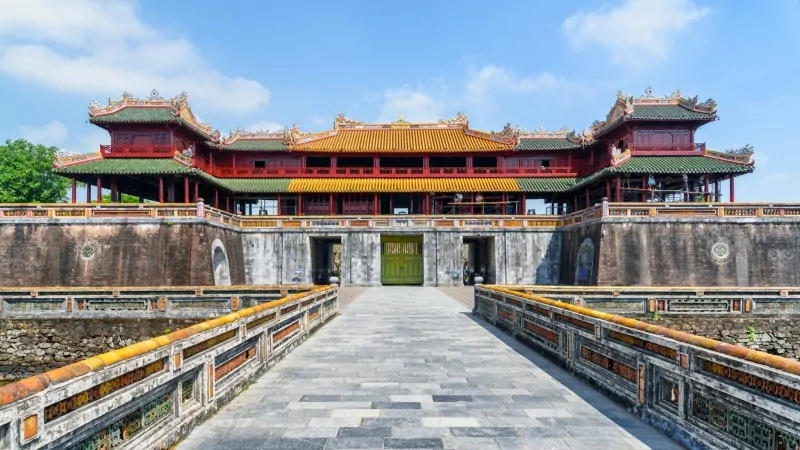
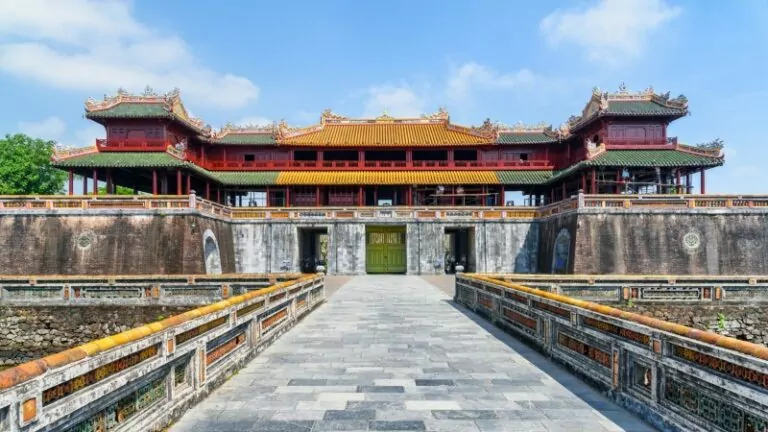
From 1802 to 1945, Hue was the capital of the Nguyen emperors. Its Imperial City, the royal tombs of Tu Duc, Minh Mang and Khai Dinh, and Thien Mu Pagoda on the Perfume River form the Complex of Hue Monuments, inscribed by UNESCO in 1993. Spend a full day on the citadel and tombs, take a dragon boat on the Perfume River, and try the city’s spicy royal cuisine, especially bún bò Huế. Browse our Hue tours.
3. Da Nang
One of Vietnam’s most liveable cities, Da Nang combines a long urban beach (My Khe), a riverfront known for its fire-breathing Dragon Bridge, and easy access to nature:
- Marble Mountains: cave temples carved into the hills.
- Son Tra Peninsula: home to the rare red-shanked douc langur.
- Ba Na Hills: a hill resort with the famous Golden Bridge held up by giant stone hands.
Da Nang is the main airport for the region and a convenient base. See our Da Nang tours.
4. My Son Sanctuary
Hidden in a jungle valley about an hour from Hoi An, My Son is a group of Hindu temple towers built by the Champa Kingdom between the 4th and 13th centuries. Despite heavy wartime damage, its brick towers remain the most important Cham site in Vietnam and a UNESCO World Heritage Site since 1999. Go early in the morning, before the heat and the crowds.
5. Hai Van Pass
The 21 km mountain road over Hai Van Pass, between Da Nang and Hue, is one of the most scenic coastal drives in Asia. The best way to travel between the two cities is by private car or with an experienced motorbike driver over the pass. Stop at the summit fortifications and at Lang Co lagoon on the way.
6. Phong Nha-Ke Bang National Park
In Quang Tri province (formerly Quang Binh), Phong Nha-Ke Bang protects one of the oldest karst landscapes in Asia and hundreds of caves. Highlights include:
- Paradise Cave: boardwalks through vast chambers.
- Phong Nha Cave: explored by boat.
- Dark Cave: zip-line, mud bath and swimming.
- Son Doong: the world’s largest known cave passage, visited only on limited multi-day expeditions.
The park was first inscribed by UNESCO in 2003. In July 2025 it became the first transboundary World Heritage Site shared by Vietnam and Laos, together with Hin Nam No National Park.
7. Quy Nhon and the central coast
Further south, Quy Nhon (now in Gia Lai province) is a rising beach destination. It offers quiet bays, the Cham towers of Banh It and Twin Towers, and fresh seafood, with far fewer tourists than Da Nang. It suits travellers who want a relaxed beach finish to a Central Vietnam trip.
UNESCO World Heritage Sites in Central Vietnam
| Site | Type | Inscribed | Location |
|---|---|---|---|
| Complex of Hue Monuments | Cultural | 1993 | Hue City |
| Hoi An Ancient Town | Cultural | 1999 | Da Nang City |
| My Son Sanctuary | Cultural | 1999 | Da Nang City |
| Phong Nha-Ke Bang National Park (with Hin Nam No, Laos) | Natural | 2003 (extended 2015, 2025) | Quang Tri |
See the full list on the UNESCO World Heritage Centre.
Best Time to Visit Central Vietnam
Central Vietnam’s weather is the opposite of the north and south: its rainy season comes in the autumn. Plan around it.
| Period | Weather | Good for |
|---|---|---|
| February – May | Dry, sunny, pleasant; 24–30°C | Best overall: sightseeing in Hue and Hoi An, My Son, Hai Van Pass |
| June – August | Hot and dry; 30–38°C | Beaches in Da Nang, Hoi An and Quy Nhon; Phong Nha caves |
| September – December | Rainy, typhoon risk; floods possible in Hue and Hoi An in Oct–Nov | Lower prices; keep plans flexible |
| January | Cool, occasional drizzle; 20–25°C | Sightseeing; Tet preparations in late January or February |
Tip: Hoi An’s old town sometimes floods in October and November. It is a seasonal event that usually lasts a day or two. If you travel then, choose a hotel outside the riverside streets and allow flexible days.
How to Get to and Around Central Vietnam
Most visitors fly into Da Nang, about 1 hour 15 minutes from Hanoi or Ho Chi Minh City, with direct international flights from across Asia. Typical travel times:
| Route | Best option | Travel time |
|---|---|---|
| Da Nang Airport – Hoi An | Private car or taxi | 45 minutes |
| Da Nang – Hue | Car over Hai Van Pass, or the coastal train | 2.5–3 hours |
| Hoi An – My Son | Private car | 1 hour |
| Da Nang – Ba Na Hills | Private car + cable car | 45 minutes + cable car |
| Hue – Phong Nha | Private car | 3.5–4 hours |
| Dong Hoi Airport – Phong Nha | Private car | 45 minutes |
Suggested Central Vietnam Itineraries for First-Time Visitors
3 days: Hoi An and Da Nang
- Day 1: Arrive in Da Nang, transfer to Hoi An, evening lantern walk.
- Day 2: My Son in the morning, cooking class or Tra Que village in the afternoon.
- Day 3: Marble Mountains, Ba Na Hills or the beach, then depart.
5 days: Hoi An, Hai Van Pass and Hue
- Days 1–3: Hoi An and Da Nang, as above.
- Day 4: Drive over Hai Van Pass to Hue.
- Day 5: Imperial City, royal tombs and Thien Mu Pagoda.
7 days: The full central loop
- Days 1–5: As above.
- Days 6–7: Phong Nha-Ke Bang – Paradise Cave, Phong Nha Cave and Dark Cave.
Our Central Vietnam tours cover these routes with private guides and drivers. Contact Vietnam Tour Expert Team for a free custom itinerary.
Food and Culture in Central Vietnam
Central cooking is bolder and spicier than in the north:
- Bún bò Huế: spicy beef noodle soup from Hue.
- Hue royal dishes: bánh bèo, bánh khoái and other small, refined plates once served at court.
- Cao lầu: Hoi An’s chewy noodles.
- Mì Quảng: turmeric noodles from the former Quang Nam province.
- Bánh mì Phượng: the famous Hoi An bánh mì.
- Seafood all along the coast.
The region also preserves the legacy of the Champa Kingdom, the court music of Hue (nhã nhạc, recognised by UNESCO) and the craft villages of Hoi An: lanterns, pottery and woodcarving.
Practical Travel Tips for Central Vietnam
- Avoid flood season surprises: from October to November, keep a flexible day and follow local weather warnings.
- Beat the heat: from May to August, visit My Son, the citadel and the tombs early in the morning.
- Hoi An ticket: the old town requires an entrance ticket for foreign visitors, which covers a choice of heritage houses.
- Dress respectfully in the Imperial City, pagodas and temples, with shoulders and knees covered.
- Book Son Doong far ahead: expeditions are limited and often sell out months in advance.
- Tailoring tip: give your Hoi An tailor at least 24–48 hours for fittings.
Show More
Show Less
Central Vietnam Travel Guide
Frequently asked questions
1. What are the top tourist destinations in Central Vietnam?
Hoi An Ancient Town, Hue, Da Nang, Ba Na Hills, My Son Sanctuary, the Hai Van Pass, Phong Nha-Ke Bang National Park and Quy Nhon.
2. What is the best time to visit Central Vietnam?
February to May is best for sightseeing, with dry, pleasant weather. June to August is great for beaches but hot. September to December is the rainy and typhoon season.
3. When is the rainy season in Hoi An and Hue?
Roughly September to December, with the heaviest rain and a risk of flooding in October and November.
4. How many days do I need in Central Vietnam?
Four to six days covers Hoi An, Da Nang and Hue comfortably. Add two days for the caves of Phong Nha-Ke Bang.
5. Should I stay in Hoi An or Da Nang?
Stay in Hoi An for atmosphere, culture and food. Choose Da Nang for city beaches, nightlife and modern hotels. They are only 45 minutes apart, so you can easily do day trips from either.
6. How do I get from Da Nang to Hue?
By private car over the Hai Van Pass (about 2.5–3 hours with stops), by the scenic coastal train, or by bus through the Hai Van tunnel.
7. Is the Hai Van Pass worth it?
Yes. It is one of the most beautiful coastal roads in Vietnam, with views of the sea, Lang Co lagoon and the mountains. It is best travelled in clear weather between February and August.
8. Is My Son Sanctuary worth visiting?
Yes, especially for history lovers. It is the most important Champa temple site in Vietnam, an hour from Hoi An, and best visited at opening time.
9. Can I visit Son Doong Cave?
Only on licensed multi-day expeditions with a limited number of places each year, which usually sell out months ahead. Paradise Cave, Phong Nha Cave and Dark Cave are easy to visit on a day trip.
10. How many UNESCO World Heritage Sites are in Central Vietnam?
Four: the Complex of Hue Monuments, Hoi An Ancient Town, My Son Sanctuary and Phong Nha-Ke Bang National Park.
11. What food is Central Vietnam famous for?
Bún bò Huế, cao lầu, mì Quảng, Hoi An bánh mì, Hue royal snacks such as bánh bèo, and fresh seafood.
12. Is Hoi An good for families?
Very. The old town is walkable and largely pedestrianised in the evenings, the beaches are close, and lantern-making, cooking classes and basket-boat rides are fun for children.
13. Is Hoi An now part of Da Nang?
Yes. Since 1 July 2025, the former Quang Nam province, including Hoi An and My Son, has been part of Da Nang City under Vietnam’s provincial merger. The town itself is unchanged.
14. How do I get from Hanoi to Central Vietnam?
Fly from Hanoi to Da Nang or Hue in about 1 hour 15 minutes, or take the overnight train. Flying is the fastest and most popular option.
15. Do I need a tour in Central Vietnam?
Not necessarily, but a private driver and guide make the Hai Van Pass, My Son, the Hue tombs and Phong Nha far easier. They also bring the history to life.