Suitable: Couples, Families, Friends, Active Seniors
Type: Private
Why you’ll love this trip?
Run south to north, the way most long-haul flights into Vietnam are priced – and the way the trip builds, finishing in the mountains and on Halong Bay rather than starting there.
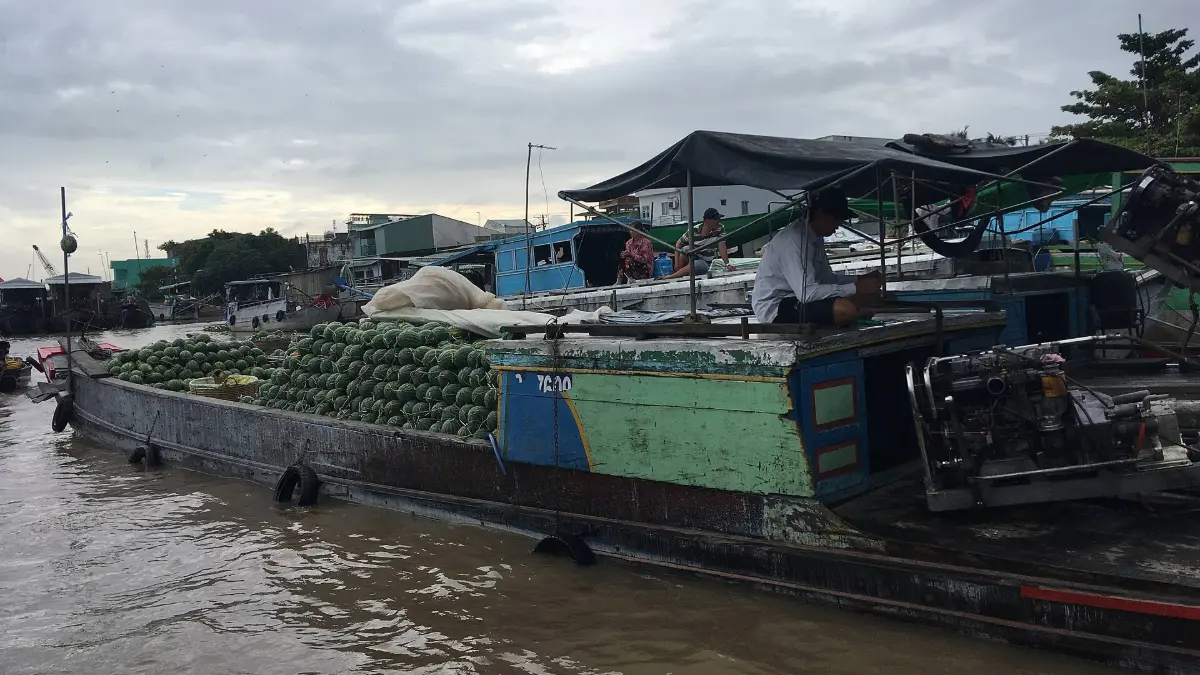
Four unhurried days in the south: Saigon, the Cao Dai noon ceremony, the Cu Chi Tunnels and a full day on the Mekong Delta.
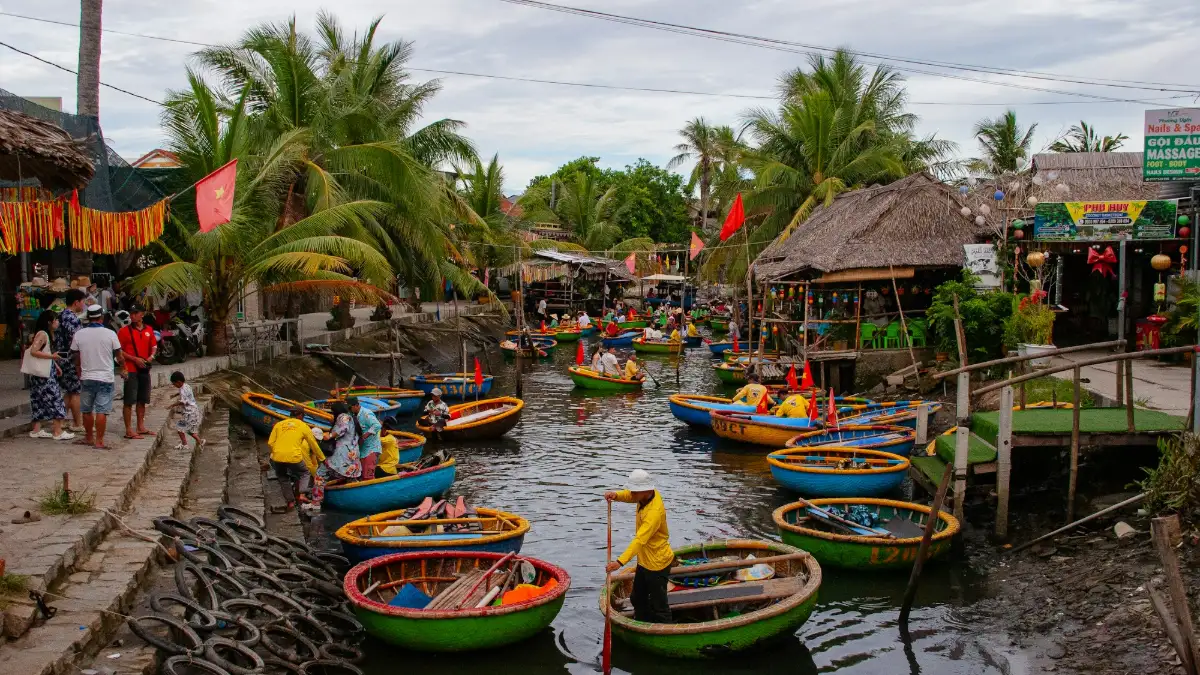
A basket-boat afternoon in the Cam Thanh coconut forest instead of a fourth set of ruins, five minutes from Hoi An.
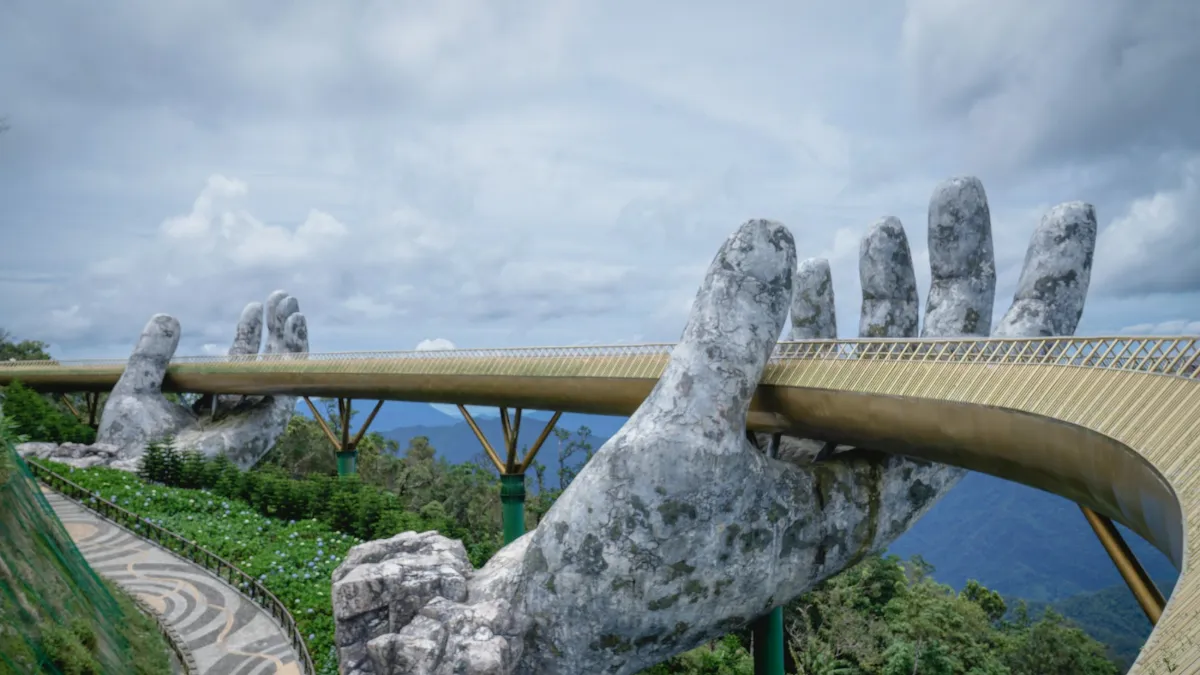
The Golden Bridge at Ba Na Hills and two nights in the lantern-lit old town of Hoi An.
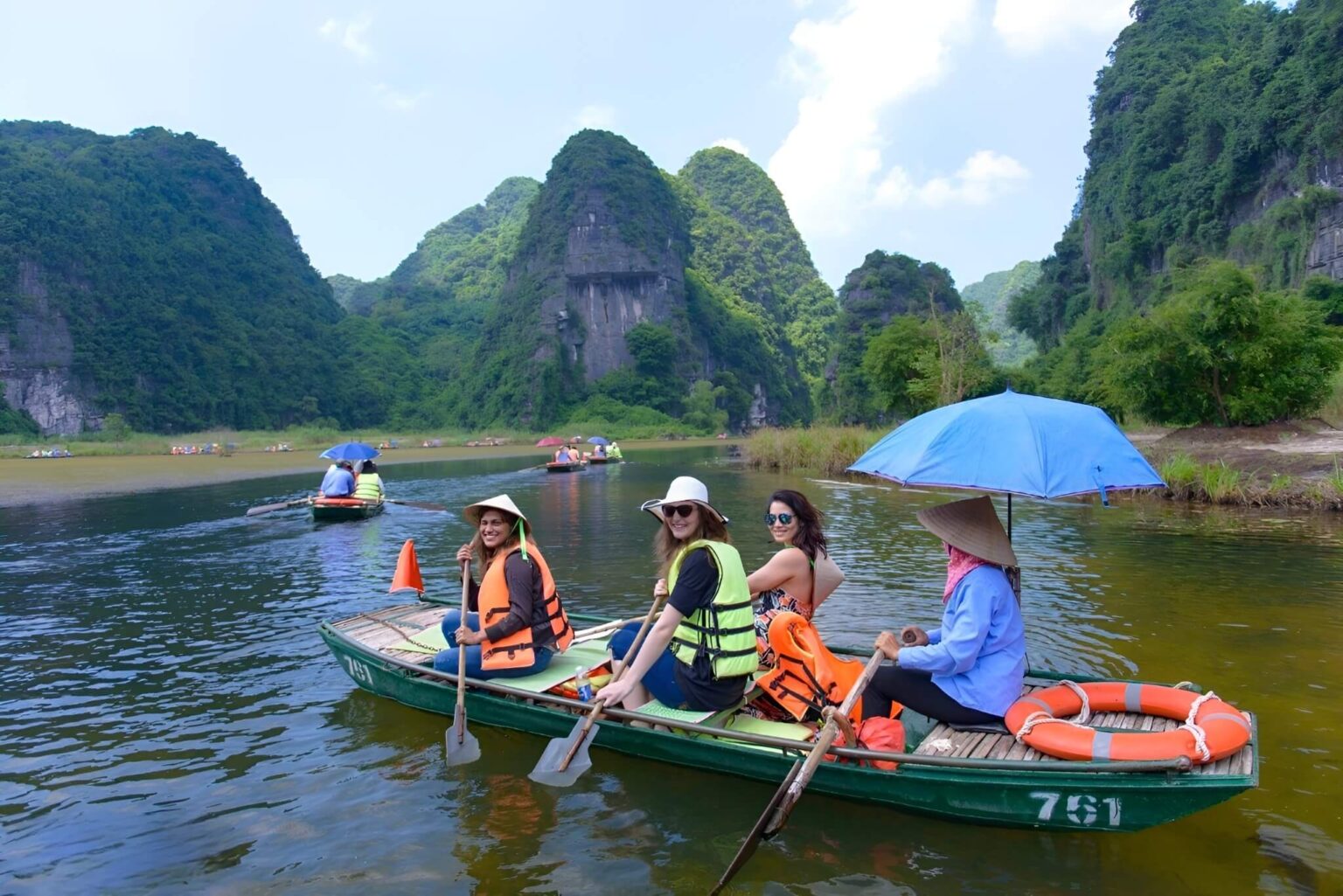
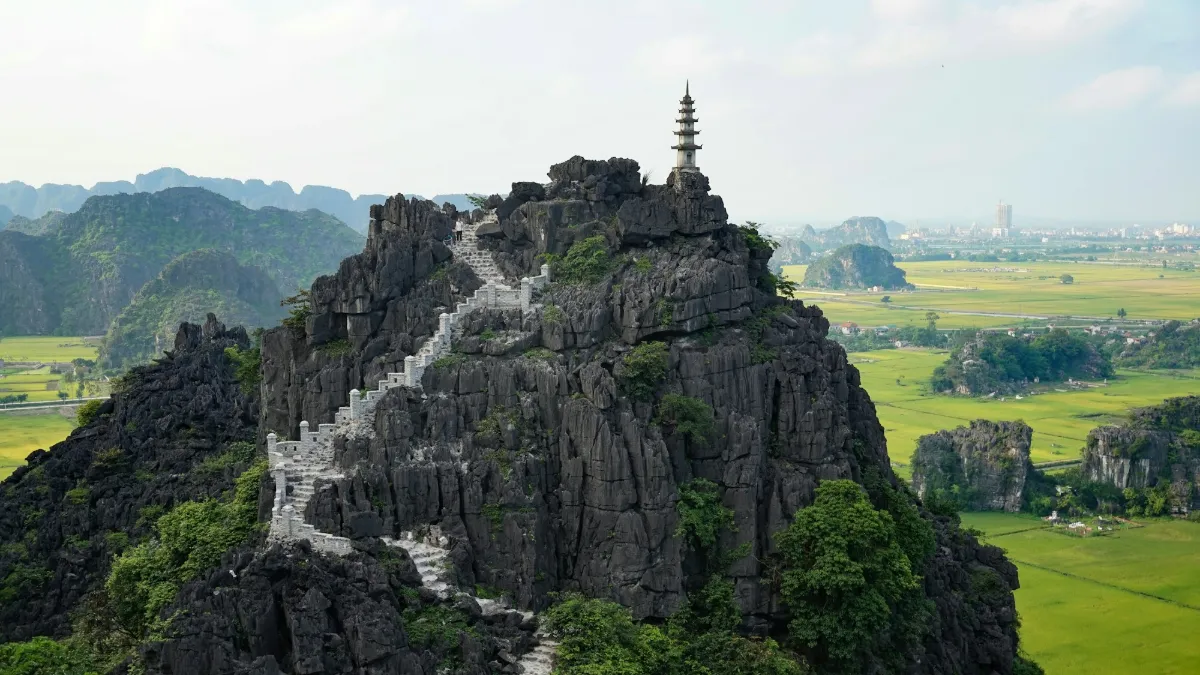
Trang An’s nine flooded caves by rowing boat, the Muong Hoa Valley on foot, and the Fansipan cable car to 3,143 m – all included.
A cabin on an overnight Halong Bay cruise as the last night before you fly home.
Tour Information & Itinerary
Fifteen days up the length of Vietnam, starting where most long-haul flights land. Four days in Saigon and on the Mekong Delta, two short flights, the Marble Mountains and a basket-boat afternoon in the Cam Thanh coconut forest, the Golden Bridge at Ba Na Hills, then Hanoi, the Trang An river caves, two days in the Sapa mountains and a night on Halong Bay to finish.
This is our standard Highlights of Vietnam program, run south to north. It is built to cover the strongest sights of all three regions rather than concentrating on one – the Mekong Delta and Saigon in the south, Hoi An and the Golden Bridge in the center, Ninh Binh, Sapa and Halong Bay in the north – so that you leave having actually seen the country rather than one slice of it.
It is also a private tour rather than a fixed departure, which means the fifteen days below are a starting point, not a timetable. We reorder days to fit international flight times, add or drop nights, swap sights in and out and change the pace to suit the group, at no extra charge. The one deliberate change we have already made against our northbound version is on day 6: the Cham ruins at My Son give way to the water-coconut forest outside Hoi An.
Your own guide, driver and vehicle in each of the three regions. From USD 1294 per person, land only.
Why travel Vietnam south to north
Three reasons, and the first is the dull practical one that actually decides it for most people.
The flights price better. A large share of long-haul routings into Vietnam arrive in Ho Chi Minh City and depart from Hanoi, or cost noticeably less that way round. Forcing a northbound itinerary onto southbound flights means paying twice – once for the fare and once for a repositioning sector.
The trip builds instead of fading. You begin flat, warm and slow in the delta, move into the heritage towns of the center, and spend the last week in the mountains and on the water. Fansipan on day 12 and Halong Bay on day 13 are the two biggest days of the fortnight, and here they land at the end.
The weather risk sits where you can still manage it. Sapa and Halong Bay are the two weather-dependent parts of this route. Putting them in the last five days gives us ten days of forecast to work with; putting them first gives us two.
01 / 27
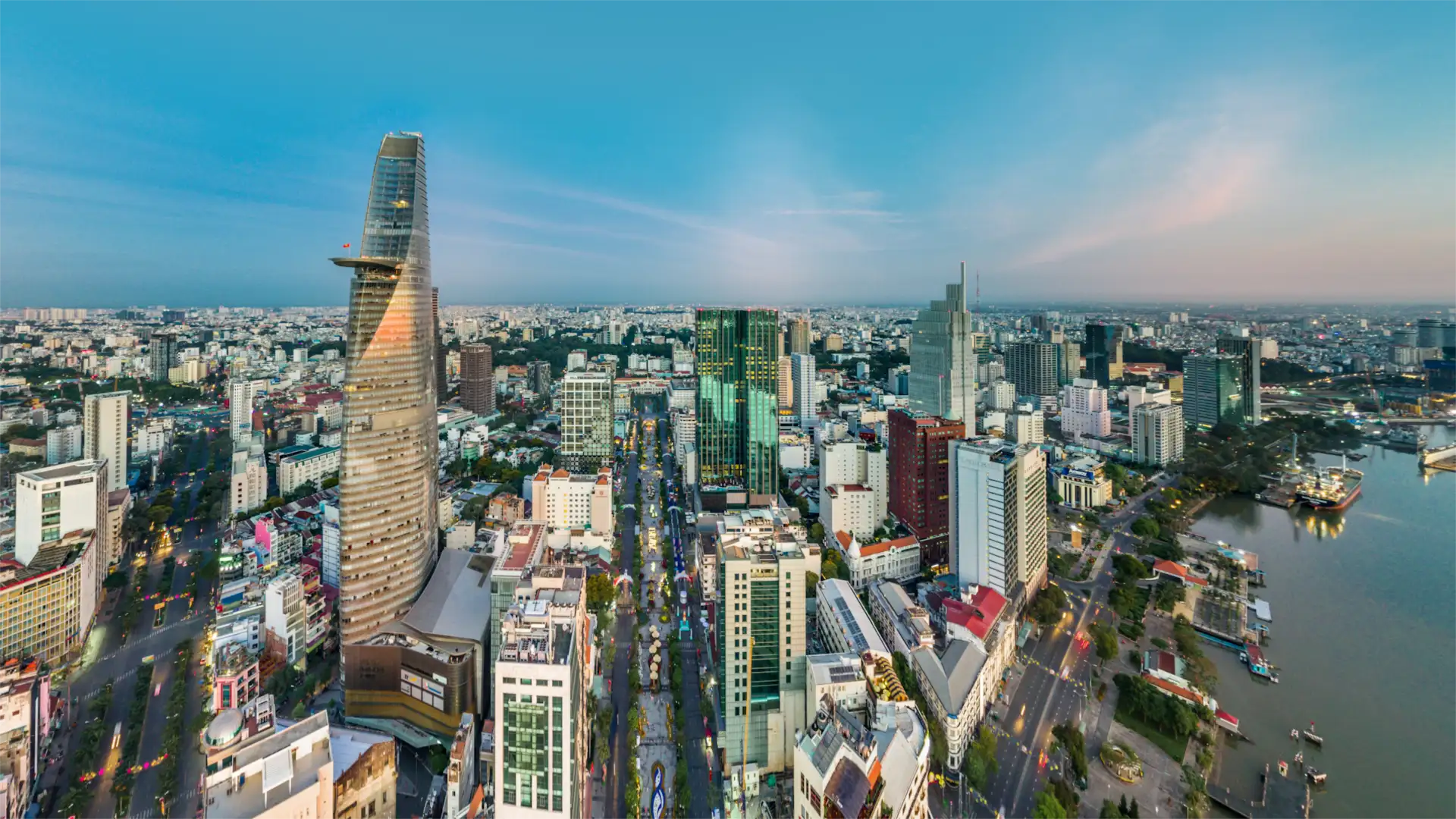
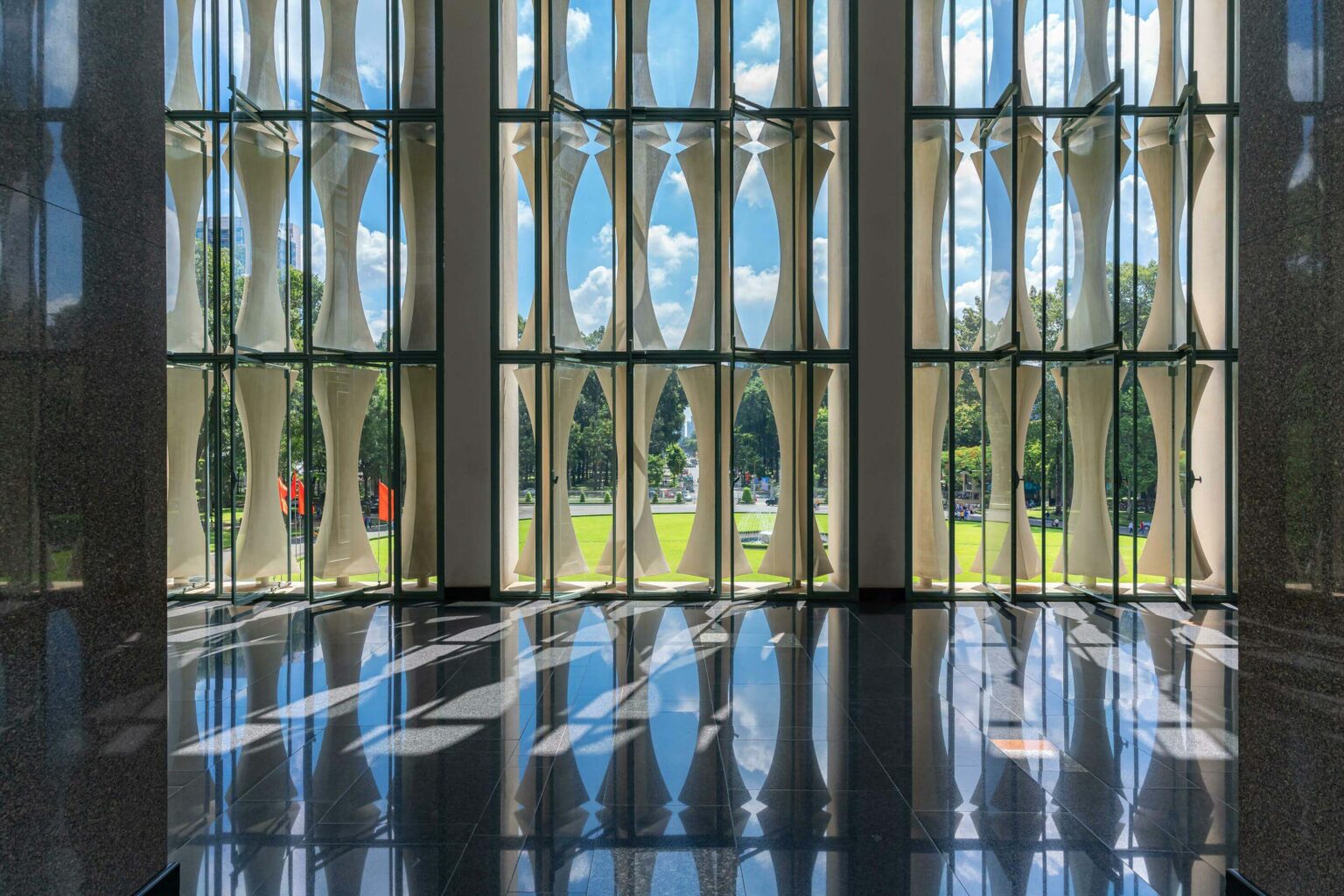
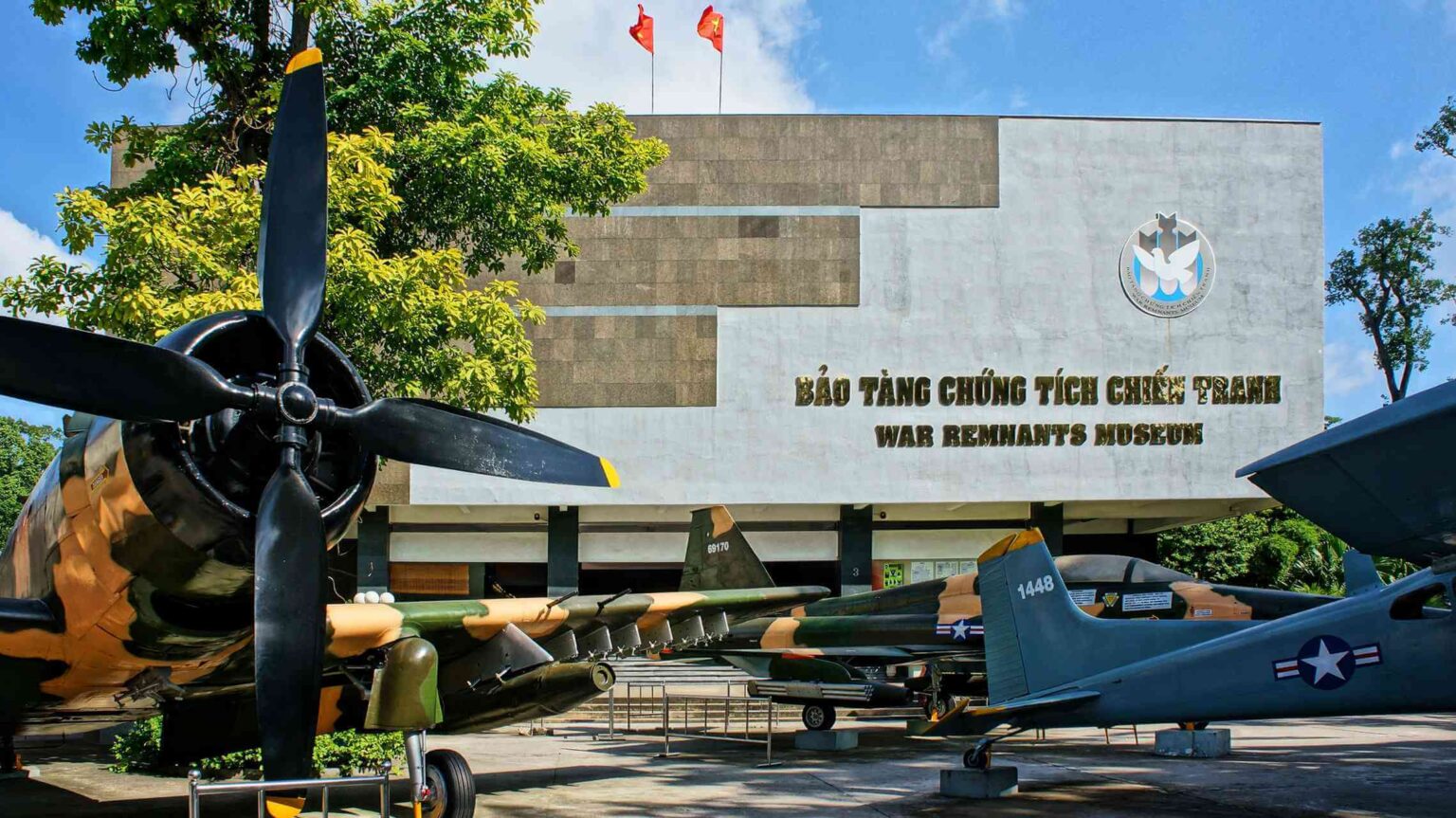
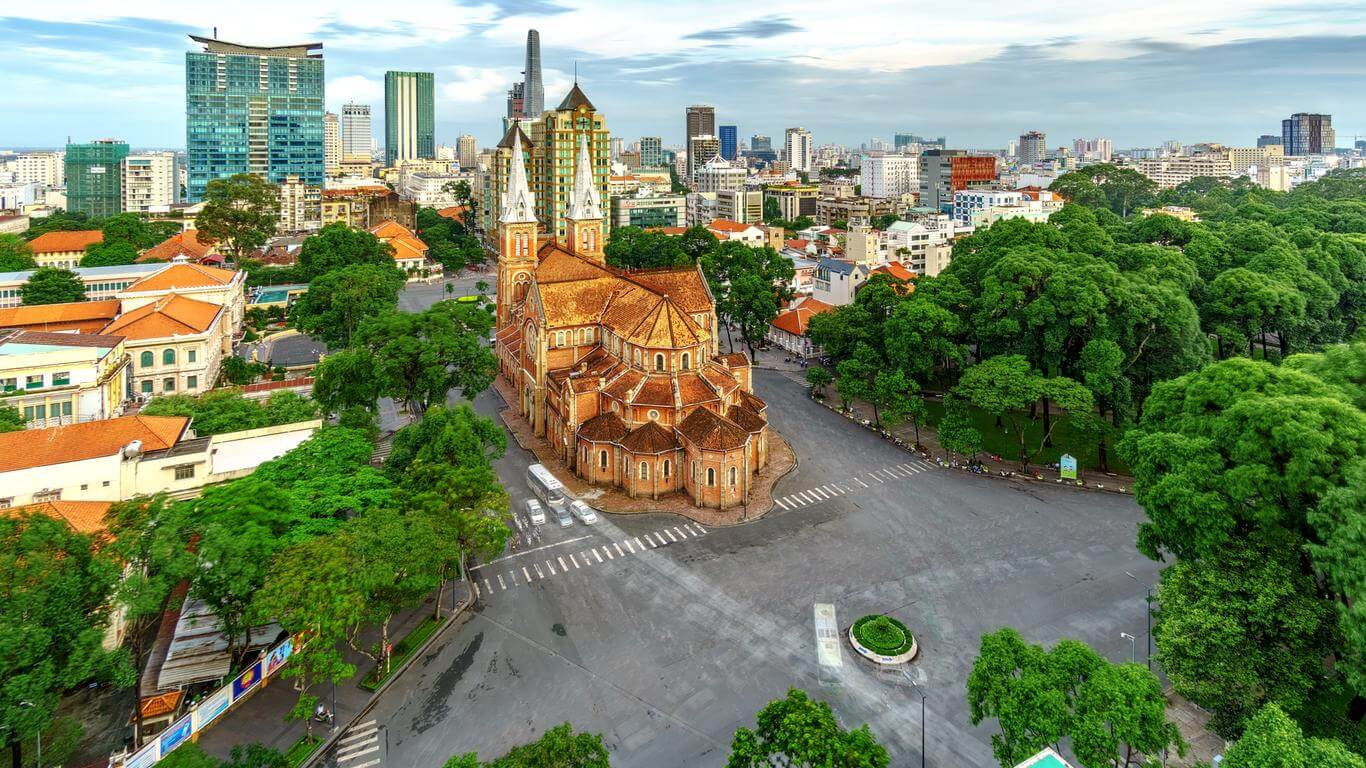
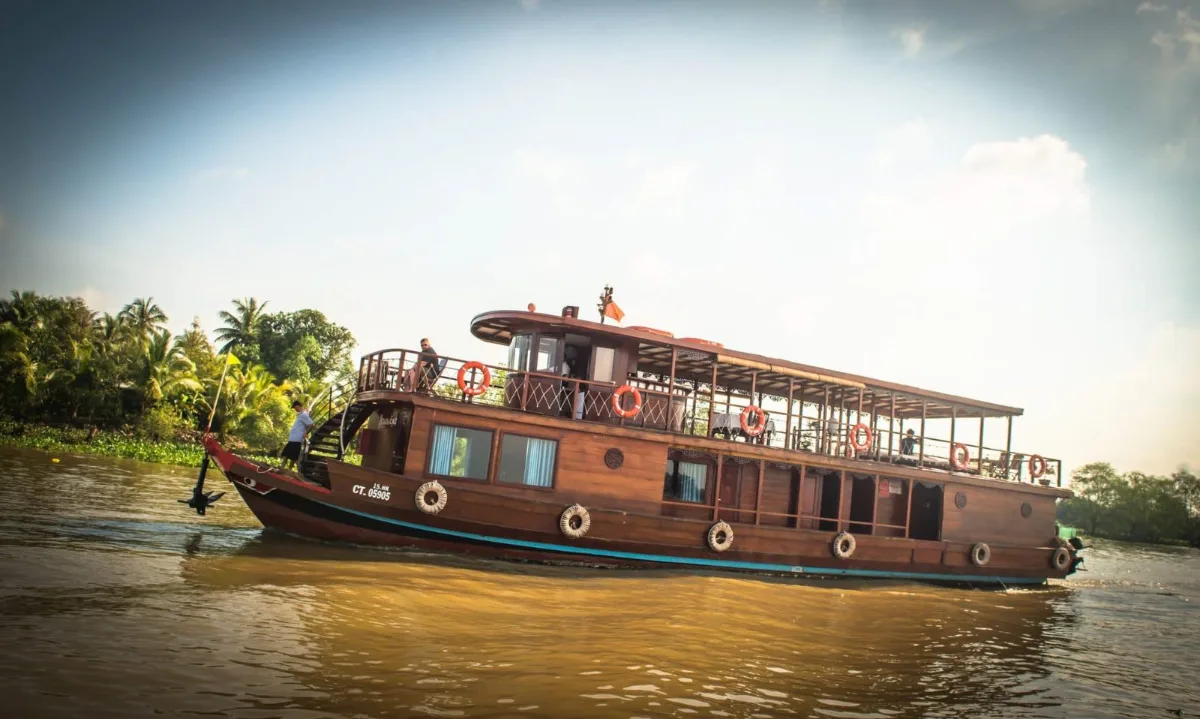
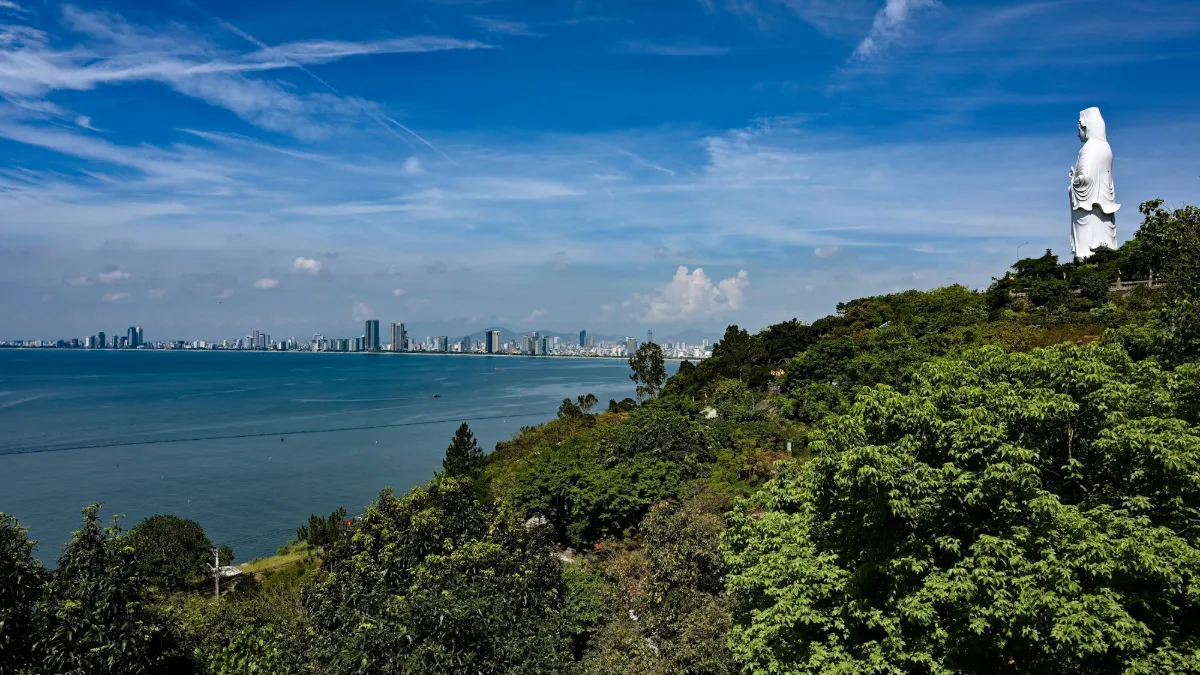
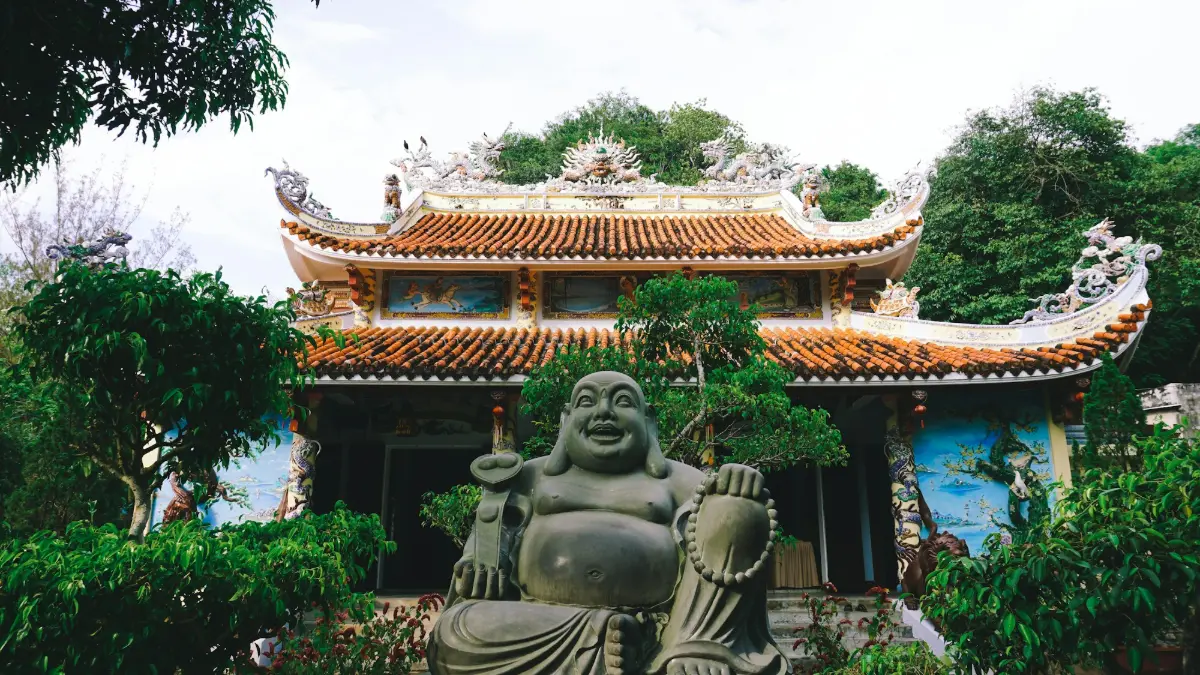
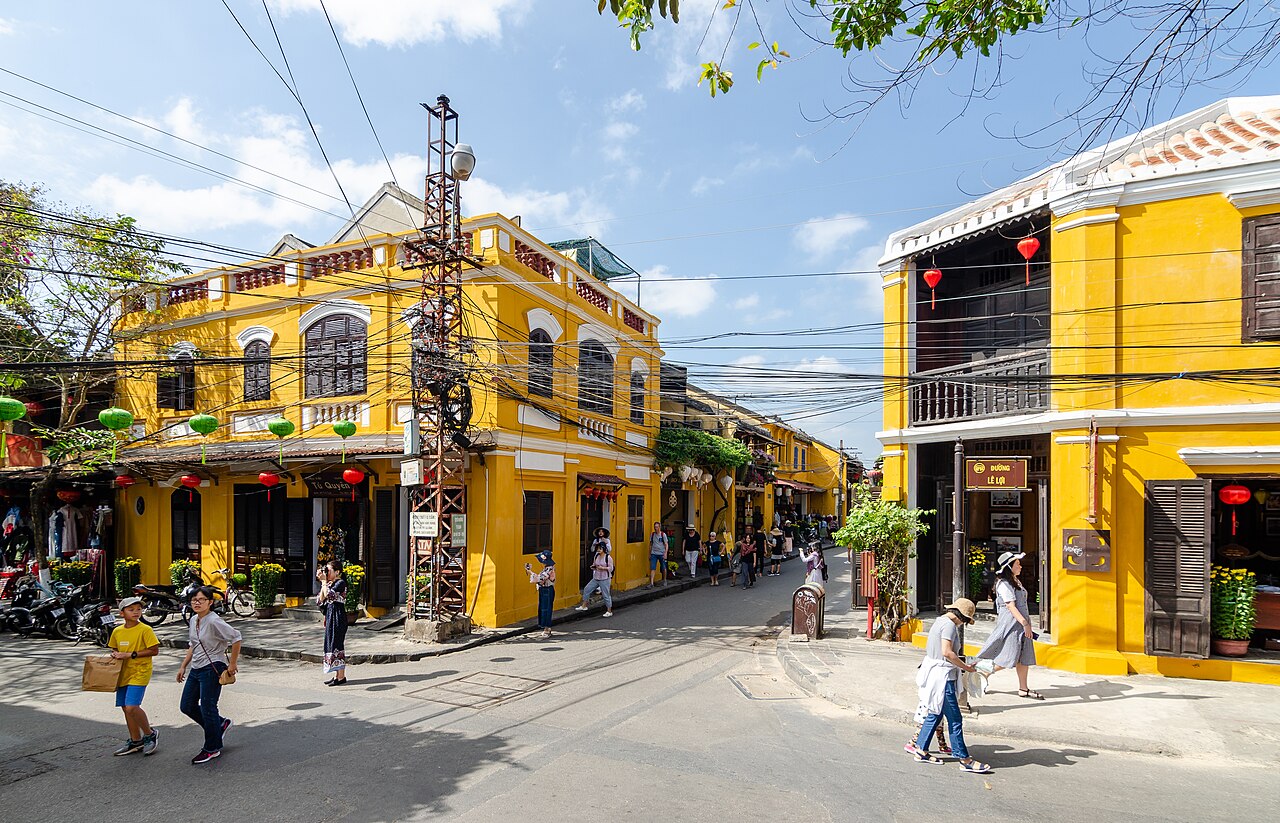
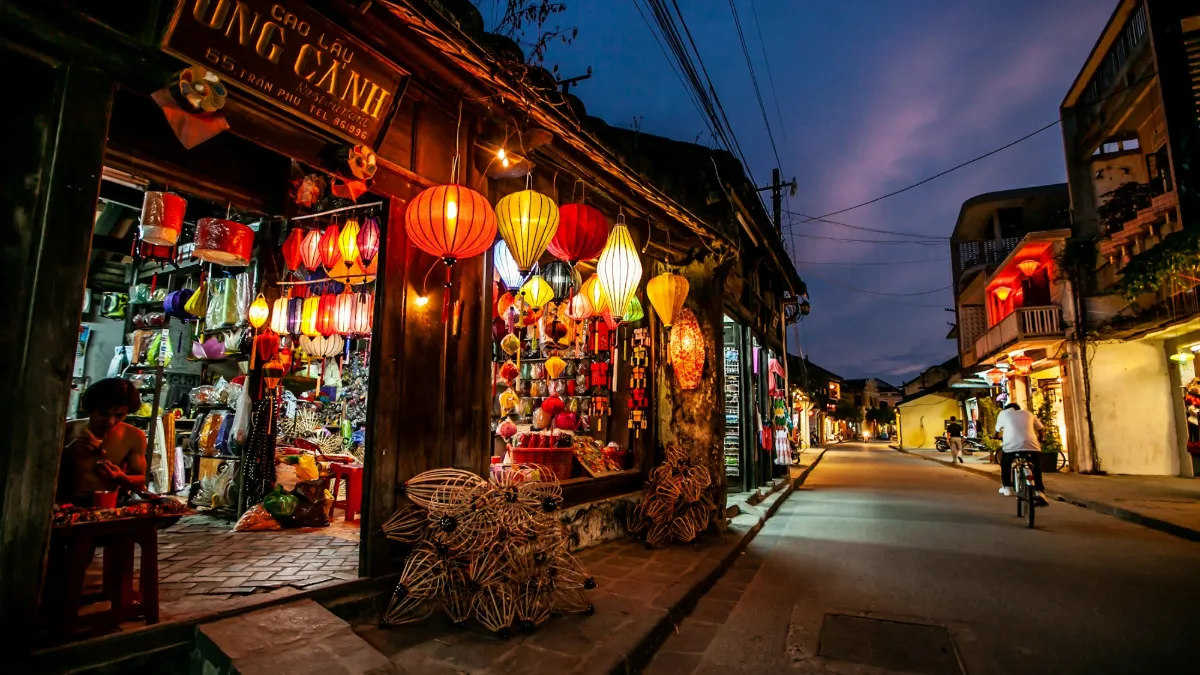
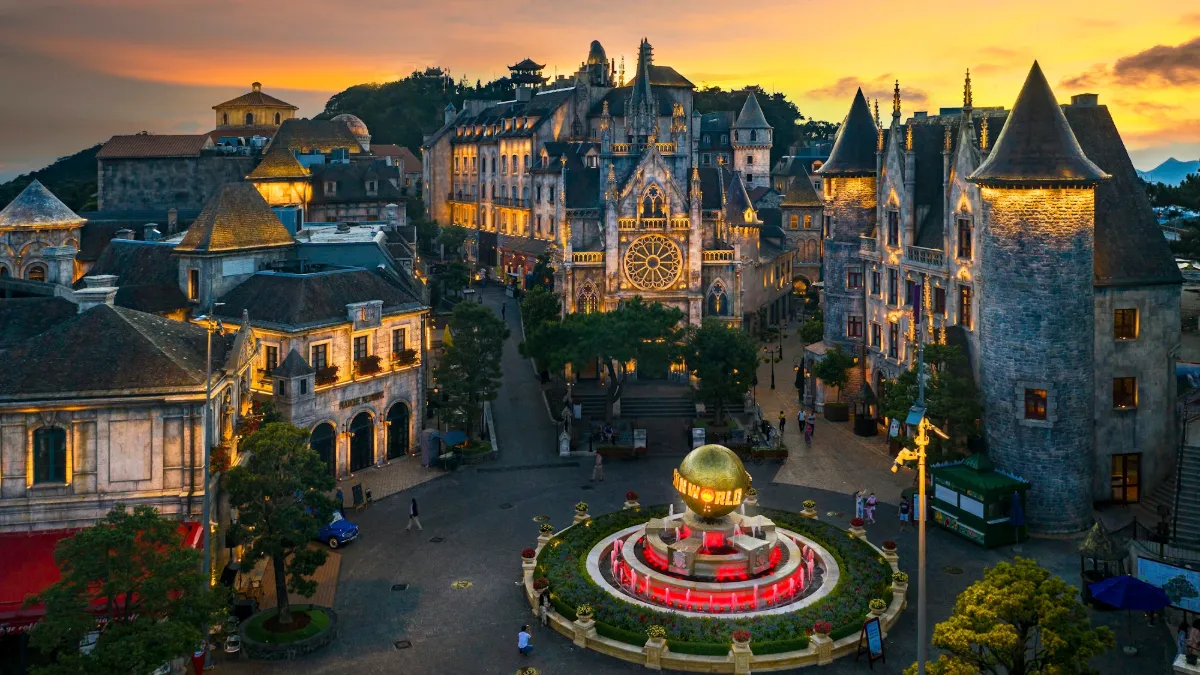
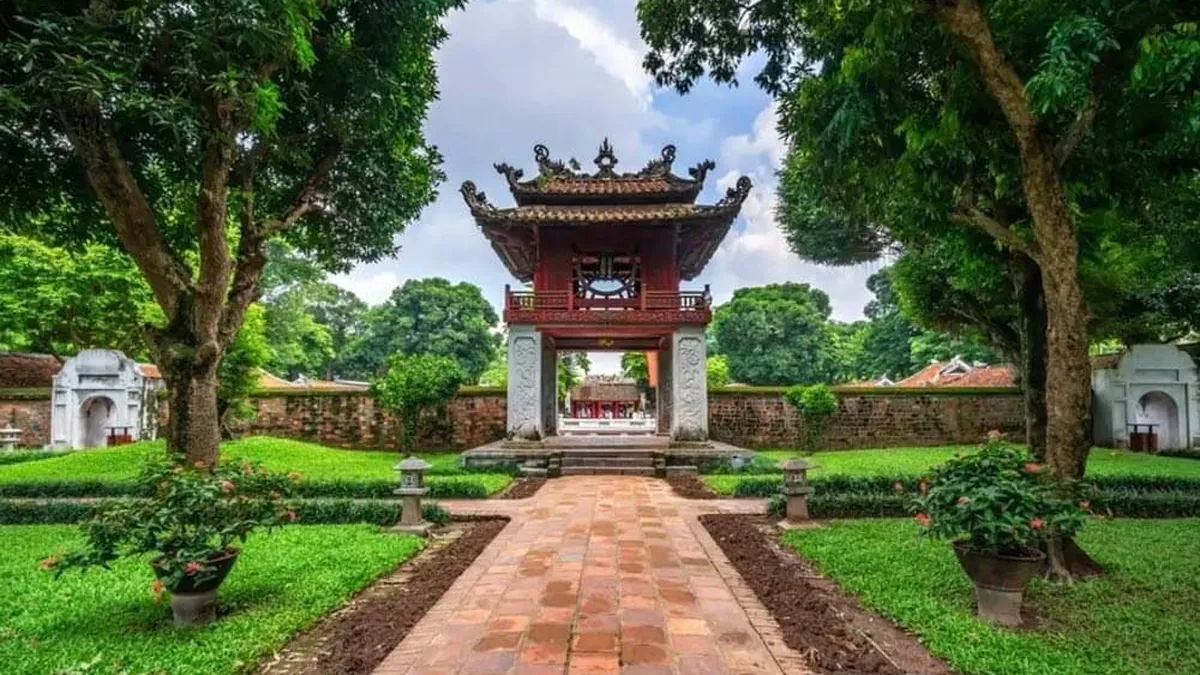
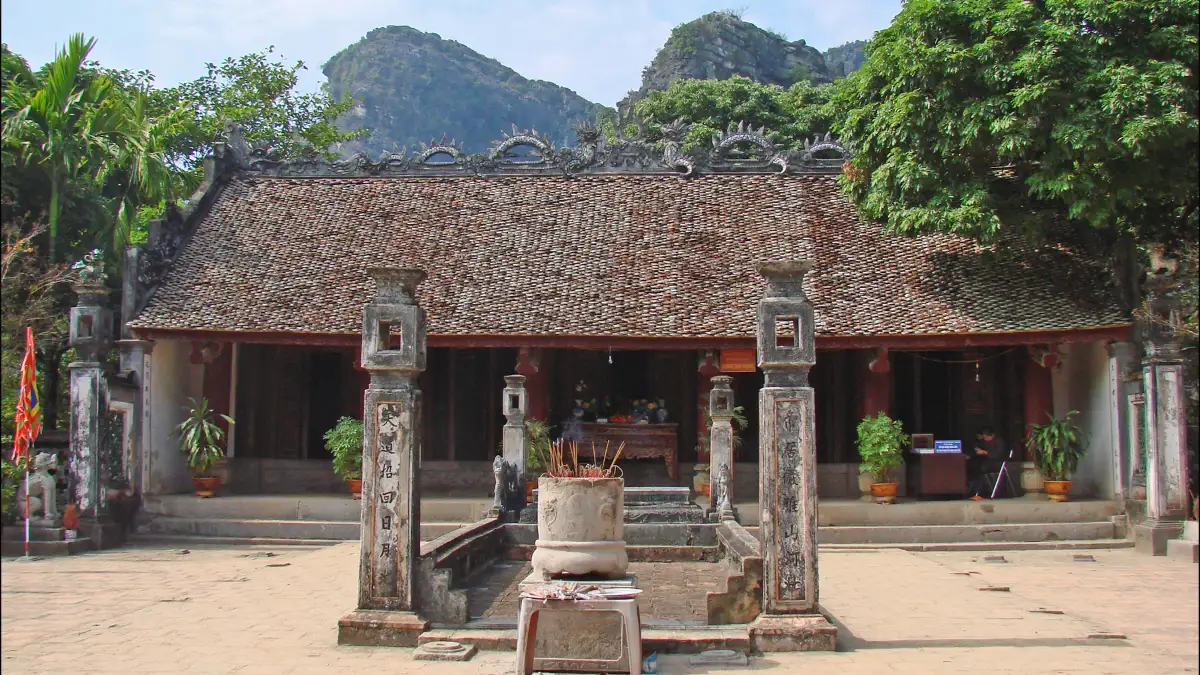
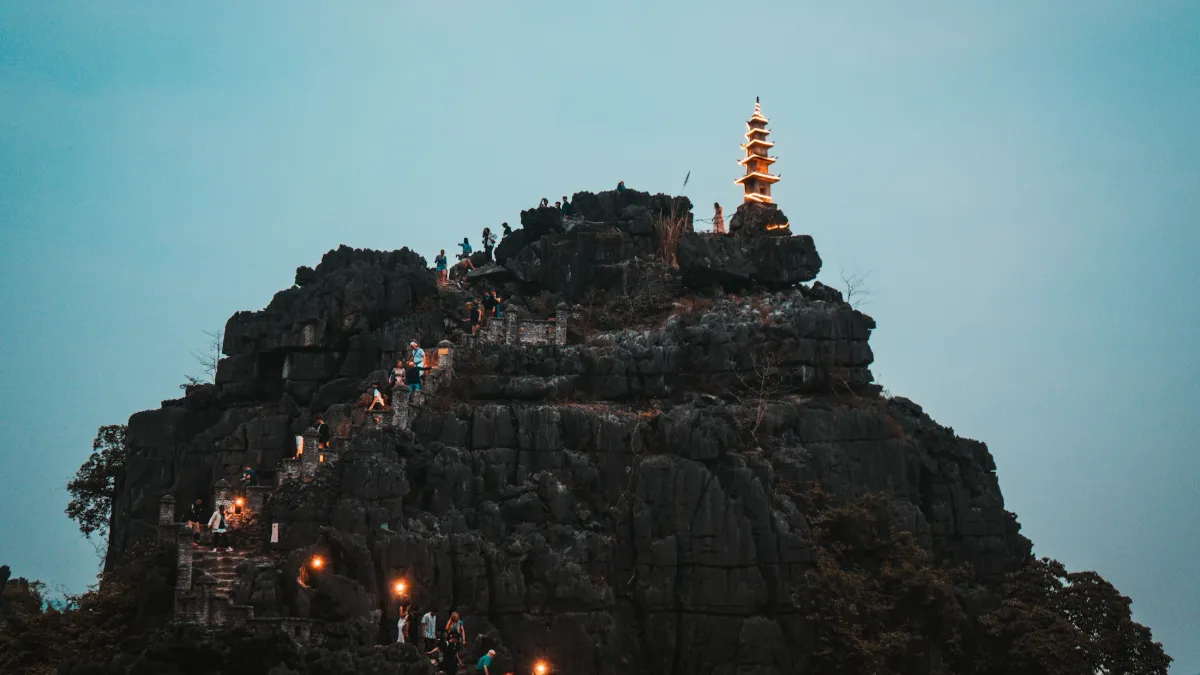
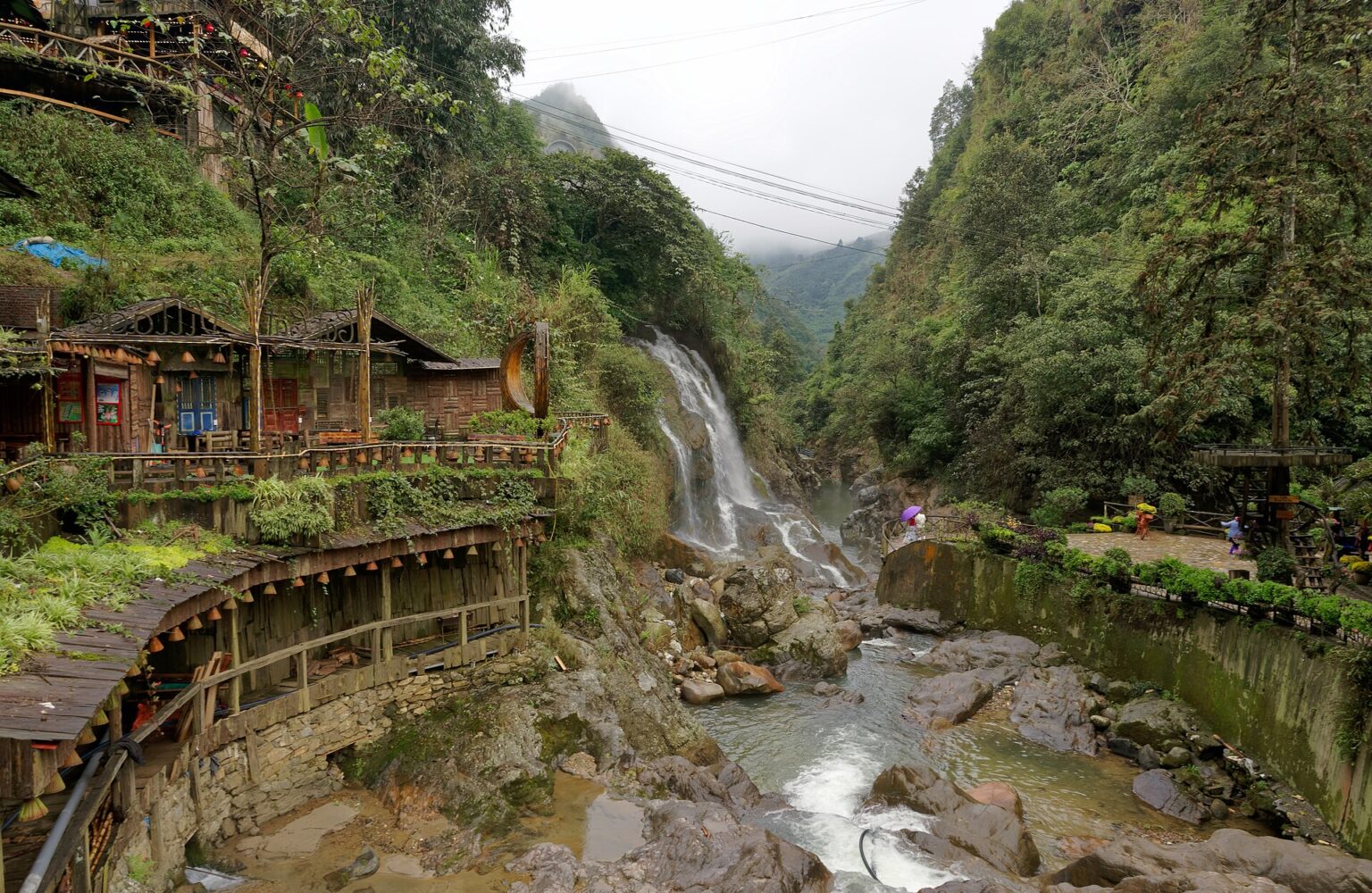
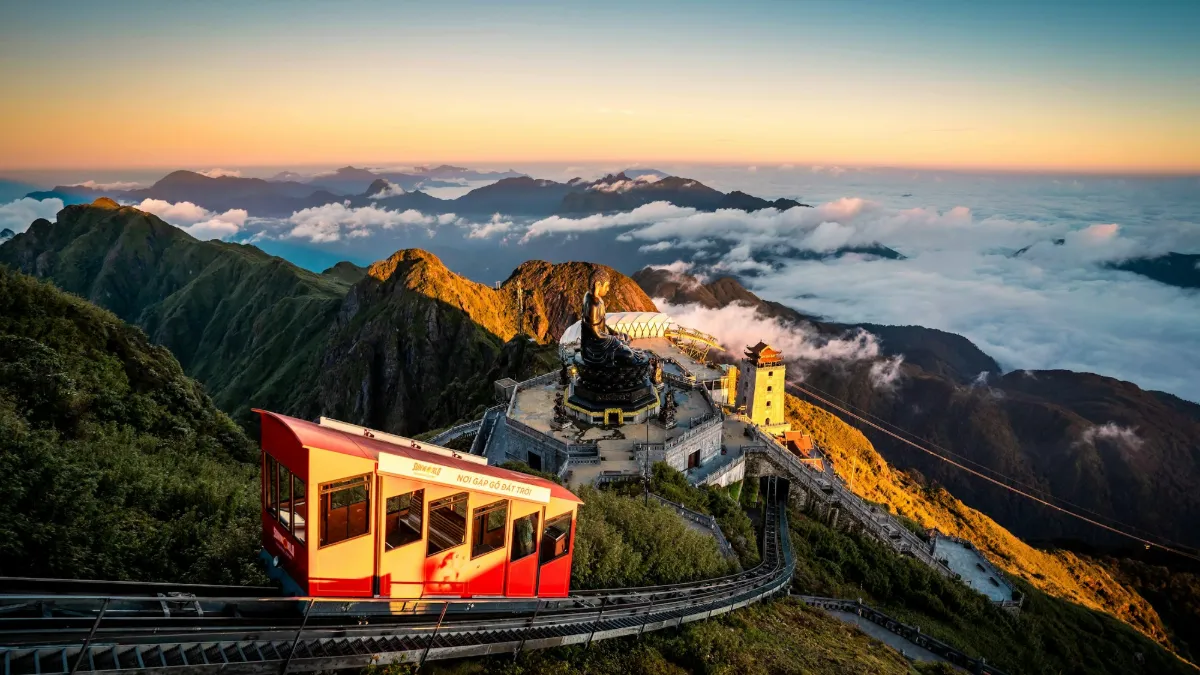
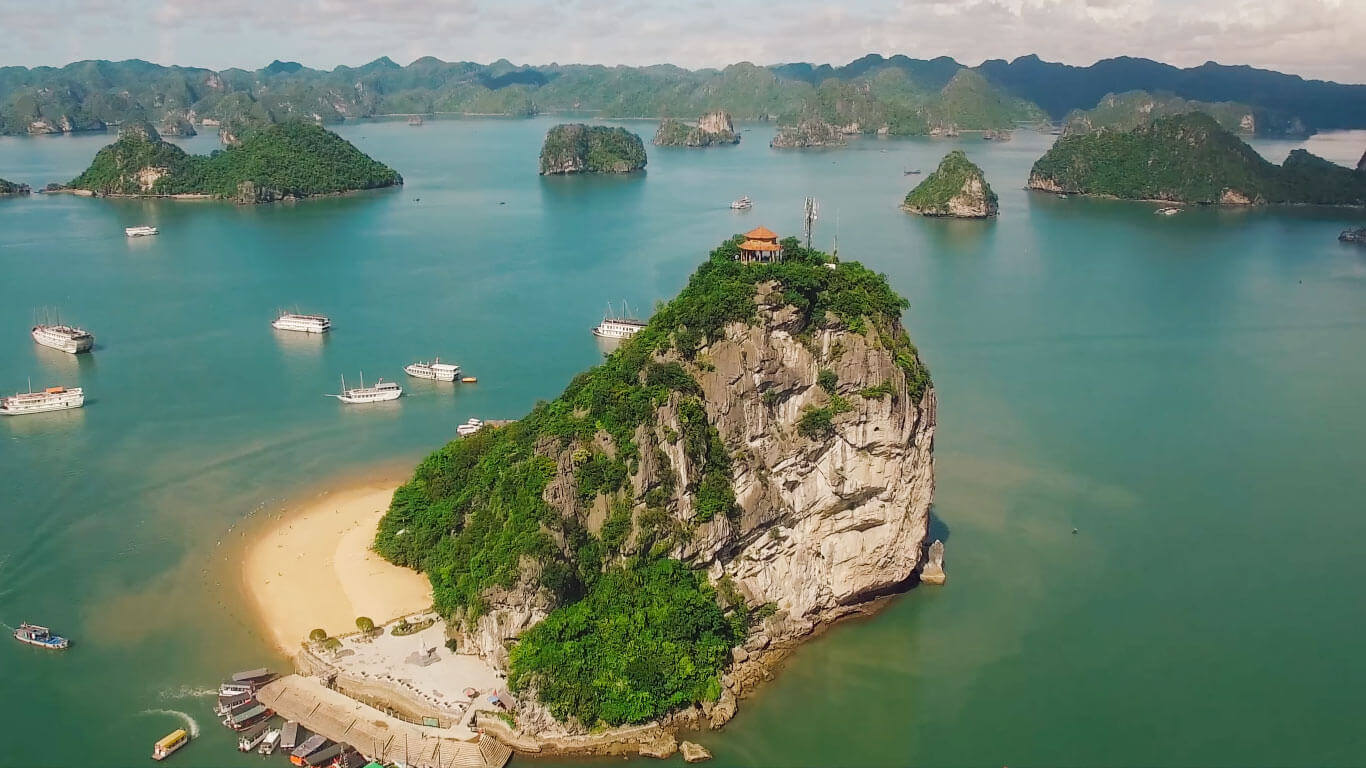
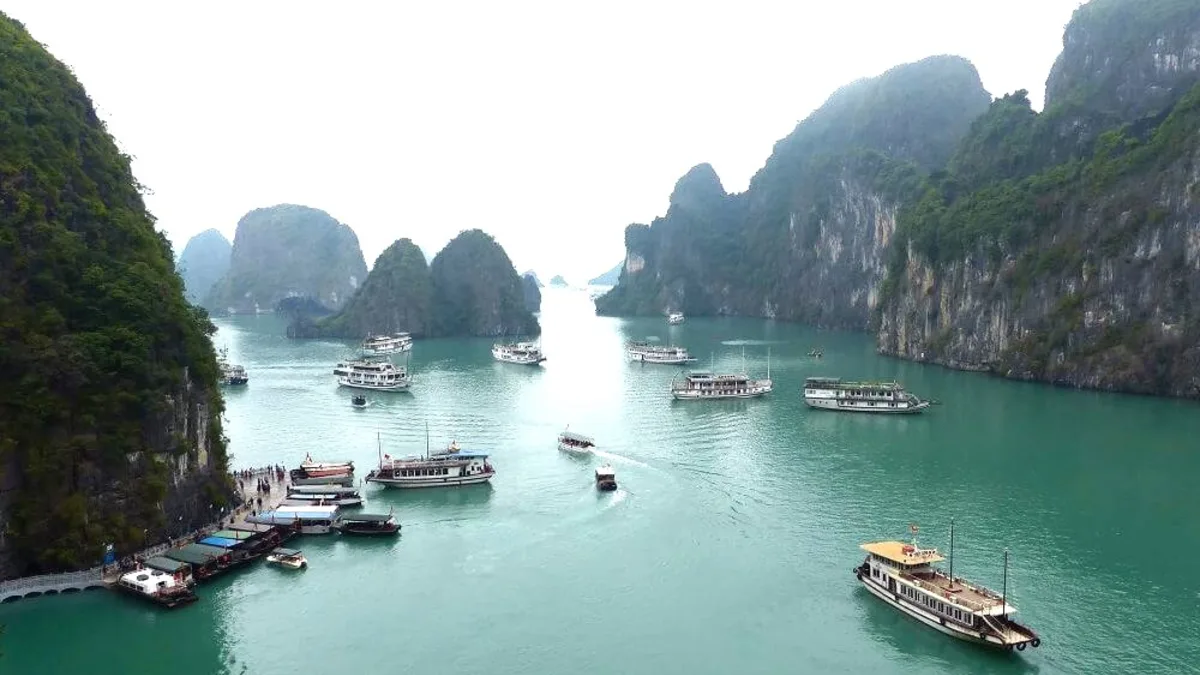
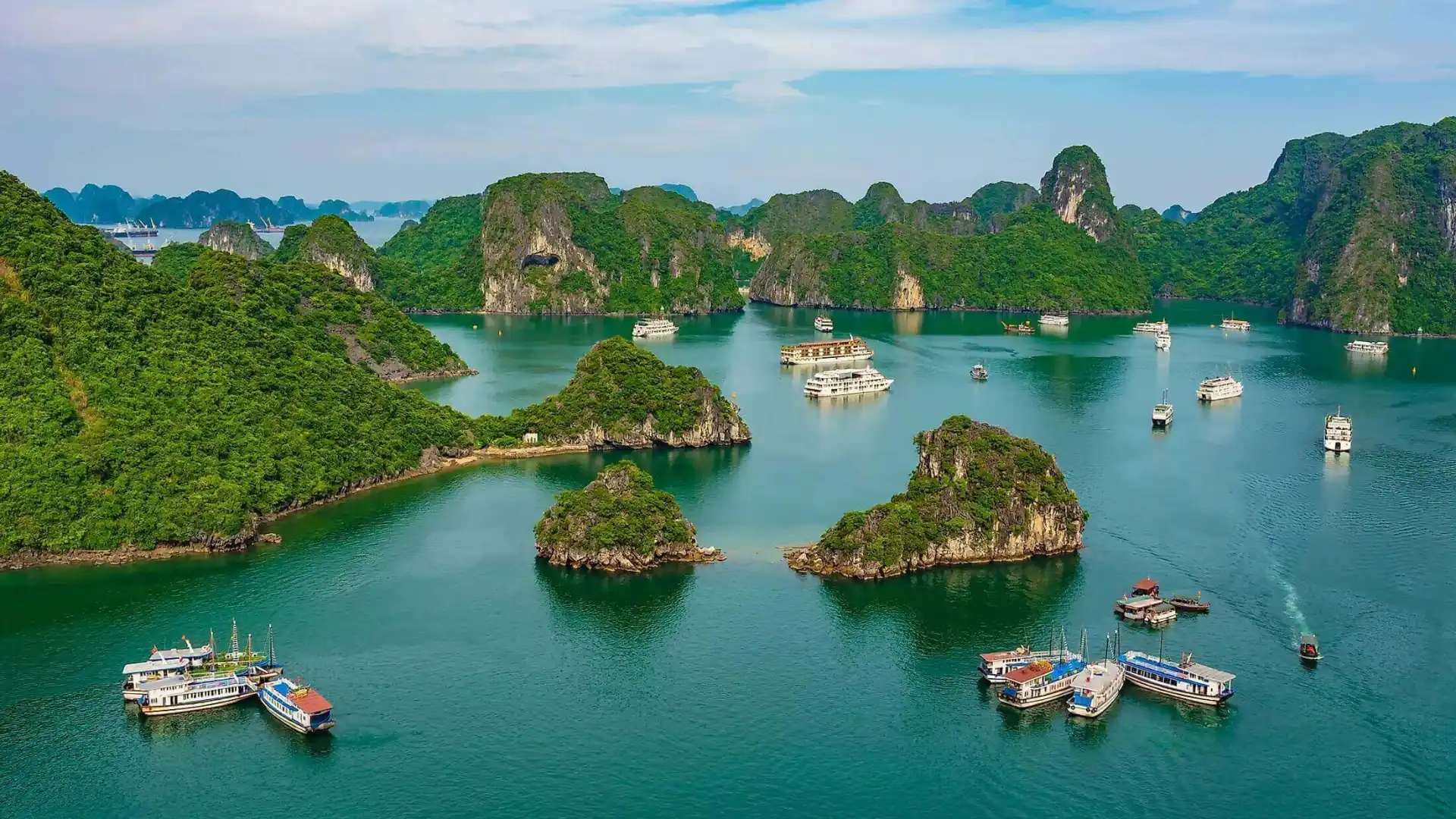
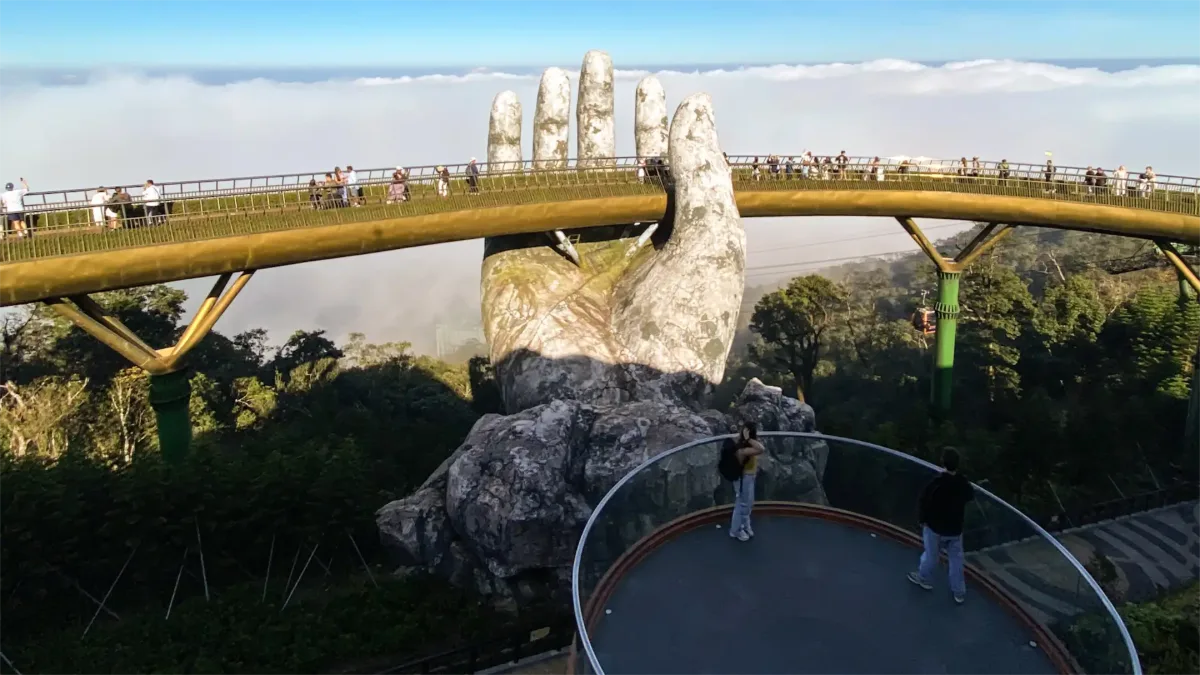
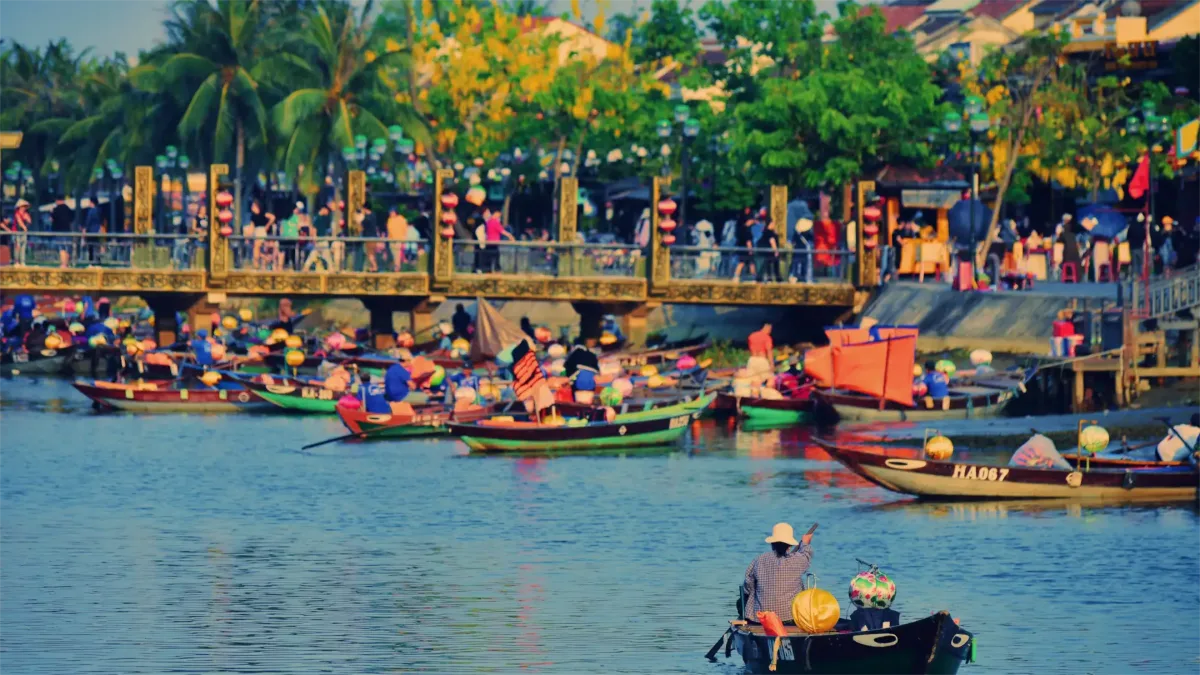
Days 1–4Saigon on the riverDay 2Inside the Independence PalaceDay 2War Remnants Museum, SaigonDay 2Notre-Dame Cathedral, SaigonDay 2Thien Hau Temple, CholonDay 2Ben Thanh MarketDay 3Cao Dai Holy See – the noon ceremonyDay 3The Cu Chi TunnelsDay 4A day on the Mekong DeltaDay 5Lady Buddha, Son Tra peninsulaDay 5The Marble Mountains, Da NangDay 6Hoi An Ancient TownDay 6Basket boats, Cam Thanh coconut forestDay 6Lantern street, Hoi AnDay 7The Golden Bridge, Ba Na HillsDay 7The French Village, Ba Na HillsDay 8The Huc Bridge, Hoan Kiem LakeDay 8Temple of Literature, HanoiDay 9Hoa Lu – the temple of King DinhDay 9Rowing through Trang AnDay 9Mua Cave pagoda at duskDay 10Cat Cat waterfall, SapaDay 11Muong Hoa Valley at Ta VanDay 12Fansipan – the Muong Hoa mountain trainDay 13Junks under sail on Halong BayDay 13Ti Top Island, Halong BayDay 14Sung Sot Cave, Halong Bay
Tour at a Glance
Duration
15 days, 14 nights
Direction
South to north – Saigon arrival, Hanoi departure
Route
Ho Chi Minh City – Tay Ninh – Cu Chi – My Tho – Ben Tre – Da Nang – Hoi An – Ba Na Hills – Hanoi – Ninh Binh – Sapa – Halong Bay
Tour style
Private – your own guide, driver and vehicle in all three regions
Pick-up / drop-off
Tan Son Nhat International Airport (SGN) – Noi Bai International Airport (HAN)
Nights
Ho Chi Minh City 4 · Hoi An 2 · Da Nang 1 · Hanoi 4 · Sapa 2 · Halong Bay cruise 1
Internal flights
2 sectors – Saigon to Da Nang (day 5) and Da Nang to Hanoi (day 8). Booked on request, invoiced at cost
Meals
14 breakfasts, 13 lunches, 1 dinner on the cruise
Walking
Moderate – a 10 km valley trek in Sapa, 500 steps at Mua Cave, light walking elsewhere
Best months
October to April
From
US$1,294 per person, land only
What you see, region by region
Days 1 to 4 – Saigon and the Mekong Delta
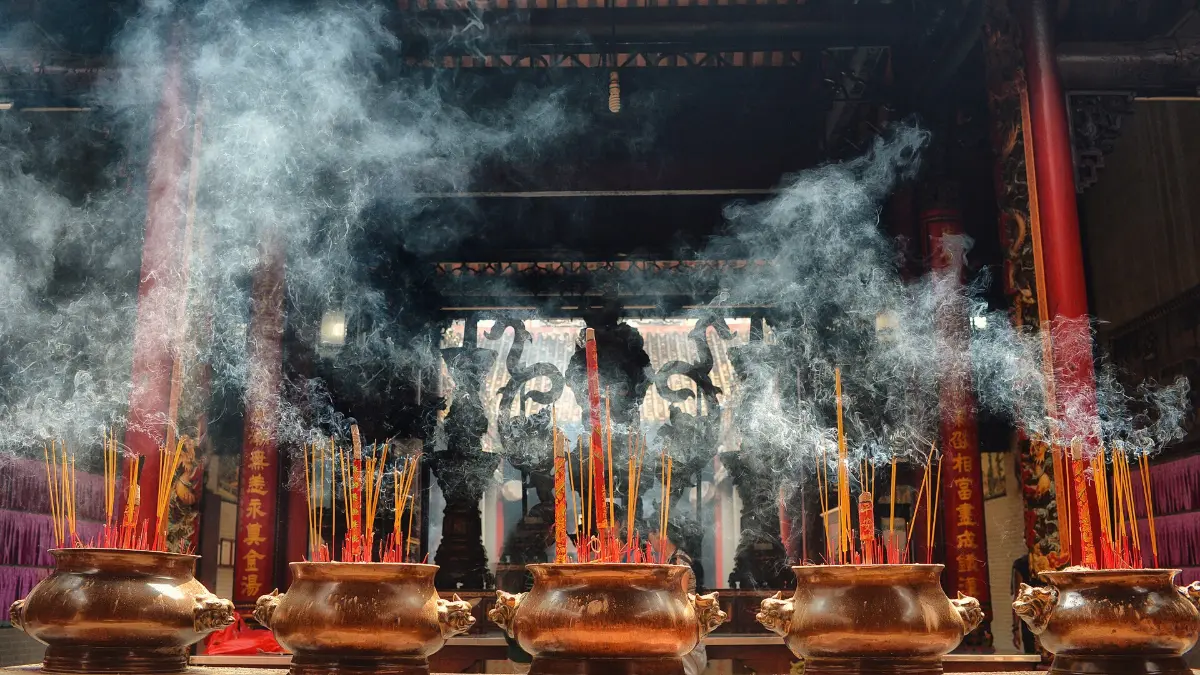
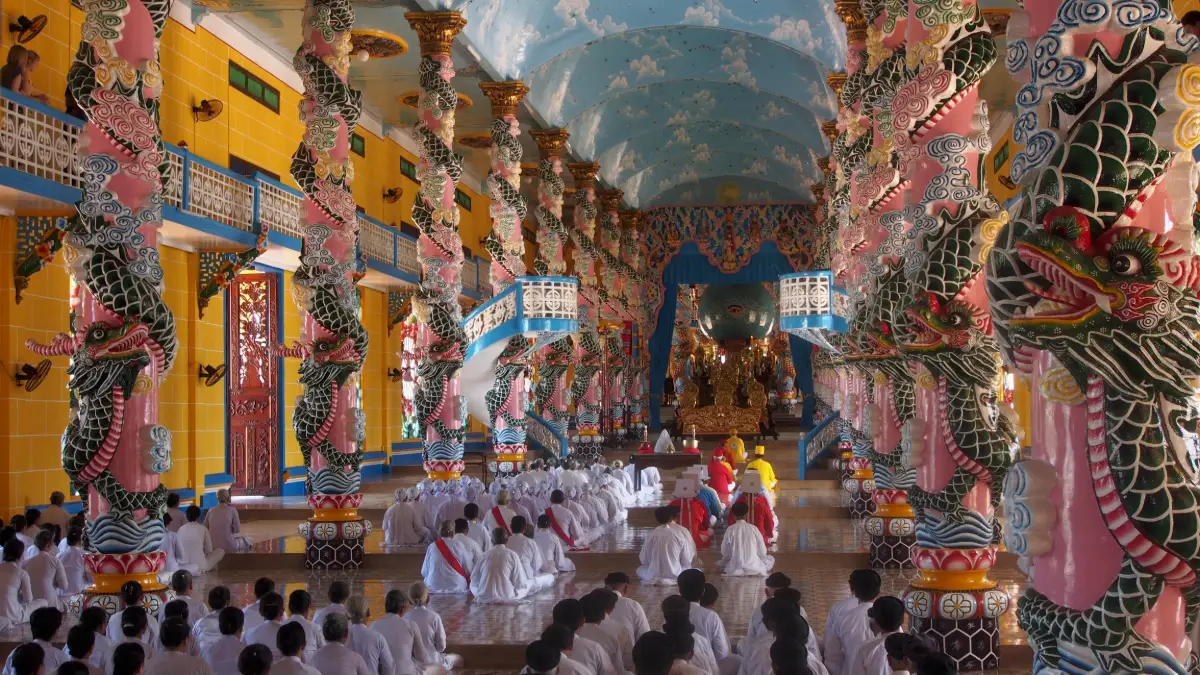
Four days is enough to stop treating Ho Chi Minh City as an arrival point. A full city day covers the Independence Palace, frozen since April 1975, the War Remnants Museum, and Cholon with its incense-choked Thien Hau Temple. A second day runs out to Tay Ninh for the noon ceremony at the Cao Dai Holy See and comes back through the Cu Chi Tunnels at Ben Duoc. A third goes down to My Tho and Ben Tre for a private motorboat across the Tien River, a rowing sampan under the water coconut, and coconut candy made in front of you.
Days 5 to 7 – Da Nang, Hoi An and Ba Na Hills
A morning flight puts you on the central coast by lunchtime. The Son Tra peninsula and the 67-meter Lady Buddha, then the Marble Mountains with their lift and cave grottoes, then Hoi An for two nights. The sixth day is the one this itinerary was rebuilt around: a thung chai – a round bamboo basket boat – in the Cam Thanh coconut forest, followed by the Ancient Town on foot and the lanterns along the Thu Bon after dark. Day seven climbs to Ba Na Hills for the Golden Bridge, early, before the crowds arrive.
Days 8 to 12 – Hanoi, Ninh Binh and Sapa
The second flight lands you in Hanoi. Ba Dinh Square, the Temple of Literature and the Old Quarter on the afternoon you arrive; Ninh Binh the next day for Hoa Lu and nearly three hours rowing through the nine flooded caves of Trang An. Then five and a half hours up the expressway into the mountains for two nights in Sapa – Cat Cat below the town on the first afternoon, the Muong Hoa Valley on foot on the second, and Fansipan by cable car on the morning you leave.
Days 13 to 15 – Halong Bay and home
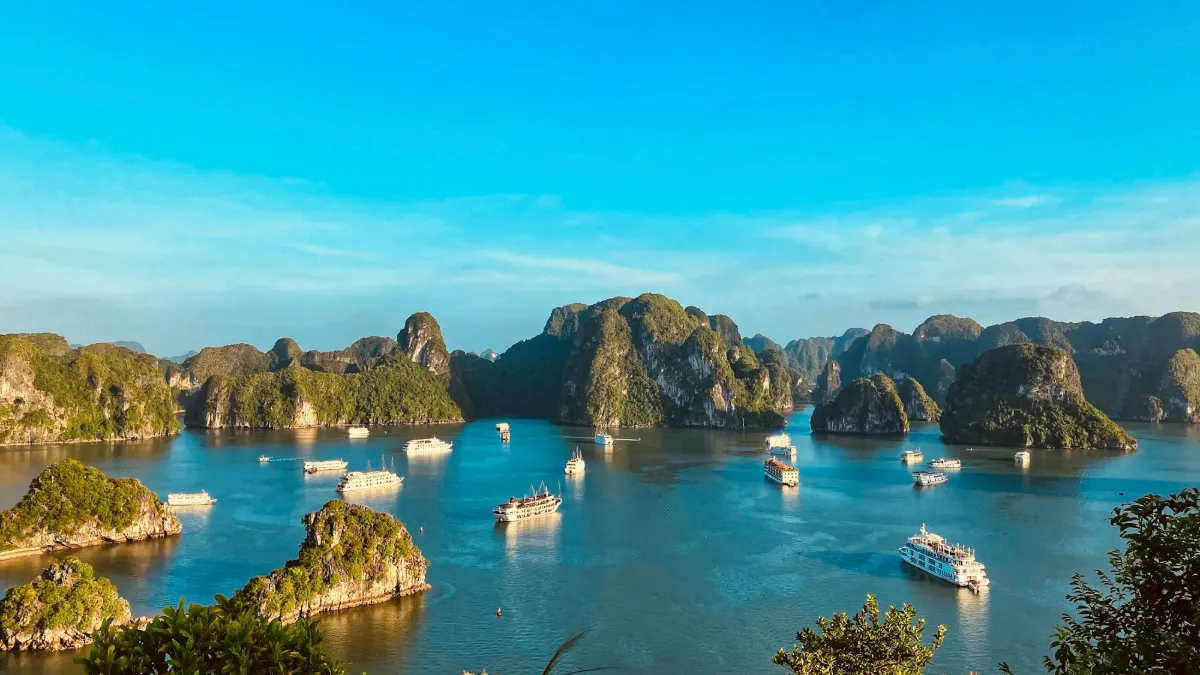
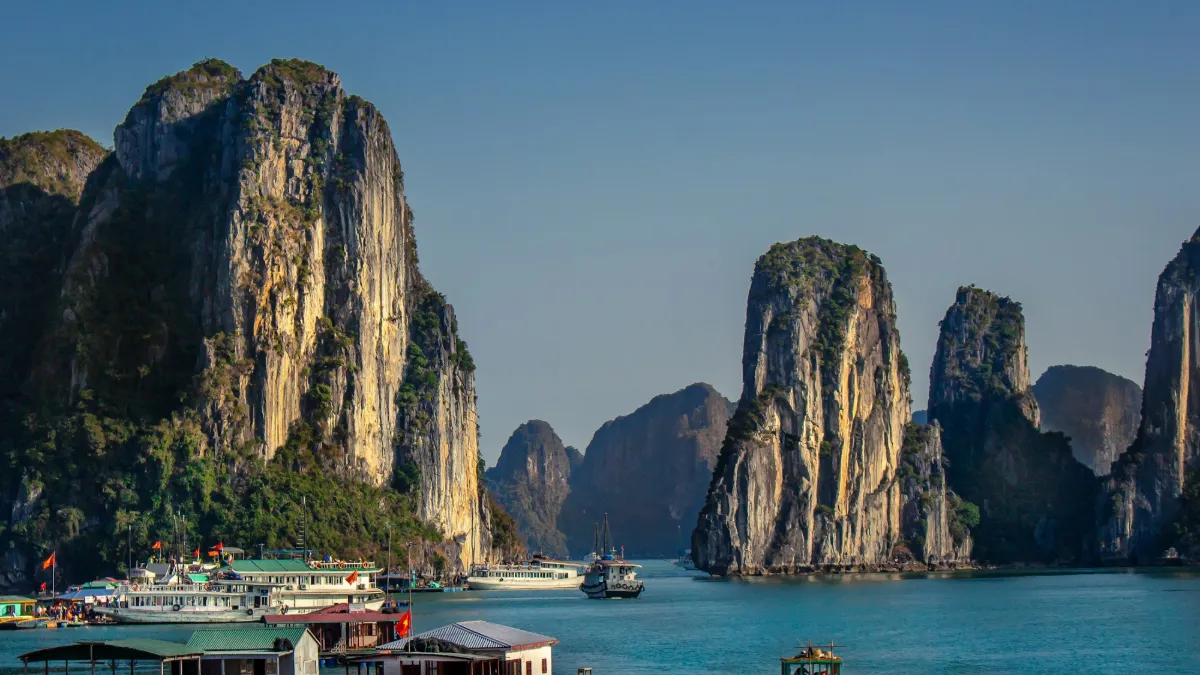
A cabin on an overnight cruise among the limestone islands, with kayaking, Sung Sot Cave and dinner on board, then back to Hanoi with a free afternoon before you fly. Ending the trip here rather than starting with it means the bay is the last thing you see, which is the right way round.
The Cam Thanh Coconut Forest, and why it replaces My Son
By day six you will have seen the Independence Palace, the Cao Dai Holy See, the Cu Chi Tunnels and the Marble Mountains. Adding the Cham brick towers at My Son makes it five monuments in six days, and an hour each way to reach them.
Cam Thanh does something different. A hundred hectares of water-coconut palm grow in the brackish water where the Thu Bon meets the sea, five minutes outside Hoi An. The forest sheltered the resistance here for thirty years and now it is where local families fish for crab. You go out in a basket boat with a rower who will show you how it is woven, let you try to paddle it – harder than it looks, since it has no bow – and then spin it on its own axis at speed, which is the part everyone films.
It is an hour on the water rather than an hour in a car, and it hands the whole afternoon back to the old town. If you would rather have My Son, say so and it swaps straight back in on day 6 at close to the same price.
Hotels and the cruise
Thirteen hotel nights plus one on the water. You choose a single class for the whole trip and the Halong Bay cabin follows it automatically – standard with 3-star, deluxe with 4-star, luxury with 5-star.
Rooms are quoted twin or double share. Solo travelers and odd-numbered groups can take an extra bed or a single room on supplement; tell us which you prefer and we will quote both. If you already know which hotels you want in Saigon, Hoi An or Hanoi, name them and we will price the trip around them rather than ours.
The two internal flights
Saigon to Da Nang on day 5 and Da Nang to Hanoi on day 8, about an hour and twenty minutes each. Together they replace roughly twenty-four hours of driving.
They are not included in the tour price, and that is deliberate rather than mean. Vietnamese domestic fares move constantly with the date and the booking window; a figure fixed four months out would have to be padded to be safe, and you would pay the padding. We book both sectors for you on request and invoice them at cost when you confirm your dates. The day 5 flight is a morning departure so that the Da Nang sightseeing still fits; the day 8 flight is late morning, which is why that morning is left open.
When to go
October to April is the period when all three regions cooperate. The south is dry from December to April. The center – Da Nang, Hoi An, Ba Na – is driest between February and August. The north and Sapa are at their clearest from October to December and again in March and April.
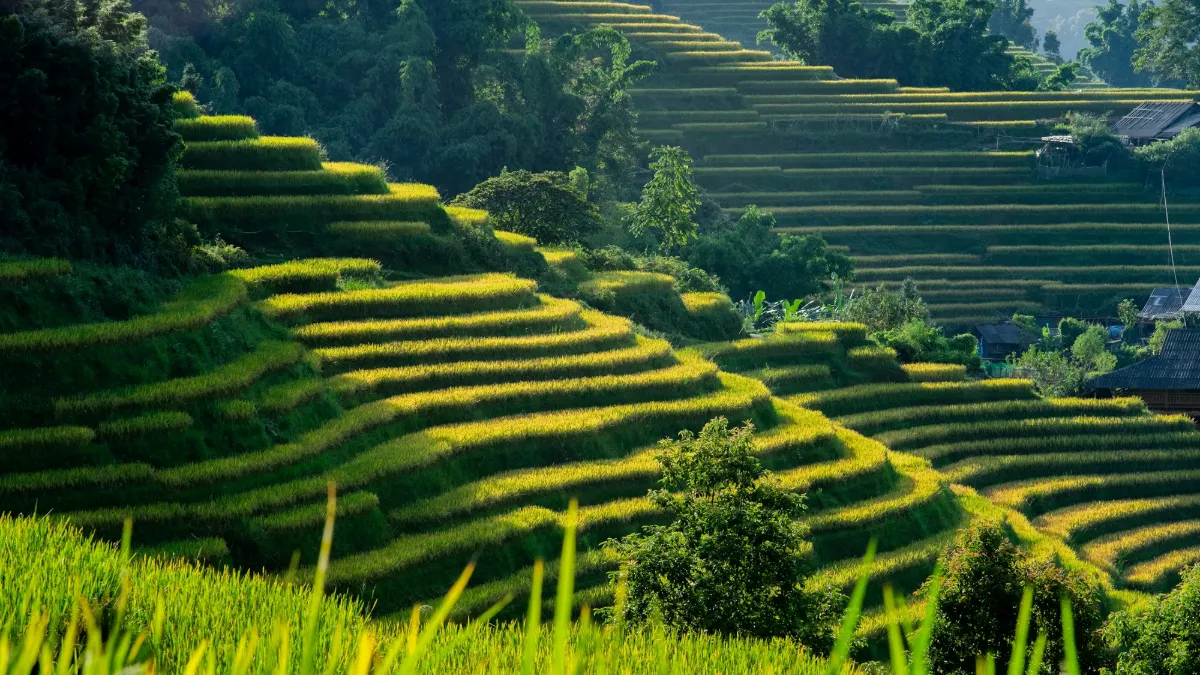
Two honest caveats. Sapa in January and February is often cold and buried in cloud, and we will tell you plainly that the Fansipan view is a gamble on those dates. September to November is the greenest the rice terraces get, but it is also typhoon season on the central coast and a storm can shut Halong Bay for a day or two. Running the route south to north helps here, because both of those sit at the end of the trip where we have time to move them.
Booking direct with Vietnam Tour Expert
No platform commission. You book with our own team in Hanoi, not through an agency or a marketplace taking twenty to twenty-five percent off the top.
One operator across all three regions. Our guides, our drivers, our vehicles – not three subcontractors who have never spoken to one another.
No asterisks. The Fansipan combo, the Ba Na cable car, the Trang An boat and the Cam Thanh basket boats are all in the price. What is not included is listed plainly, the two flights first.
Answers within 24 hours, and a number that is answered for the whole fifteen days.
30% deposit confirms the booking; the balance is due before you travel.
Make it yours – this itinerary is a draft, not a timetable
Every trip we run on this route ends up slightly different from the page, and that is the point of booking a private tour rather than a seat on a fixed group departure. Tell us what you want changed and we rebuild it: there is no fee for redrafting and no limit on how many versions we go through before you are happy. The changes people ask for most often:
Add Hue – two days for the Imperial City and the royal tombs, slotted in before the flight north, usually by trading a Saigon day and a Hoi An day.
Put My Son back in place of the coconut forest on day 6.
Add a beach – Phu Quoc or Nha Trang work best as a three or four-night extension at the start, while you are still in the south.
Run it the other way if your flights change: the same route northbound is on our site as a separate trip.
Upgrade the cruise to a named boat, or take two nights on Halong Bay instead of one.
Add Phong Nha or Ha Giang if you have more than fifteen days.
Send your dates, group size and what matters most, and we will rebuild and re-quote within 24 hours.
Compare our Vietnam tours
Tour
Duration
Direction
From
Saigon – Hoi An – Hanoi – Sapa – Halong Bay Tour 15 Days (this tour)
Three things worth knowing before you commit to this direction.
Check your flights before you choose the direction. This is the single decision that saves or costs real money on a fifteen-day trip, and it takes five minutes. Price Saigon-in/Hanoi-out against Hanoi-in/Saigon-out, then pick the itinerary that matches. We run both and we are not trying to push you onto either.
Do not stack Hue on top of this. It is the most common request and it is usually the wrong one. Adding Hue without adding days means cutting Sapa to a single night, and a single night in Sapa is a long drive for very little. Give it seventeen days or leave it for the next trip.
Go to Ba Na Hills at opening time, not after breakfast. The cable car runs from early morning and the Golden Bridge is quiet for the first hour. By eleven you are queuing to stand on it, and the cloud is usually in by midday. It is the one morning on this trip where the alarm clock pays for itself.
Questions on any of this, send them through the tour inquiry form or WhatsApp +84 88 626 1368. I answer them myself.
Updated 28 October 2026 · By Jimmy, Vietnam Tour Expert
Day by day itinerary
About This South-to-North Vietnam Tour
Fifteen days from the Mekong Delta to the Chinese border, run in the direction most long-haul flights actually favor. You start with four days in and around Saigon – the city itself, the Cao Dai Holy See and the Cu Chi Tunnels, and a full day on the delta – then fly to Da Nang for the Marble Mountains, two nights in Hoi An with a basket-boat afternoon in the Cam Thanh coconut forest, and the Golden Bridge at Ba Na Hills.
A second short flight puts you in Hanoi for the second half: the Old Quarter and the Temple of Literature, the Trang An river caves at Ninh Binh, two days walking and riding the cable car in Sapa, and a night on Halong Bay to finish. Private throughout – your own guide, driver and vehicle in each region – with 13 hotel nights, one cruise cabin and only four days out of fifteen that involve a long move.
Day 1: Landing in Saigon – first night on Nguyen Hue
We meet you inside the arrivals hall at Tan Son Nhat with a name board and drive you into District 1, around half an hour depending on the traffic, which in Saigon is a spectator sport in itself.
Once you have dropped your bags, your guide walks you down Nguyen Hue in the evening. The boulevard is closed to cars, the old People’s Committee building glows at the far end, and half the city is out on the paving stones with iced coffee. It is the gentlest possible introduction to Vietnam.
Dinner is yours to choose and your guide will tell you where the locals go.
Overnight: Ho Chi Minh City
Day 2: Saigon – the palace, the war museum and Cholon
Morning: The Independence Palace first, before the coaches. Nothing inside has moved since April 1975 – the rotary telephones, the war room in the basement, the helicopter on the roof. Then the War Remnants Museum, which is confronting and which we do not rush. Notre-Dame from the outside, still under restoration, and the Central Post Office across the square.
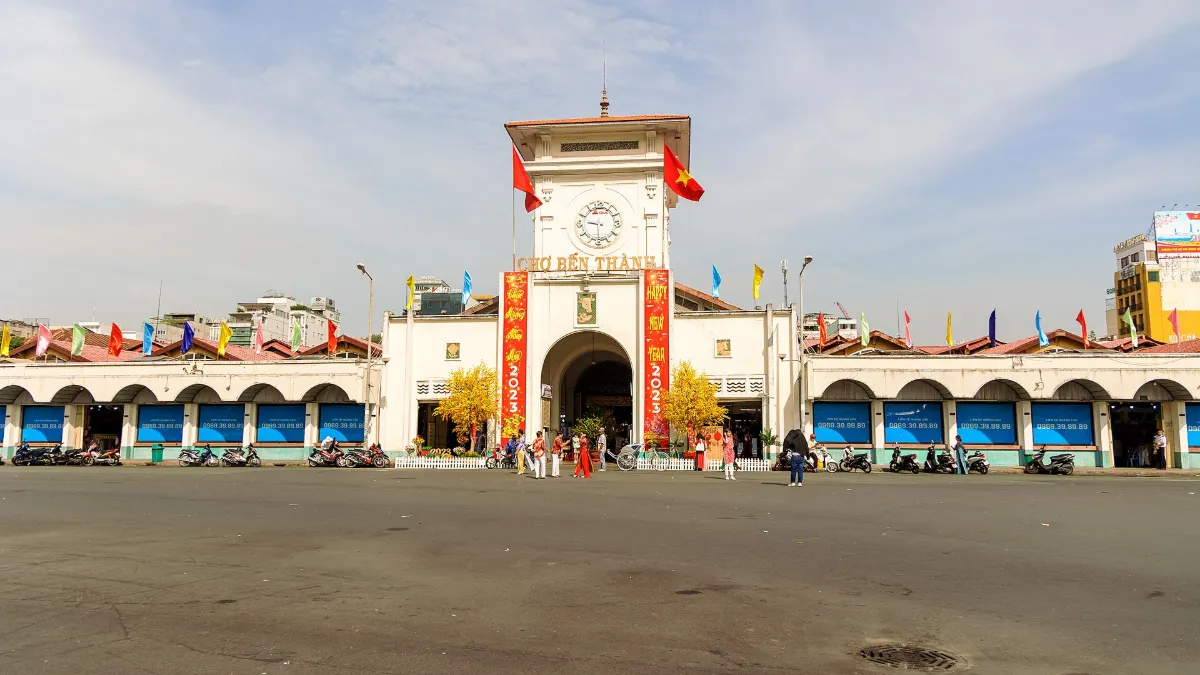
Afternoon: Lunch, then over to Cholon. The Thien Hau Temple is the one to see – the incense coils hang so thick you lose the ceiling – and Binh Tay Market next door is a working wholesale market rather than a tourist one. Ben Thanh on the way back for anyone who wants to shop. Hotel by 17:00.
Meals: breakfast, lunch · Overnight: Ho Chi Minh City
Day 3: Tay Ninh and the Cu Chi Tunnels
Morning: An early run out to Tay Ninh, about two and a half hours, timed for the midday service at the Cao Dai Holy See. Caodaism was founded here in 1926 and borrows from Buddhism, Catholicism and Taoism in roughly equal measure. From the upstairs gallery you watch several hundred worshippers in white file in under the all-seeing eye while a nine-piece orchestra plays.
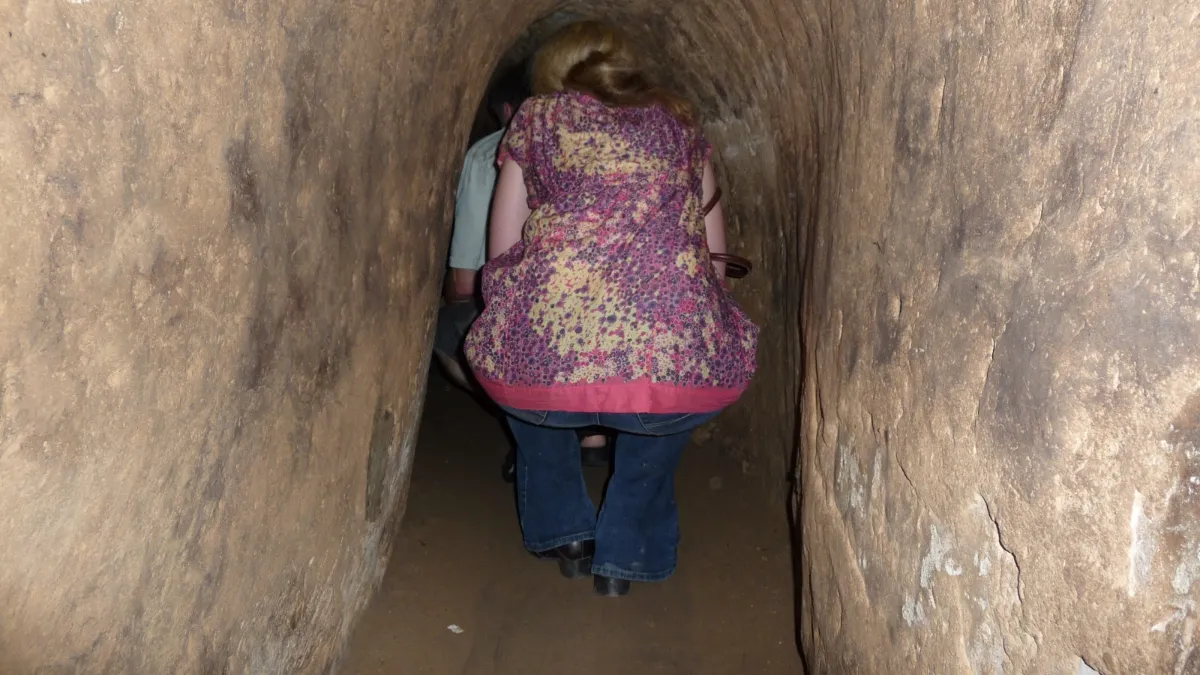
Afternoon: Lunch in Tay Ninh, then the Cu Chi Tunnels at Ben Duoc rather than Ben Dinh – the same tunnel system, far fewer people. Trapdoors, field kitchens vented through false termite mounds, and a widened stretch you can crawl through if you feel like it. Back in Saigon about 18:00.
Meals: breakfast, lunch · Overnight: Ho Chi Minh City
Day 4: A day on the Mekong Delta
Morning: Two hours south to My Tho, with a stop at the Vinh Trang Pagoda and its enormous reclining Buddha. Then onto a private motorboat and across the Tien River, past the floating fish farms, to Thoi Son islet.
Afternoon: Lunch in a garden restaurant under the fruit trees. A rowing sampan takes you down a canal roofed over with water coconut – the part of the delta everyone pictures. Seasonal fruit and honey tea with live don ca tai tu, the folk music of the south, then a coconut-candy workshop on the Ben Tre bank. Back in Saigon in the late afternoon; the last southern evening is free.
Meals: breakfast, lunch · Overnight: Ho Chi Minh City
Day 5: Fly to Da Nang – Lady Buddha, the Marble Mountains and on to Hoi An
Morning: Transfer to the airport for the morning flight north, about an hour and twenty minutes. We book the seats for you on request and quote them with your dates. Your central-region guide is waiting at Da Nang. Straight out to the Son Tra peninsula and the Linh Ung Pagoda, where the 67-meter Lady Buddha stands with her back to the mountain and her eyes on the sea.
Afternoon: Lunch in Da Nang, then the Marble Mountains – a lift up Thuy Son, the Huyen Khong grotto with daylight falling through the holes in its roof, and a viewpoint that takes in the whole coast. Forty-five minutes on to Hoi An and check in. The evening is free in the old town.
Meals: breakfast, lunch · Overnight: Hoi An
Day 6: The Cam Thanh Coconut Forest and Hoi An Ancient Town
Morning: A slow start, then five minutes out of town to Cam Thanh, where a hundred hectares of water-coconut palm grow in the brackish water where the river meets the sea. The forest fed and hid the resistance here for thirty years; today it is where Hoi An families fish for crab.
You go out in a thung chai, the round bamboo basket boat. A local rower takes you down channels barely wider than the boat, shows you how the baskets are woven and waterproofed, and – if the mood takes him – spins the thing on its own axis, which is as alarming and as funny as it sounds.
Afternoon: Lunch at a garden restaurant in Cam Thanh, then back into Hoi An on foot: the Japanese Covered Bridge, a Chinese assembly hall, a merchant house that has been in the same family for seven generations, and the market. Stay for the evening, when the lanterns come on along the Thu Bon and the night market opens on An Hoi islet.
Meals: breakfast, lunch · Overnight: Hoi An
Day 7: Ba Na Hills and the Golden Bridge
Morning: Out early – an hour and a quarter from Hoi An, and worth the alarm clock, because by eleven the Golden Bridge is shoulder to shoulder. The cable car rises 1,400 meters in about twenty minutes, one of the longest non-stop spans anywhere. The bridge itself is held up by two weathered stone hands and curves out over the valley; above it sit the French Village, the flower gardens and the Linh Ung pagoda.
Afternoon: Lunch on the mountain, down in the mid-afternoon, and into Da Nang for the night. If it is a Saturday or Sunday, the Dragon Bridge breathes fire and water at 21:00 and the riverside fills up to watch it.
Meals: breakfast, lunch · Overnight: Da Nang
Day 8: Fly to Hanoi – Ba Dinh, the Temple of Literature and the Old Quarter
Morning: The morning is loose – a last walk on My Khe Beach if you want one – then the flight to Hanoi, again about an hour and twenty. Your northern guide meets you at Noi Bai and drives you into the city, roughly forty-five minutes.
Afternoon: Lunch in the Old Quarter, then Ba Dinh Square and the Ho Chi Minh Mausoleum from the outside, the Presidential Palace grounds and the One Pillar Pagoda. The Temple of Literature follows – Vietnam’s first university, founded in 1070, with the stone stelae of the doctoral laureates standing on their tortoises. Finish at Ngoc Son Temple on its island in Hoan Kiem Lake and walk back through the thirty-six craft streets.
Meals: breakfast, lunch · Overnight: Hanoi
Day 9: Ninh Binh – Hoa Lu, Trang An and Mua Cave
Morning: Two hours south on the expressway. Hoa Lu was the capital of Vietnam in the tenth century, and the temples of King Dinh and King Le still sit in a bowl of limestone with almost nobody in them.
Afternoon: Lunch – goat with crispy rice, which is what Ninh Binh is known for – and then the part everyone remembers: two and a half to three hours in a rowing boat through Trang An. The route runs through nine flooded caves, some low enough to duck in, past riverside temples and the village set left behind by Kong: Skull Island. We use Trang An rather than Tam Coc because it is longer, the caves are better and there is no queue for the boats. Anyone with the legs for it climbs the 500 steps at Mua Cave afterwards for the view back over the valley. Hanoi by 18:30.
Meals: breakfast, lunch · Overnight: Hanoi
Day 10: Up to Sapa and down into Cat Cat
Morning: 07:30 away on the Noi Bai – Lao Cai expressway. Five to five and a half hours with a break, climbing out of the Red River delta into the mountains, and the view out of the window earns its keep for the last hour.
Afternoon: Lunch in Sapa town and check in. Then down into Cat Cat, the Black H’mong village directly below the town – water wheels, indigo dye vats, a waterfall at the bottom. The car picks you up at the bottom so that nobody has to climb back out. The evening is free: the stone church square, the market, and cafés looking straight down the valley.
Meals: breakfast, lunch · Overnight: Sapa
Day 11: The Muong Hoa Valley – Lao Chai to Ta Van on foot
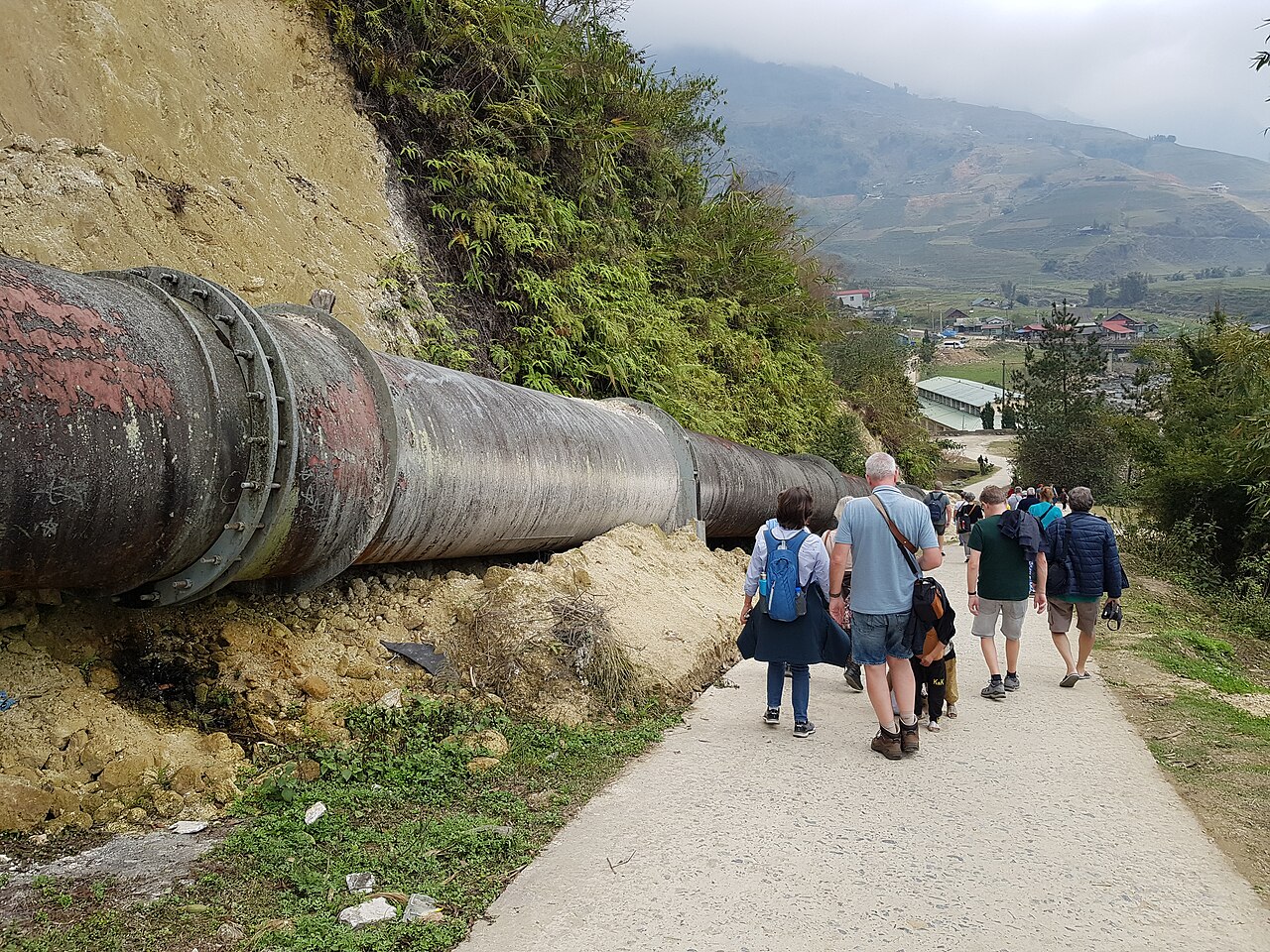
Morning: 08:30, with your guide and a H’mong guide from the valley. About 10 km and four to five hours, almost all of it downhill on footpaths and the bunds between the rice terraces. You drop through Y Linh Ho, cross into Lao Chai, and follow the Muong Hoa river into Ta Van, which is a Giay village rather than a H’mong one and looks and sounds different because of it.
Afternoon: The trek ends at Ta Van. The car is waiting there and drives you back up to Sapa, about half an hour, for a late lunch in town – no second climb, and no third village tacked on at the end of a long morning. The afternoon is yours: a herbal bath, which after that walk is not a luxury, a massage, or the night market.
Meals: breakfast, lunch · Overnight: Sapa
Day 12: Fansipan, then the road back to Hanoi
Morning: First thing, while the air is still clear. The Muong Hoa mountain train leaves from the middle of Sapa, then the cable car crosses the valley, then a funicular lifts you the last stretch to 3,143 meters – the highest point in Vietnam, Laos and Cambodia, with a pagoda complex and a bronze Buddha on top. The whole combination is included; nothing is left as a paid extra. Lunch back in town.
Afternoon: Leave Sapa in the early afternoon and reach Hanoi around 19:00. Whatever you left behind at the Hanoi hotel is waiting for you. The evening is free.
Meals: breakfast, lunch · Overnight: Hanoi
Day 13: Out to Halong Bay and a night on the water
Morning: 08:00 pick-up and two and a half hours on the expressway to Tuan Chau Marina. Board around midday, welcome drink, cabin keys, and lunch served while the boat works its way out among the islands.
Afternoon: Kayaking or a bamboo boat into one of the lagoons, a beach or island stop depending on where the boat is routed and what the weather is doing, and sunset from the top deck. A cooking demonstration before dinner, then squid fishing off the stern for anyone still upright.
Meals: breakfast, lunch, dinner on board · Overnight: Halong Bay cruise cabin
Day 14: Sung Sot Cave, back to Hanoi
Morning: Tai chi on the sun deck at sunrise if you are awake for it, a light breakfast, then Sung Sot Cave – the largest on the bay, three chambers deep. Cabins are vacated and brunch is served while the boat runs back to the marina. Ashore around midday.
Afternoon: Two and a half hours back to Hanoi and check in. The rest of the day is free. If there is shopping left to do, the Old Quarter is where to do it; if there is not, the lake is ten minutes away on foot. Ask your guide which street to eat on for the last night – they all have a favorite and they are all right.
Meals: breakfast and brunch on board · Overnight: Hanoi
Day 15: Hanoi – departure
Breakfast, then the morning is yours. Check-out is at midday and we will ask for a later one if your flight needs it.
Private transfer to Noi Bai International Airport, timed to put you there three hours before departure. End of our services.
Meals: breakfast
Inclusions
Meals
14 Breakfasts, 13 Lunches, 1 Dinner
Transport
Private Car, Domestic Flights, Overnight Cruise, Boat Trips, Cable Car
Accommodation
Hotel (13 nights), Overnight Cruise (1 night)
Tour Inclusions
Private air-conditioned vehicle with driver for every transfer and touring day, in the south, the center and the north.
13 nights’ hotel accommodation in twin or double rooms with daily breakfast: Ho Chi Minh City 4, Hoi An 2, Da Nang 1, Hanoi 4, Sapa 2.
1 night in a cabin with private bathroom on an overnight Halong Bay cruise, in the class matching your hotel class.
English-speaking local guides in each region, plus a H’mong guide from the Muong Hoa Valley for the day 11 trek.
14 breakfasts, 13 lunches and dinner on board the cruise.
Every entrance fee in the program: the Independence Palace, the War Remnants Museum, the Cu Chi Tunnels at Ben Duoc, the Mekong motorboat and sampan, the Vinh Trang Pagoda, the Marble Mountains with the lift, the Cam Thanh basket boats, the Hoi An Ancient Town ticket, the Ba Na Hills cable car, the Temple of Literature, Ngoc Son Temple, Hoa Lu, the Trang An boat trip, Mua Cave, Cat Cat, the Muong Hoa valley villages, the full Fansipan combo and the Halong Bay sightseeing fees including Sung Sot Cave.
On board the cruise: kayaking or a bamboo boat, a cooking demonstration, the cave visit and a welcome drink.
Bottled water every touring day, all taxes and service charges, and someone reachable 24 hours a day for the whole fifteen days.
Tour Exclusions
The two internal flights – Ho Chi Minh City to Da Nang on day 5 and Da Nang to Hanoi on day 8. Booked by us on request and invoiced at cost, no mark-up.
International flights, and Vietnam visa or e-visa fees.
Dinners apart from the one on the cruise. We leave them out on purpose: Saigon, Hoi An and Hanoi are three of the best eating cities in Asia and you should get to choose. Your guide books tables at no charge.
Drinks with meals and on board.
Optional extras – the Mua Cave climb if you would rather wait at the bottom, the Cu Chi shooting range, spa and massage, Fansipan summit photography.
Tips for guides, drivers, rowers and cruise crew.
Travel insurance, personal spending, early check-in and late check-out unless we have confirmed them free.
Peak-season surcharges over Christmas, New Year and Tet.
Tour Price
Vietnam Tour 15 Days South to North price: from USD 1294 per person, land only, based on a 3-star hotel, twin-share (2 guests per room), with a matching standard, deluxe or luxury cabin on the Halong Bay cruise. Per-person prices in USD by group size and hotel class:
Group size
3-star hotel
4-star hotel
5-star hotel
02 – 03 Pax
2313 USD
2576 USD
3302 USD
04 – 05 Pax
1755 USD
2019 USD
2745 USD
06 – 10 Pax
1541 USD
1804 USD
2530 USD
11 – 15 Pax
1405 USD
1668 USD
2394 USD
16 – 20 Pax
1331 USD
1595 USD
2321 USD
21 Pax +
1294 USD
1558 USD
2284 USD
Prices may change depending on the season, travel dates and group size. Please contact Vietnam Tour Expert for the latest updated price and our best price for your dates.
Local price: booked direct with our Vietnam team, with no agency or booking-platform commission.
Included: everything in the Tour Inclusions tab – private vehicle and guide in each region, entrance fees, 13 hotel nights, 1 night on an overnight Halong Bay cruise and the meals shown in the itinerary.
Not included: see Tour Exclusions. The two internal flights (Saigon – Da Nang and Da Nang – Hanoi) are booked on request and invoiced at cost.
Children policy:
Children below 6 years old sharing their parents’ room: free of charge.
Children below 12 years old sharing their parents’ room without an extra bed: 50% of the adult tour price.
Children below 12 years old sharing their parents’ room with an extra bed: 75% of the adult tour price.
Children from 12 years old: 100% of the adult tour price.
Tour Inquiry
FAQs about the Vietnam Tour 15 Days South to North
1. Is this the full “Highlights of Vietnam” route?
Yes – this is our standard Highlights of Vietnam program, run south to north. It takes in the strongest sights of all three regions rather than concentrating on one: in the south, Saigon, the Cao Dai Holy See, the Cu Chi Tunnels and the Mekong Delta; in the center, Da Nang, the Marble Mountains, Hoi An Ancient Town, the Cam Thanh coconut forest and the Golden Bridge at Ba Na Hills; in the north, Hanoi, the Trang An river caves at Ninh Binh, the Muong Hoa Valley and Fansipan in Sapa, and a night on Halong Bay. If someone tells you they have seen Vietnam, this is roughly the list they mean.
2. Can the program be customized?
Completely. This is a private tour, not a fixed departure, so the fifteen days printed here are a starting point rather than a timetable. We routinely change the order to fit international flight times, add or remove nights in any city, swap My Son back in for the coconut forest, add Hue, Phong Nha, Ha Giang or a beach stay in Phu Quoc or Nha Trang, upgrade the Halong Bay cruise to a named boat, or slow the whole thing down for families with small children and speed it up for travelers who want to cover more ground. Tell us your dates, your group and what matters most to you, and we will rebuild the itinerary and re-quote within 24 hours at no charge.
3. How much does this 15-day south-to-north tour cost?
From USD 1294 per person for a group of 21 or more in a 3-star hotel, and USD 2313 per person for two or three travelers. A 4-star trip runs from USD 1558 to USD 2576 per person and a 5-star trip from USD 2284 to USD 3302, depending on group size. Everything in the Tour Inclusions tab is covered. The two internal flights are quoted separately at cost.
4. Should I travel Vietnam south to north or north to south?
Neither direction shows you a better country, so decide it on your flights. A large share of long-haul routings arrive in Saigon and depart from Hanoi, or price noticeably better that way round; check both before you choose, because it is the one decision on a fifteen-day trip that can move the total by a few hundred dollars. Beyond that, going south to north means the trip builds – you start warm and flat in the Mekong and finish in the mountains and on Halong Bay. We run both directions as separate trips.
5. Why does this itinerary visit the Coconut Forest instead of My Son?
Because by day 6 you have already seen four major monuments in five days, and a fifth set of ruins is a lot to ask of anyone. Cam Thanh is a different kind of afternoon: an hour in a round bamboo basket boat among the water-coconut palms, with a rower who teaches you to paddle it and then spins it on the spot. It also sits five minutes from Hoi An rather than an hour away, which hands the rest of the day back to the old town. If you would rather have the Cham towers, My Son swaps straight back in at close to the same price.
6. Are the two internal flights included?
No, and that is deliberate. Saigon to Da Nang on day 5 and Da Nang to Hanoi on day 8 are booked by us on request and invoiced at cost with no mark-up. Vietnamese domestic fares move constantly with the date and the booking window, so any figure fixed months ahead would have to be padded to be safe – and you would be paying the padding. Each sector takes about an hour and twenty minutes.
7. What happens if the weather turns – a typhoon on the coast, or fog in Sapa?
This is the practical reason we like the southbound-start direction. Sapa and Halong Bay, the two weather-dependent parts of the trip, fall in the last five days, so we have ten days of forecast to work with rather than two. If Halong Bay closes, the cruise moves a day or becomes a full-day trip on the bay; if Sapa is fogged in, we can trade the trekking day for the Fansipan day or extend Ninh Binh. Nobody loses a day of their holiday to a forecast, and there is no extra charge for rearranging.
8. Do we keep the same guide and driver for all fifteen days?
No – and on this route that is an advantage. You have a dedicated English-speaking guide, driver and vehicle in each region: the south for days 1 to 4, the center for days 5 to 7, the north for days 8 to 14. Each one lives where they guide, knows which road is dug up this month and which restaurant has changed hands, and can answer questions about their own region properly. The handovers happen at the airport on days 5 and 8 and take about two minutes. One operator stands behind all three.
9. Who is this trip built for – and who should pick something else?
It suits first-time visitors who want the whole country rather than one region, travelers who would rather have their own car and guide than a coach of forty, and anyone who can walk 10 km on uneven ground and manage a few hundred steps. It is not the right trip if you want a beach holiday with some sightseeing attached – that is a shorter route plus an island extension – or if mobility is limited, in which case talk to us first about the Sapa trek and the Mua Cave climb, both of which have comfortable alternatives.
10. How far ahead should we book?
Two to three months is comfortable for most dates. The internal flights get materially more expensive inside six weeks, the better Halong Bay cabins and the Sapa hotels sell out first in the October to April window, and we need a little lead time to hold a 4 or 5-star room block in Hoi An. For Christmas, New Year and Tet, book four to six months ahead and expect a peak-season surcharge. For travel more than nine months out we can hold the itinerary but we will re-check the land prices before confirming.