Ham Ninh Fishing Village Phu Quoc: Crab, Seafood & Tips
 By Jimmy Nguyen, Founder & Director of Asia Travel Expert Co., Ltd.
Ham Ninh is a traditional fishing village on Phu Quoc’s east coast, about 14–20 km (20–30 minutes) from Duong Dong, famous for small blue swimmer crabs (ghẹ Hàm Ninh) steamed and eaten with salt, pepper and lime. There is no entrance fee: you pay only for seafood, chosen live from tanks and priced by the kilo, in restaurants built on stilts over the sea.
Status (checked November 2026): The village, its stilt seafood restaurants and the local market operate normally. The long concrete pier that once ran out into the bay was judged unsafe and partly dismantled in January 2020; a new commercial and tourism pier was proposed in November 2024, so check locally whether work has started. Today visitors reach the water along the restaurants’ own wooden jetties.
Why Ham Ninh Fishing Village is worth seeing:
- The freshest crab on Phu Quoc: ghẹ Hàm Ninh is the island’s best-known seafood speciality.
- Restaurants on stilts over the water, where you choose your seafood from tanks or cages before it is cooked.
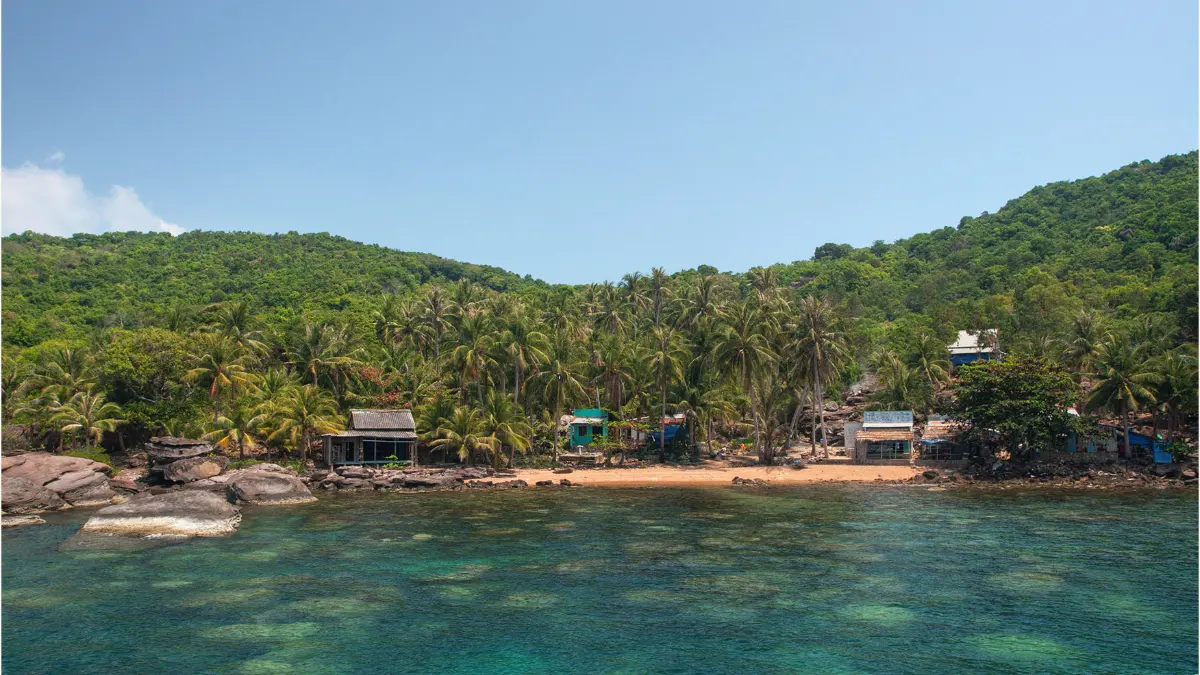
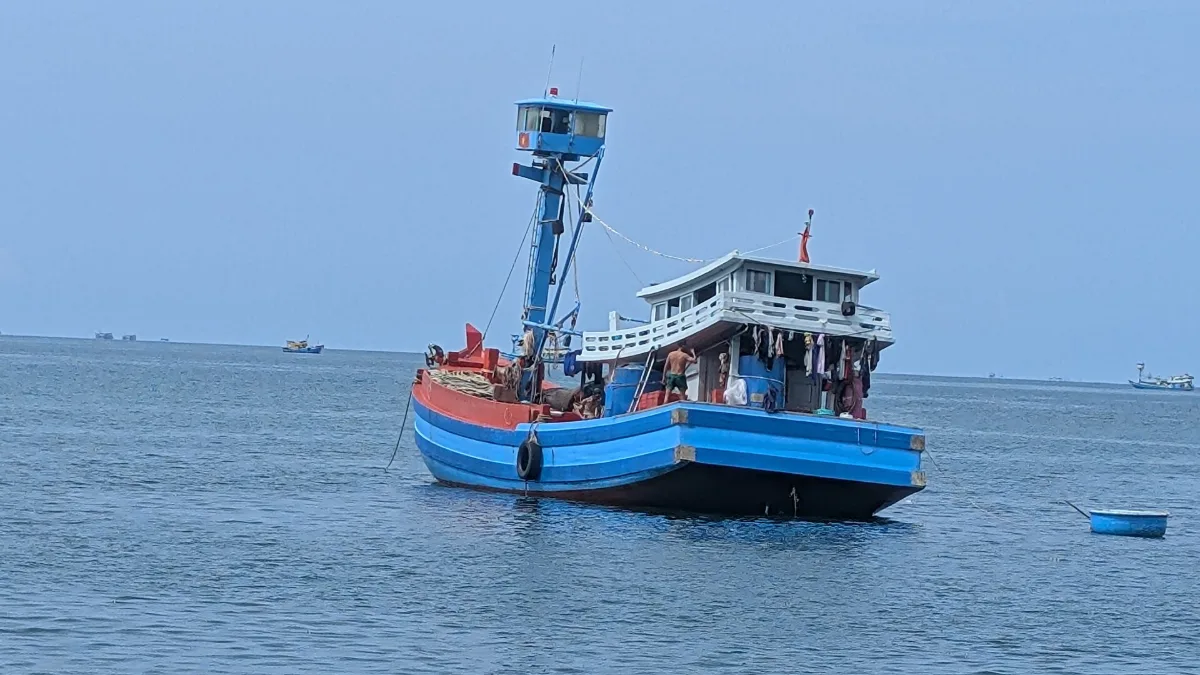
- A working fishing village rather than a resort, with boats unloading in the morning and nets drying in the sun.
- East-facing views of the bay and offshore islets, with sunrise over the sea.
- Easy to combine with Ho Quoc Pagoda, Sao Beach and Tranh Stream in a half-day east-coast loop.
Ham Ninh Fishing Village at a Glance
| Vietnamese name | Làng chài Hàm Ninh |
|---|---|
| Location | Ham Ninh, east coast of Phu Quoc, at the foot of Ham Ninh Mountain, Phu Quoc Special Zone, An Giang Province |
| Distance | About 14–20 km from Duong Dong and the airport, 20–30 minutes by car; a few minutes north of Bai Vong ferry port |
| Known for | Blue swimmer crab (ghẹ), stilt seafood restaurants, morning catch, pearls, sunrise views |
| Opening hours | Village open all day; restaurants mainly serve lunch and dinner; market busiest in the morning |
| Entrance fee | Free – you pay only for food and shopping |
| Time needed | 1.5–2 hours including a seafood meal |
| Best time | November–April; early morning for fishing boats, late morning to lunch for seafood |
| Nearby | Ho Quoc Pagoda, Sao Beach, Tranh Stream, Bai Vong port, Phu Quoc National Park |
| Find it | Google Maps · Tripadvisor (Ham Ninh Pier) |
Is Ham Ninh Fishing Village Worth Visiting?
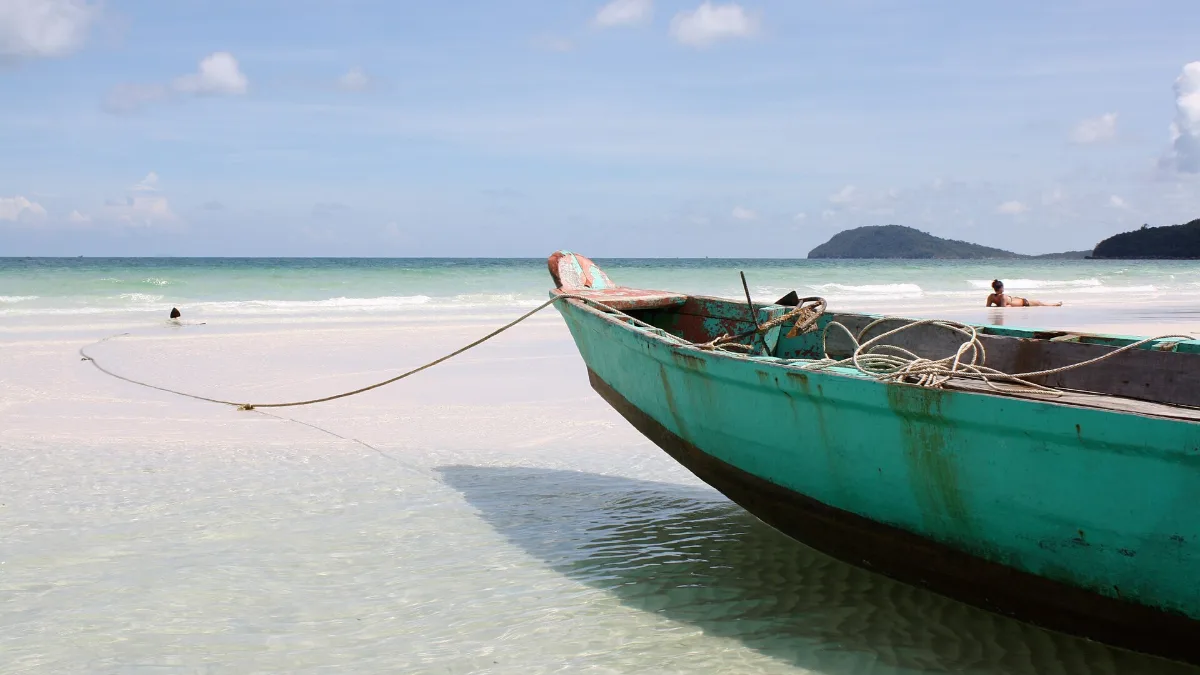
Yes, for a seafood lunch and a look at village life on the quieter side of the island. Ham Ninh is not a sight in the usual sense – there is nothing to buy a ticket for – but eating freshly steamed crab on a stilt restaurant over the bay is one of the most memorable meals on Phu Quoc. Expect a simple, working village: wooden houses, fishing boats and plain, functional restaurants.
- Best for: seafood lovers, photographers and travellers who want to see how islanders live away from the resorts.
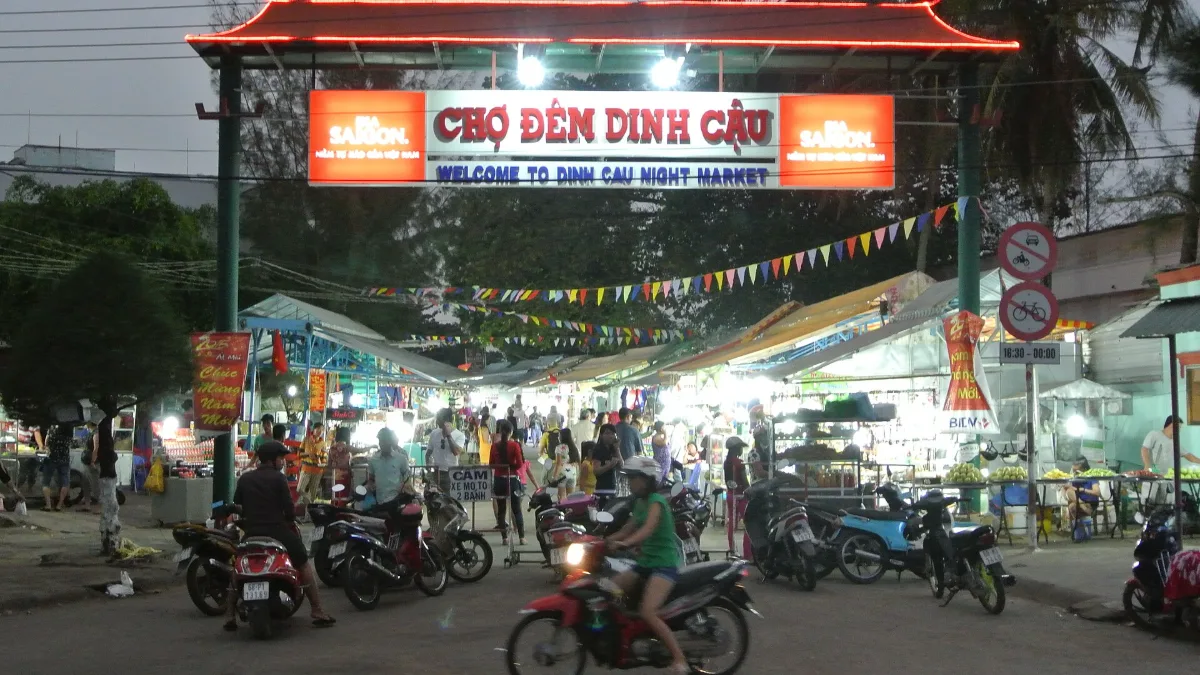
- Skip if: you do not eat seafood or expect a polished waterfront – the Phu Quoc Night Market is easier for a first taste.
- Short on time: come for a 1.5-hour lunch on the way to Ho Quoc Pagoda or the airport.
History of Ham Ninh Fishing Village
Ham Ninh is one of the oldest fishing settlements on Phu Quoc. Fishermen from elsewhere came to harvest the rich waters off the east coast and gradually built a village in the shelter of Ham Ninh Mountain. Over time it became one of the island’s main suppliers of seafood, known for crab and sea cucumber, and a centre of pearl farming.
For decades the village’s landmark was a long, narrow pier where fishing boats moored. It was first built of wood, rebuilt in reinforced concrete in 2002 and, after an inspection found it structurally unsafe, partly dismantled by the authorities on 3 January 2020. Local shop owners had relied on the pier for visitors, and in late 2024 the local government proposed a new commercial and service pier designed as a community and tourism landmark. Until it is built, the stilt restaurants with their own jetties are the way to get out over the water.
What to See and Do at Ham Ninh Fishing Village
1. The stilt seafood restaurants
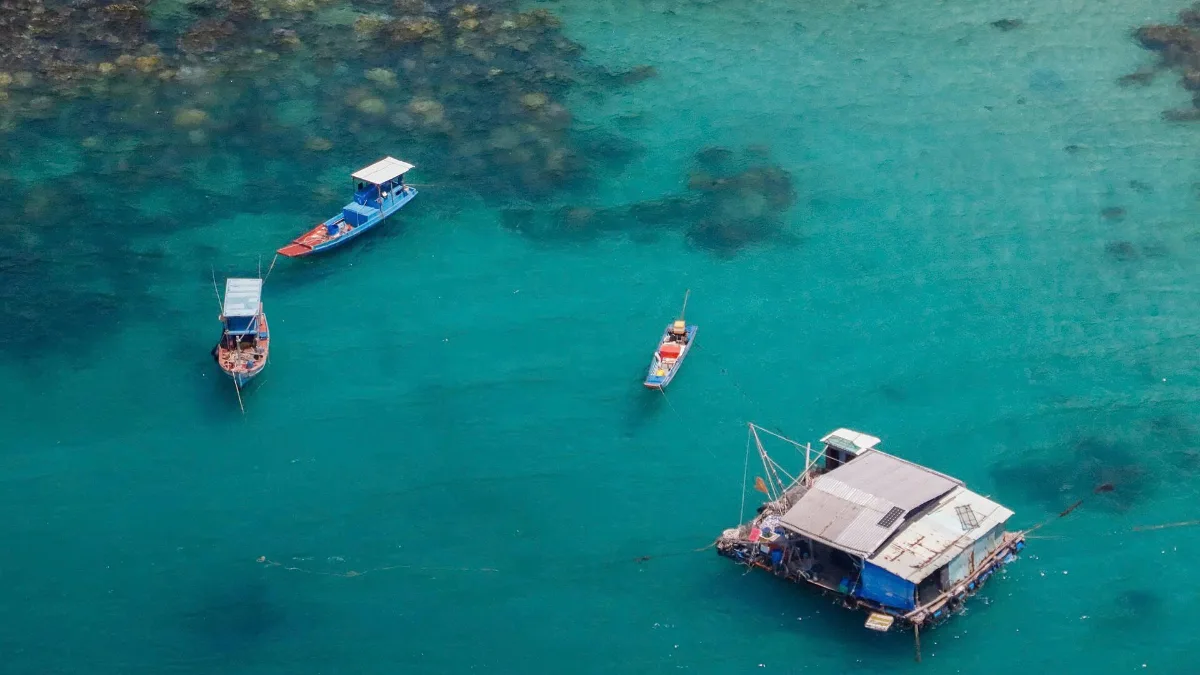
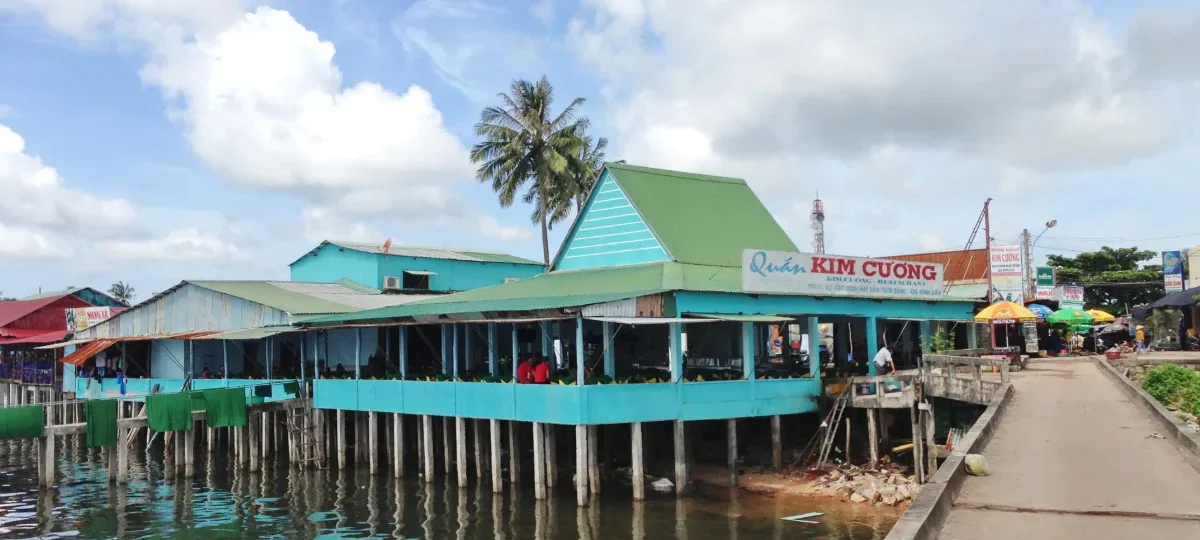
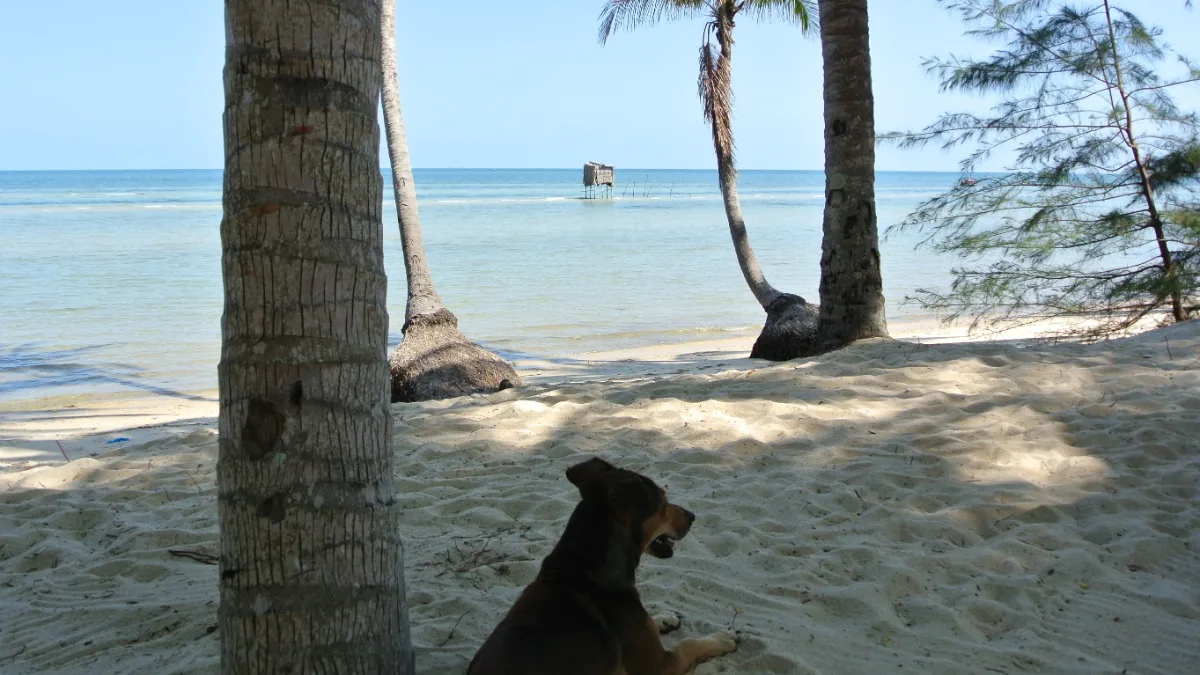
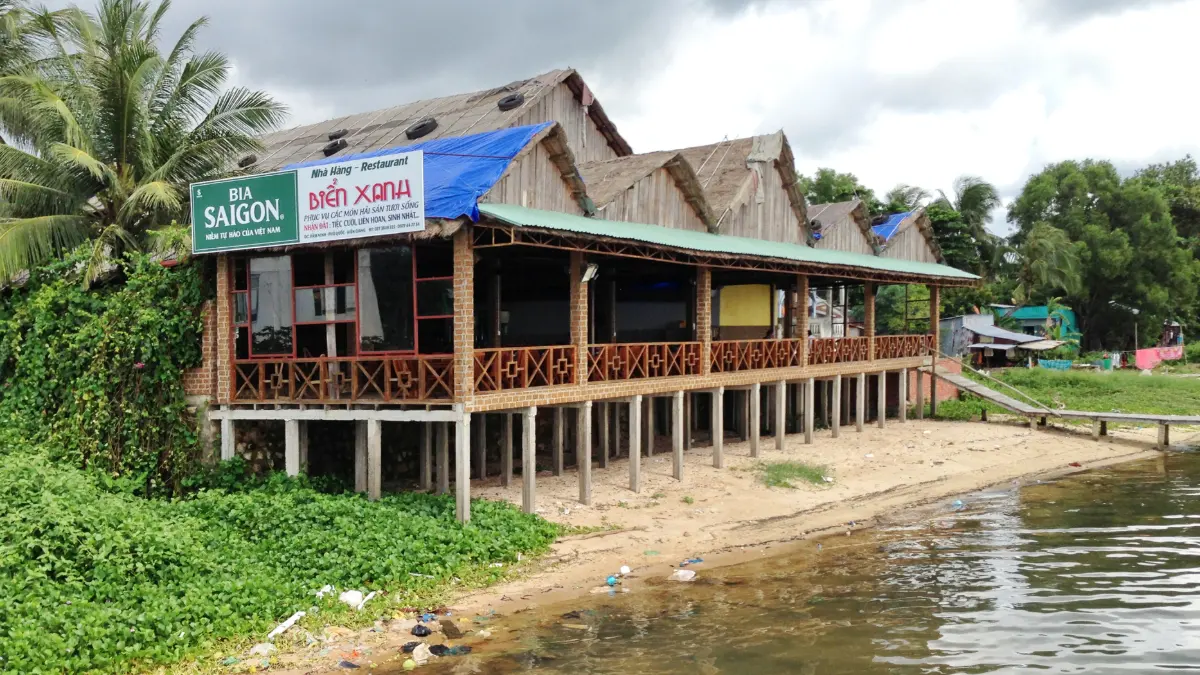
Rows of restaurants stand on wooden piles over the bay, each reached by its own jetty. Live crab, fish, squid, shrimp and shellfish are kept in tanks or sea cages underneath, so you can see exactly what you are ordering. Walk along a few before choosing, as selections and views differ.
2. Ghẹ Hàm Ninh – the blue swimmer crab
Ham Ninh crabs are small to medium in size but known for firm, sweet meat. The classic way to eat them is steamed whole and dipped in salt, pepper and lime; crab hotpot, crab porridge and tamarind or salt-roasted crab are also common.
3. Other local dishes
Try herring salad (gỏi cá trích) – raw herring sliced thin with lime, chilli, garlic and herbs, wrapped in rice paper – and grilled fish or squid. Phu Quoc’s own fish sauce and pepper are served on most tables.
4. The morning catch and market
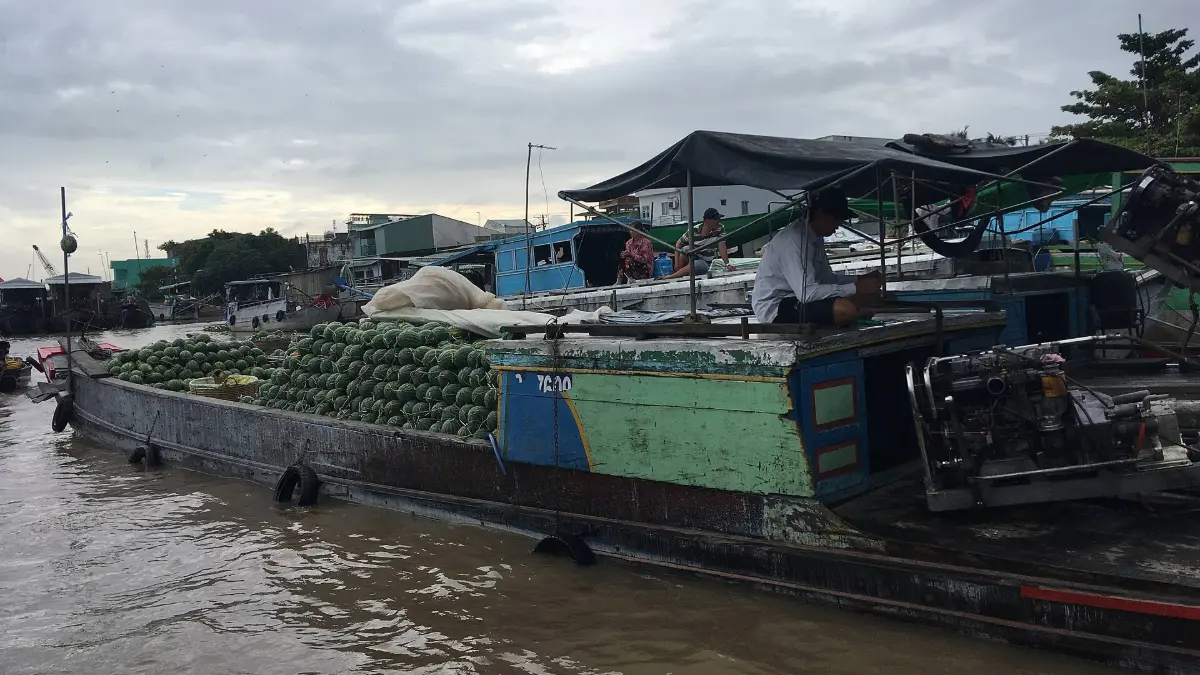
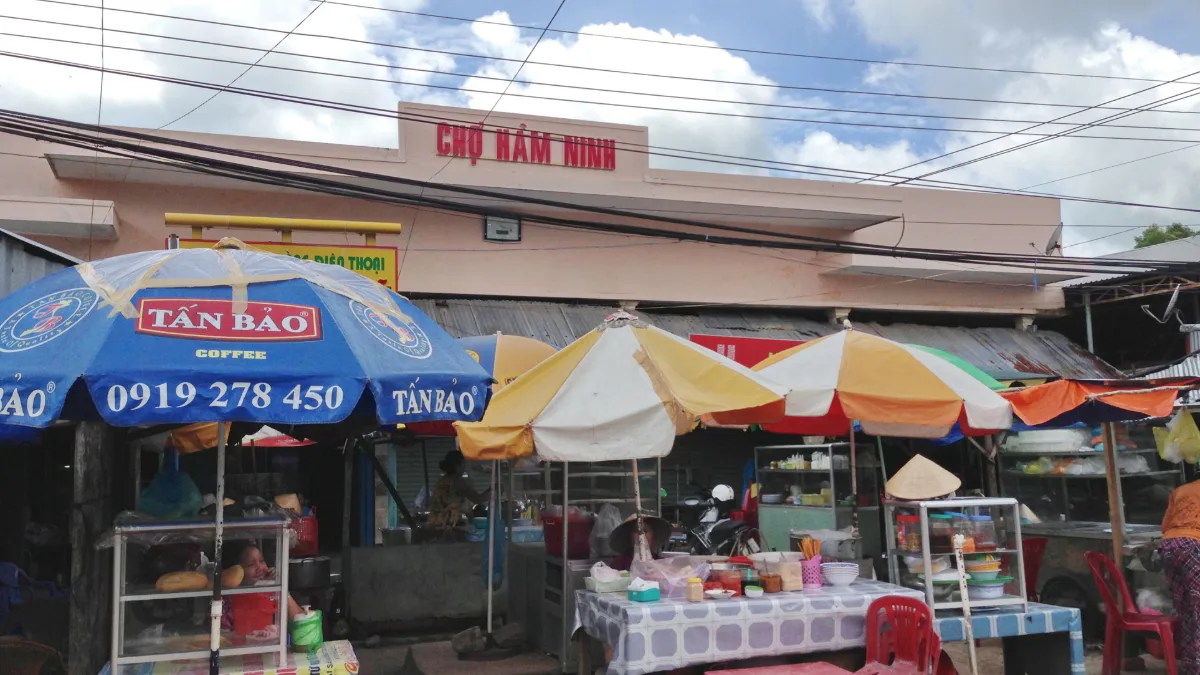
Early in the morning fishing boats return and the catch is sorted and sold by the shore and at the small Ham Ninh market, where fish, shrimp, crab and squid change hands. It is the most authentic time to visit for photographs.
5. Pearl and souvenir shops
Ham Ninh has long been linked with pearl farming, and shops along the village road sell pearl jewellery, dried seafood and Phu Quoc pepper. Buy pearls from shops that give a written description and receipt. You will also see dried seahorses and seahorse wine; seahorses are protected under CITES and many countries restrict bringing them home, so we suggest not buying them.
6. Sunrise and bay views
Because the village faces east, the sun rises over the bay and the offshore islets. Early morning light on the boats and wooden houses is the best time for photos.
How Seafood Pricing Works at Ham Ninh
There is no entrance fee to the village. At the restaurants, seafood is sold by weight, usually at a price per kilo that varies by species, size and season. Market prices are lower than restaurant prices, because restaurants include cooking, service and the seat over the water.
| Step | What happens | Tip |
|---|---|---|
| 1. Choose | Pick live crab, fish or shellfish from the tanks or cages | Look for lively crabs that feel heavy for their size |
| 2. Agree the price | Staff quote a price per kilo; some places have a board, often only in Vietnamese | Ask for the price per kilo in writing or on a phone calculator before weighing |
| 3. Weigh | The seafood is weighed in front of you | Watch the scale and note the weight |
| 4. Cook | Choose steamed, grilled, hotpot or another style | Ask whether cooking is included or charged separately |
| 5. Pay | Bill = seafood by weight + drinks, rice, vegetables and any cooking charge | Pay in cash (VND); check the bill line by line |
Prices change daily, so we do not quote fixed figures. A simple crab lunch here generally costs less than a similar meal at a resort, but large lobsters, grouper and other premium seafood can be expensive. See Money in Vietnam for cash and card advice.
How to Get to Ham Ninh Fishing Village
| From | How | Time |
|---|---|---|
| Duong Dong (town centre) | Grab, taxi or private car east across the island | 20–30 minutes |
| Phu Quoc International Airport (PQC) | Grab or taxi | About 20–25 minutes |
| Bai Vong ferry port | Taxi or Grab north along the east coast | About 5–10 minutes |
| Ho Quoc Pagoda | Car or Grab north along the east coast | About 25–30 minutes |
| An Thoi / Sao Beach (south) | Car or Grab | About 40–50 minutes |
Best Time to Visit Ham Ninh Fishing Village
| When | What to expect |
|---|---|
| November–April (dry season) | Sunny, dry days and the most comfortable time to sit over the water. |
| May–October (rainy season) | Short, heavy showers. The south-west monsoon mostly affects the west and south coasts, so the east-coast village is a useful rainy-season stop; fishing can pause in storms. |
| Sunrise to 10:00 | Boats unloading, market activity and soft light for photos. |
| 11:00–14:00 | Best for a seafood lunch; restaurants are busiest with tour groups around midday. |
| Late afternoon | Quieter, cooler and good for an early dinner before heading back west for sunset. |
Local Expert Tips for Ham Ninh Fishing Village
These tips come from years of arranging Phu Quoc tours for international travellers.
- Agree the price per kilo before anything is weighed or cooked – this one habit avoids almost every billing surprise.
- Order crabs by number as well as weight (for example “four crabs”) so the kitchen and the bill match.
- Bring cash in small notes; smaller stilt restaurants may not accept cards.
- Wear sandals with grip – wooden jetties can be wet and uneven.
- Keep children close on the jetties and near the water’s edge.
- Combine Ham Ninh with Ho Quoc Pagoda in the morning and Sao Beach in the afternoon for an easy east-and-south loop.
Ham Ninh Fishing Village vs Phu Quoc Night Market for Seafood
| Ham Ninh | Phu Quoc Night Market (Duong Dong) | |
|---|---|---|
| Setting | Stilt restaurants over a fishing bay | Busy town market with street stalls |
| Best time | Morning to late afternoon | Evening |
| Speciality | Ghẹ (blue swimmer crab), freshly landed fish | Wide choice of grilled seafood, snacks and souvenirs |
| Atmosphere | Quiet, local, working village | Lively, crowded, tourist-focused |
| Getting there | 20–30 minutes from Duong Dong | In central Duong Dong |
Our view: For the best crab and a real fishing-village setting, go to Ham Ninh at lunchtime. For variety, convenience and an evening out, the Phu Quoc Night Market is easier – many travellers do both on different days.
Nearby Attractions
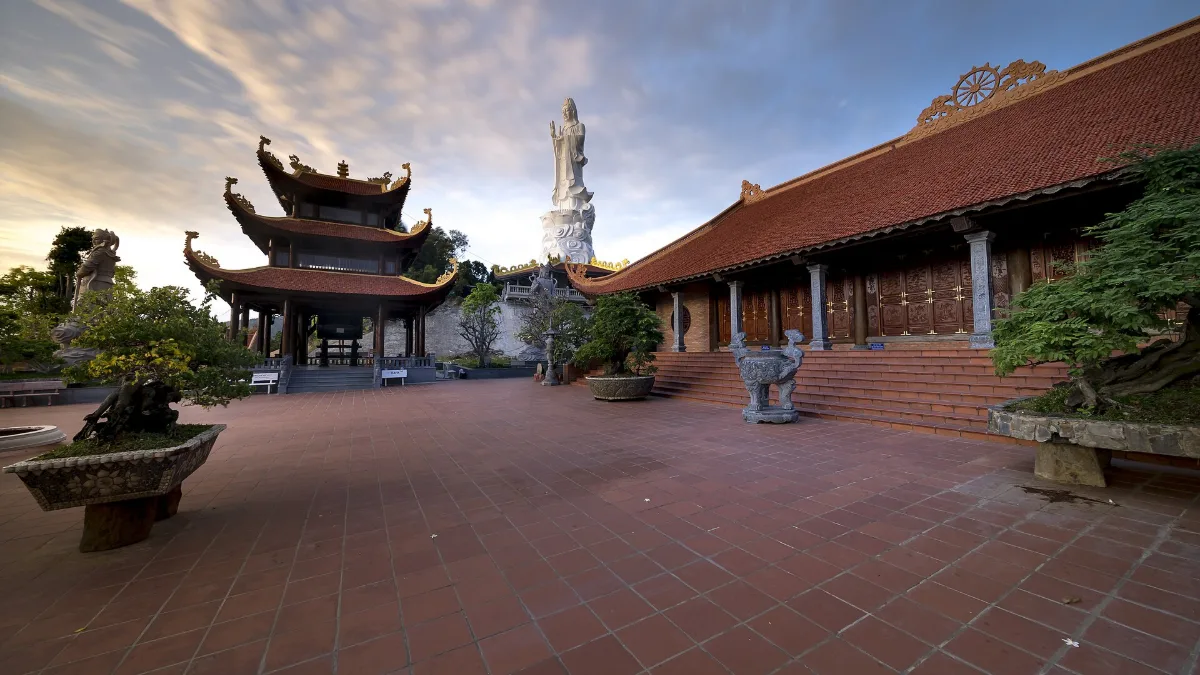
- Ho Quoc Pagoda – large Zen monastery overlooking the sea further south on the east coast.
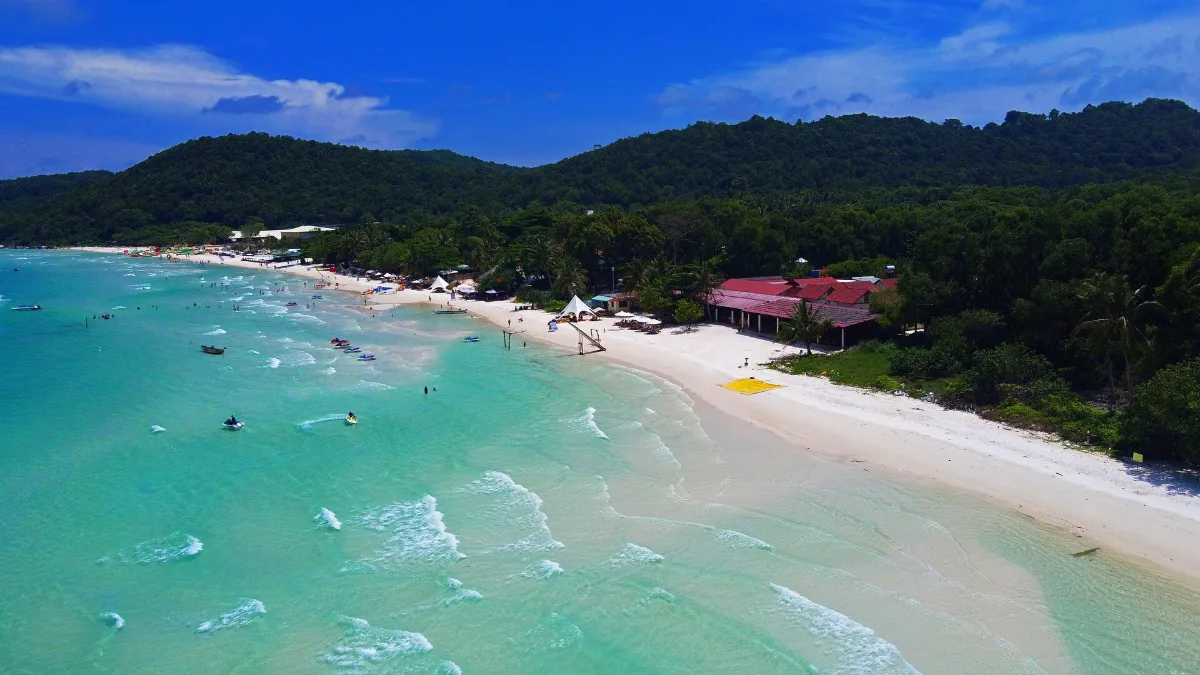
- Sao Beach – white-sand beach in the south-east, easily combined on the same day.
- Phu Quoc National Park and Tranh Stream – forest and seasonal stream on the road back to Duong Dong.
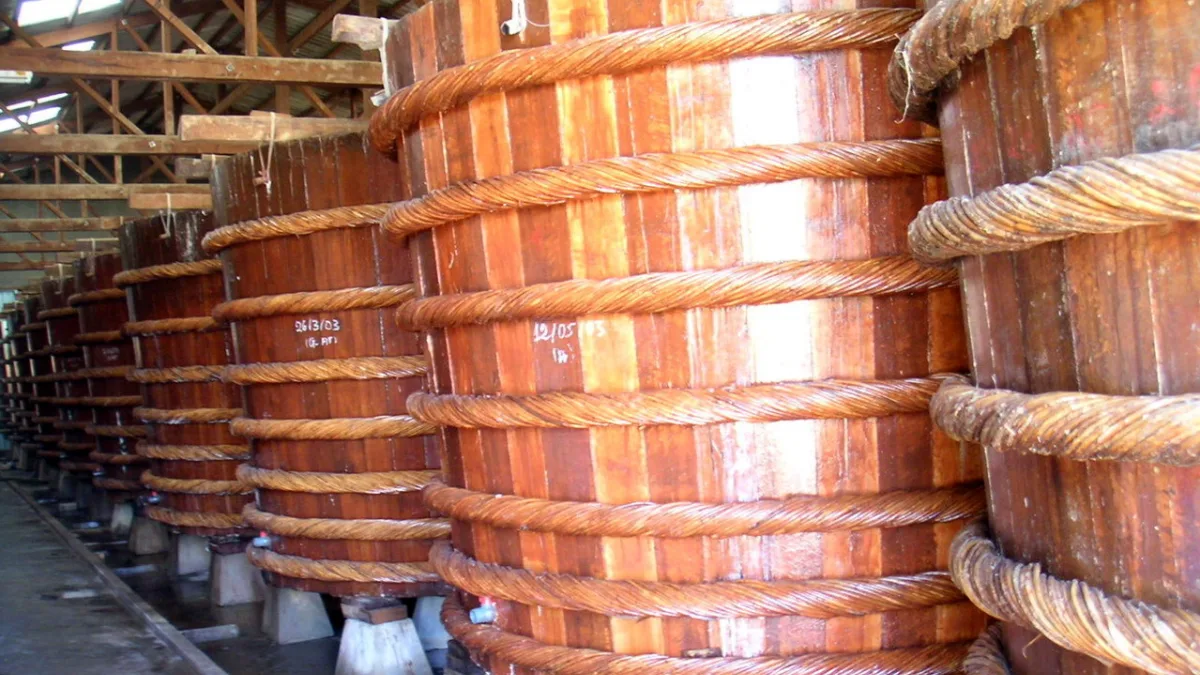
- Fish sauce houses, pepper farms and pearl farms – learn how Phu Quoc’s famous products are made.
- Phu Quoc Prison (Coconut Tree Prison) – the island’s main historic site, in the south near An Thoi.
Where Ham Ninh Fishing Village Fits in a Phu Quoc Itinerary
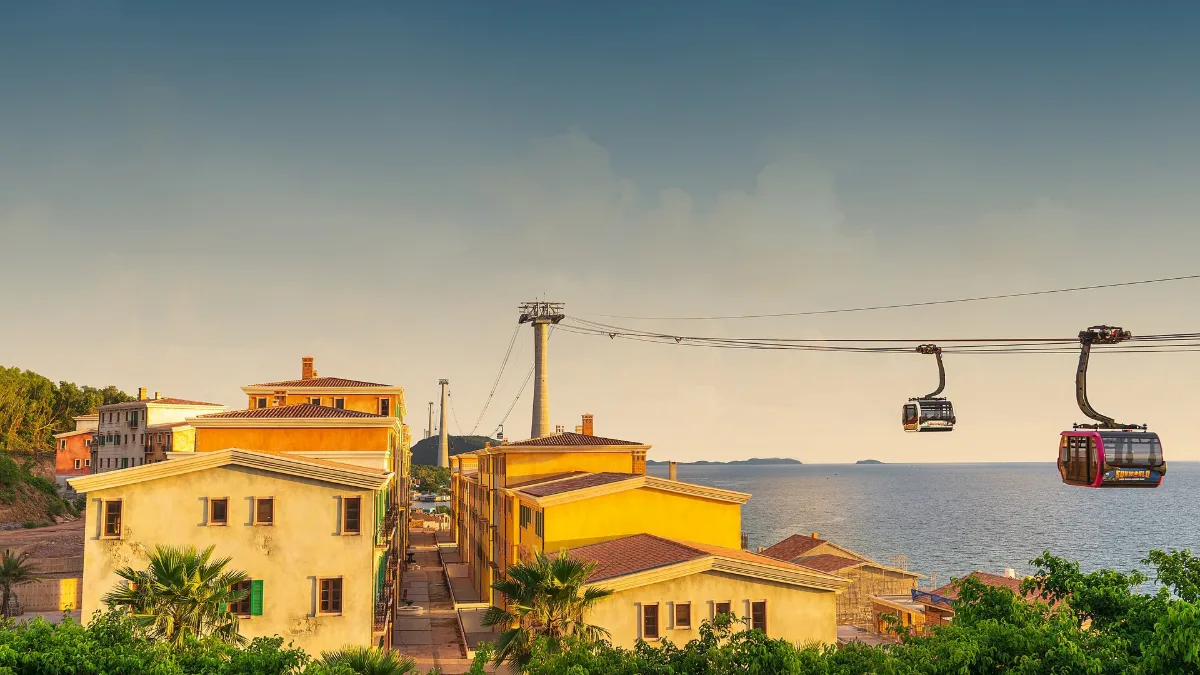
Ham Ninh fits best into an east-coast half day: Ho Quoc Pagoda in the morning, seafood lunch at Ham Ninh, and an afternoon swim at Sao Beach, or as a lunch stop on the way to or from the airport. Our Phu Quoc Tour 4 Days 3 Nights (from US$385) includes Ham Ninh, Ho Quoc Pagoda and a pepper farm, and the Phu Quoc South Island Tour 1 Day (from US$95) covers Sao Beach, Phu Quoc Prison and the Hon Thom cable car. See the Phu Quoc itinerary guide and the Phu Quoc Travel Guide, or Contact Vietnam Tour Expert Team to add a private Ham Ninh seafood lunch to your trip.
Frequently Asked Questions about Ham Ninh Fishing Village
1. Where is Ham Ninh Fishing Village?
Ham Ninh Fishing Village is on the east coast of Phu Quoc, at the foot of Ham Ninh Mountain, about 14–20 km (20–30 minutes) from Duong Dong.
2. Is there an entrance fee for Ham Ninh Fishing Village?
No. Ham Ninh Fishing Village is free to visit; you pay only for food, drinks and anything you buy.
3. What is Ham Ninh Fishing Village famous for?
Ham Ninh Fishing Village is famous for ghẹ Hàm Ninh, small blue swimmer crabs usually steamed and eaten with salt, pepper and lime, and for its stilt seafood restaurants over the bay.
4. How does seafood pricing work at Ham Ninh Fishing Village?
At Ham Ninh Fishing Village you choose live seafood, agree a price per kilo, watch it being weighed and then choose a cooking style. Ask whether cooking is included before you order.
5. Is the Ham Ninh pier still open?
The old concrete pier at Ham Ninh Fishing Village was judged unsafe and partly dismantled in January 2020, and a new pier was proposed in 2024. Visitors now walk out over the water on the restaurants’ own wooden jetties.
6. What is the best time to visit Ham Ninh Fishing Village?
Visit Ham Ninh Fishing Village between November and April, early in the morning to see the boats and market, or from late morning to early afternoon for a seafood lunch.
7. Can you see the sunrise at Ham Ninh Fishing Village?
Yes. Ham Ninh Fishing Village faces east, so the sun rises over the bay and the offshore islets; arrive just after dawn.
8. How do I get to Ham Ninh Fishing Village from Duong Dong?
Take a Grab, taxi or private car east across the island for about 20–30 minutes; Ham Ninh Fishing Village is also 20–25 minutes from the airport.
9. How long should I spend at Ham Ninh Fishing Village?
Allow 1.5–2 hours at Ham Ninh Fishing Village for a walk, a look at the market and a seafood meal.
10. Is Ham Ninh Fishing Village worth visiting?
Yes, Ham Ninh Fishing Village is worth it for a seafood lunch and a glimpse of local life, but it is a simple working village rather than a polished attraction.
11. Can I buy pearls at Ham Ninh Fishing Village?
Yes, shops in Ham Ninh Fishing Village sell pearl jewellery; ask for a written description and receipt. You can also visit pearl farms elsewhere on the island – see our pearl farm guide.
12. Should I buy seahorse wine at Ham Ninh Fishing Village?
We advise against it. Dried seahorses and seahorse wine are sold in Ham Ninh Fishing Village, but seahorses are CITES-listed and many countries restrict bringing them home.
13. Is Ham Ninh Fishing Village good for children?
Ham Ninh Fishing Village is fine for children who enjoy seeing live seafood and boats, but keep them close on the wooden jetties and near the water’s edge.
14. Can I visit Ham Ninh Fishing Village in the rainy season?
Yes. Ham Ninh Fishing Village is on the east coast, away from the main south-west monsoon, so it is a reasonable rainy-season stop, though boats may stay in during storms.
15. Can I combine Ham Ninh Fishing Village with Ho Quoc Pagoda and Sao Beach?
Yes. Visit Ho Quoc Pagoda in the morning, eat lunch at Ham Ninh Fishing Village and finish at Sao Beach in the afternoon.
16. Is Ham Ninh Fishing Village better than the night market for seafood?
Ham Ninh Fishing Village is better for fresh crab in a fishing-village setting; the Duong Dong night market is better for variety and an evening out.
Related Posts
Sao Beach Phu Quoc: White Sand, Best Time & Local Tips
An Thoi Islands Phu Quoc: Snorkelling, Boat Tours & Tips
Sunset Town Phu Quoc: Kiss Bridge, Kiss of the Sea & Tips
Hon Thom Cable Car Phu Quoc: Tickets, Times & Tips
Grand World Phu Quoc: Shows, Gondola Rides, Hours & Tips