Ho Quoc Pagoda Phu Quoc: Opening Hours, Dress Code & Tips
 By Jimmy Nguyen, Founder & Director of Asia Travel Expert Co., Ltd.
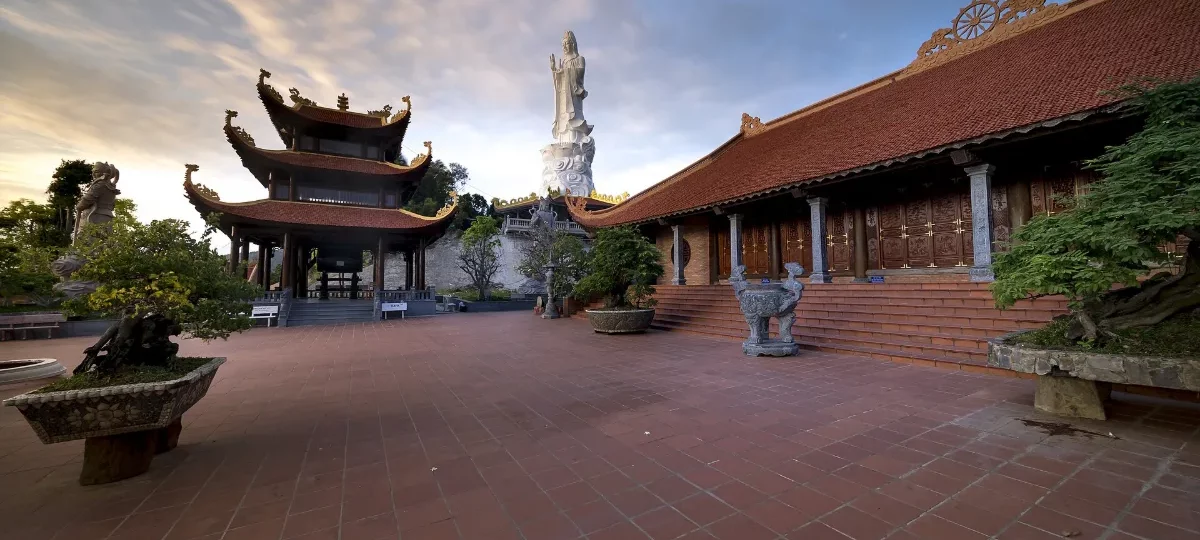
Ho Quoc Pagoda (Truc Lam Ho Quoc Zen Monastery) is the largest Buddhist temple on Phu Quoc, built in 2011–2012 on a hillside above the island’s east coast, about 20–27 km from Duong Dong and 10 km from the airport. Entry is free, it is open daily from about 06:00 to 18:00, and a visit takes 45–60 minutes. Come early for sunrise over the sea and cover shoulders and knees.
Status (checked November 2026): Ho Quoc Pagoda is open every day, roughly 06:00–18:00, with free entry; donations are voluntary. It is an active Zen monastery of the Truc Lam school, so modest dress is expected and halls may be closed during ceremonies. Since 1 July 2025 the pagoda lies in the Phu Quoc Special Zone of An Giang Province. Expect more worshippers on the 1st and 15th of each lunar month, at Tet (Lunar New Year) and during Vu Lan in the seventh lunar month.
Why Ho Quoc Pagoda is worth seeing:
- The largest pagoda on Phu Quoc, set on about 12 ha with a mountain behind and the sea in front.
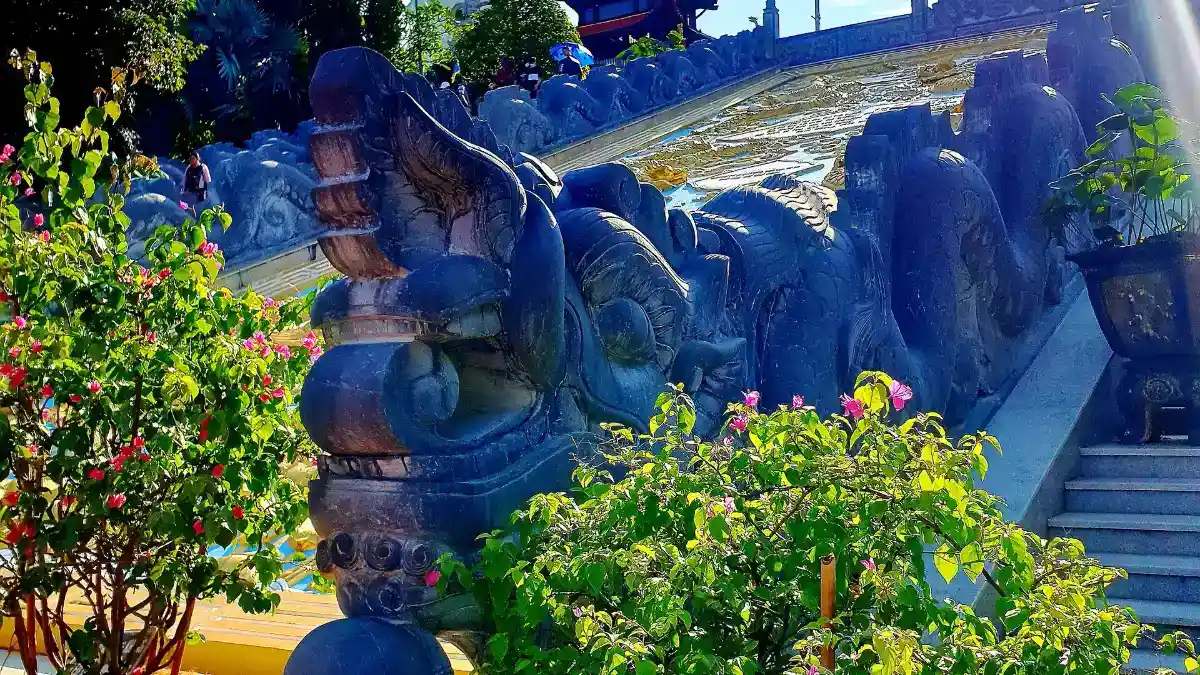
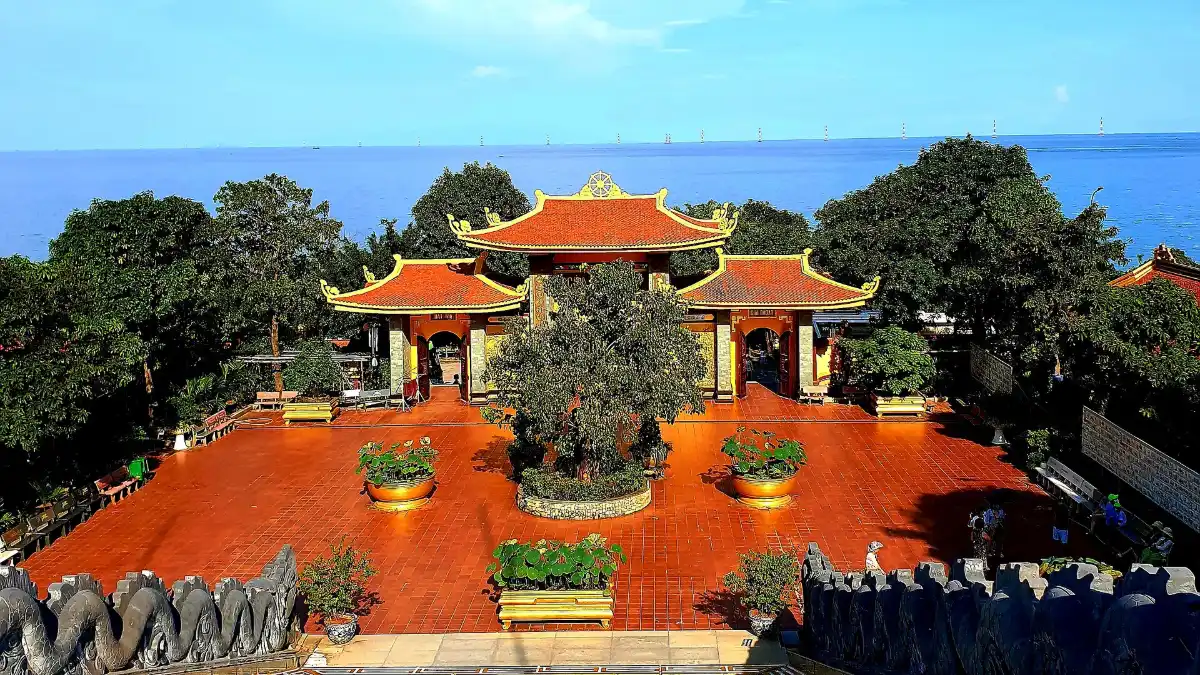
- Classic Ly–Tran style architecture: a three-entrance gate, ironwood (lim) columns, curved tiled roofs and a 70-step stone stairway lined with dragons.
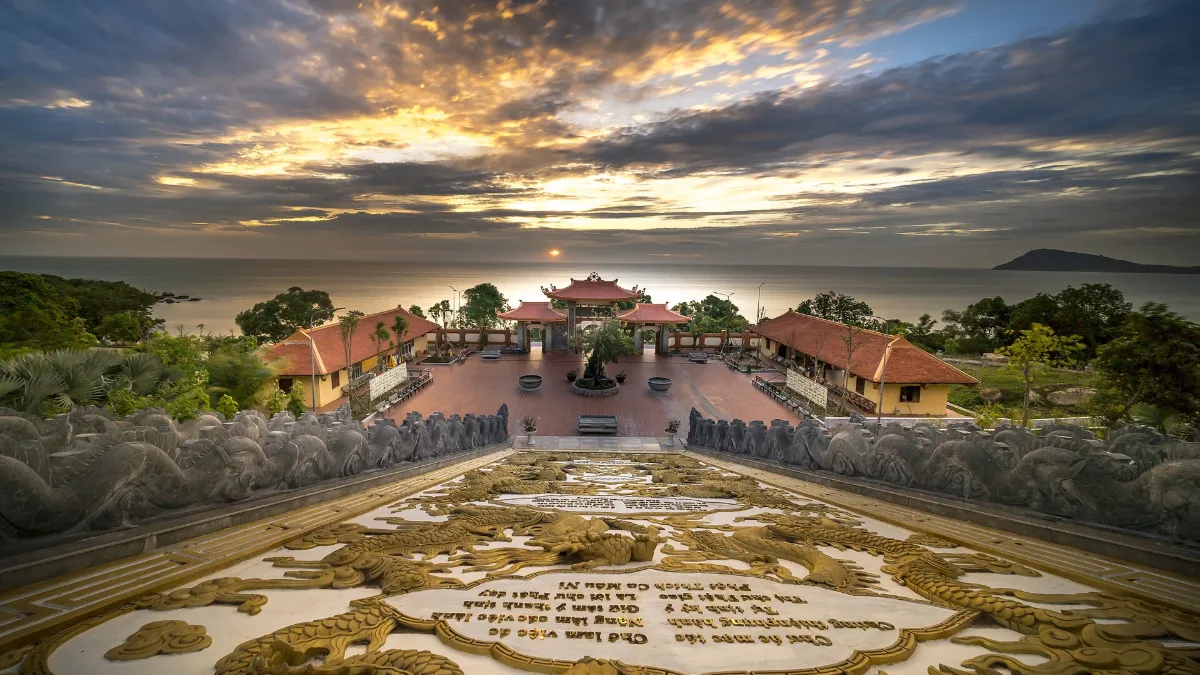
- One of the best sunrise viewpoints on the island, because the temple faces east over the sea.
- A large white Guan Yin (Quan Am) statue on a terrace with views along the coast.
- Free entry and an easy combination with Ham Ninh fishing village and Sao Beach on the same east-coast drive.
Ho Quoc Pagoda at a Glance
| Vietnamese name | Chùa Hộ Quốc / Thiền viện Trúc Lâm Hộ Quốc |
|---|---|
| Location | Suoi Lon area, south-east coast of Phu Quoc (Bai Dam), Phu Quoc Special Zone, An Giang Province |
| Distance | About 20–27 km from Duong Dong (35–45 minutes by car); about 10 km from Phu Quoc International Airport (around 20 minutes); about 10 km north of Sao Beach |
| Known for | Largest pagoda on Phu Quoc; sea-facing Zen monastery; sunrise views |
| Built | October 2011 – December 2012 |
| Buddhist school | Truc Lam (Bamboo Grove) Zen, the Vietnamese school founded by King Tran Nhan Tong |
| Opening hours | Daily, about 06:00–18:00 |
| Entrance fee | Free (voluntary donations) |
| Time needed | 45–60 minutes; 1.5 hours with sunrise and the beach below |
| Best time | Sunrise to about 08:30, or late afternoon; dry season November–April |
| Dress code | Shoulders and knees covered; shoes off inside halls |
| Nearby | Ham Ninh Fishing Village, Sao Beach, Phu Quoc Prison |
| Find it | Google Maps · Tripadvisor · Wikipedia: Truc Lam school |
Is Ho Quoc Pagoda Worth Visiting?
Yes. Ho Quoc Pagoda is the most impressive religious site on Phu Quoc and the only one where temple architecture, mountain and sea come together in one view. It is free, rarely takes more than an hour and sits on the route between the airport, Ham Ninh and Sao Beach, so it fits easily into an east- or south-island day. It is a modern building, not an ancient monument, which is worth knowing if you are expecting centuries-old history.
- Best for: photographers, early risers, travellers interested in Vietnamese Buddhism, couples and families who want a calm stop between beaches.
- Skip if: you only want historic sites (the pagoda dates from 2012) or you cannot manage stairs in the heat.
- Short on time: come at 06:00–07:30, walk from the gate up the 70 steps to the main hall, see the Guan Yin terrace and continue to Sao Beach.
History of Ho Quoc Pagoda and the Truc Lam Zen School
Built in 14 months (2011–2012)
Construction of Truc Lam Ho Quoc Zen Monastery began in October 2011 and the pagoda was inaugurated in December 2012, after about 14 months of work and an investment reported at more than 100 billion VND. Landscaping and visitor facilities were added in the following years. The temple grounds cover nearly 12 ha inside a spiritual tourism area of about 110 ha, which makes it the largest pagoda on Phu Quoc.
What “Ho Quoc” means
“Hộ Quốc” means “protecting the nation”. The name reflects the pagoda’s position on Vietnam’s south-western sea frontier: local fishermen come to pray before going to sea, and families visit at Lunar New Year and on Buddhist holidays such as the Buddha’s Birthday (Phat Dan) and Vu Lan.
The Truc Lam (Bamboo Grove) Zen tradition
Ho Quoc was the first monastery of the Truc Lam Yen Tu Zen school on Phu Quoc. Truc Lam is a Vietnamese school of Zen Buddhism founded in the late 13th century by King Tran Nhan Tong, who gave up the throne to become a monk on Yen Tu Mountain in the north. The pagoda’s Patriarchs’ Hall honours the school’s three founders: Tran Nhan Tong, Phap Loa and Huyen Quang. The architecture deliberately copies the Ly and Tran dynasty style of northern Vietnam, which is why it looks older than it is.
What to See at Ho Quoc Pagoda
1. The Three-Entrance Gate (Tam Quan)
The visit begins at a three-tier gate with curved roofs and three passages. From here you look up the hillside at the main hall, and back towards the sea. Stone guardian figures stand at the entrance.
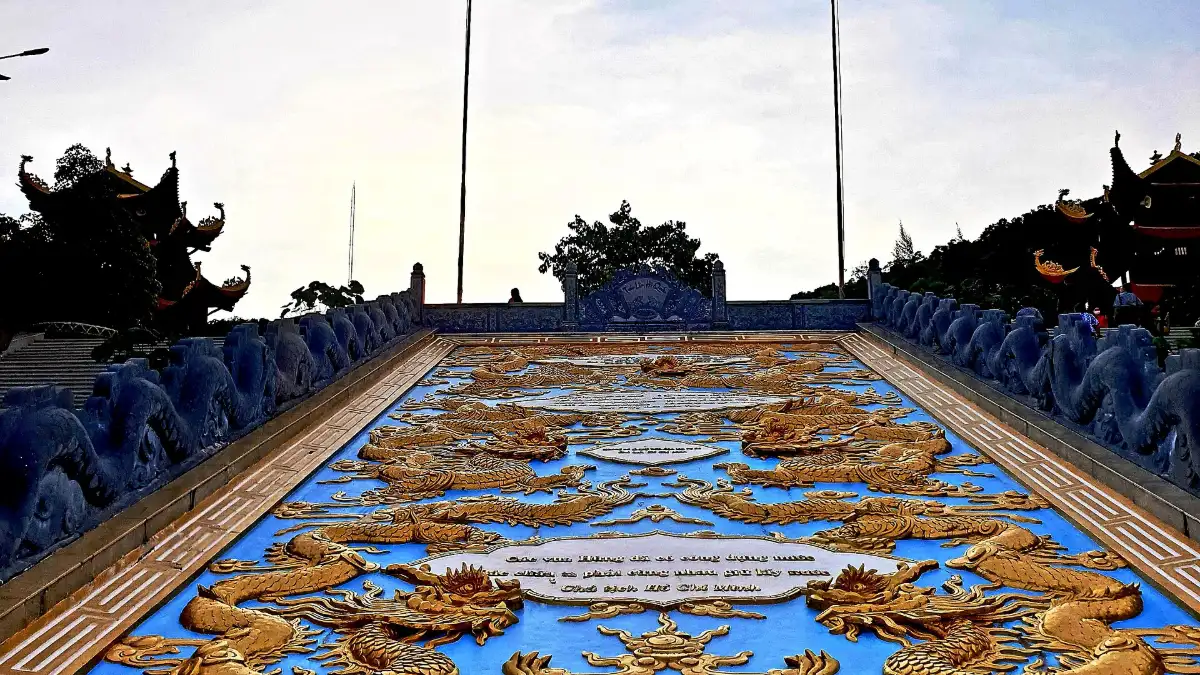
2. The 70 Stone Steps and Dragon Balustrades
A stairway of 70 stone steps, flanked by carved stone dragons, links the gate area to the main hall. It is the most photographed spot at Ho Quoc Pagoda, especially in early-morning light. There is little shade, so take it slowly in the middle of the day.
3. The Jade Buddha in the Courtyard
In the central courtyard (San Thien Tinh) sits a jade-coloured stone statue of Shakyamuni Buddha, nearly 3 m tall, beneath a bodhi tree. It is a common place for visitors to stop and bow before entering the main hall.
4. The Main Hall (Chanh Dien / Tam Bao)
The main hall is built from ironwood (lim) columns with carved reliefs and houses statues of the Buddha, bodhisattvas and Dharma protectors. Remove your shoes before entering, keep your voice low and do not photograph monks or worshippers at prayer without asking.
5. The Patriarchs’ Hall, Bell Tower and Drum Tower
Behind the main hall, the Patriarchs’ Hall (Nha To) honours the three Truc Lam founders. Wooden bell and drum towers stand on either side of the courtyard; the large bell is struck during ceremonies.
6. The Guan Yin Statue and Sea-View Terrace
A large white statue of Guan Yin (Quan Am), the bodhisattva of compassion, stands on a terrace overlooking the coast. It is the best place for wide photos of the sea and, at dawn, of the sun rising over the water.
7. Bai Dam Beach Below the Pagoda
Steps lead down to Bai Dam, the small beach in front of the monastery. It is pleasant for a short walk and sea views; after storms in the rainy season rubbish can wash up, so check it from the steps before planning a swim.
Ho Quoc Pagoda Opening Hours and Entrance Fee (2026)
| Item | Details | Notes |
|---|---|---|
| Opening hours | Daily, about 06:00–18:00 | Halls may close briefly for ceremonies |
| Entrance fee | Free | Donation boxes are voluntary |
| Grab / taxi from Duong Dong | Roughly 250,000–400,000 VND one way (about US$10–15) | Estimate; depends on car size and route |
| Time needed | 45–60 minutes | 1.5 hours with sunrise and Bai Dam beach |
Prices are 2026 estimates and may change. There is no official ticket website; the pagoda is managed by the monastery itself.
How to Visit Ho Quoc Pagoda Step by Step
- Leave Duong Dong or Long Beach around 05:15–05:30 for sunrise, or before 08:00 for a cool morning visit.
- Dress for a temple: a top that covers your shoulders and trousers or a skirt below the knee. Bring a light scarf if you are coming from the beach.
- Enter through the three-entrance gate, then walk up the 70 stone steps to the courtyard and jade Buddha.
- Take off your shoes and visit the main hall, then the Patriarchs’ Hall behind it.
- Walk to the Guan Yin terrace for sea views, and down to Bai Dam if you have time.
- Continue south to Sao Beach for a swim, or north to Ham Ninh fishing village for a seafood lunch.
Dress code and etiquette
- Cover shoulders and knees; avoid swimwear, very short shorts and see-through tops. Staff rarely refuse entry, but modest dress is expected at an active monastery.
- Remove shoes and hats before entering halls.
- Speak quietly, do not run on the stairs and never climb on statues or point your feet at altars.
- Ask before photographing monks; do not use drones without permission.
- Alcohol and smoking are not appropriate on the grounds. Take your rubbish with you.
For more on temple behaviour across the country, read our Vietnam etiquette guide.
How to Get to Ho Quoc Pagoda
| From | How | Time |
|---|---|---|
| Duong Dong / Long Beach | Car, Grab or taxi (about 20–27 km) | 35–45 minutes |
| Phu Quoc International Airport | Car or Grab (about 10 km) | About 20 minutes |
| Sao Beach | Car or motorbike north along the east coast (about 10 km) | 15–20 minutes |
| Ham Ninh fishing village | Car or motorbike south along the east coast | About 20–30 minutes |
| Organised tour | Included on Day 4 of our Phu Quoc Tour 4 Days 3 Nights | Hotel pick-up |
The last section of road winds uphill and has a short steep stretch near the gate; it is fine for cars, but take care on a motorbike after rain. Grab works on Phu Quoc, but cars can be scarce for the return trip at dawn, so ask your driver to wait or book a private car. See how to get to Phu Quoc for flights and ferries to the island.
Best Time to Visit Ho Quoc Pagoda
| When | What to expect |
|---|---|
| Sunrise (about 05:45–07:00) | Sun rises over the sea in front of the pagoda; quiet, cool and best for photos |
| Morning until about 09:00 | Still calm; tour groups usually arrive from mid-morning |
| Midday (11:00–14:00) | Hot, bright and busier; little shade on the stairs and courtyard |
| Late afternoon (15:30–17:30) | Softer light and cooler air; the sun sets behind the mountain, not over the sea |
| Dry season (November–April) | Clear skies and calm seas; the best months overall |
| Rainy season (May–October) | Short heavy showers, greener hills; visit in the morning before storms |
| 1st and 15th lunar day, Tet, Vu Lan | Many local worshippers and ceremonies; interesting but crowded |
For month-by-month weather on the island, see our guide to the best time to visit Phu Quoc.
Local Expert Tips for Ho Quoc Pagoda
These tips come from years of arranging Phu Quoc tours for international travellers.
- Sunrise is the reason to come early: the pagoda faces east, so the light falls on the gate and stairs straight from the sea.
- Carry a sarong or light scarf in your day bag so you can visit the pagoda between beach stops without changing.
- Bring water and a hat; the stone courtyard and stairs reflect heat and shade is limited.
- Wear sandals that are easy to slip off, as you will remove them several times.
- A small donation in the box is appreciated but never required; there is no ticket booth.
- Pair it with Ham Ninh for breakfast or lunch on the pier, then Sao Beach for the afternoon – all on the same coast road.
Ho Quoc Pagoda vs Dinh Cau Shrine
| Feature | Ho Quoc Pagoda | Dinh Cau Shrine |
|---|---|---|
| Type | Large Truc Lam Zen monastery (2012) | Small shrine where fishermen pray for safe voyages |
| Location | South-east coast, 35–45 minutes from Duong Dong | On the rocks at the mouth of the Duong Dong River, in town |
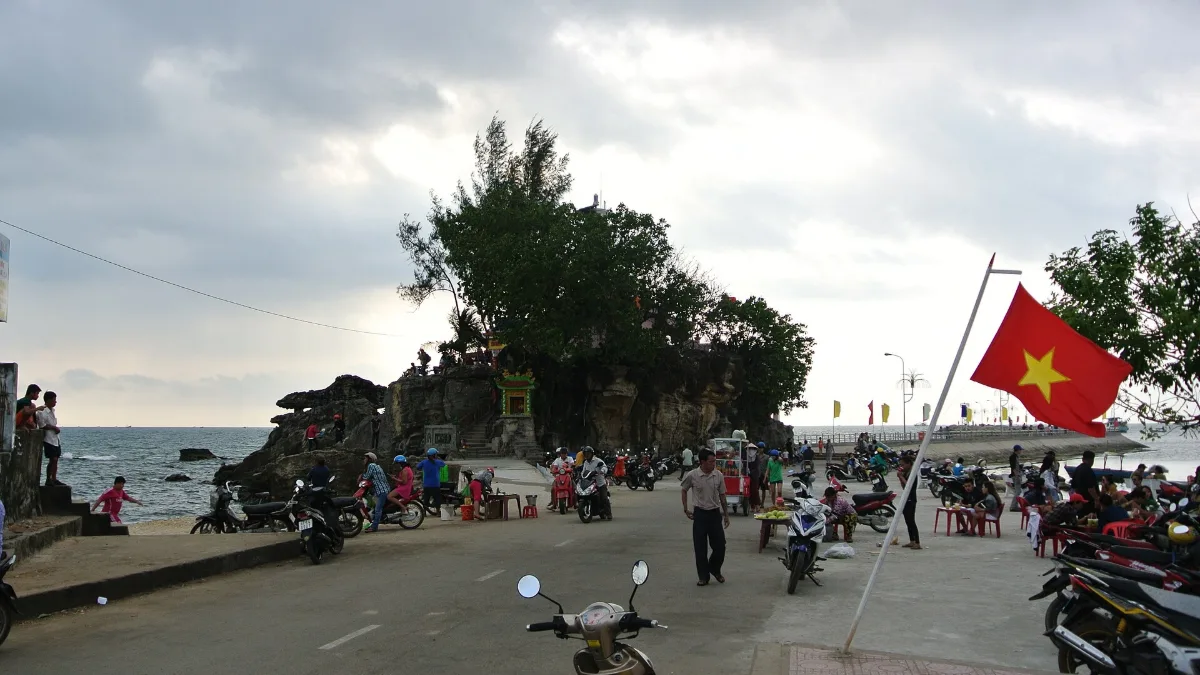
| Best time | Sunrise and early morning | Sunset, then the night market |
| Time needed | 45–60 minutes | 20–30 minutes |
| Entrance | Free | Free |
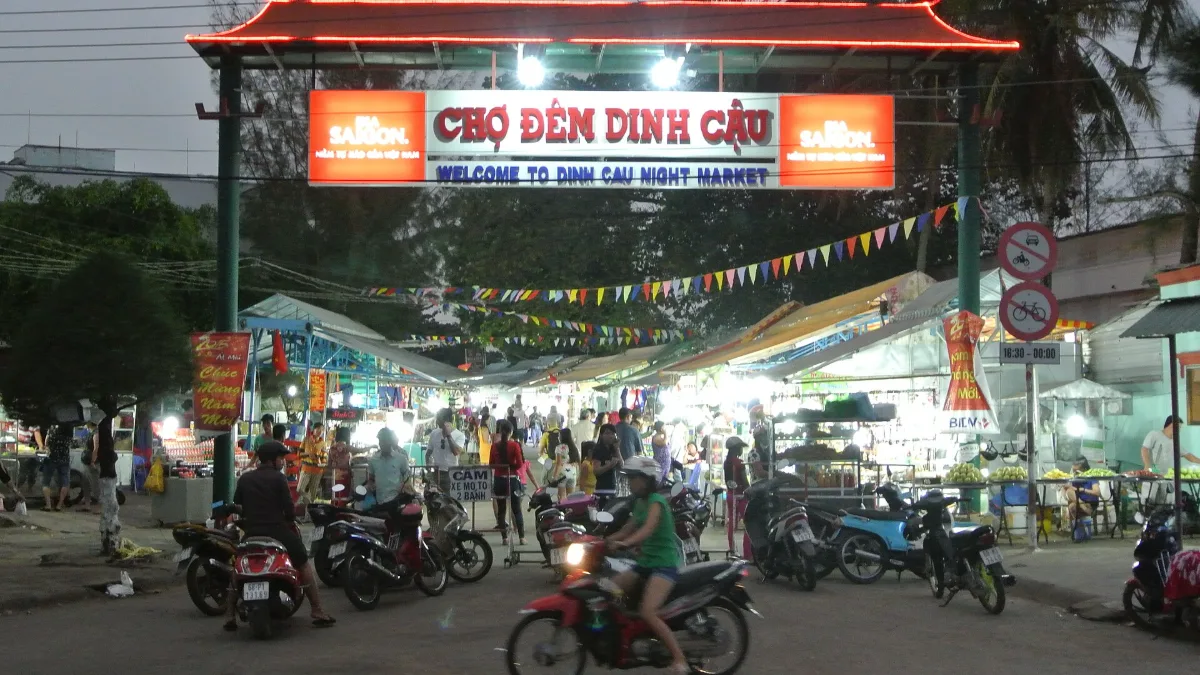
Our view: Ho Quoc Pagoda is the more rewarding visit for architecture and views; Dinh Cau is an easy sunset add-on to the Phu Quoc Night Market. With time for only one, choose Ho Quoc and combine it with the east-coast beaches.
Nearby Attractions
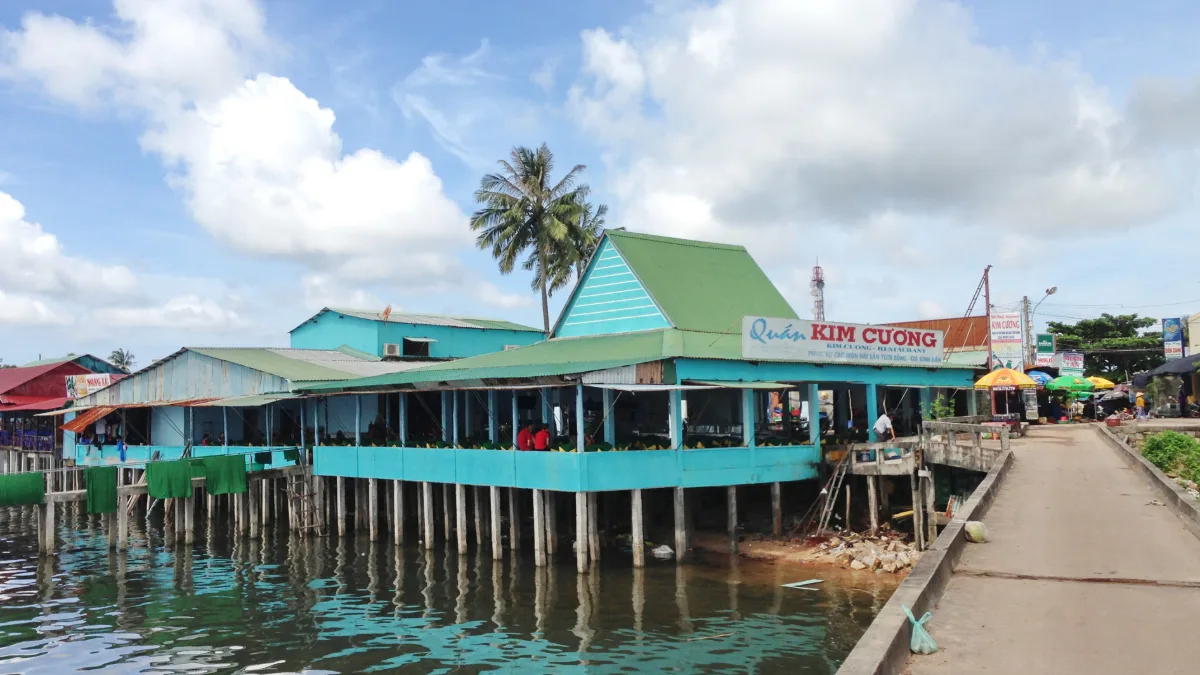
- Ham Ninh Fishing Village – wooden pier, crab and seafood restaurants further north on the east coast.
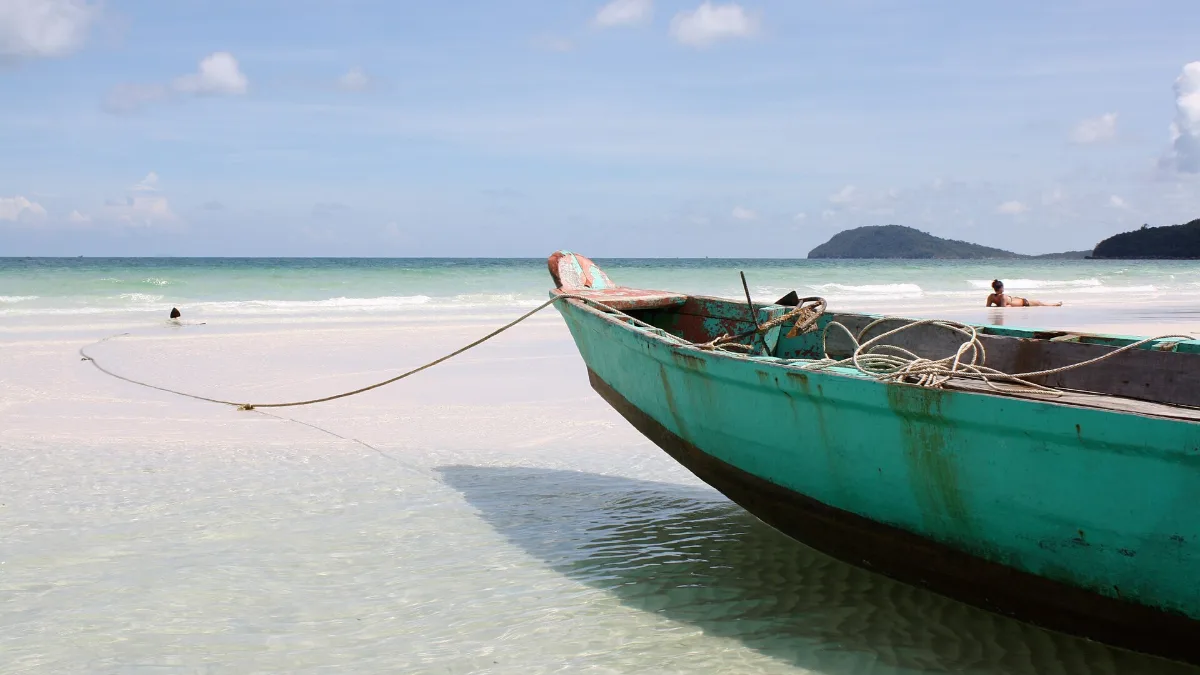
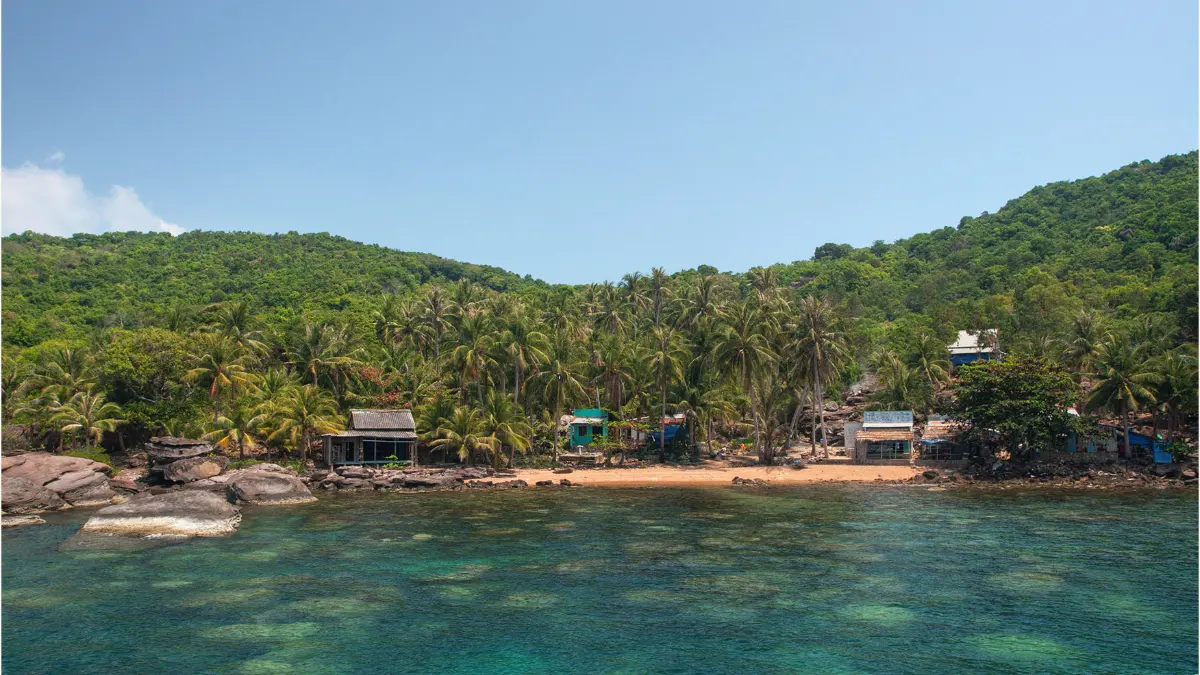
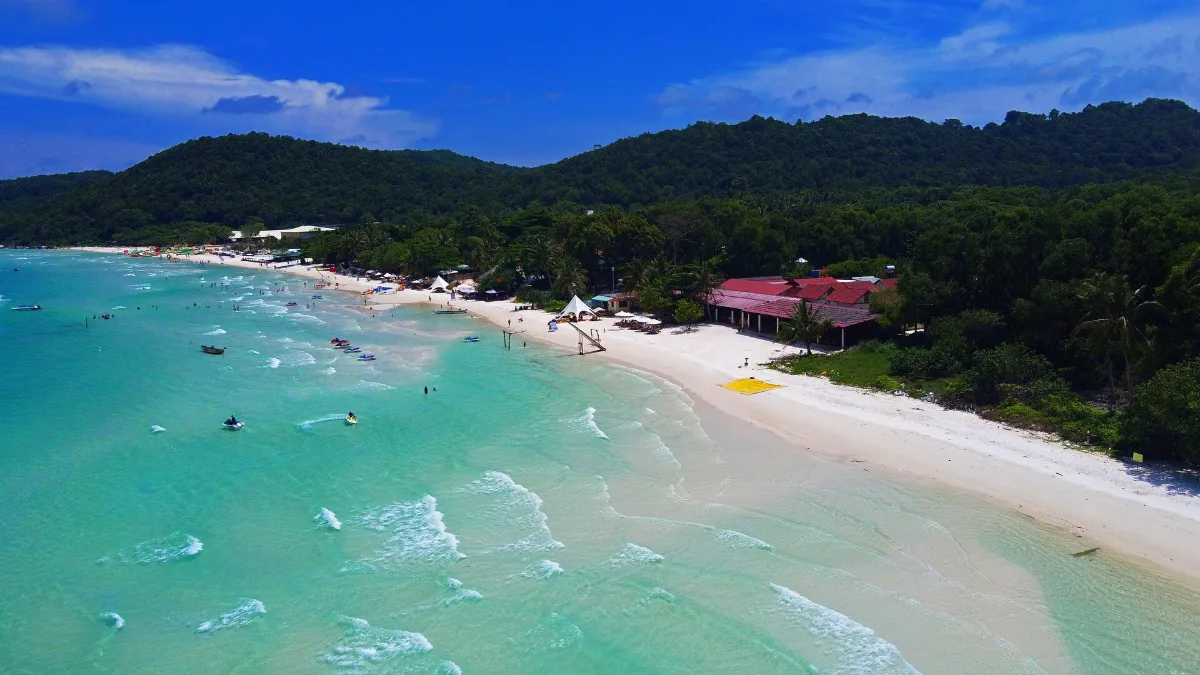
- Sao Beach (Bai Sao) – white sand and calm water in the dry season, about 10 km south.
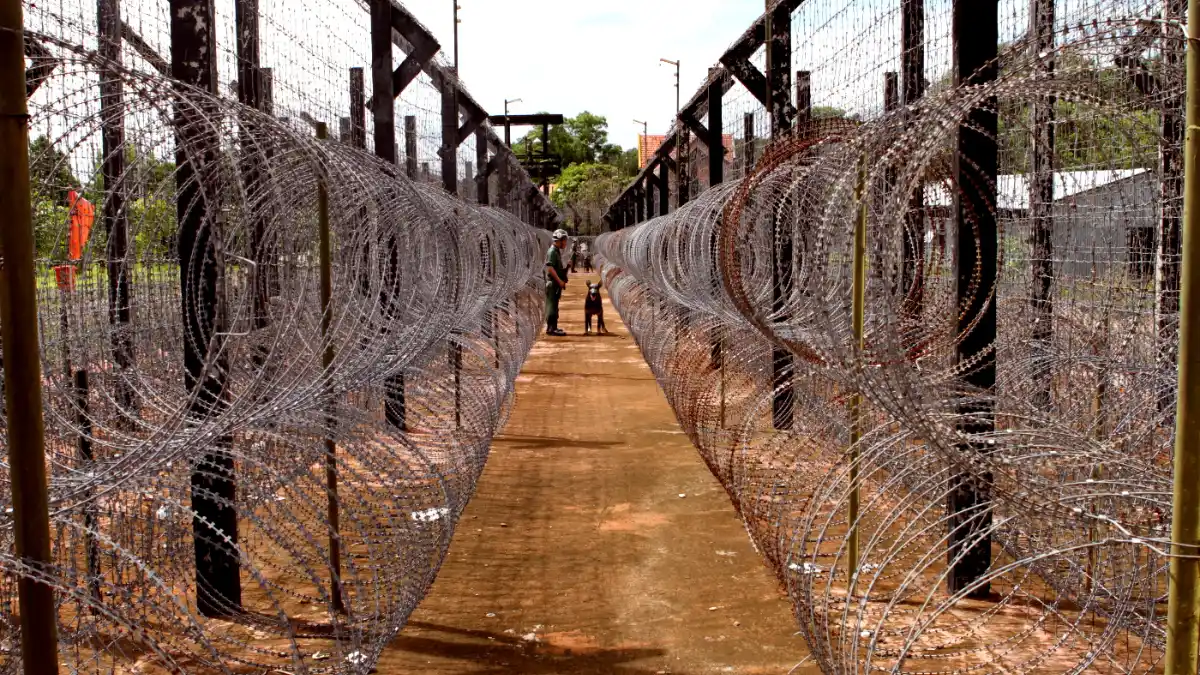
- Phu Quoc Prison (Coconut Tree Prison) – free historic site near An Thoi in the south.
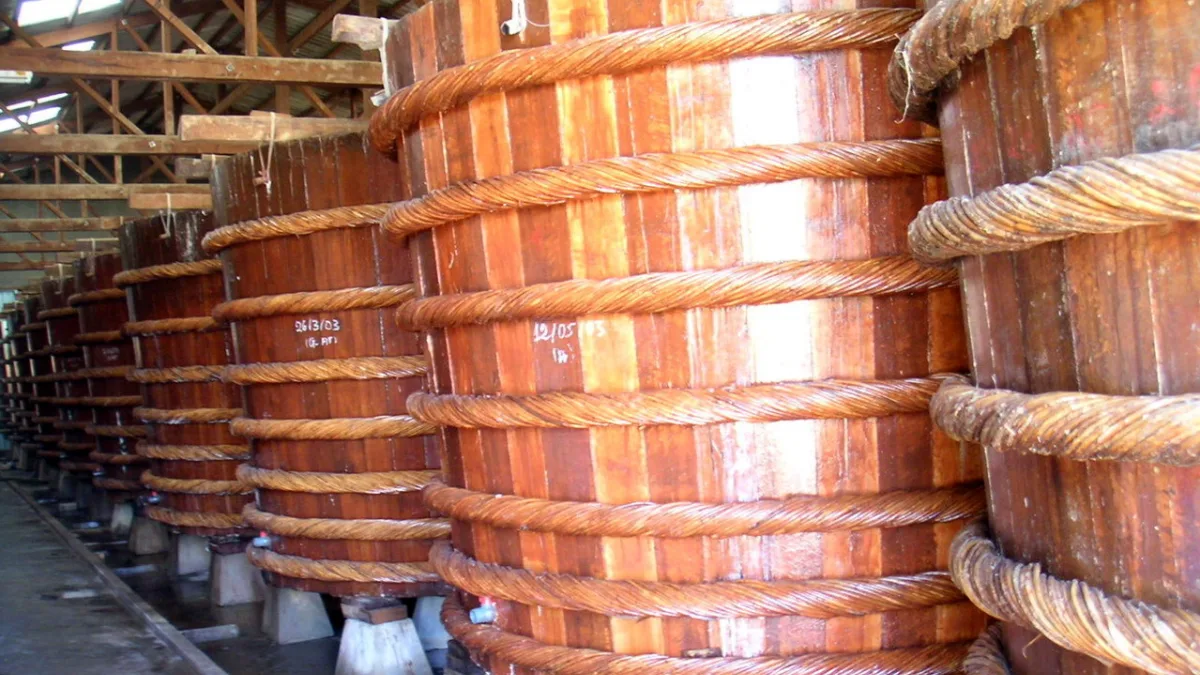
- Fish sauce houses, pepper farms and pearl farms – free visits to the island’s traditional products.
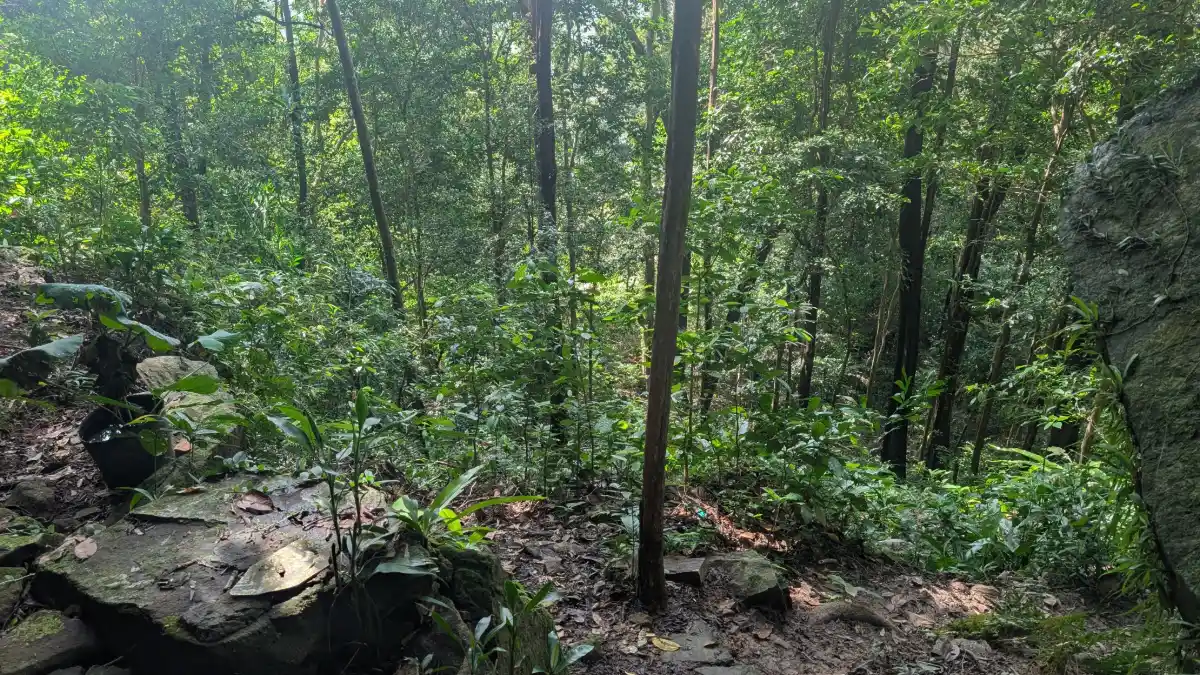
- Phu Quoc National Park – forested hills covering much of the north and centre.
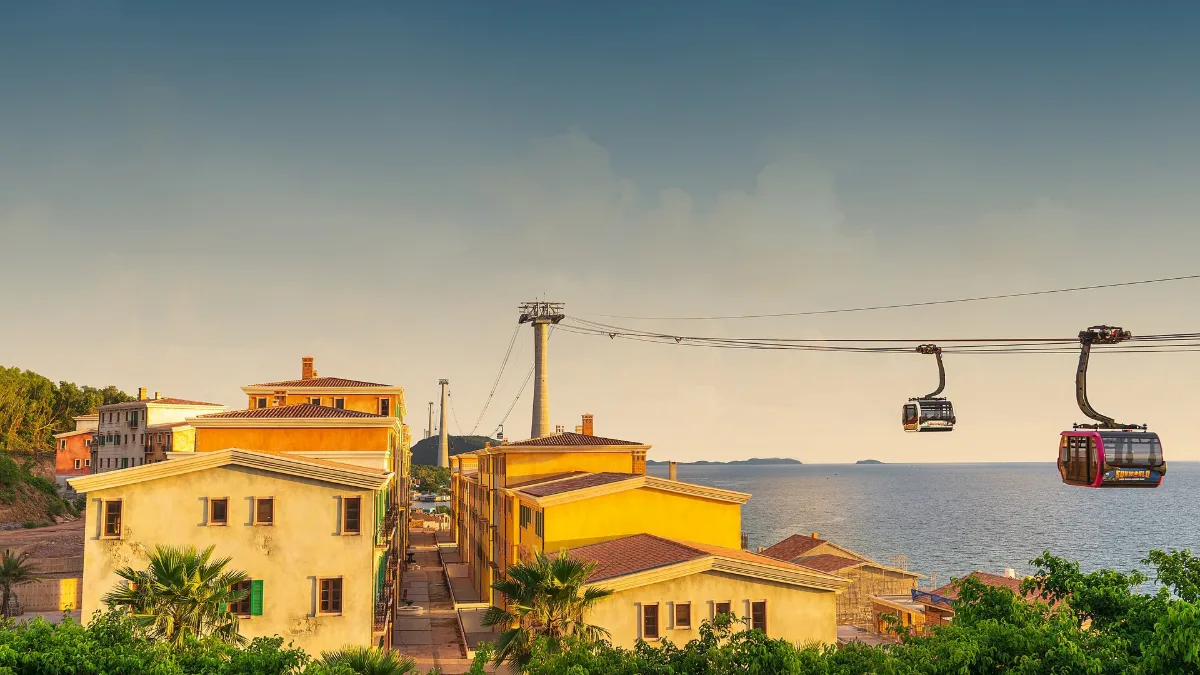
- Hon Thom Cable Car – the record-breaking sea crossing from An Thoi.
Where Ho Quoc Pagoda Fits in a Phu Quoc Itinerary
Most travellers visit Ho Quoc Pagoda on an east- or south-island day: pagoda at sunrise or early morning, Ham Ninh for seafood, then Sao Beach for the afternoon – or the reverse on your last day before an afternoon flight, since the airport is only about 20 minutes away. Our Phu Quoc Tour 4 Days 3 Nights (from US$385) includes the pagoda, Ham Ninh and a pepper farm on Day 4, and the Phu Quoc South Island Tour 1 Day (from US$95) can be adjusted to start with the pagoda on a private basis. See the full Phu Quoc itinerary and our Phu Quoc Travel Guide for more ideas.
Want a sunrise start with a private driver and guide? Contact Vietnam Tour Expert Team and we will build the day around your hotel and flight times.
Frequently Asked Questions about Ho Quoc Pagoda
1. Where is Ho Quoc Pagoda in Phu Quoc?
Ho Quoc Pagoda is on the south-east coast of Phu Quoc in the Suoi Lon area above Bai Dam beach, about 20–27 km from Duong Dong and 10 km north of Sao Beach.
2. Is Ho Quoc Pagoda free to enter?
Yes, Ho Quoc Pagoda is free to enter. Donation boxes are voluntary and there is no ticket office.
3. What are Ho Quoc Pagoda opening hours?
Ho Quoc Pagoda is open daily from about 06:00 to 18:00; individual halls can close briefly during ceremonies.
4. When was Ho Quoc Pagoda built?
Ho Quoc Pagoda was built between October 2011 and December 2012, so it is a modern temple designed in the older Ly–Tran style.
5. What is the dress code at Ho Quoc Pagoda?
At Ho Quoc Pagoda cover your shoulders and knees, avoid swimwear and remove your shoes and hat before entering the halls.
6. Can I see the sunrise at Ho Quoc Pagoda?
Yes, Ho Quoc Pagoda faces east over the sea, so sunrise is the best time to visit; arrive by about 05:45 in the dry season.
7. How long do I need at Ho Quoc Pagoda?
Allow 45–60 minutes for Ho Quoc Pagoda, or about 1.5 hours if you come for sunrise and walk down to Bai Dam beach.
8. How do I get to Ho Quoc Pagoda from Duong Dong?
Take a Grab, taxi or private car to Ho Quoc Pagoda; the drive from Duong Dong takes about 35–45 minutes and from the airport about 20 minutes.
9. Is Ho Quoc Pagoda the largest pagoda in Phu Quoc?
Yes, Ho Quoc Pagoda is the largest pagoda on Phu Quoc, with grounds of nearly 12 ha inside a spiritual tourism area of about 110 ha.
10. What Buddhist school does Ho Quoc Pagoda belong to?
Ho Quoc Pagoda belongs to the Truc Lam (Bamboo Grove) Zen school founded by King Tran Nhan Tong in the 13th century, and was its first monastery on Phu Quoc.
11. How many steps are there at Ho Quoc Pagoda?
Ho Quoc Pagoda has a stairway of 70 stone steps, lined with carved dragons, leading from the gate area to the main hall.
12. Is there a Guan Yin statue at Ho Quoc Pagoda?
Yes, a large white Guan Yin (Quan Am) statue stands on a sea-view terrace at Ho Quoc Pagoda and is a favourite photo spot.
13. Can I swim at the beach below Ho Quoc Pagoda?
Steps lead from Ho Quoc Pagoda to Bai Dam beach; it is fine for a paddle in calm dry-season weather, but Sao Beach nearby is better for swimming.
14. Can I combine Ho Quoc Pagoda with Sao Beach and Ham Ninh?
Yes, Ho Quoc Pagoda sits between Ham Ninh fishing village and Sao Beach on the east coast, so all three fit comfortably into one day.
15. Is Ho Quoc Pagoda suitable for children and older travellers?
Ho Quoc Pagoda suits most visitors, but the 70 steps and exposed courtyard are tiring in midday heat, so visit early and bring water.
16. Are there food and drinks at Ho Quoc Pagoda?
Ho Quoc Pagoda has basic toilets but no restaurant, and drink stalls nearby are few, so bring water and plan to eat at Ham Ninh or Sao Beach.
17. Can I visit Ho Quoc Pagoda on a tour?
Yes, Ho Quoc Pagoda is included on Day 4 of the Phu Quoc Tour 4 Days 3 Nights, together with Ham Ninh and a pepper farm.
18. Is Ho Quoc Pagoda busy on festival days?
Ho Quoc Pagoda is busiest on the 1st and 15th of each lunar month, at Tet and during Vu Lan, when local Buddhists come to pray.
Related Posts
Sao Beach Phu Quoc: White Sand, Best Time & Local Tips
An Thoi Islands Phu Quoc: Snorkelling, Boat Tours & Tips
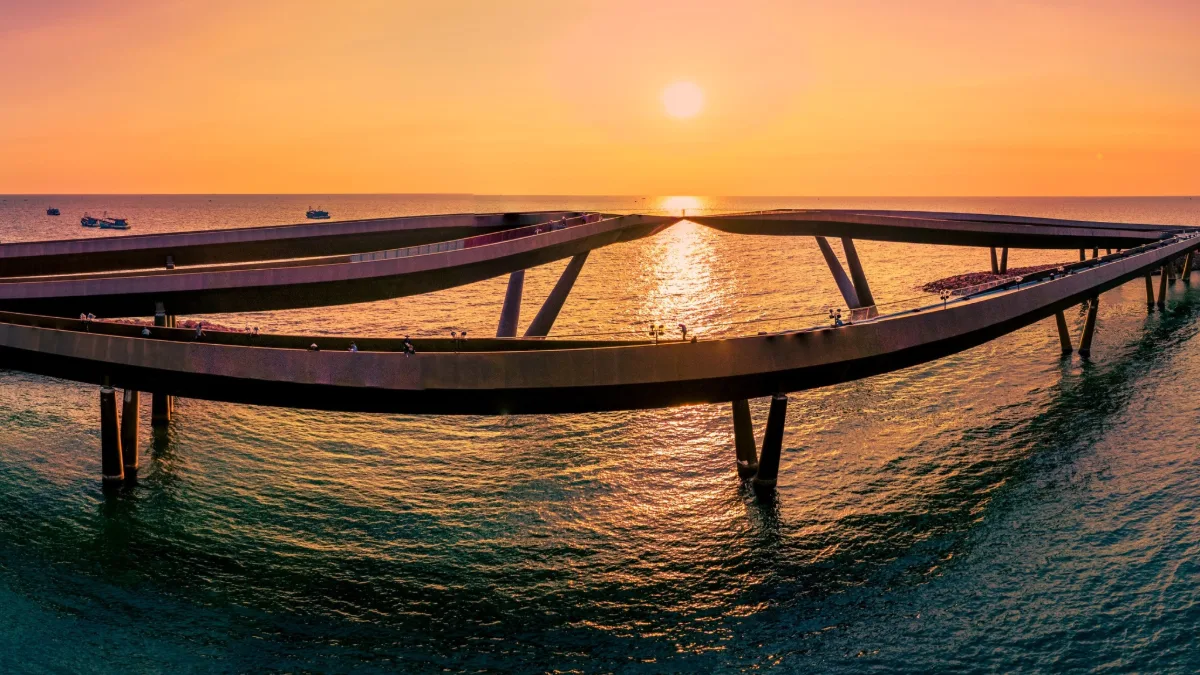
Sunset Town Phu Quoc: Kiss Bridge, Kiss of the Sea & Tips
Hon Thom Cable Car Phu Quoc: Tickets, Times & Tips
Ham Ninh Fishing Village Phu Quoc: Crab, Seafood & Tips