Mekong Delta Transportation: Saigon to Can Tho & Beyond
From Ho Chi Minh City to the Mekong Delta, the fastest way is a private car or limousine van on the expressway: about 1.5 hours to My Tho and 3–3.5 hours to Can Tho (about 170 km). Buses from Mien Tay station cost about 150,000–250,000 VND to Can Tho. Can Tho Airport (VCA) has direct flights from Hanoi in about 2 hours.
Status (checked October 2026): The Rach Mieu 2 bridge between My Tho (Dong Thap) and Ben Tre (Vinh Long) opened on 19 August 2025, and the Can Tho–Ca Mau expressway opened in stages between December 2025 and January 2026. Since 1 July 2025 the delta is organised as Can Tho city plus An Giang, Dong Thap, Vinh Long and Ca Mau provinces, so road signs and tickets may use the new names.
Key takeaways:
- There is no railway into the Mekong Delta: travel is by road, air or boat.
- An expressway now runs from Ho Chi Minh City through Trung Luong and My Thuan to Can Tho, and on to Ca Mau.
- Private car with driver is the most comfortable option for multi-stop routes and floating markets.
- Grab, Xanh SM and Be work in Can Tho and larger towns; boats and bicycles are best for islets and canals.
- Chau Doc has a river route to Phnom Penh, Cambodia, in about 4–5 hours by speedboat.
Mekong Delta Transportation at a Glance
| Main gateway | Ho Chi Minh City (Tan Son Nhat Airport, Mien Tay bus station) |
|---|---|
| Delta airport | Can Tho International Airport (VCA), about 8 km from the city centre |
| HCMC – Can Tho by car | About 170 km, 3–3.5 hours via expressway |
| HCMC – My Tho by car | About 70 km, about 1.5 hours |
| Bus HCMC – Can Tho | About 150,000–250,000 VND (US$6–10), about 3.5–4 hours |
| Flight Hanoi – Can Tho | About 2 hours, Vietnam Airlines and Vietjet Air |
| Can Tho Airport to centre | Taxi about 120,000–180,000 VND, 15–20 minutes |
| Ride-hailing | Grab, Xanh SM and Be in Can Tho and larger towns |
| Boat to Cambodia | Chau Doc – Phnom Penh, about 4–5 hours, about US$20–35 |
| Trains | None; the North–South railway ends in Ho Chi Minh City |
How Do I Get from Ho Chi Minh City to the Mekong Delta?
Most travellers go by road from Ho Chi Minh City, choosing between a private car, a limousine van, a public bus or an organised tour. The expressway from the city to Trung Luong, Trung Luong–My Thuan (opened in 2022) and My Thuan–Can Tho with the new My Thuan 2 bridge (opened in December 2023) has cut journey times sharply; Vietnamese media reported the Can Tho trip became nearly two hours shorter.
| Destination | Distance from HCMC | By car (approx.) | By bus (approx.) |
|---|---|---|---|
| My Tho (Dong Thap) | About 70 km | 1.5 hours | 2 hours |
| Ben Tre town (Vinh Long) | About 85 km | 2 hours | 2–2.5 hours |
| Cai Be (Dong Thap) | About 105 km | 2 hours | 2.5 hours |
| Vinh Long | About 135 km | 2.5 hours | 3 hours |
| Can Tho | About 170 km | 3–3.5 hours | 3.5–4 hours |
| Chau Doc (An Giang) | About 250 km | 5–6 hours | 6–7 hours |
| Ca Mau | About 300 km | About 5 hours | About 6 hours |
Times are approximate and depend on traffic leaving Ho Chi Minh City, which is heavy on Friday evenings, Sunday afternoons and around public holidays.
What Are the Ways to Travel Around the Mekong Delta?
For most visitors the best mix is a car or van between towns and boats for markets, canals and islets. Here are the options in detail.
1. Private car with driver
The most comfortable and flexible choice, especially for families and for routes with several stops such as My Tho, Ben Tre, Vinh Long and Can Tho. A driver can wait while you take a boat trip and collect you on the other side. Prices depend on vehicle size and distance; a 4-seat or 7-seat car for a day trip from Ho Chi Minh City typically costs about US$70–130.
2. Limousine vans
Nine-seat and 11-seat “limousine” vans run between Ho Chi Minh City and Can Tho, Vinh Long, Ben Tre and Chau Doc, often with hotel pick-up within the city centre. Fares to Can Tho start from about 200,000 VND. They are faster and more comfortable than large buses.
3. Public buses
Large seat and sleeper buses leave Mien Tay bus station in Binh Tan, western Ho Chi Minh City, for every delta town. Phuong Trang (FUTA) runs frequent services to Can Tho, roughly hourly through the day, with fares from about 165,000 VND. Book online or at the operator’s office, and allow 30–60 minutes to reach Mien Tay from District 1.
4. Flights
Can Tho International Airport has direct domestic flights from Hanoi (about 2 hours), Da Nang (about 1.5 hours) and a few other cities, operated by Vietnam Airlines and Vietjet Air. It is useful if you start in the north and want to skip Ho Chi Minh City. Regular international flights do not currently operate. Rach Gia and Ca Mau also have small airports, and Phu Quoc, now part of An Giang province, has its own international airport.
5. Ride-hailing and taxis
Grab, Xanh SM (all-electric) and Be operate in Can Tho and the bigger towns, with cars and motorbike taxis. Prices are shown in the app before you book. In small towns and on islets, ask your hotel to call a local taxi or xe ôm (motorbike taxi).
6. Boats, sampans and ferries
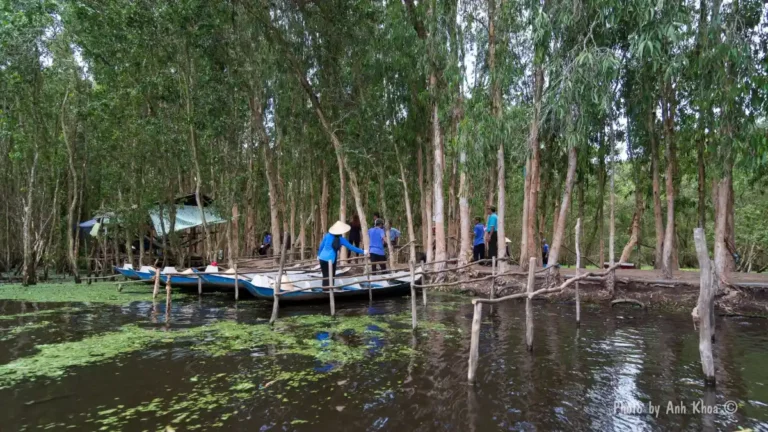
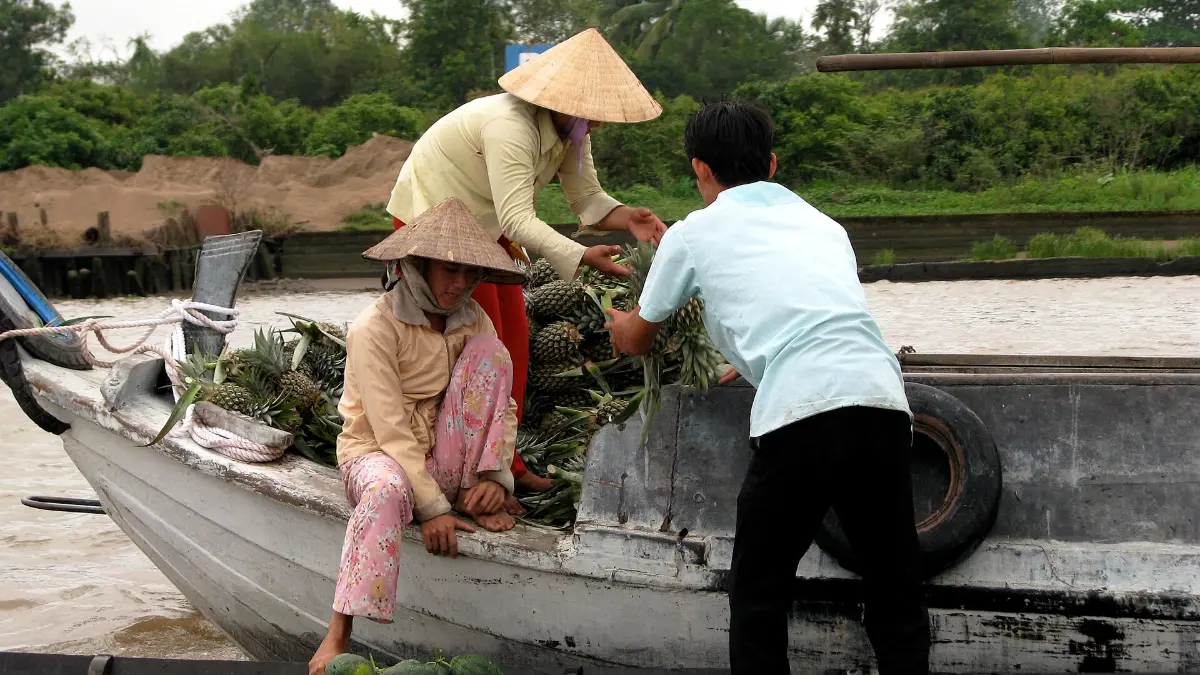
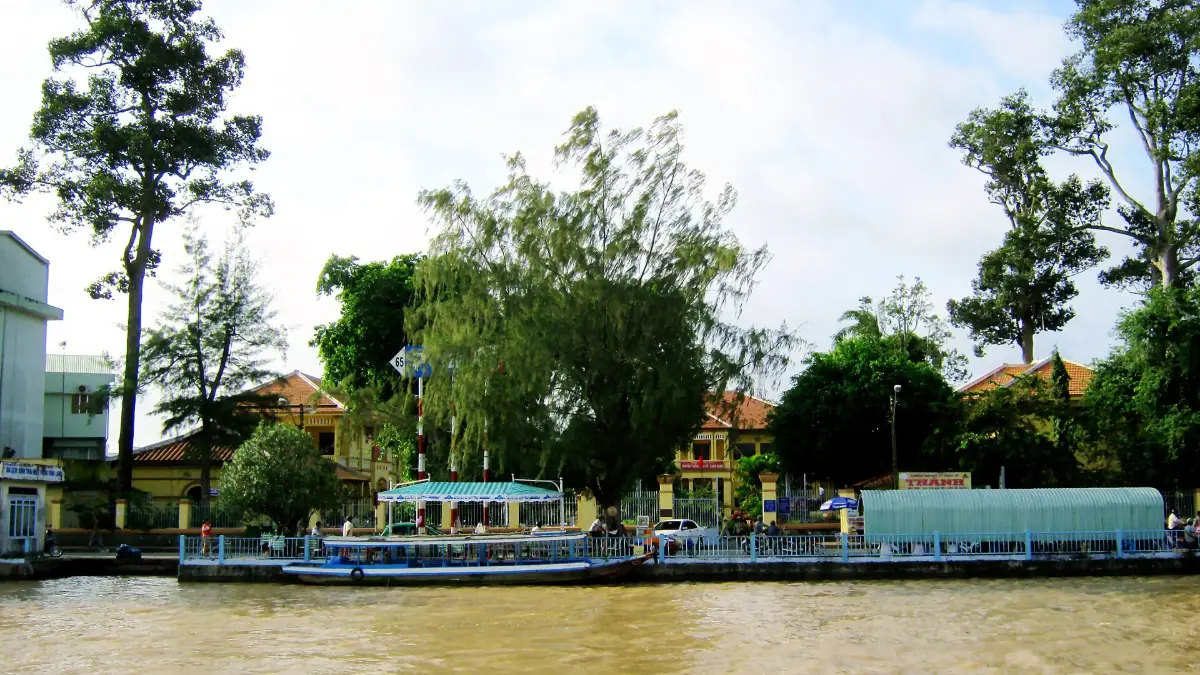
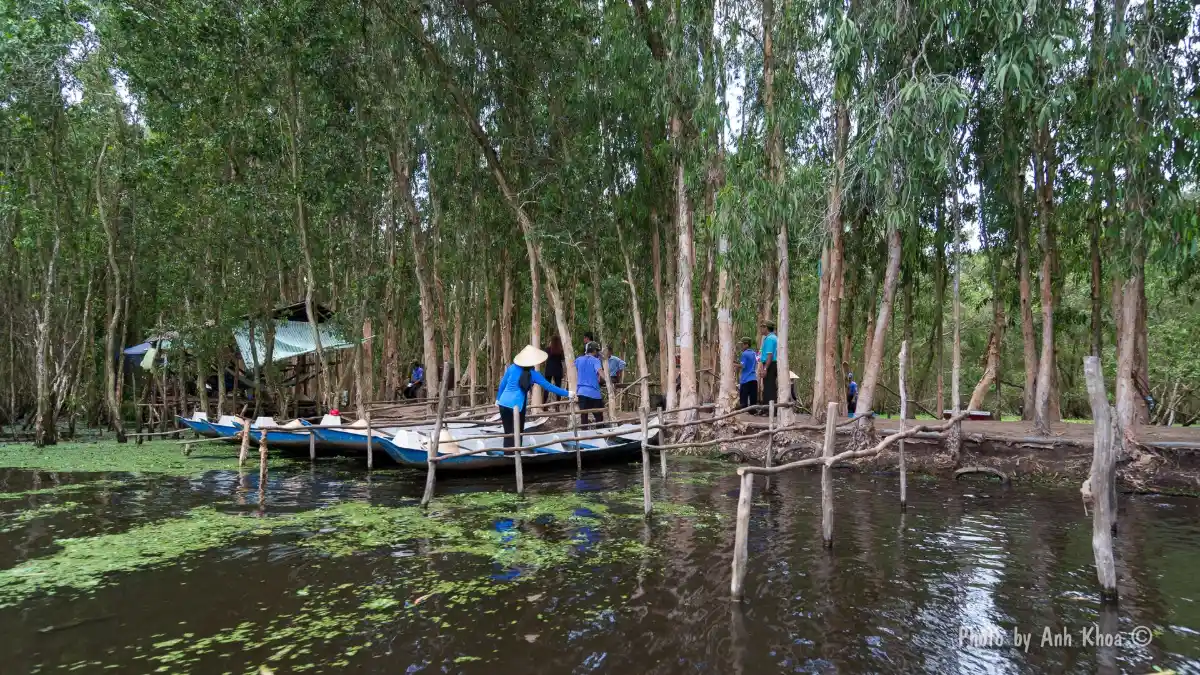
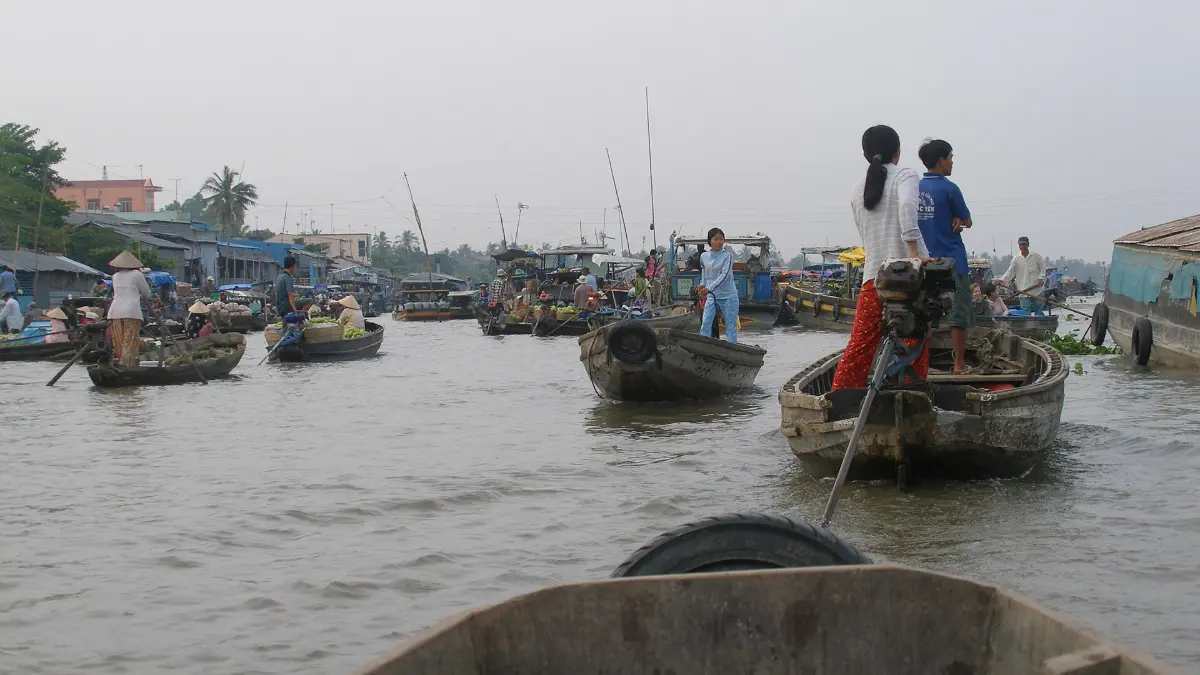
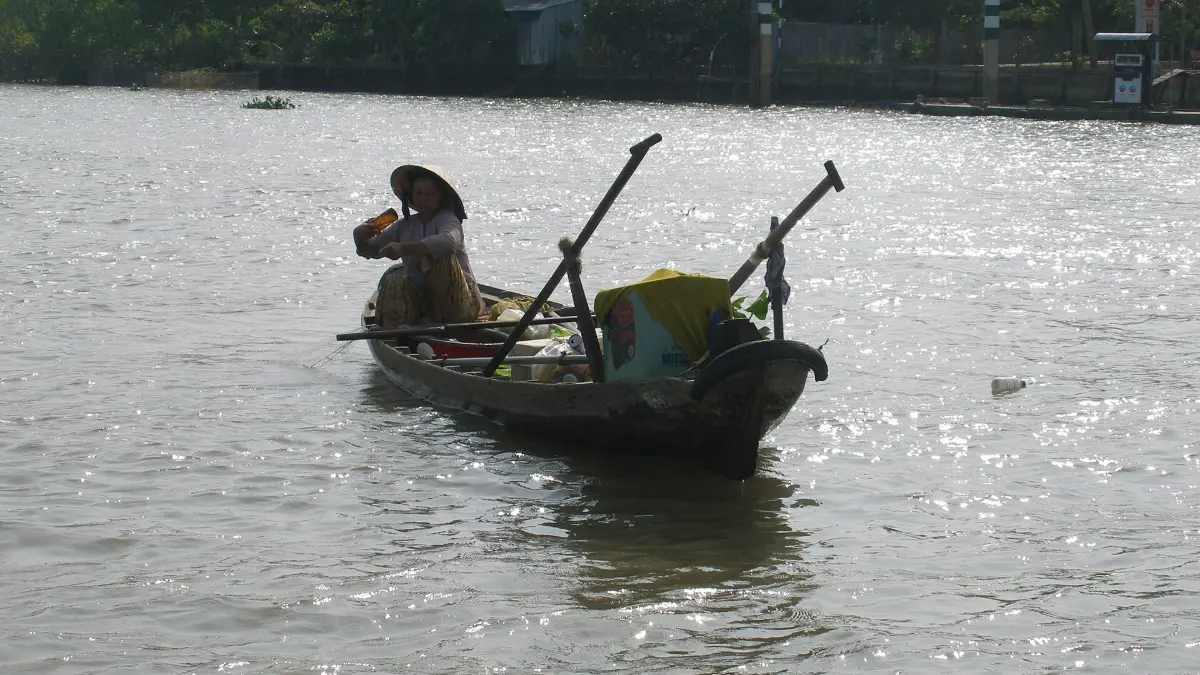
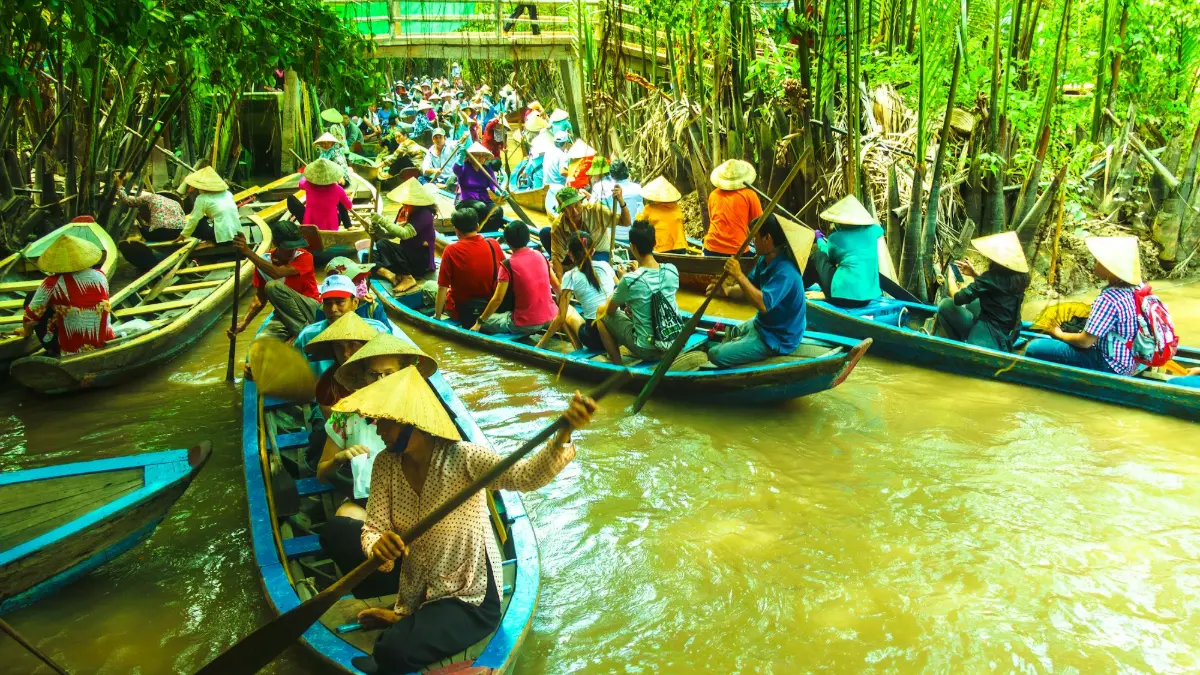
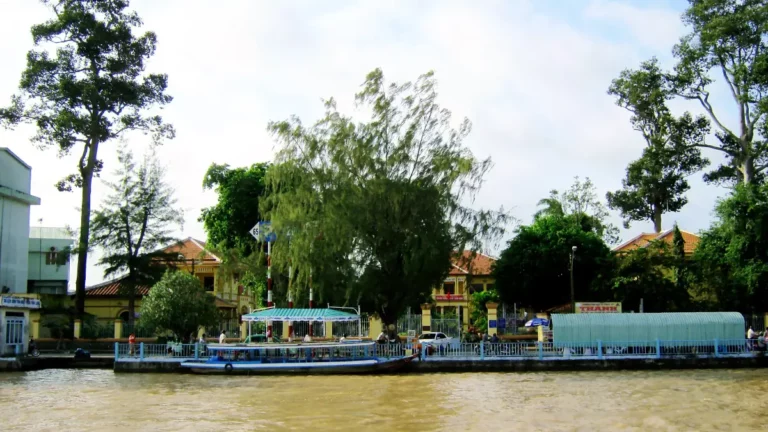
Boats are the heart of delta travel. Motorboats take you to the Cai Rang floating market and along canals; small rowing sampans glide through narrow water-coconut channels around Ben Tre and My Tho; car ferries and passenger boats link islets such as An Binh in Vinh Long. Life jackets should be provided; ask for one if not.
7. Bicycles and walking
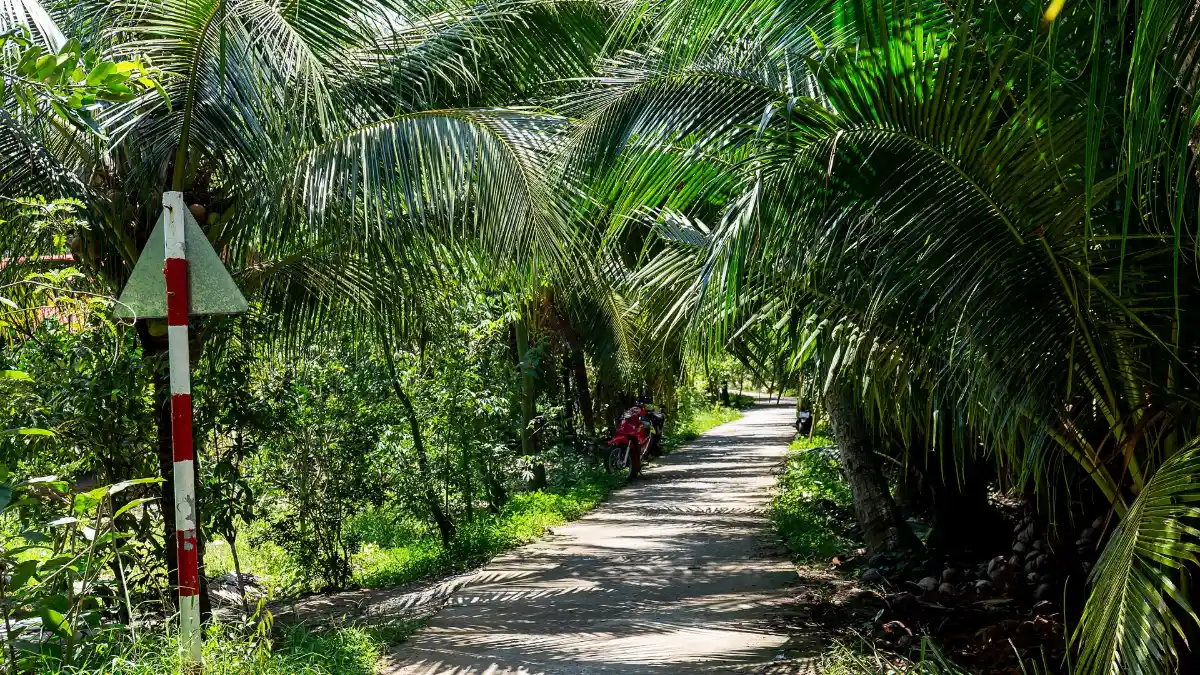
Cycling along the lanes of An Binh islet, Thoi Son islet or the Ben Tre countryside is one of the delta’s highlights. Many homestays and eco-lodges lend bicycles free or for a small fee. Lanes are flat but narrow; watch out for motorbikes on small concrete bridges.
8. Riding a motorbike yourself
You can rent a motorbike in Can Tho and some towns, but you must hold a valid licence. Under Decree 168/2024 (in force from 1 January 2025), riding without a licence is fined about 2–4 million VND for bikes up to 125 cc and 6–8 million VND above 125 cc, and only an International Driving Permit issued under the 1968 Convention is recognised. Travel insurance usually does not cover unlicensed riders.
How Do I Get from Can Tho Airport to the City?
Can Tho Airport is about 8 km from the city centre, a 15–20 minute drive. A taxi or Grab/Xanh SM/Be car costs about 120,000–180,000 VND, and a motorbike taxi about 40,000–70,000 VND, according to Vietnam Airlines’ airport guide. Some hotels offer free or paid pick-ups; ask when booking.
How Do I Travel Between Mekong Delta Towns?
Buses and limousine vans connect all main towns, and a private car is easiest for one-way routes such as Ho Chi Minh City – Ben Tre – Can Tho – Chau Doc. Approximate times between towns:
| Route | By car (approx.) | Notes |
|---|---|---|
| My Tho – Ben Tre | 20–30 minutes | Rach Mieu and Rach Mieu 2 bridges over the Tien River |
| Cai Be – Vinh Long | 30–40 minutes | Boat trips often link the two |
| Vinh Long – Can Tho | About 1 hour | Via Can Tho Bridge over the Hau River |
| Can Tho – Chau Doc | About 3 hours | Expressway under construction; main road for now |
| Can Tho – Soc Trang | About 1.5 hours | Khmer pagodas, now part of Can Tho city |
| Can Tho – Ca Mau | About 2–2.5 hours | New expressway, maximum 80 km/h |
| Chau Doc – Ha Tien | About 2–2.5 hours | Along the Cambodian border, both in An Giang |
How Do I Get from Chau Doc to Phnom Penh by Boat?
Speedboats leave Chau Doc in the morning and reach Phnom Penh in about 4–5 hours, crossing the border at Vinh Xuong (Vietnam) and Kaam Samnor (Cambodia). Fares are about US$20–35 depending on the operator and season. Bring your passport, a passport photo and US dollars in cash; check in advance whether you need a Cambodian visa beforehand or can get one on arrival at this river border, as e-visa acceptance at land and river crossings can change.
Is the Rach Mieu 2 Bridge Open?
Yes. The Rach Mieu 2 bridge opened on 19 August 2025. Its cable-stayed main span is about 1.97 km, and with approach roads the project is about 17.6 km long, linking the My Tho side (Dong Thap) and the Ben Tre side (Vinh Long) across the Tien River. It relieves traffic on the original Rach Mieu bridge and speeds up trips to Ben Tre and the coconut country.
Which Mekong Delta Expressways Are Open?
As of October 2026, the expressway runs continuously from Ho Chi Minh City to Ca Mau via Trung Luong, My Thuan and Can Tho:
- Ho Chi Minh City – Trung Luong: open since 2010.
- Trung Luong – My Thuan: opened in January 2022.
- My Thuan – Can Tho, with the My Thuan 2 bridge: opened on 25 December 2023 (23 km).
- Can Tho – Ca Mau: about 110 km, opened in stages from December 2025 to January 2026, with finishing works continuing.
- Chau Doc – Can Tho – Soc Trang: under construction.
Mekong Delta Transport Scams and Safety
The delta is generally safe, but a few habits help:
- Agree the boat price, duration and route before you board; private boats at piers may quote high prices.
- Use ride-hailing apps or hotel-booked taxis to avoid unclear meter fares.
- Wear a life jacket on boats and keep phones in a waterproof bag.
- Avoid travelling on rural roads after dark, when lighting is poor.
- Buy bus tickets from the official operator counter or app, not from touts at the station.
- In flood season (about September–November), some small canals and lanes may be flooded; follow your guide’s advice.
Local Expert Tips for Getting Around the Mekong Delta
These tips come from years of arranging Mekong Delta tours for international travellers.
- Leave Ho Chi Minh City before 7 am to beat traffic and reach the orchards while it is cool.
- Overnight in Can Tho and take a boat from Ninh Kieu wharf around 5:30 am for Cai Rang.
- For a one-way trip into Cambodia, combine a car to Chau Doc with the morning speedboat to Phnom Penh.
- Fly Hanoi – Can Tho to save a day if you start in the north.
- Choose a small rowing sampan in the water-coconut canals; it is quieter than a motorboat.
- Avoid travelling on the first days of Tet and the 30 April – 1 May holiday, when buses sell out and fares rise.
- Pack light: you will step on and off boats several times a day.
Plan Your Mekong Delta Trip
Use these guides to plan your route: My Tho and Ben Tre for a first taste, Cai Be and Vinh Long for orchards and homestays, Can Tho for the floating market and Chau Doc for Sam Mountain and the border. Short on time? Try a Mekong Delta day trip from Saigon. Read our Mekong Delta travel tips, where to stay in the Mekong Delta and Mekong Delta food guide, plus getting around Saigon before you leave the city.
Plan your trip with our Mekong Delta travel guide and Mekong Delta tours. Contact Vietnam Tour Expert Team for a free custom itinerary.
Frequently Asked Questions about Mekong Delta Transportation
1. How long does it take to get from Ho Chi Minh City to the Mekong Delta?
By car, Ho Chi Minh City to My Tho in the Mekong Delta takes about 1.5 hours and to Can Tho about 3–3.5 hours via the expressway. Buses take 30–60 minutes longer.
2. What is the best way to get from Saigon to Can Tho in the Mekong Delta?
A private car or limousine van is the most comfortable way to reach Can Tho, taking about 3–3.5 hours. Public buses from Mien Tay station cost about 150,000–250,000 VND.
3. Is there a train to the Mekong Delta?
No. Vietnam’s North–South railway ends in Ho Chi Minh City, so you reach the Mekong Delta by road, air or boat.
4. Can I fly to the Mekong Delta?
Yes. Can Tho International Airport (VCA) in the Mekong Delta has direct flights from Hanoi in about 2 hours, plus Da Nang and a few other cities.
5. How far is Can Tho Airport from the city centre?
Can Tho Airport is about 8 km from the city centre, around 15–20 minutes by car. A taxi costs about 120,000–180,000 VND.
6. Where do buses to the Mekong Delta leave from in Ho Chi Minh City?
Most buses to the Mekong Delta leave from Mien Tay bus station in Binh Tan, western Ho Chi Minh City. Many limousine vans offer pick-up in the city centre.
7. Is Grab available in the Mekong Delta?
Yes. Grab, Xanh SM and Be operate in Can Tho and larger Mekong Delta towns. In villages and on islets, ask your hotel to arrange transport.
8. How do I get to the Cai Rang floating market in the Mekong Delta?
Take a boat from Ninh Kieu wharf in central Can Tho; it takes about 30 minutes to reach Cai Rang. Leave around 5:30–6 am to see the market at its busiest; read our Can Tho guide.
9. Can I take a boat from the Mekong Delta to Cambodia?
Yes. Speedboats from Chau Doc in the Mekong Delta reach Phnom Penh in about 4–5 hours via the Vinh Xuong border, for about US$20–35.
10. Is the Rach Mieu 2 bridge in the Mekong Delta open?
Yes. The Rach Mieu 2 bridge opened on 19 August 2025, linking My Tho in Dong Thap and Ben Tre in Vinh Long across the Tien River.
11. Is the expressway to Can Tho in the Mekong Delta finished?
Yes. The expressway runs from Ho Chi Minh City via Trung Luong and My Thuan to Can Tho, and since early 2026 continues to Ca Mau. The Chau Doc–Can Tho–Soc Trang expressway is still under construction.
12. Can I rent a motorbike in the Mekong Delta?
You can rent a motorbike in Can Tho and some Mekong Delta towns, but you need a valid licence or a 1968-Convention International Driving Permit. Unlicensed riding is fined up to 8 million VND.
13. How much does a private car to the Mekong Delta cost?
A private car with driver for a Mekong Delta day trip from Ho Chi Minh City typically costs about US$70–130, depending on vehicle size, distance and stops.
14. Is it safe to travel by boat in the Mekong Delta?
Boat travel in the Mekong Delta is generally safe with licensed operators. Wear the life jacket provided, agree the price in advance and avoid overcrowded boats.
15. How do I get from Can Tho to Chau Doc?
Can Tho to Chau Doc takes about 3 hours by car or about 3.5–4 hours by bus. Limousine vans also run the route several times a day.
16. Do I need a car in the Mekong Delta?
Not for every trip. Buses link the main Mekong Delta towns, but a car with driver saves time on multi-stop routes and makes early-morning floating market visits much easier.
17. When is traffic worst between Saigon and the Mekong Delta?
Traffic between Ho Chi Minh City and the Mekong Delta is heaviest on Friday evenings, Sunday afternoons, around Tet and the 30 April – 1 May holiday. Leave early in the morning to avoid it.
Related Posts
Mekong Delta Travel Tips 2026: Best Time, Floods & Itineraries
Where to Stay in the Mekong Delta: Best Bases & Homestays
Mekong Delta Food Guide: Must-Try Dishes & Specialties

Cai Be Mekong Delta: Floating Market, Church & Old Houses
Vinh Long: An Binh Island Homestays & Mang Thit Kilns