Minh Mang Tomb Hue: Ticket, Layout & Visitor Tips
Minh Mang Tomb (Lăng Minh Mạng, officially Hieu Lang) is the mausoleum of Emperor Minh Mang, the second Nguyen ruler, set among pine hills and lotus lakes about 12 km south-west of central Hue, near the confluence that forms the Perfume River. Built from 1840 to 1843, it is famed for its perfectly symmetrical layout. Entry costs 150,000 VND for adults.
Status (checked October 2026): open daily as normal. Winter hours apply from 16 October (tickets 7:00–17:00, site closes 18:00); paths around the lakes can be muddy during the October–December rains.
Why Minh Mang Tomb is worth seeing:
- Classic Nguyen design: often called the most harmonious of the royal tombs, with its palaces, pavilions and bridges laid out on a strict central axis.
- Landscape and architecture together: lakes, bridges and pine-covered hills frame every pavilion.
- Peaceful: further from the city than the other great tombs, so it is usually quieter.
- UNESCO heritage: part of the Complex of Hue Monuments, listed in 1993.
- Photogenic: Minh Lau Pavilion reflected in Trung Minh Lake is one of Hue’s classic views.
Minh Mang Tomb at a Glance
| Vietnamese name | Lăng Minh Mạng (Hiếu Lăng) |
|---|---|
| Location | Cam Ke Hill (Hieu Son), An Bang hamlet, Kim Long Ward (formerly Huong Tho commune), Hue City |
| Distance | About 12 km south-west of central Hue; 25–30 minutes by car |
| Built | April 1840 to early 1843, by about 10,000 soldiers and workers |
| Size | About 18 ha inside a 1,750 m wall; central “Spirit Way” over 700 m long |
| Known for | Symmetry, Trung Minh Lake, Minh Lau Pavilion, Sung An Temple, crescent-moon lake |
| Recognition | Part of the UNESCO-listed Complex of Hue Monuments (1993) |
| Opening hours | Summer (16 Mar–15 Oct): tickets 6:30–17:30, closes 18:30. Winter (16 Oct–15 Mar): tickets 7:00–17:00, closes 18:00 |
| Entrance fee | 150,000 VND adults (about US$6); 30,000 VND children aged 7–12 |
| Time needed | 1–1.5 hours |
| Best time | February–April; morning or late afternoon; lotus season May–July |
| Nearby | Gia Long Tomb, Khai Dinh Tomb, Tu Duc Tomb, Perfume River |
| Find it | Google Maps · Tripadvisor · Official website · UNESCO |
Is Minh Mang Tomb Worth Visiting?
Yes. For many travellers it is the most beautiful of all the Hue royal tombs. It lacks the mosaics of Khai Dinh Tomb, but its majestic gates, calm lakes and long processional axis show traditional Nguyen architecture at its most balanced. It is a little further out, so it suits travellers with a car or a full day.
- Best for: lovers of architecture, gardens and photography, and anyone who wants a quieter tomb.
- Skip if: you only have half a day in Hue; choose Tu Duc Tomb, which is closer.
- Short on time? Walk straight along the central axis from the Salutation Court to Minh Lau Pavilion and back: about 45 minutes.
History of Minh Mang Tomb
The reforming emperor
Minh Mang (Nguyen Phuc Dam) succeeded his father, Gia Long, in 1820 and reigned until his death in January 1841. He centralised the state, reorganised the administration and completed much of the Hue Imperial City. Read more about Emperor Minh Mang and his long reign.
Fourteen years to choose a site
In the 1820s, the court geomancer Le Van Duc chose Cam Ke Hill near Bang Lang, where the Ta Trach and Huu Trach rivers meet to form the Perfume River. The emperor deliberated for 14 years before approving the site in 1840, renaming the hill Hieu Son and the tomb Hieu Lang.
Finished by his son
Work began in April 1840, but Minh Mang died on 20 January 1841. His successor, Thieu Tri, sent almost 10,000 soldiers and workers to complete the tomb exactly according to his father’s plans. The emperor was buried on 20 August 1841, and the work was finally completed in early 1843.
What to See at Minh Mang Tomb
1. Dai Hong Mon (Great Red Gate)
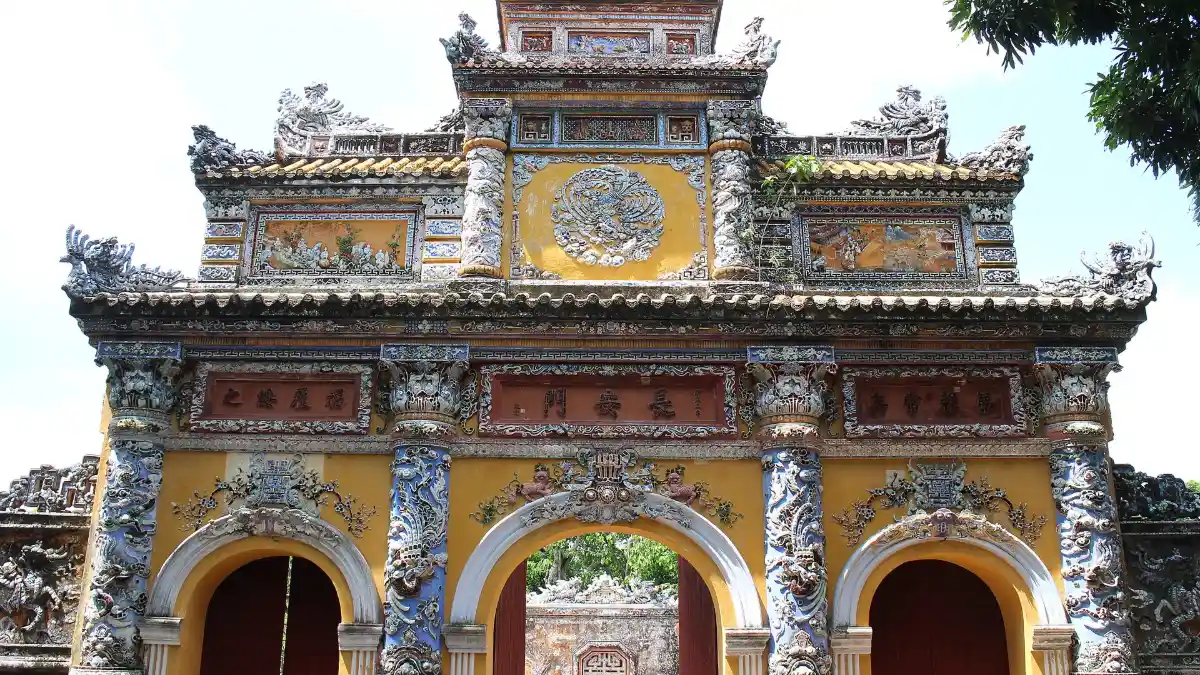
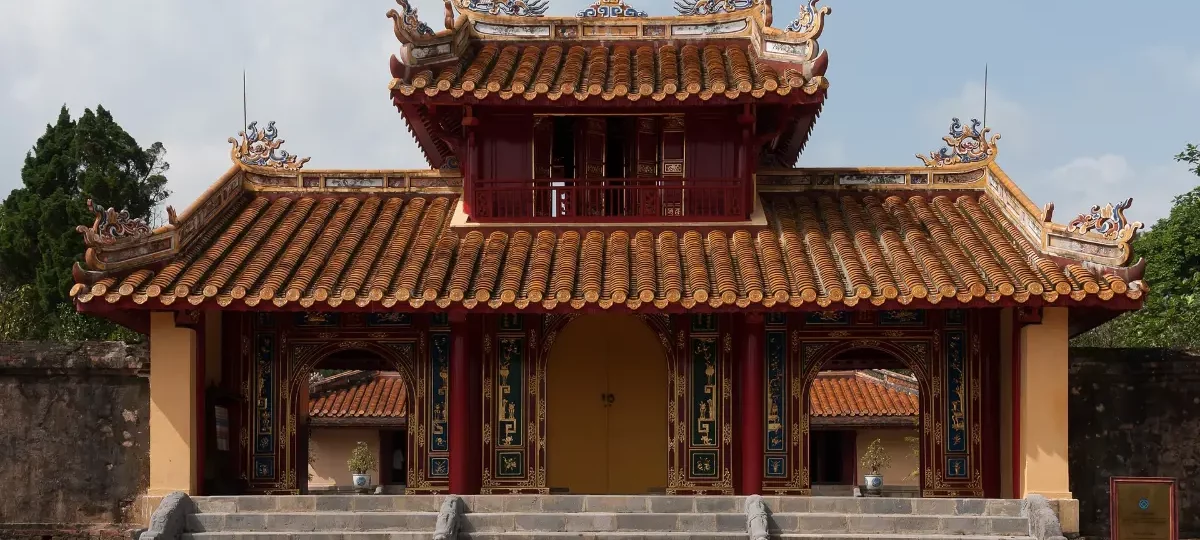
The main gate, over 9 m high and 12 m wide, has three entrances and 24 roofs decorated with carp turning into dragons. It was opened only once, to carry the emperor’s coffin inside; visitors enter through the side gates, Ta Hong Mon and Huu Hong Mon.
2. The Salutation Court (Bai Dinh)
A 45 m × 45 m brick-paved courtyard lined with stone mandarins, elephants and horses. They stand in silent rows facing the axis, ready to attend the emperor in the afterlife.
3. The Stele Pavilion (Bi Dinh)
On Phung Than hill stands the pavilion sheltering a large stone stele. It carries Thieu Tri’s text praising his father’s life and achievements.
4. Hien Duc Gate and Sung An Temple
Beyond the stepped Court of Honour, the wooden Hien Duc Gate leads into a walled square enclosure. At its centre, Sung An Temple, about 23 m × 22 m, is dedicated to Minh Mang and Empress Ta Thien Nhan. The red-lacquered interior is the most richly decorated building in the tomb.
5. Trung Minh Lake and the three bridges
Behind the temple, Trung Minh Lake (the Lake of Impeccable Clarity) spreads out in two halves like a pair of green lungs. Three stone bridges, Ta Phu, Trung Dao and Huu Bat, cross it.
6. Minh Lau Pavilion
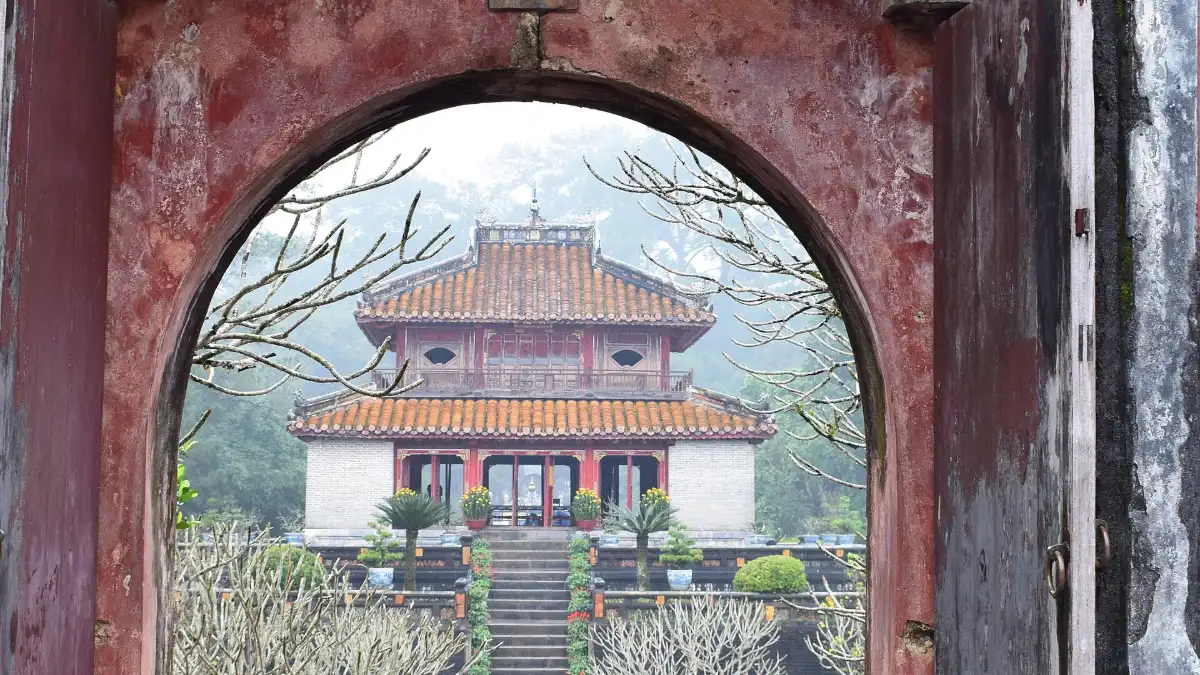
The two-storey, eight-roofed Minh Lau (Pavilion of Light) stands on a three-tiered mound. It symbolises the Eastern ideas of heaven, earth and humankind, and its reflection in the lake is the tomb’s best photograph.
7. Tan Nguyet Lake and the burial mound
A crescent-shaped lake, Tan Nguyet (New Moon), wraps around the circular burial enclosure. The Thong Minh Chinh Truc bridge and 33 steps lead to a locked bronze gate in the Buu Thanh wall, which is 3.5 m high and 273 m round. The emperor lies beneath the pine-covered mound inside.
8. The lakeside pavilions
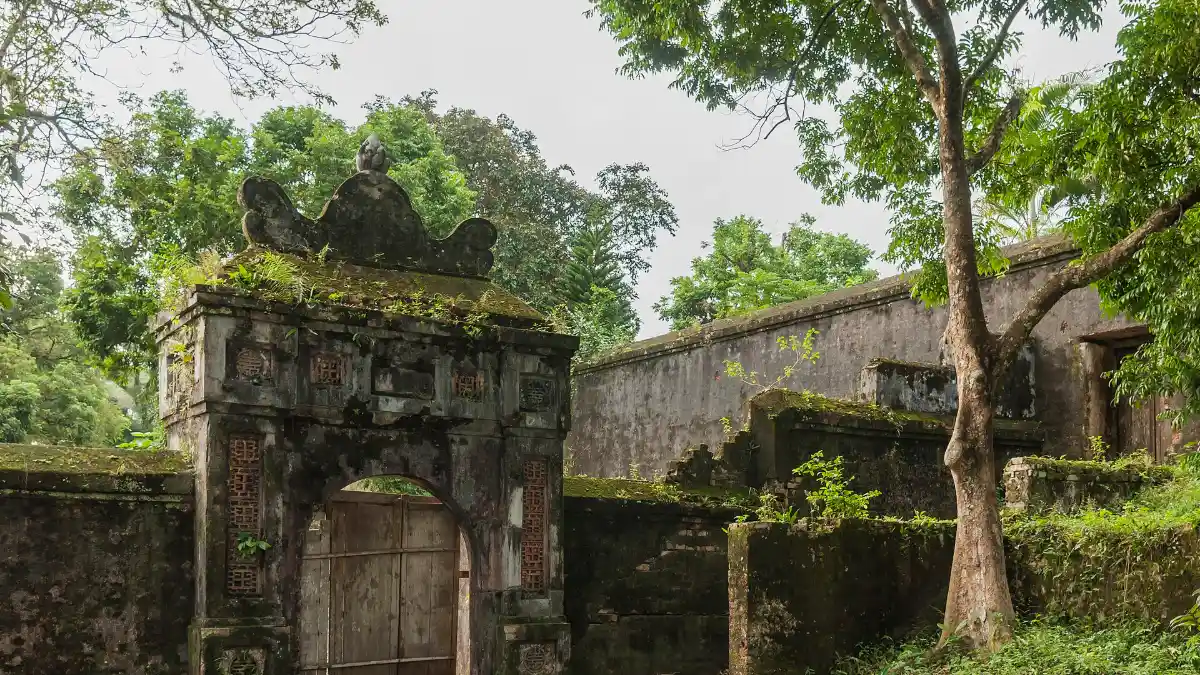
Away from the axis, smaller pavilions and waterside kiosks sit along the lakes, built as places to rest and enjoy the view. A walk around the outer paths is the best way to escape the groups.
Minh Mang Tomb Tickets and Opening Hours (2026)
| Ticket | Adult | Child (7–12) |
|---|---|---|
| Minh Mang Tomb only | 150,000 VND (about US$6) | 30,000 VND |
| 2 sites: Minh Mang + Gia Long tombs | 240,000 VND (about US$9) | 30,000 VND |
| 3 sites: Imperial City + Minh Mang + Khai Dinh or Tu Duc | 420,000 VND (about US$16) | 80,000 VND |
| 4 sites: Imperial City + Minh Mang + Tu Duc + Khai Dinh | 530,000 VND (about US$20) | 100,000 VND |
| Hours, 16 March–15 October | Tickets 6:30–17:30; site closes 18:30 | |
| Hours, 16 October–15 March | Tickets 7:00–17:00; site closes 18:00 | |
Prices are set by the Hue City People’s Council and collected by the Hue Monuments Conservation Centre; check the official ticket page before you go. Children under 7 enter free.
Rules and Etiquette at Minh Mang Tomb
- Dress modestly and remove your hat inside Sung An Temple.
- Do not climb on statues, walls or bridges, and keep off the lawns.
- Stay on the paths around the lakes; the banks can be slippery after rain.
- No smoking anywhere on the site.
How to Get to Minh Mang Tomb
| From | How | Time |
|---|---|---|
| Central Hue | Taxi, Grab or private car | 25–30 min |
| Central Hue | Motorbike | About 30 min |
| Central Hue | Perfume River boat tour (some itineraries include the tomb) | Half a day or more |
| Khai Dinh Tomb | Taxi or motorbike | 20–25 min |
| Tu Duc Tomb | Taxi or motorbike | About 20 min |
See our Hue transportation guide for taxi, driver and motorbike tips.
Best Time to Visit Minh Mang Tomb
| When | What to expect |
|---|---|
| February–April | Mild, green and comfortable for walking the long axis |
| May–July | Hot, but lotus flowers often bloom on the lakes |
| September–December | Rainy season; misty, romantic but muddy |
| Morning | Calm water for reflections, fewer people |
| Late afternoon | Warm light on Minh Lau Pavilion |
Local Expert Tips for Minh Mang Tomb
These tips come from years of arranging Hue tours for international travellers.
- Visit Minh Mang first on a tomb day and work back towards the city via Khai Dinh and Tu Duc.
- Combine it with the less-visited Gia Long Tomb using the 2-site ticket if you love history.
- Walk the whole axis to the burial mound; many visitors turn back at Sung An Temple and miss the best part.
- Bring insect repellent in the wet season.
- Stop for lunch near the tomb; our Hue food guide lists dishes to look for.
Minh Mang Tomb vs Khai Dinh Tomb
| Minh Mang Tomb | Khai Dinh Tomb | |
|---|---|---|
| Style | Traditional, symmetrical, set in nature | Concrete, vertical, East-West fusion |
| Built | 1840–1843 | 1920–1931 |
| Highlight | Lakes, bridges and Minh Lau Pavilion | Mosaic interior of Thien Dinh Palace |
| Distance from centre | About 12 km | About 10 km |
| Time needed | 1–1.5 hours | About 1 hour |
Our view: Minh Mang shows the classical ideal of a Nguyen tomb, while Khai Dinh shows how far that ideal changed under French rule. If you see two tombs, choose these two.
Nearby Attractions
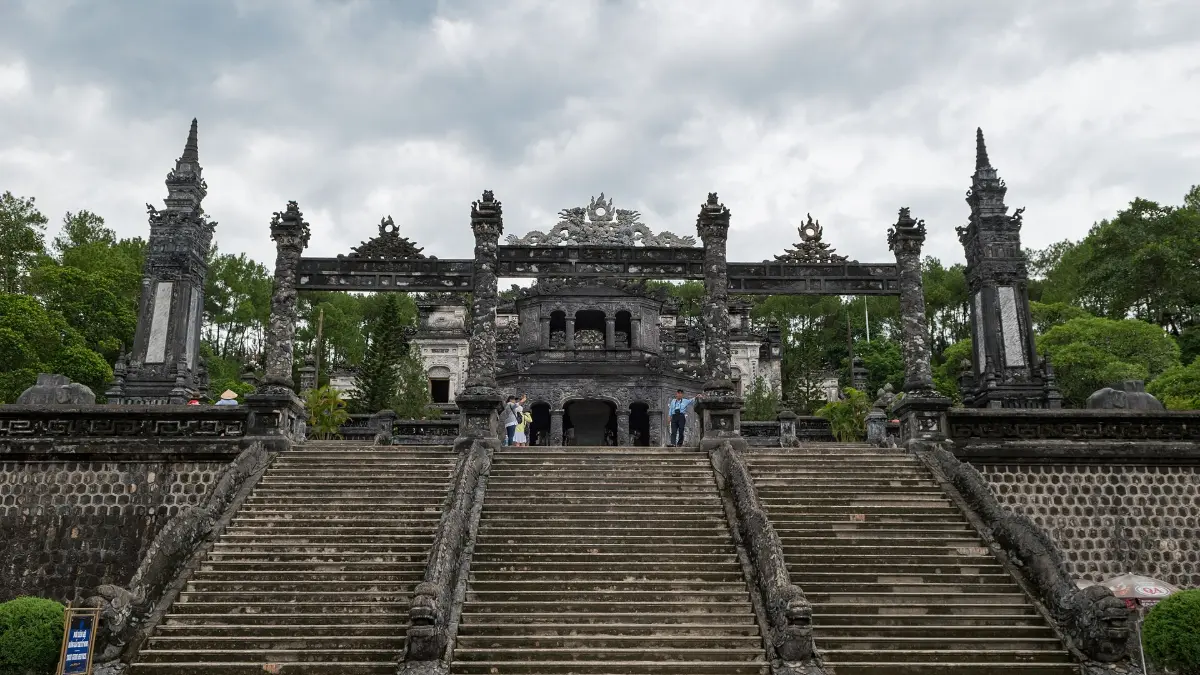
- Khai Dinh Tomb: the dramatic hillside tomb with mosaic interiors.
- Tu Duc Tomb: a romantic retreat of lakes and pavilions.
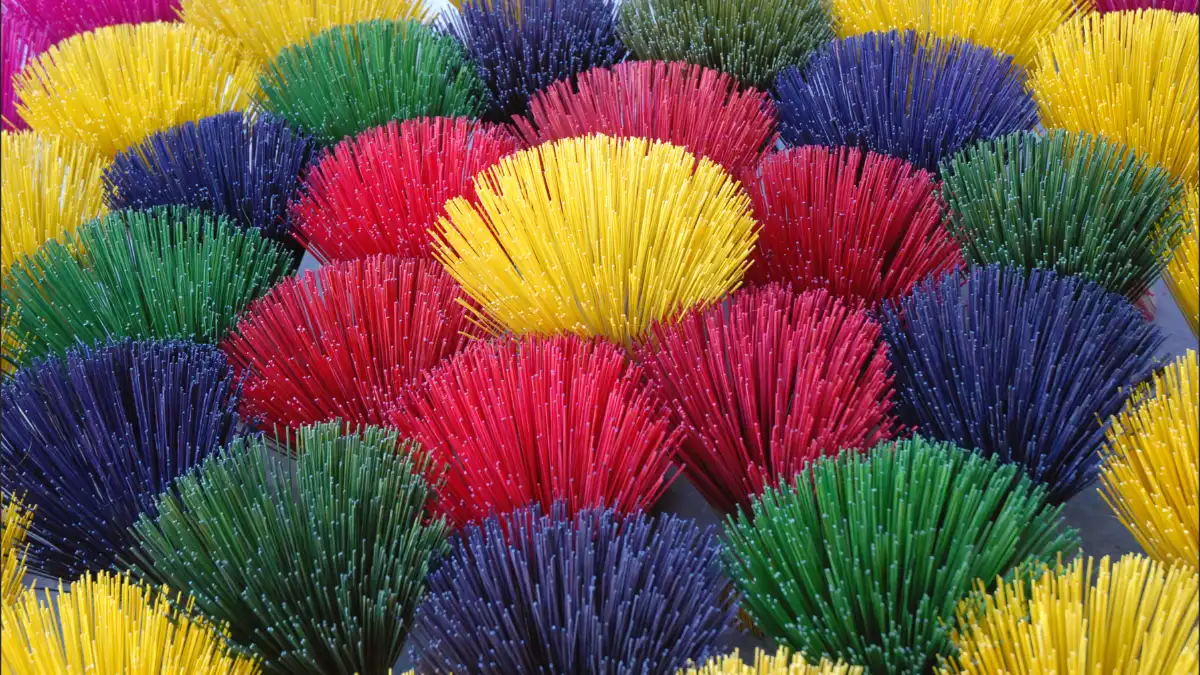
- Thuy Xuan Incense Village: a colourful stop on the way back to the city.
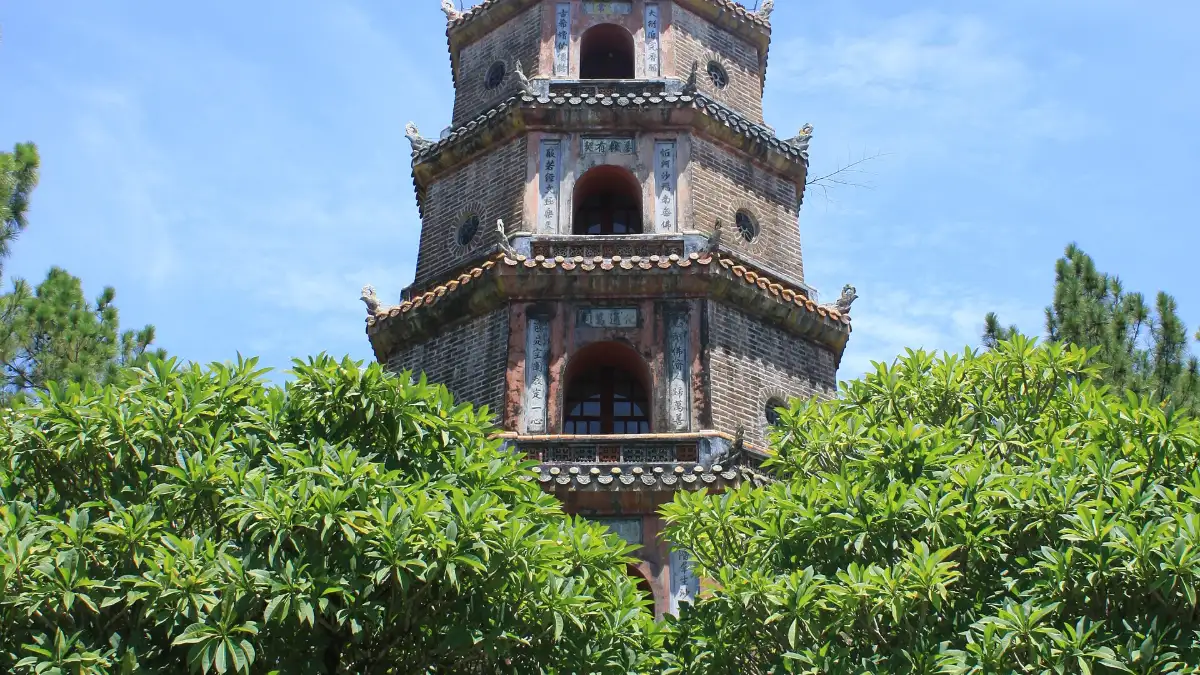
- Thien Mu Pagoda: Hue’s best-known pagoda, upstream on the Perfume River.
- Hue Imperial City: the palaces Minh Mang completed.
Sightseeing in Hue for First-Time Visitors: Where Minh Mang Tomb Fits
One day in Hue? The Imperial City in the morning and Tu Duc and Khai Dinh tombs in the afternoon is the classic plan; add Minh Mang only if you start early.
Two days? Make day two a tomb and river day: Minh Mang, Khai Dinh, the incense village and Thien Mu Pagoda. Check our Hue travel tips and best areas to stay in Hue.
Plan your trip with our Hue travel guide and Hue tours. Contact Vietnam Tour Expert Team for a free custom itinerary.
Frequently Asked Questions about Minh Mang Tomb
1. Where is Minh Mang Tomb?
Minh Mang Tomb is on Cam Ke Hill in Kim Long Ward, Hue City, about 12 km south-west of the centre near the source of the Perfume River.
2. How much is the Minh Mang Tomb ticket?
The Minh Mang Tomb ticket costs 150,000 VND for adults and 30,000 VND for children aged 7–12; under-7s are free.
3. What are the Minh Mang Tomb opening hours?
From 16 March to 15 October tickets are sold 6:30–17:30 (closing 18:30); from 16 October to 15 March, 7:00–17:00 (closing 18:00).
4. When was Minh Mang Tomb built?
Minh Mang Tomb was built from April 1840 to early 1843, finished under Emperor Thieu Tri after Minh Mang died in 1841.
5. Why is Minh Mang Tomb famous?
Minh Mang Tomb is famous for its symmetrical layout along a central axis of more than 700 m, harmonised with lakes and pine hills.
6. How long do you need at Minh Mang Tomb?
Allow 1 to 1.5 hours at Minh Mang Tomb to walk the full axis to the burial mound and back.
7. Is Minh Mang Tomb worth visiting?
Yes. Many travellers consider Minh Mang Tomb the most beautiful and harmonious of the Hue royal tombs.
8. Is Minh Mang Tomb included in the combo ticket?
Yes. Minh Mang Tomb is part of the 3-site (420,000 VND) and 4-site (530,000 VND) combo tickets, and a 2-site ticket with Gia Long Tomb costs 240,000 VND.
9. Can you see Minh Mang’s grave?
The emperor lies under a mound inside the circular Buu Thanh wall at Minh Mang Tomb; the gate is normally locked, but you can view the enclosure from the steps.
10. How do I get to Minh Mang Tomb?
Most visitors reach Minh Mang Tomb by taxi, Grab or private car in 25–30 minutes; our guide to Hue transport has details.
11. Can I visit Minh Mang Tomb by boat?
Some Perfume River boat tours include Minh Mang Tomb, but road transport is faster and more flexible.
12. Which tombs are near Minh Mang Tomb?
Gia Long Tomb lies nearby on the opposite bank of the river, and Khai Dinh and Tu Duc tombs are each about 20–25 minutes from Minh Mang Tomb by car.
13. Is there a dress code at Minh Mang Tomb?
Modest dress is expected at Minh Mang Tomb, especially inside Sung An Temple; remove hats indoors.
14. What is the best time to visit Minh Mang Tomb?
Visit Minh Mang Tomb in the morning or late afternoon, ideally from February to April; lotus flowers often bloom on the lakes in early summer.
15. Who was Emperor Minh Mang?
Minh Mang was the second Nguyen emperor (reigned 1820–1841), a reformer who centralised the state; Minh Mang Tomb is his resting place.
16. Is Minh Mang Tomb suitable for children?
Yes. Minh Mang Tomb has open spaces and lakes, but supervise children near the water and on the bridges.
Related Posts
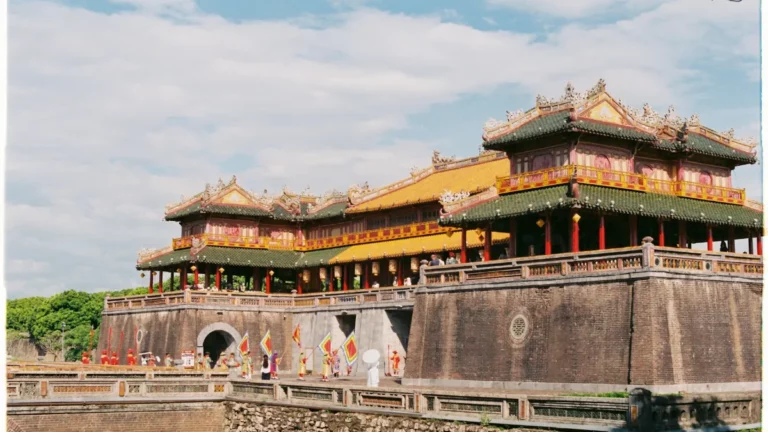
Hue Travel Tips 2026: Best Time, Tickets & Dress Code
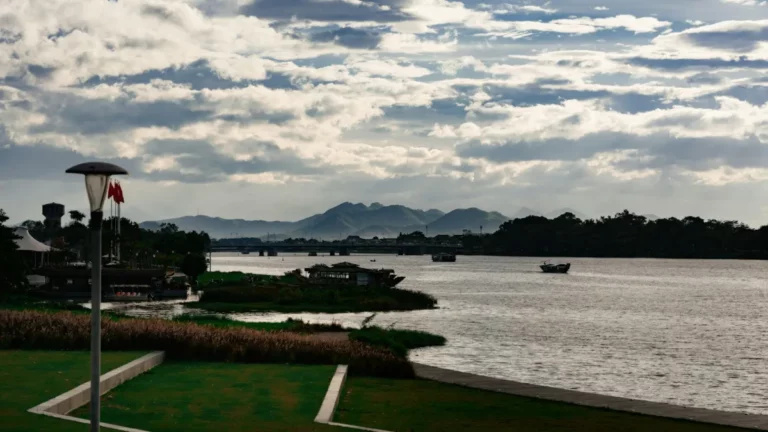
Where to Stay in Hue: Best Areas & Hotels by Budget
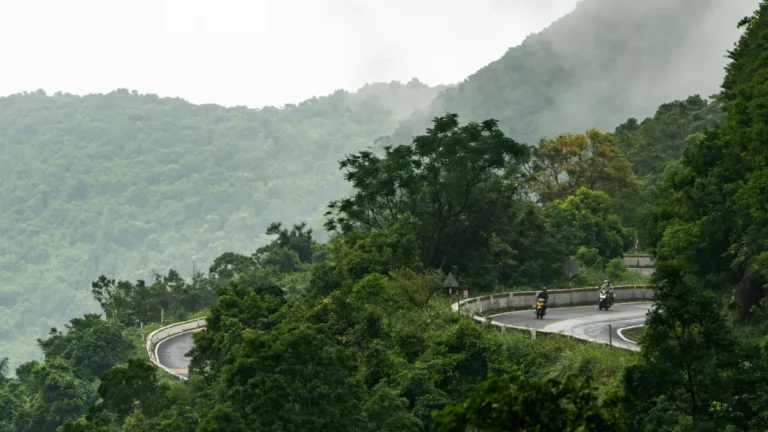
Hue Transportation: Airport, Trains, Hai Van Pass & Boats
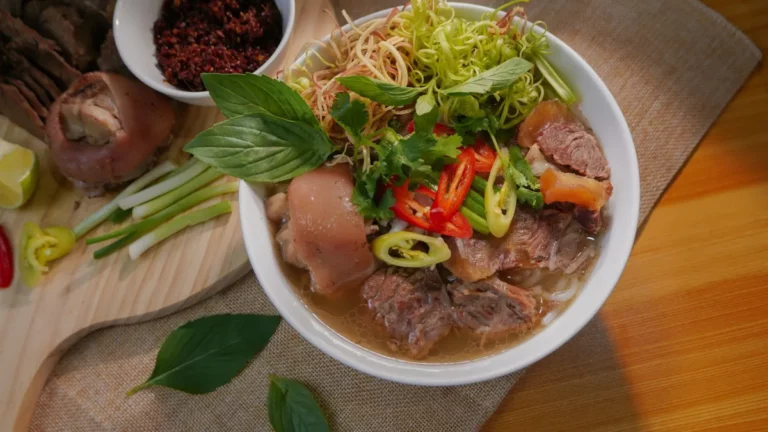
Hue Food Guide: Bun Bo Hue, Royal Cuisine & Where to Eat
Lang Co Beach: Bay, Lagoon & Seafood Between Hue and Da Nang