Thien Mu Pagoda Hue: History, Dragon Boats & Tips
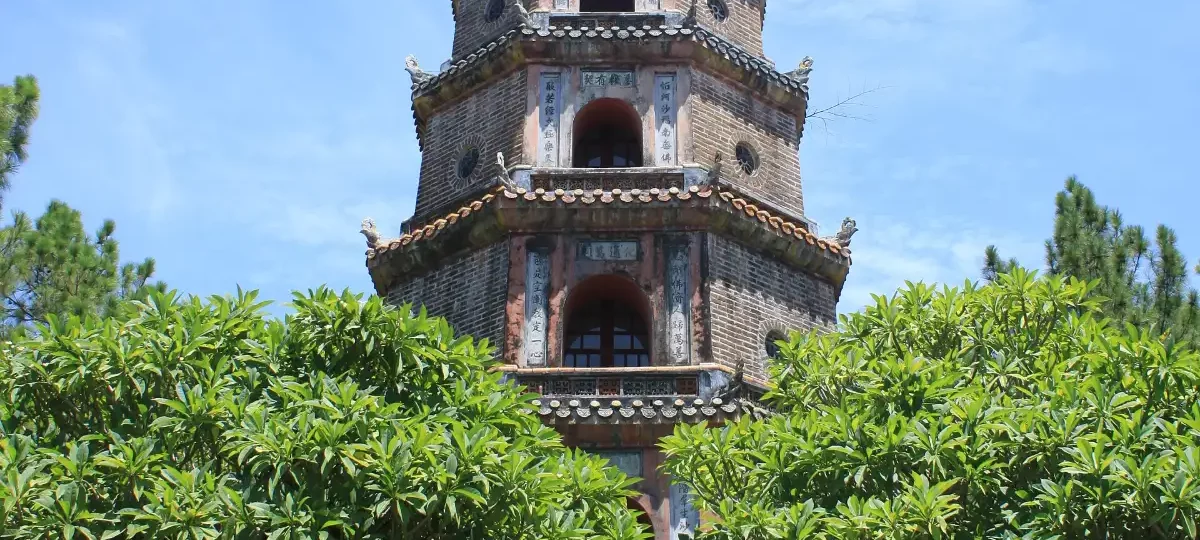
Thien Mu Pagoda (Chùa Thiên Mụ, “Pagoda of the Celestial Lady”) is Hue’s oldest and most famous Buddhist temple, founded in 1601 on Ha Khe Hill above the Perfume River, about 4–5 km west of the Citadel. Its seven-storey Phuoc Duyen Tower is the unofficial symbol of Hue. Entry is free; it is still an active monastery, so dress modestly.
Status (checked October 2026): open daily as normal and free to enter during daylight hours. It is a working monastery: shoulders and knees must be covered, and the riverbank steps can flood during heavy October–November rains.
Why Thien Mu Pagoda is worth seeing:
- The symbol of Hue: the 21 m octagonal Phuoc Duyen Tower, built in 1844, appears on countless postcards.
- Over 400 years of history: founded by Lord Nguyen Hoang in 1601 and patronised by the Nguyen lords and emperors.
- National treasure: the great bronze bell cast in 1710.
- Modern history: the Austin car that carried Thich Quang Duc to his self-immolation in 1963.
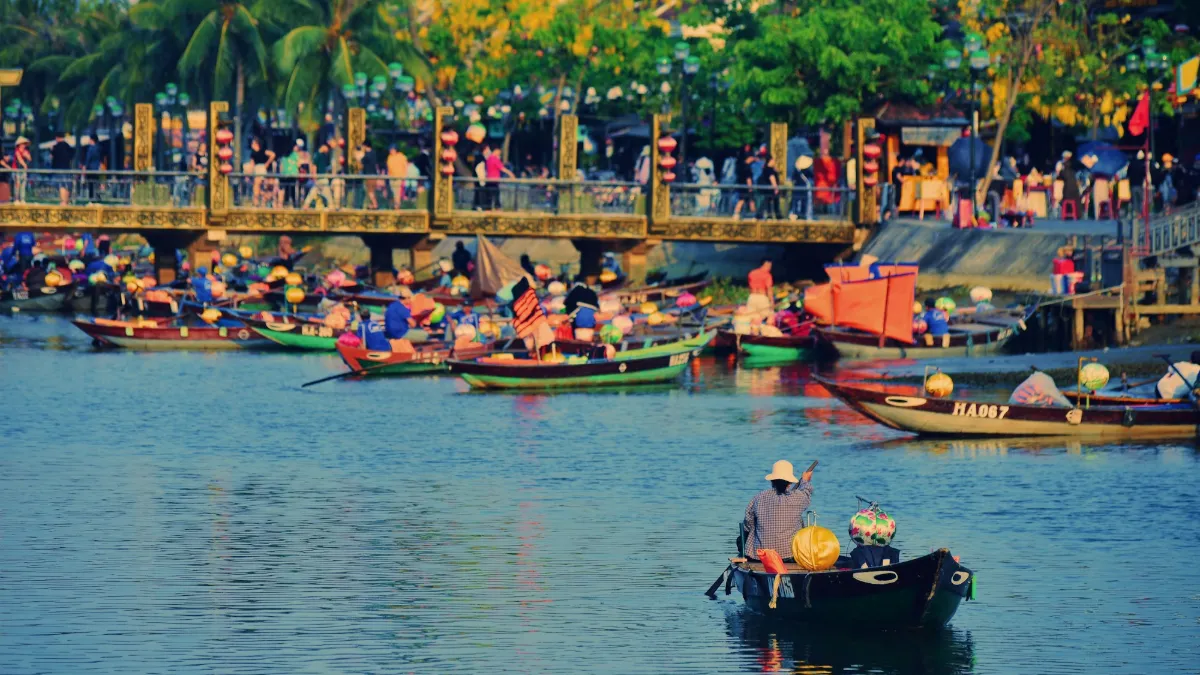
- River setting: arrive by dragon boat along the Perfume River.
- Free: no ticket needed.
Thien Mu Pagoda at a Glance
| Vietnamese name | Chùa Thiên Mụ (also Chùa Linh Mụ) |
|---|---|
| Location | Ha Khe Hill, Nguyen Phuc Nguyen Street, Kim Long Ward (formerly Huong Long), Hue City, on the north bank of the Perfume River |
| Distance | About 4–5 km west of the Citadel; 10–15 minutes by car |
| Founded | 1601, by Lord Nguyen Hoang |
| Known for | Phuoc Duyen Tower, the 1710 bronze bell, stele on a stone turtle, Thich Quang Duc’s Austin car |
| Recognition | Special national relic; the bell is a national treasure (2013) |
| Opening hours | Daily, daylight hours (roughly 8:00–17:00; not officially fixed) |
| Entrance fee | Free |
| Time needed | 45 minutes–1 hour |
| Best time | Early morning or late afternoon; February–April |
| Nearby | Hue Imperial City, Perfume River boat pier, Van Mieu (Temple of Literature of Hue), royal tombs |
| Find it | Google Maps · Tripadvisor · Wikipedia |
Is Thien Mu Pagoda Worth Visiting?
Yes. It is free, beautiful and full of history, and it takes less than an hour. The tower and the river view are the highlights, but the quiet gardens behind the main hall and the sight of young monks at their daily routines give the visit its atmosphere. It combines naturally with a boat trip and the Hue Imperial City.
- Best for: first-time visitors, photographers, those interested in Buddhism and modern Vietnamese history.
- Skip if: you have already seen several pagodas and only have a few hours in Hue.
- Short on time? See the tower, the bell pavilion, the main hall and the Austin car in 30 minutes.
History and Legend of Thien Mu Pagoda
The prophecy of the Celestial Lady
According to the royal annals, local people told Lord Nguyen Hoang, then governor of Thuan Hoa, of an old woman dressed in red and blue who appeared on the hill and foretold that a lord would build a pagoda there to bring prosperity to the land. She then vanished. In 1601 Nguyen Hoang founded the pagoda and named it Thien Mu, “Celestial Lady”.
Growth under the Nguyen lords
Lord Nguyen Phuc Tan carried out major works in 1665. Under Lord Nguyen Phuc Chu, the Chinese Zen master Thich Dai San came to Hue in 1695, and in 1710 the great bell was cast. In 1714 Phuc Chu launched the largest expansion in the pagoda’s history, adding halls, gates and pavilions, and he recorded the work on a stele set on a stone turtle.
The tower and the 20th century
Emperor Thieu Tri built the seven-storey tower, first called Tu Nhan, in 1844; it was later renamed Phuoc Duyen. A typhoon badly damaged the pagoda in 1904, and Emperor Thanh Thai ordered repairs. In 1963 Thien Mu became a centre of Buddhist protests against the Diem government, and the monk Thich Quang Duc travelled from here to Saigon, where he burned himself to death in protest. A large restoration of 18 structures took place in 2003–2006.
What to See at Thien Mu Pagoda
1. The riverside steps and gate
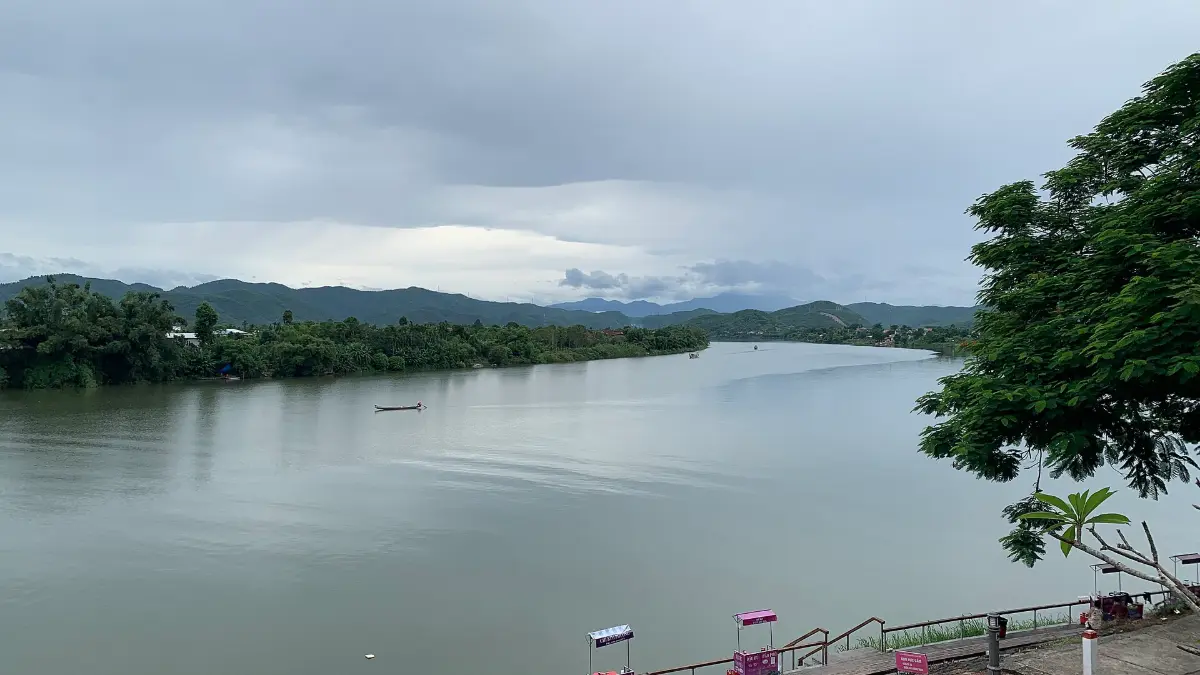
From the riverbank, stone steps climb Ha Khe Hill to the pagoda. Look back for the classic view along the Perfume River towards the city.
2. Phuoc Duyen Tower
The octagonal brick tower rises 21 m in seven storeys, each said to represent a manifestation of the Buddha. It is closed to visitors inside, but the façade and terrace are the main photo spot. Before its 2003–2006 restoration, the tower leaned by about 7 degrees.
3. The stele pavilion and stone turtle
To one side of the tower, a pavilion shelters a tall stele from 1715 on the back of a marble turtle, a symbol of longevity. It records Lord Nguyen Phuc Chu’s works and his devotion to Buddhism.
4. The bell tower and the 1710 bell
On the other side, the bell pavilion holds the bronze bell cast in 1710. It weighs about 2 tonnes (recorded as 3,285 can in the old Vietnamese unit), was recognised as a national treasure in 2013, and its sound, said to carry far across the river, inspired a poem by Emperor Thieu Tri.
5. Nghi Mon gate and the guardian statues
The triple gate behind the tower is flanked by large statues of Dharma guardians. Passing through it you enter the monastery proper.
6. Dai Hung main hall
The main sanctuary contains a laughing Maitreya Buddha, flanked by the bodhisattvas Manjushri and Samantabhadra, along with bronze gongs and lacquered boards.
7. Thich Quang Duc’s Austin car
In a garage behind the main hall stands the Austin car in which Thich Quang Duc was driven to the Saigon crossroads on 11 June 1963. The photograph of his self-immolation shocked the world and became one of the defining images of the period.
8. The gardens and pine grove
Behind the halls, bonsai gardens, monks’ quarters and a pine grove with the stupa of the 20th-century abbot Thich Don Hau create a calm end to the visit.
Thien Mu Pagoda Entrance and Opening Hours
| Item | Details |
|---|---|
| Entrance fee | Free; donations welcome |
| Opening | Daily during daylight; roughly 8:00–17:00 |
| Tower interior | Not open to visitors |
| Dragon boat from central Hue | Paid separately at the city pier; agree the price and route first |
| Parking | Small fee for motorbikes and cars at the foot of the hill |
Thien Mu Pagoda is an active monastery and has no official website or ticket office; hours can change for religious ceremonies.
Etiquette at Thien Mu Pagoda
- Cover shoulders and knees; carry a scarf or sarong in summer.
- Remove shoes and hats before entering the main hall.
- Speak quietly and do not photograph monks at close range without permission.
- Do not climb on the stele, turtle or bell.
- Do not point your feet at altars or touch statues.
How to Get to Thien Mu Pagoda
| From | How | Time |
|---|---|---|
| Central Hue (south bank) | Taxi or Grab | 10–15 min |
| Central Hue | Dragon boat on the Perfume River | About 30–45 min each way |
| Hue Imperial City | Taxi, Grab or bicycle along the north bank | 10 min by car; 20 min by bike |
| Royal tombs | Combine by car on a tomb day | 20–30 min |
For the best ways to get around, see our Hue transportation guide.
Best Time to Visit Thien Mu Pagoda
| When | What to expect |
|---|---|
| Early morning | Mist on the river, monks at their morning routines, few visitors |
| Late afternoon | Warm light on the tower and boats returning to town |
| February–April | Mild, dry weather; the most comfortable season |
| May–August | Hot; go early and bring water |
| September–December | Rainy season; floods can affect the riverbank in October–November |
| Buddhist festivals (e.g. Vesak) | Colourful ceremonies, but crowded |
Local Expert Tips for Thien Mu Pagoda
These tips come from years of arranging Hue tours for international travellers.
- Arrive by boat and leave by road: the river approach is the most memorable, and a car saves time afterwards.
- Go before 9:00 to beat the tour groups and enjoy the morning calm.
- Agree on dragon boat prices and the route before boarding.
- Pair it with the Imperial City in the morning or with the tombs in the afternoon.
- Look out for vegetarian dishes in our Hue food guide; Hue has a strong Buddhist vegetarian tradition.
Thien Mu Pagoda vs Tu Hieu Pagoda
| Thien Mu Pagoda | Tu Hieu Pagoda | |
|---|---|---|
| Setting | Hilltop on the Perfume River | Pine forest near Tu Duc Tomb |
| Founded | 1601 | 19th century |
| Highlight | Seven-storey tower, bell, Austin car | Quiet lotus ponds and meditation atmosphere |
| Crowds | Busy at midday | Usually quiet |
| Entrance | Free | Free |
Our view: Thien Mu is the essential pagoda for first-time visitors; add Tu Hieu if you want a quieter, more contemplative stop on the way to Tu Duc Tomb.
Nearby Attractions
- Hue Imperial City: the Nguyen palace complex, 10 minutes away.
- Truong Tien Bridge: Hue’s historic bridge, near the boat pier.
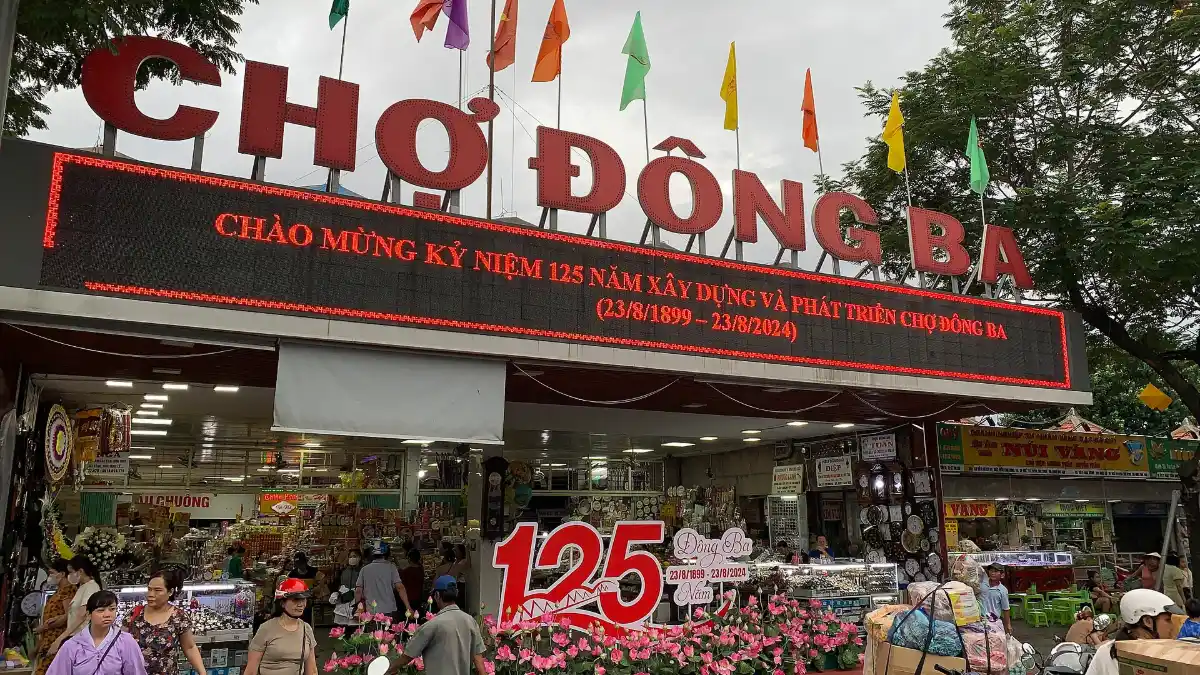
- Dong Ba Market: the city’s main market by the river.
- Minh Mang Tomb: upstream on the Perfume River.
- Khai Dinh Tomb: the ornate hillside tomb south of the city.
Sightseeing in Hue for First-Time Visitors: Where Thien Mu Pagoda Fits
One day in Hue? Start at the Imperial City, take a short ride or boat to Thien Mu Pagoda before lunch, and spend the afternoon at Tu Duc and Khai Dinh tombs.
Two days? Make a Perfume River boat trip the centrepiece of day two, with Thien Mu and Minh Mang Tomb. Our Hue travel tips and where to stay in Hue guide help with the details.
Plan your trip with our Hue travel guide and Hue tours. Contact Vietnam Tour Expert Team for a free custom itinerary.
Frequently Asked Questions about Thien Mu Pagoda
1. Where is Thien Mu Pagoda?
Thien Mu Pagoda stands on Ha Khe Hill in Kim Long Ward, Hue City, on the north bank of the Perfume River about 4–5 km west of the Citadel.
2. Is there an entrance fee for Thien Mu Pagoda?
No. Thien Mu Pagoda is free to enter; donations are welcome.
3. What are the opening hours of Thien Mu Pagoda?
Thien Mu Pagoda is open daily during daylight, roughly 8:00–17:00, though hours are not officially fixed and may change for ceremonies.
4. When was Thien Mu Pagoda built?
Thien Mu Pagoda was founded in 1601 by Lord Nguyen Hoang; the famous tower was added by Emperor Thieu Tri in 1844.
5. How tall is the Thien Mu Pagoda tower?
The Phuoc Duyen Tower at Thien Mu Pagoda is 21 m high, with seven storeys and an octagonal plan.
6. Can you go inside the Thien Mu Pagoda tower?
No. The tower at Thien Mu Pagoda is not open to visitors, but you can walk around it on the terrace.
7. What is the dress code at Thien Mu Pagoda?
Cover your shoulders and knees at Thien Mu Pagoda, and remove shoes and hats before entering the main hall.
8. Why is there a car at Thien Mu Pagoda?
Thien Mu Pagoda displays the Austin car that carried the monk Thich Quang Duc to Saigon, where he burned himself in protest in June 1963.
9. How long do you need at Thien Mu Pagoda?
Plan 45 minutes to an hour at Thien Mu Pagoda, or longer if you arrive by boat.
10. How do I get to Thien Mu Pagoda by boat?
Dragon boats leave from the city pier near Truong Tien Bridge and reach Thien Mu Pagoda in about 30–45 minutes; agree the price first. See our Hue transport guide for more options.
11. What does Thien Mu Pagoda mean?
Thien Mu means “Celestial Lady”, after the legendary old woman who prophesied the pagoda’s founding.
12. Is Thien Mu Pagoda worth visiting?
Yes. Thien Mu Pagoda is free, historic and beautifully sited, and it is one of the essential sights in Hue.
13. Is Thien Mu Pagoda still an active monastery?
Yes. Monks live and study at Thien Mu Pagoda, so visitors should behave quietly and respectfully.
14. What is the best time to visit Thien Mu Pagoda?
Early morning or late afternoon is best at Thien Mu Pagoda, especially between February and April.
15. Is Thien Mu Pagoda a protected monument?
Yes. Thien Mu Pagoda is ranked as a special national relic of Vietnam, and its 1710 bronze bell is a national treasure.
16. Can I combine Thien Mu Pagoda with the royal tombs?
Yes. Thien Mu Pagoda fits well on a tomb day with Tu Duc Tomb or Minh Mang Tomb, or on a Perfume River boat trip.
Related Posts
Hue Travel Tips 2026: Best Time, Tickets & Dress Code
Where to Stay in Hue: Best Areas & Hotels by Budget
Hue Transportation: Airport, Trains, Hai Van Pass & Boats
Hue Food Guide: Bun Bo Hue, Royal Cuisine & Where to Eat
Lang Co Beach: Bay, Lagoon & Seafood Between Hue and Da Nang