Bich Dong Pagoda: The Three-Level Cave Pagoda Near Tam Coc, Ninh Binh (2026)
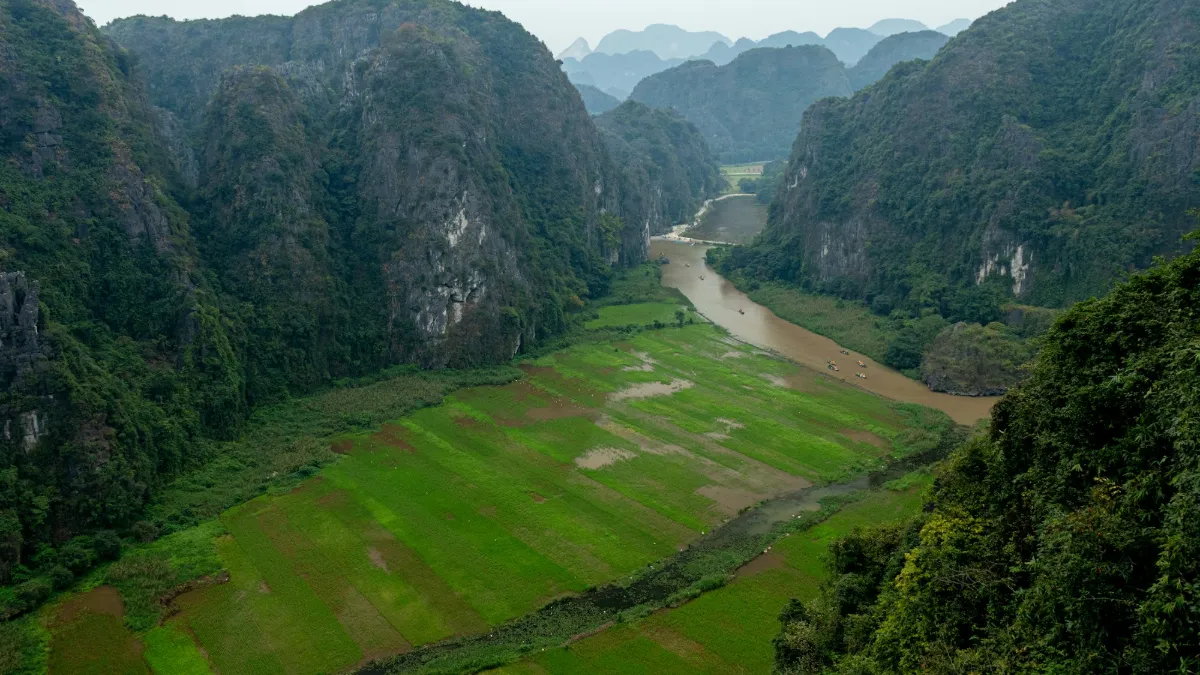
Bich Dong Pagoda (Chùa Bích Động, “Jade Grotto”) is a group of three pagodas built into a limestone mountain about 2 km from the Tam Coc boat wharf in Ninh Binh. Dating from the 15th century and part of the UNESCO-listed Trang An Landscape Complex, it is famous for its Lower, Middle and Upper pagodas linked by stone steps and caves. Entry is free.
Status (checked October 2026): open daily as normal and free to enter, roughly during daylight hours (about 7:30–16:30 for the pagoda halls). The stone steps can be slippery after rain; festival crowds peak in the first three lunar months (February–April).
Why Bich Dong Pagoda is worth seeing:
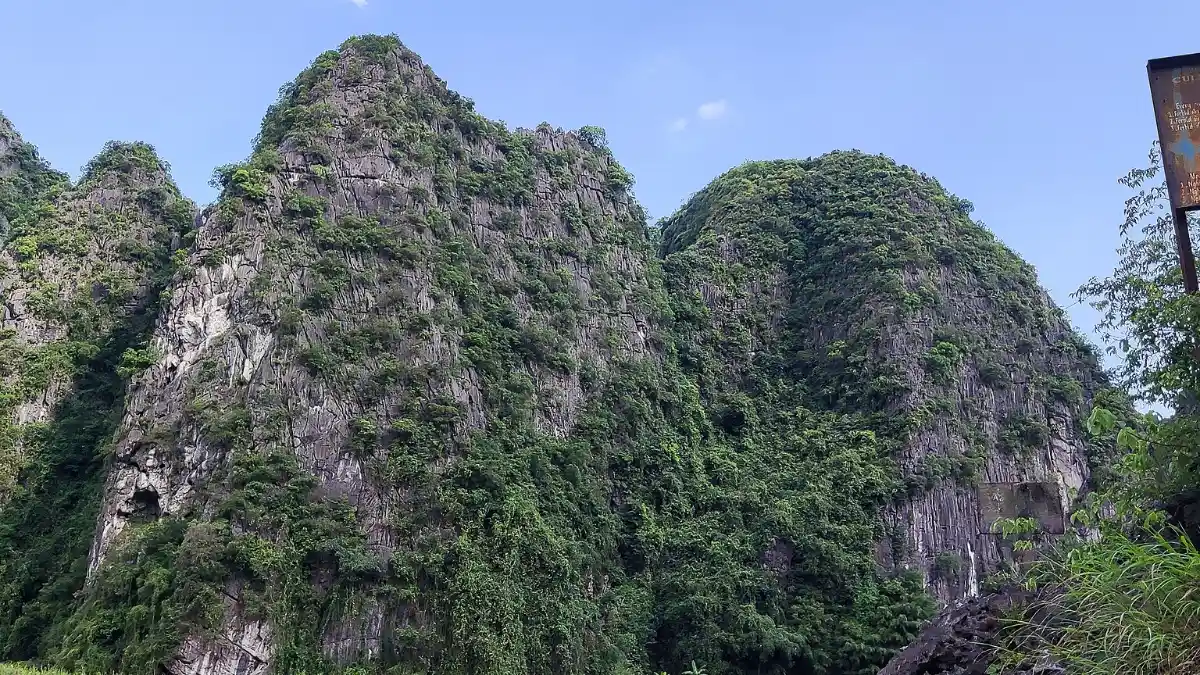
- A pagoda inside a mountain: the Middle Pagoda is partly set in a cave, with an open front facing rice fields.
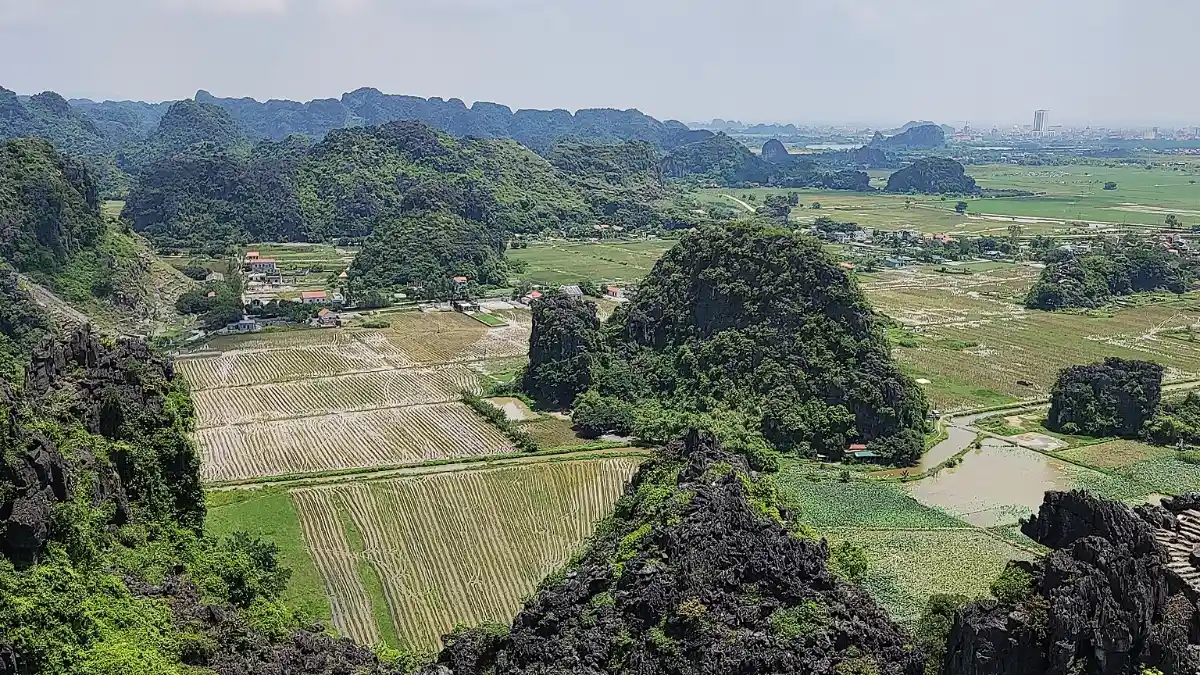
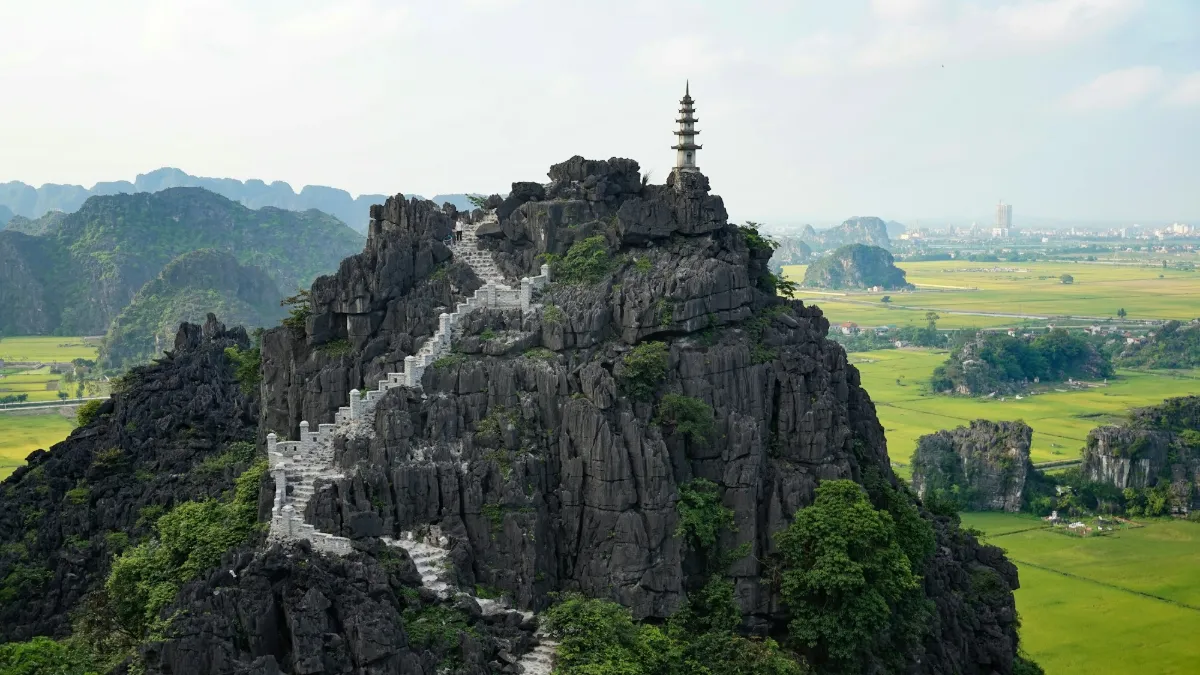
- Three levels climbing a karst peak, ending at a viewpoint over Tam Coc.
- Six centuries of history, from a 1428 hermitage to the classic 18th-century layout.
- UNESCO setting: part of the Trang An Landscape Complex, a mixed World Heritage Site since 2014.
- Free and quiet compared with the busy Tam Coc boat trip next door.
Bich Dong Pagoda at a Glance
| Vietnamese name | Chùa Bích Động |
|---|---|
| Location | Dam Khe village, Tam Coc area (formerly Ninh Hai commune, Hoa Lu), Ninh Binh province |
| Distance | About 2 km from Tam Coc wharf, about 7 km from Ninh Binh city centre and about 100 km from Hanoi |
| Known for | Three cave pagodas on a karst mountain, stone steps, views over Tam Coc |
| Recognition | Part of the Trang An Landscape Complex (UNESCO World Heritage, 2014); special national relic area (2012) |
| Opening hours | Daily, about 7:30–16:30 (grounds accessible in daylight) |
| Entrance fee | Free |
| Time needed | 45 minutes to 1.5 hours |
| Best time | Early morning or late afternoon; May–June for golden rice, October–April for cooler climbing |
| Nearby | Tam Coc, Thung Nham, Mua Cave, Trang An, Hoa Lu |
| Find it | Google Maps · Tripadvisor · UNESCO · Wikipedia |
Is Bich Dong Pagoda Worth Visiting?
Yes, it is one of the most atmospheric small pagodas in northern Vietnam, and it costs nothing. It takes about an hour, sits right beside Tam Coc, and rewards a short climb with cave shrines and views. It is not grand like Bai Dinh; its charm is age, setting and quiet.
- Best for: travellers staying in Tam Coc, cyclists, photographers and anyone interested in traditional Vietnamese temples.
- Skip if: you have trouble with steep, uneven steps; the Lower Pagoda alone is still worth a look.
- Short on time: combine it with the Tam Coc boat trip or cycle here from Tam Coc town in 10–15 minutes.
History of Bich Dong Pagoda
According to local records, a small hermitage known as the Cave Pagoda (Chùa Động) was built here in 1428, at the start of the Le dynasty. In 1705 two monks from Nghe An, Tri Kien and Tri The, rebuilt the site and created the three-level layout seen today. The pagoda was expanded again in the 1740s.
In 1773–1774 the site received the name Bích Động (“Jade Grotto”), traditionally credited to Lord Trinh Sam during a visit, though some accounts attribute it to the scholar-official Nguyen Nghiem. It became known as “Nam thiên đệ nhị động”, the second most beautiful cave in the southern realm, after Huong Tich in the Perfume Pagoda area.
The Tam Coc–Bich Dong area was recognised as a special national relic in 2012 and, in 2014, became part of the Trang An Landscape Complex, Southeast Asia’s first mixed (cultural and natural) World Heritage Site. Since 1 July 2025 the area belongs to the enlarged Ninh Binh province, which now includes the former Ha Nam and Nam Dinh provinces.
What to See at Bich Dong Pagoda
1. The Lower Pagoda (Chùa Hạ)
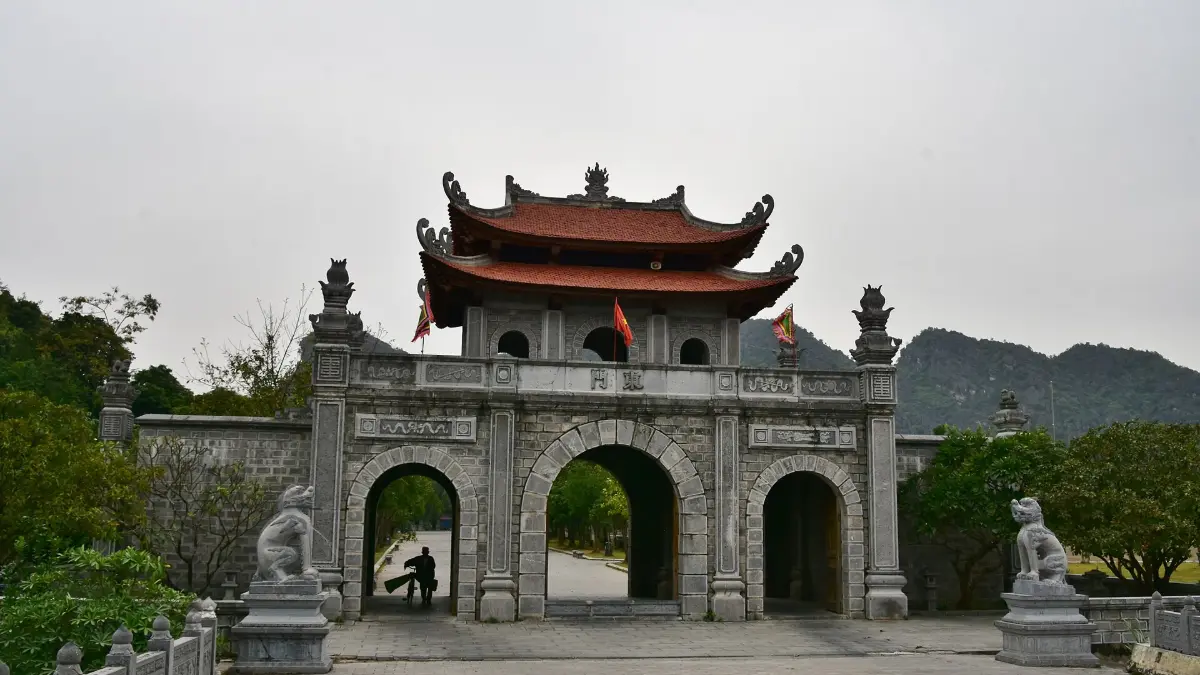
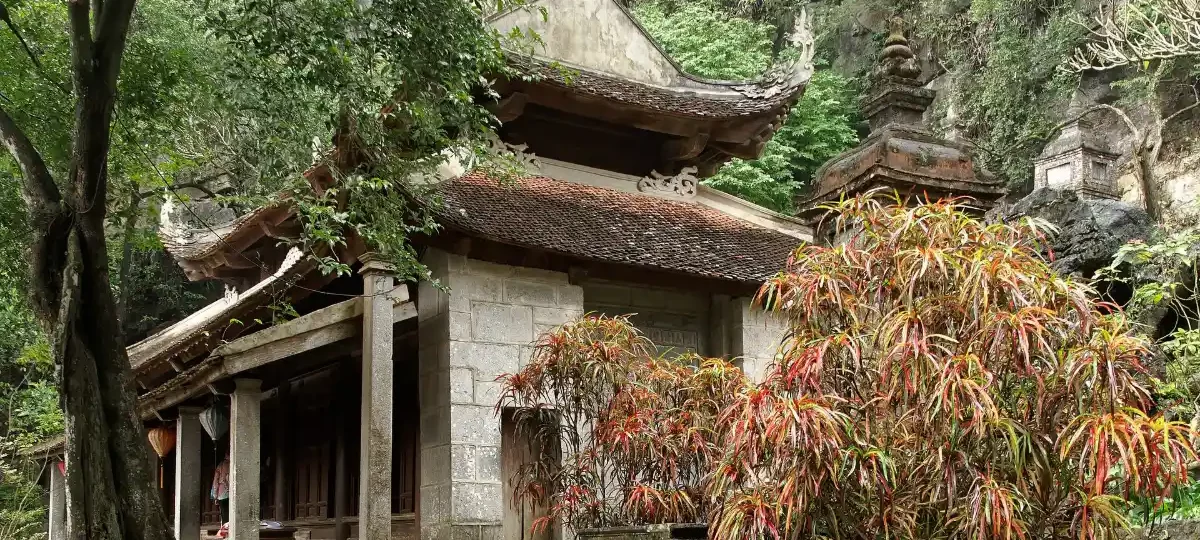
At the foot of the mountain beside a small river and lotus pond, the Lower Pagoda has five bays and a simple layout with curved tiled roofs and stone columns. A stone bridge and gate lead to it from the road.
2. The stone steps
About 100–120 stone steps wind up the mountainside to the Middle Pagoda, shaded by trees. The climb takes 5–10 minutes.
3. The Middle Pagoda (Chùa Trung)
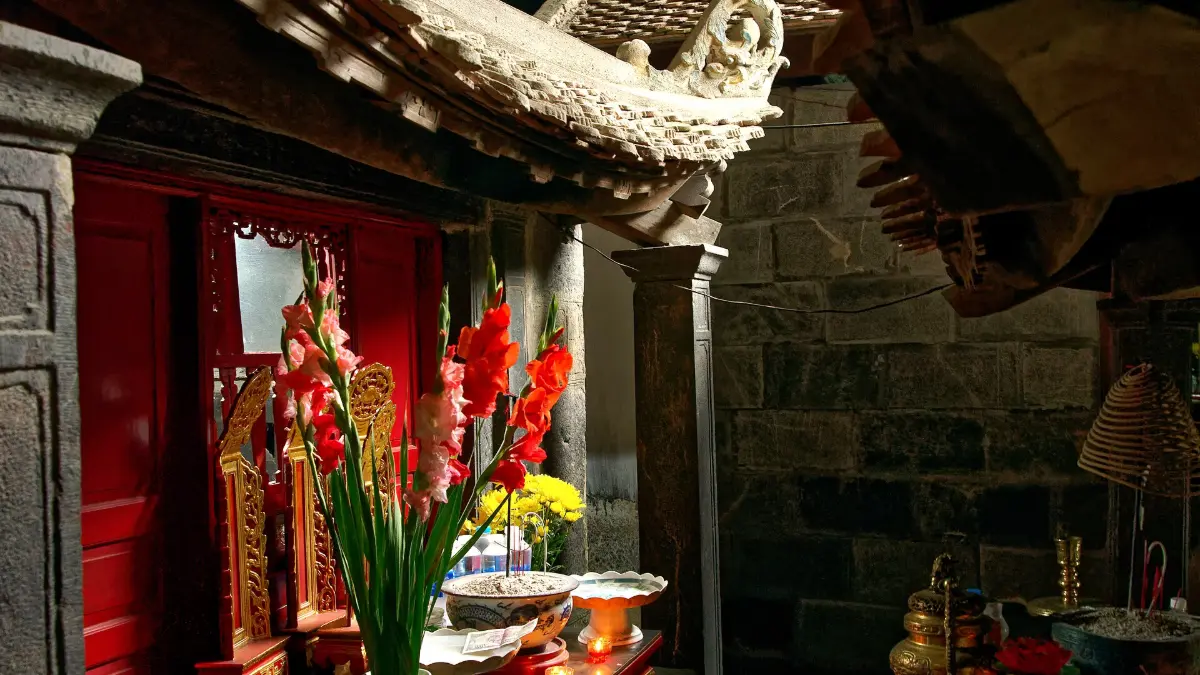
The highlight: a three-bay pagoda partly built into a cave, with its front open to views of rice fields and karst peaks. Inside are Buddha statues and altars.
4. The dark cave
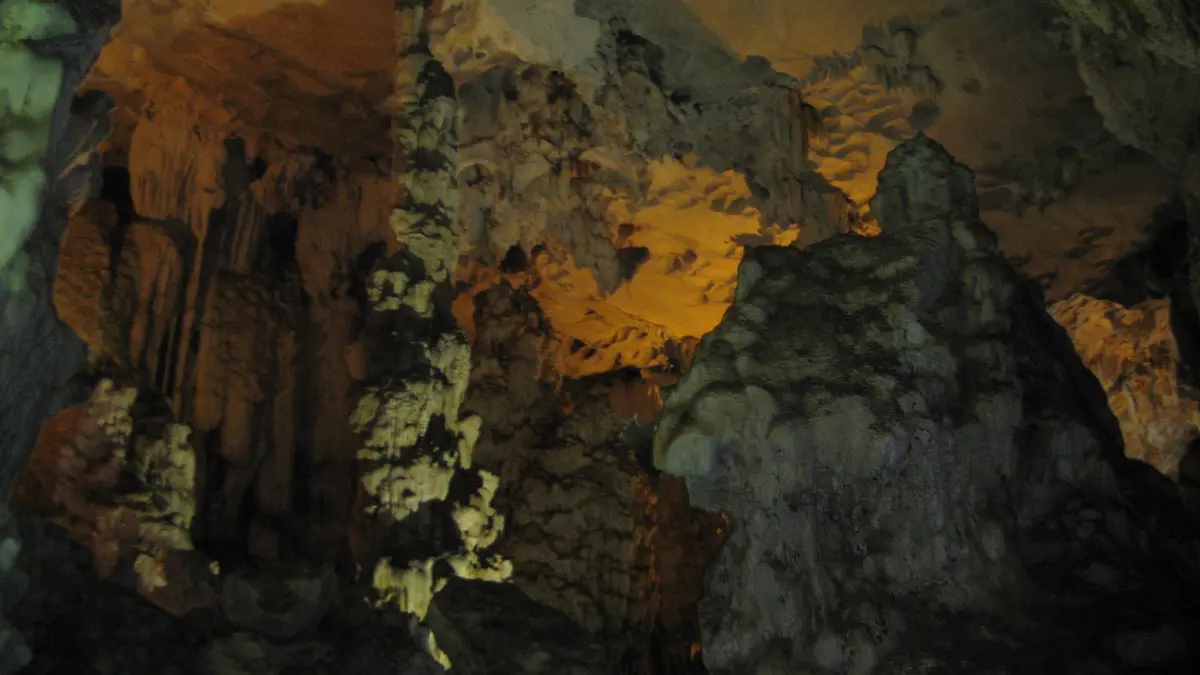
Next to the Middle Pagoda, a short passage leads into a dark cave with rock formations that locals compare to animals and figures. Steps are uneven; a phone torch helps.
5. The Upper Pagoda (Chùa Thượng)
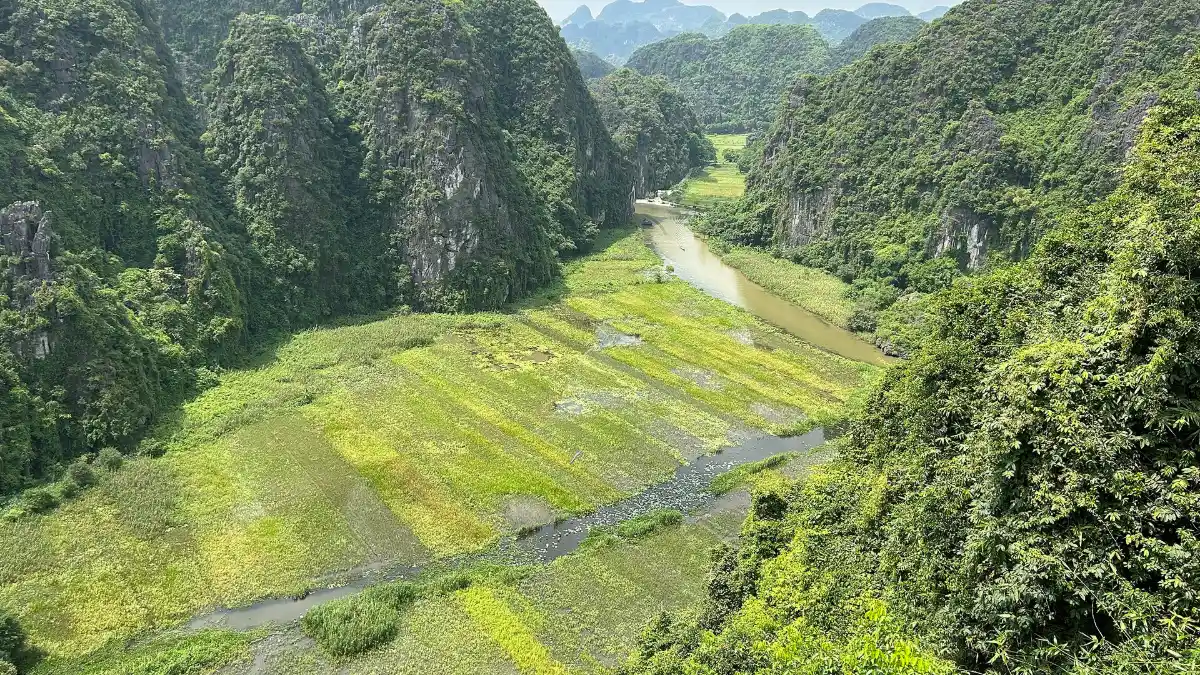
About 40 more steps lead to the small Upper Pagoda near the summit, dedicated to Quan Am, the Bodhisattva of Compassion. The terrace looks over the Ngo Dong River valley and Tam Coc’s rice fields.
6. Xuyen Thuy water cave
Behind the mountain, a water cave known as Xuyen Thuy runs beneath an arched roof of stone. Ask locally whether boats are running; access depends on water levels.
Bich Dong Pagoda Tickets and Opening Hours (2026)
| Item | Details |
|---|---|
| Pagoda entry | Free |
| Opening hours | Daily, about 7:30–16:30 for the halls |
| Parking | Small fee for cars and motorbikes near the gate |
| Tam Coc boat trip (separate) | About 250,000 VND per adult including boat (2025 provincial price list) |
Bich Dong itself has no ticket; Tam Coc boat prices are set by the Ninh Binh authorities and may change.
How to Visit Bich Dong Pagoda, Step by Step
- Cycle, take a taxi or ride a motorbike about 2 km from Tam Coc town to the pagoda gate.
- Cross the stone bridge to the Lower Pagoda.
- Climb the steps to the Middle Pagoda and peek into the dark cave.
- Continue to the Upper Pagoda for the view.
- Return the same way and continue to Thung Nham, Mua Cave or Tam Coc wharf.
Etiquette at Bich Dong
- Cover shoulders and knees; carry a scarf or sarong if needed.
- Speak quietly; this is an active place of worship.
- Do not touch altars or offerings, and ask before photographing monks or worshippers.
- Wear shoes with grip; steps can be wet and mossy.
How to Get to Bich Dong Pagoda
| From | How | Time |
|---|---|---|
| Tam Coc town / wharf | Bicycle, motorbike or taxi (about 2 km) | 5–15 minutes |
| Ninh Binh city | Taxi, Grab or private car | About 20 minutes |
| Trang An wharf | Taxi or car | About 20 minutes |
| Hanoi | Private car, tour or limousine bus | About 2 hours |
| Hanoi by public transport | Train or bus to Ninh Binh, then taxi | About 2.5–3 hours |
See all the ways to arrive in our Ninh Binh transportation guide.
Best Time to Visit Bich Dong Pagoda
| When | What to expect |
|---|---|
| February–April (lunar 1st–3rd months) | Spring pilgrimage season; busy, especially around Tet. |
| Late May–early June | Golden rice around Tam Coc; lotus blooms near the Lower Pagoda; hot. |
| July–September | Hot and rainy; slippery steps. |
| October–January | Cool and dry; comfortable for the climb. |
| Time of day | Early morning for quiet and soft light; late afternoon for warm views from the top. |
Local Expert Tips for Bich Dong Pagoda
These tips come from years of arranging Ninh Binh tours for international travellers.
- Cycle here from Tam Coc through the rice fields; it is the most enjoyable approach.
- Visit after your Tam Coc boat trip to spread out the day and avoid midday heat on the river.
- Bring water and wear grippy shoes for the steps and the dark cave.
- Continue to Thung Nham Bird Park in the late afternoon to see thousands of birds return to roost.
- Go early during the spring festival season to avoid crowds.
- Find homestays within cycling distance in our Ninh Binh hotel and homestay guide.
Bich Dong Pagoda vs Bai Dinh Pagoda
| Feature | Bich Dong | Bai Dinh |
|---|---|---|
| Age | Founded 1428; layout from 1705 | Old pagoda 1136; new complex 2003–2010 |
| Size | Three small pagodas | Vietnam’s largest Buddhist complex |
| Atmosphere | Quiet, ancient, intimate | Monumental, busy |
| Cost | Free | Free entry; electric car about 100,000 VND |
| Time needed | About 1 hour | 2–3 hours |
| Best combined with | Tam Coc, Thung Nham, Mua Cave | Trang An, Hoa Lu |
Our view: if you prefer history and atmosphere, choose Bich Dong; for scale and spectacle, Bai Dinh. Both fit into two days in Ninh Binh.
Nearby Attractions
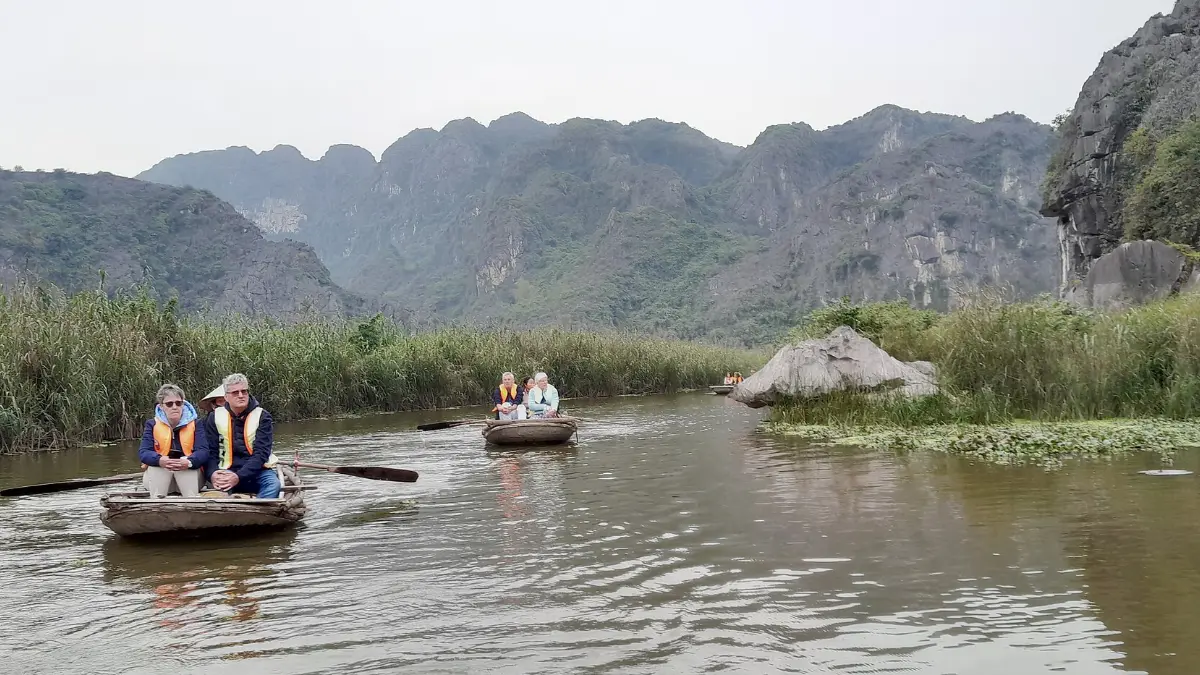
- Tam Coc: rowing boats through three river caves and rice fields.
- Thung Nham Bird Park: caves, gardens and a large bird colony.
- Mua Cave: about 500 steps to Ninh Binh’s best viewpoint.
- Thung Nang: a quiet valley boat trip close by.
- Trang An: the core of the UNESCO landscape complex.
- Hoa Lu Ancient Capital: 10th-century royal temples.
Sightseeing in Ninh Binh for First-Time Visitors: Where Bich Dong Fits
A perfect Tam Coc day: take an early Tam Coc boat trip, cycle to Bich Dong Pagoda mid-morning, have lunch in Tam Coc with ideas from our Ninh Binh food guide, and climb Hang Mua for sunset. On another day, see Trang An, Bai Dinh and the Hoa Lu temples. Check our Ninh Binh travel tips before you go.
Plan your trip with our Ninh Binh travel guide and Ninh Binh tours. Contact Vietnam Tour Expert Team for a free custom itinerary.
Frequently Asked Questions about Bich Dong Pagoda
1. What is Bich Dong Pagoda famous for?
Bich Dong Pagoda is famous for three pagodas built at different levels of a limestone mountain, including a Middle Pagoda set inside a cave, near Tam Coc in Ninh Binh.
2. Where is Bich Dong Pagoda?
Bich Dong is about 2 km from Tam Coc wharf in the former Ninh Hai commune of Hoa Lu, about 7 km from Ninh Binh city and 100 km from Hanoi.
3. Is there an entrance fee for Bich Dong Pagoda?
No, Bich Dong Pagoda is free to enter; only parking is charged.
4. What are Bich Dong Pagoda’s opening hours?
Bich Dong is open daily, with the halls open roughly from 7:30 to 16:30.
5. How old is Bich Dong Pagoda?
Bich Dong began as a hermitage in 1428 and took its three-level form in 1705, when monks Tri Kien and Tri The rebuilt it.
6. What does Bich Dong mean?
Bich Dong means “Jade Grotto” (or “green cave”), a name given in 1773–1774.
7. How many steps are there at Bich Dong Pagoda?
There are roughly 100–120 steps from the Lower to the Middle Pagoda at Bich Dong, and about 40 more to the Upper Pagoda.
8. How long does it take to visit Bich Dong?
Most visitors spend 45 minutes to 1.5 hours at Bich Dong.
9. Is Bich Dong part of the Trang An UNESCO site?
Yes, Bich Dong lies within the Trang An Landscape Complex, inscribed by UNESCO as a mixed World Heritage Site in 2014.
10. Can I combine Bich Dong with Tam Coc?
Yes, Bich Dong is about 2 km from the Tam Coc wharf, so most visitors see both on the same day.
11. What should I wear to Bich Dong Pagoda?
At Bich Dong, cover shoulders and knees and wear shoes with good grip for the stone steps.
12. How do I get to Bich Dong from Ninh Binh city?
Bich Dong is about 20 minutes from Ninh Binh city by taxi, Grab or private car.
13. Is Bich Dong suitable for elderly travellers?
The Lower Pagoda at Bich Dong is easy to reach, but the steps to the Middle and Upper Pagodas are steep and uneven.
14. What is the best time to visit Bich Dong?
Visit Bich Dong early in the morning or late afternoon; late May–early June brings golden rice, and October–April is coolest.
15. Why is Bich Dong called the second most beautiful cave?
Bich Dong was traditionally ranked “Nam thiên đệ nhị động”, the second most beautiful cave in the southern realm after Huong Tich.
16. Bich Dong or Bai Dinh: which pagoda should I visit?
Choose Bich Dong for an ancient, intimate cave pagoda, and Bai Dinh for a vast modern complex.
Related Posts
Phat Diem Cathedral: Vietnam’s Pagoda-Style Stone Cathedral in Ninh Binh (2026 Guide)
Ninh Binh Travel Tips: Itineraries, Best Time & Things to Know (2026)
Where to Stay in Ninh Binh: Best Areas, Homestays & Resorts (2026)
Ninh Binh Transportation: Hanoi to Ninh Binh & Getting Around (2026 Guide)
Ninh Binh Food Guide: Mountain Goat, Crispy Rice & Must-Try Specialties (2026)