Cu Chi Tunnels: Ben Dinh vs Ben Duoc, Tickets & Tips
The Cu Chi Tunnels (Địa đạo Củ Chi) are a vast underground network dug by Vietnamese guerrillas during the wars against France and the United States, about 50–70 km north-west of central Ho Chi Minh City. Visitors choose between two sites, Ben Dinh and Ben Duoc, open daily 7:00–17:00; foreigners pay 135,000 VND from 1 February 2026.
Status (checked October 2026): both Ben Dinh and Ben Duoc are open daily as normal from 7:00 to 17:00 (ticket counters close earlier, around 16:00). From 1 February 2026 foreign visitors pay 135,000 VND (a 35,000 VND relic fee plus a 100,000 VND service and guiding ticket), while Vietnamese visitors pay 35,000 VND, payable in cash; the shooting range, the Liberated Zone re-enactment area and the evening show are charged separately. After the July 2025 reorganisation, Cu Chi District no longer exists: Ben Dinh is now in Nhuận Đức Commune and Ben Duoc in An Nhơn Tây Commune, Ho Chi Minh City. In the rainy season (May–November) paths can be muddy.
Why the Cu Chi Tunnels are worth seeing:
- An underground war: tunnels on several levels hid fighters, hospitals, kitchens and command rooms right next to a major US base.
- Crawl through a real tunnel: short sections have been widened so visitors can experience the darkness and heat underground.
- Booby traps and ingenuity: displays of traps, smokeless “Hoàng Cầm” kitchens and air vents disguised as termite mounds.
- Ben Duoc memorial temple: a moving memorial with more than 45,000 names of the fallen.
- Easy half-day trip: combine with the city or a Mekong Delta day.
Cu Chi Tunnels at a Glance
| Vietnamese name | Địa đạo Củ Chi (Bến Đình and Bến Dược sites) |
|---|---|
| Location | Ben Dinh: Bến Đình Hamlet, Nhuận Đức Commune; Ben Duoc: Phú Hiệp Hamlet, An Nhơn Tây Commune; both in Ho Chi Minh City (the former Cu Chi District) |
| Distance | Ben Dinh about 50–60 km (1.5–2 hours by road); Ben Duoc about 70 km (around 2 hours) from the city centre |
| Known for | Wartime tunnel network, booby traps, underground command rooms, shooting range |
| Recognition | Special National Site of Vietnam |
| Opening hours | Daily 7:00–17:00 (last tickets around 16:00) |
| Entrance fee | Foreigners 135,000 VND from 1 February 2026 (35,000 VND relic fee + 100,000 VND service and guiding ticket; about US$5); Vietnamese 35,000 VND; children and students about half price |
| Time needed | 2–3 hours on site; a half-day or full-day trip from the city |
| Best time | Early morning (7:00–9:00); dry season December–April |
| Nearby | Ben Duoc memorial temple, Saigon River, rice paper villages |
| Find it | Google Maps (Ben Dinh) · Google Maps (Ben Duoc) · Tripadvisor · Wikipedia · Official website |
Are the Cu Chi Tunnels Worth Visiting?
Yes. The Cu Chi Tunnels are the most popular day trip from Ho Chi Minh City and one of the few places where you can physically feel what guerrilla life was like. Some parts are staged for tourists, especially at Ben Dinh, but the scale of the network and the ingenuity of the people who built it are genuinely impressive.
- Best for: history and military enthusiasts, families with older children, anyone curious about the Vietnam War.
- Skip if: you are claustrophobic or have knee or back problems (you can still see the site without crawling), or you dislike the sound of the shooting range.
- Short on time: a half-day tour to Ben Dinh, leaving at 7:30, gets you back for lunch.
History of the Cu Chi Tunnels
From the French war to the American war
The first tunnels in Cu Chi were dug by local Viet Minh fighters in the late 1940s during the war against France. In the 1960s the National Liberation Front (Viet Cong) expanded them dramatically into a network linking villages, command posts and supply routes across the area known as the “Iron Triangle”, just north-west of Saigon. Estimates of its total length vary from about 120 km to more than 200 km.
Life underground
The tunnels had several levels, with living quarters, field hospitals, kitchens, weapon workshops and meeting rooms. Entrances were tiny and hidden, ventilation shafts were disguised, and smoke from kitchens was dispersed through long channels so it would not reveal the position. Malaria was the second most common cause of death after combat wounds.
Operations Crimp and Cedar Falls
In January 1966 US and Australian forces launched Operation Crimp, bombing the area and sending about 8,000 troops to search it; Australian engineers who went into the tunnels became the first “tunnel rats”. In January 1967 Operation Cedar Falls, with about 30,000 troops, found a district headquarters and around half a million documents. From 1969 B-52 carpet bombing caved in many sections, but most of the network survived until the end of the war, and it was used as a base for the 1968 Tết Offensive.
After the war
After 1975 the government preserved two sections as war memorial parks: Ben Dinh, closer to the city, with reconstructed and enlarged tunnels, and Ben Duoc, which keeps part of the original system and a large memorial temple. Today the tunnels are a Special National Site and one of southern Vietnam’s most visited attractions.
Ben Dinh vs Ben Duoc: Which Cu Chi Tunnels Site to Visit?
| Ben Dinh | Ben Duoc | |
|---|---|---|
| Distance from centre | About 50–60 km, 1.5–2 hours | About 70 km, around 2 hours |
| Tunnels | Reconstructed and widened sections | Part of the original system, some sections widened |
| Crowds | Busiest; most group tours | Quieter |
| Highlights | Booby-trap displays, film, shooting range | Memorial temple, larger forest area, shooting range |
| Best for | Half-day trips, first-timers | Travellers wanting a calmer, more authentic visit |
Our view: choose Ben Duoc if you have the extra time and want fewer crowds and the memorial temple; choose Ben Dinh for a shorter half-day trip. The core experience (crawling, traps, kitchens) is similar at both.
What to See at the Cu Chi Tunnels
1. The introductory film and map
Visits usually start in a thatched shelter with a short black-and-white film from the war years and a cross-section model showing the multi-level tunnel system.
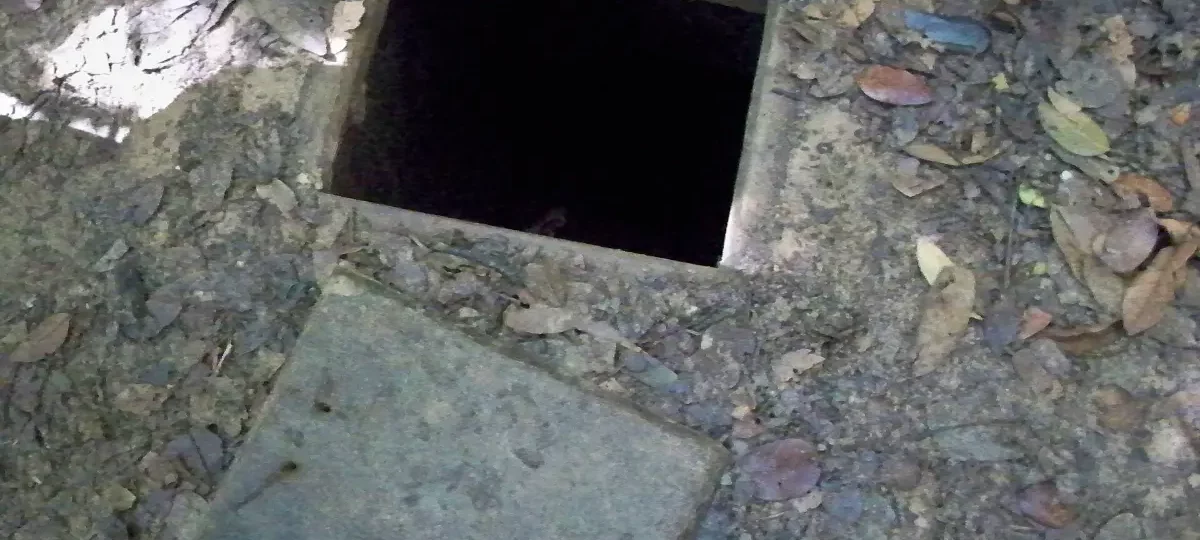
Guides show how tiny trapdoors, covered with leaves, were almost invisible; volunteers can try lowering themselves into one.
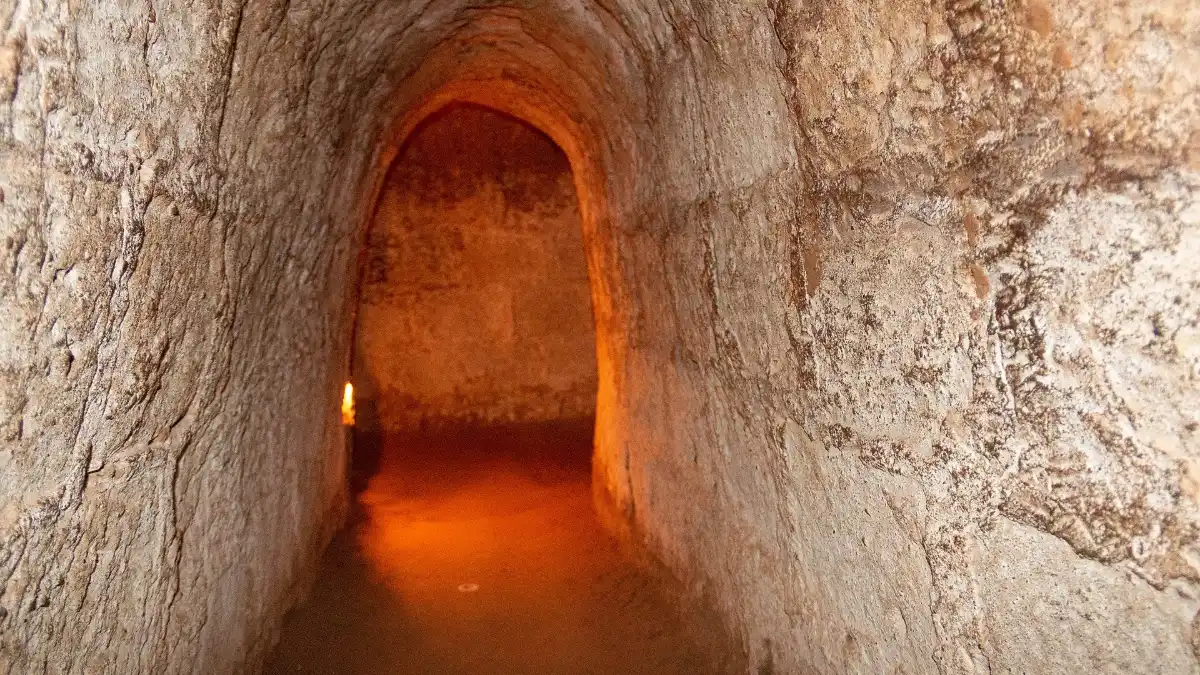
3. Crawling through the tunnels
Sections from about 20 m to over 100 m long have been widened and lit for visitors, with exits along the way. Even widened, they are low, hot and narrow, which gives a vivid sense of conditions underground.
4. Booby traps
A display of spiked pit traps, swinging traps and folding traps shows the defensive tactics used against soldiers searching the area.
5. Underground rooms and kitchens
Restored meeting rooms, field hospitals and smokeless “Hoàng Cầm” kitchens explain daily life; at the end, visitors are often offered steamed cassava with peanut salt, the staple food of the time.
6. Weapons workshop and tank
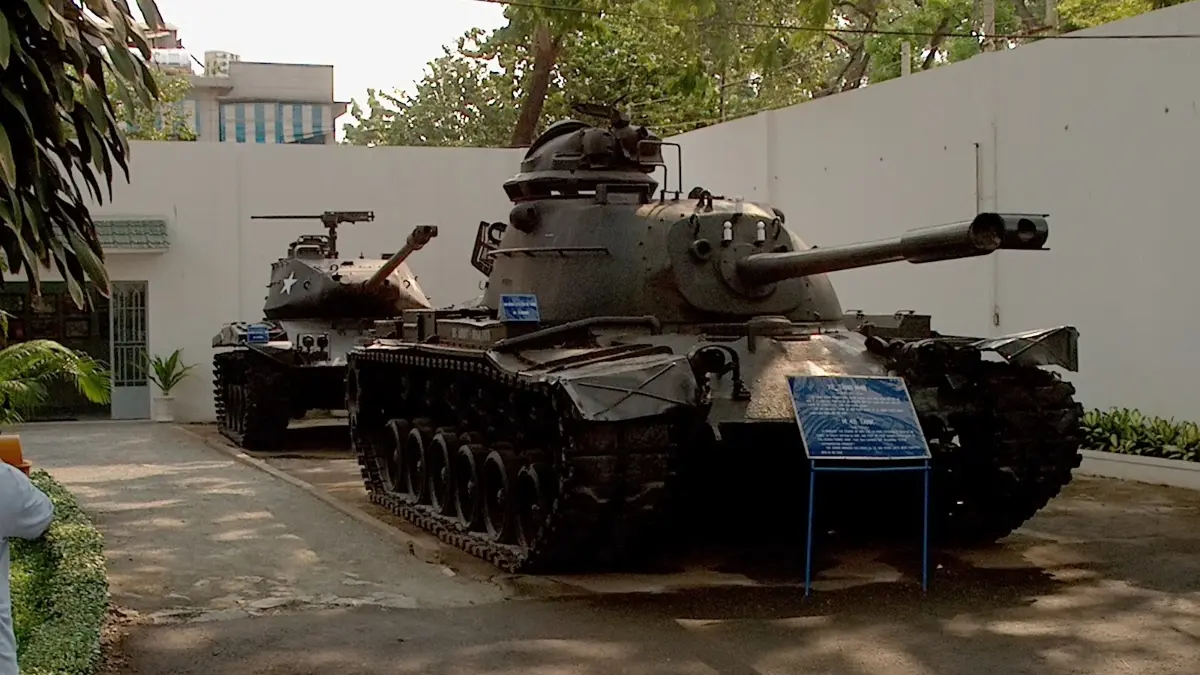
Displays show how unexploded bombs were recycled into weapons and mines, and a destroyed US M41 tank stands at Ben Dinh.
7. The shooting range
Both sites have a firing range where adults can shoot wartime rifles for a fee per bullet; the noise carries across the park.
8. Ben Duoc memorial temple
At Ben Duoc, the Memorial Temple (Đền tưởng niệm Bến Dược), built in 1993–1995 on a large landscaped complex, honours tens of thousands of soldiers and civilians from Saigon–Gia Định, with more than 45,000 names engraved on granite and a nine-storey tower.
Cu Chi Tunnels Tickets and Opening Hours
| Ticket / item | Price or time | Notes |
|---|---|---|
| Foreign adult | 135,000 VND | 35,000 VND relic fee + 100,000 VND service and guiding ticket, from 1 February 2026; cash in VND |
| Vietnamese adult | 35,000 VND | Residents’ price |
| Children and students | About 50% of the adult price | Roughly ages 7–16; children under 7 are usually free, and elderly, disabled and war-merit visitors may be exempt (check at the gate) |
| Site guide | Included for foreigners | Part of the 100,000 VND service and guiding ticket |
| Shooting range | About 20,000–50,000 VND per bullet | Varies by weapon; minimum purchase applies |
| Liberated Zone re-enactment area (Ben Duoc side) | About 85,000 VND adult / 42,500 VND child | Separate ticket |
| Opening hours | 7:00–17:00 daily | Last tickets around 16:00 |
Prices are set by the Cu Chi Tunnels Historical Relic Site management board and can change; see its official ticket notice for the 2026 foreigners’ fee; most organised tours include the entrance ticket.
How to Visit the Cu Chi Tunnels Step by Step
- Choose your site (Ben Dinh or Ben Duoc) and book a tour or private car; leave the city by 7:30 to beat the heat.
- Buy tickets at the gate (cash) if not included in your tour.
- Watch the introductory film and follow the forest path with your guide.
- Try a tunnel entrance and crawl a short section if you feel comfortable.
- See the traps, kitchens and workshops, then the shooting range or the Ben Duoc memorial temple.
Rules and safety
- Wear clothes you do not mind getting dirty and closed shoes with grip.
- Do not enter tunnels if you have heart, breathing or mobility problems; there are exits along the way.
- Stay with your guide and on marked paths; it is a forest with insects, so bring repellent.
- Ear protection is a good idea near the shooting range.
- The memorial temple is a sacred place: dress modestly and speak quietly.
How to Get to the Cu Chi Tunnels
| From | How | Time |
|---|---|---|
| City centre (group tour) | Air-conditioned minibus, often with a guide | 1.5–2 hours each way |
| City centre (private car) | Car with driver or Grab (return arranged) | About 1.5 hours to Ben Dinh, 2 hours to Ben Duoc |
| Speedboat on the Saigon River | Boat tours from the centre to Ben Duoc or Ben Dinh | About 1.5–2 hours each way |
| Public bus | Bus 13 to Cu Chi bus station, then local bus 79 to Ben Dinh/Ben Duoc | 2.5–3 hours each way |
| Tan Son Nhat Airport | Private car | About 1.5 hours |
See our Ho Chi Minh City transportation guide for more on cars, Grab and buses.
Best Time to Visit the Cu Chi Tunnels
| When | What to expect |
|---|---|
| December–April (dry season) | Dry paths and tunnels; hottest in March–April. |
| May–November (rainy season) | Afternoon storms; muddy paths and some tunnel sections may close after heavy rain. |
| 7:00–9:00 | Coolest temperatures and fewest groups. |
| 10:00–14:00 | Peak tour-group time, especially at Ben Dinh. |
| Weekends and holidays | More domestic visitors and school groups. |
Local Expert Tips for the Cu Chi Tunnels
These tips come from years of arranging Saigon tours for international travellers.
- Go early: a 7:30 departure means cooler tunnels and thinner crowds.
- Choose Ben Duoc for a quieter visit, Ben Dinh if you only have a morning.
- Carry small VND notes for tickets, drinks and the shooting range.
- Visit the War Remnants Museum or Independence Palace the day before for context.
- Combine Cu Chi with the Mekong Delta on separate days rather than squeezing both into one.
- Read our Saigon travel tips for heat, safety and what to pack.
Cu Chi Tunnels vs Vinh Moc Tunnels
| Cu Chi Tunnels | Vinh Moc Tunnels | |
|---|---|---|
| Location | North-west of Ho Chi Minh City | Quảng Trị, near the former DMZ in central Vietnam |
| Purpose | Guerrilla base and supply network | Village shelter for families under bombing |
| Tunnel size | Very narrow; widened sections for visitors | Taller; you can walk stooped |
| Access | Easy day trip from Saigon | Day trip from Huế or Đồng Hới |
Our view: Cu Chi is the obvious choice from Saigon; if your itinerary includes central Vietnam, Vinh Moc offers a different, family-focused perspective on wartime tunnel life.
Nearby Attractions
- War Remnants Museum: essential context in the city centre.
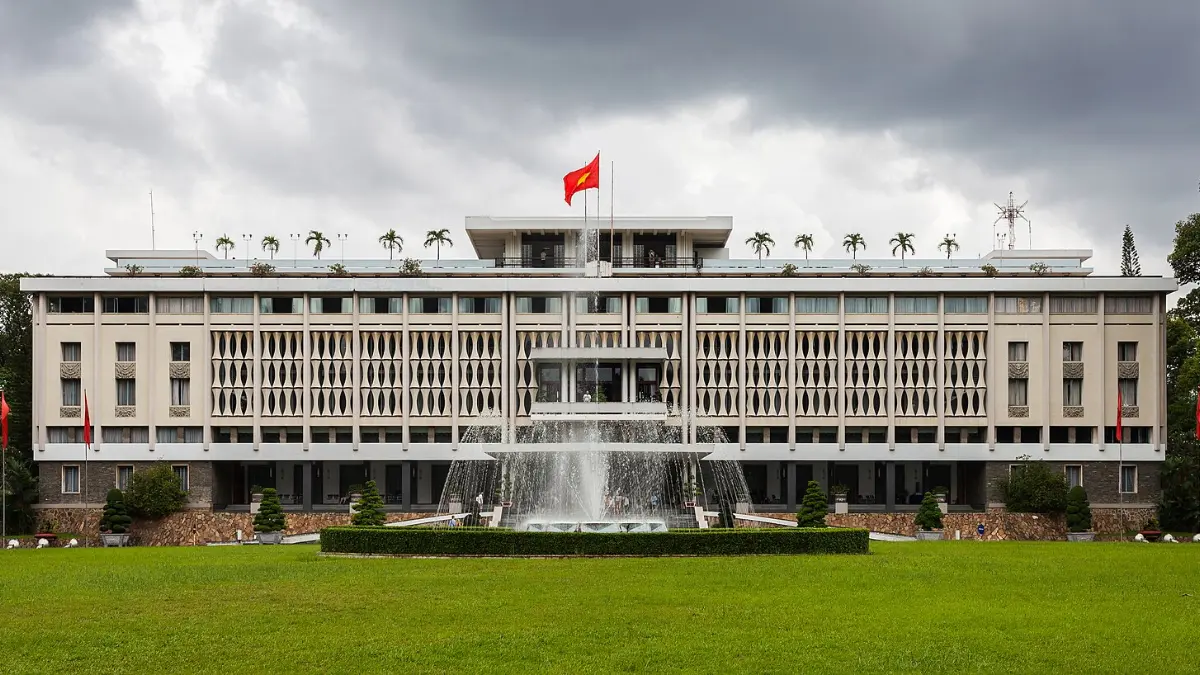
- Independence Palace: where the war ended in 1975.
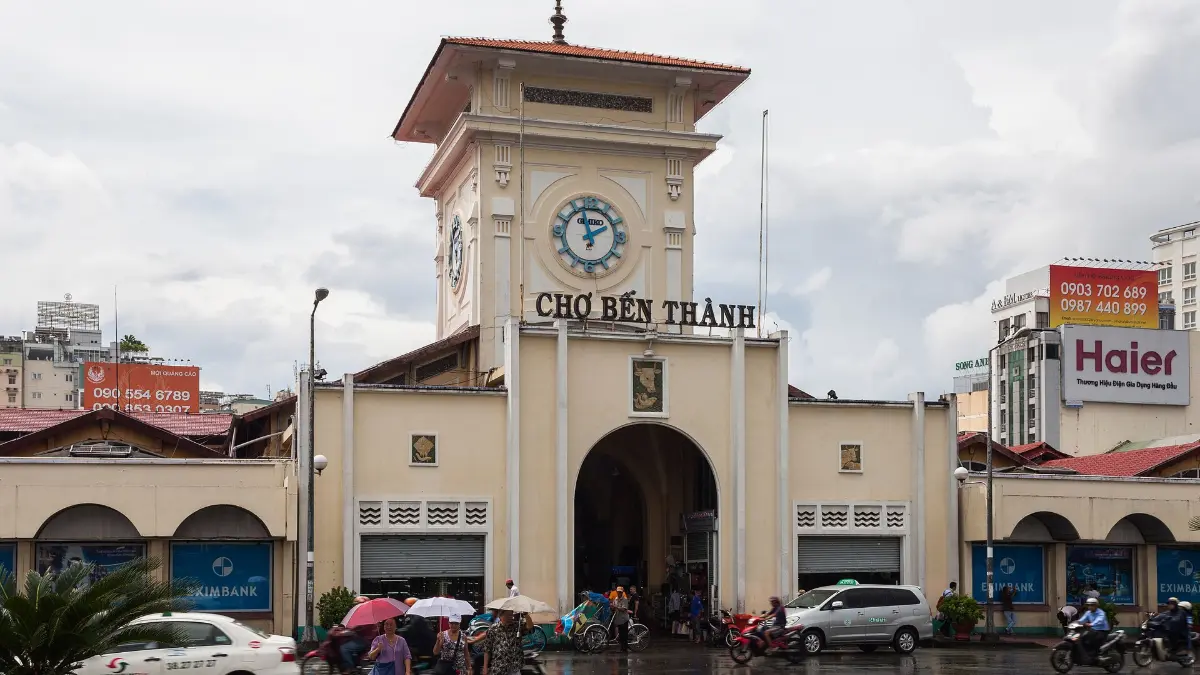
- Ben Thanh Market: lunch and souvenirs after your trip.
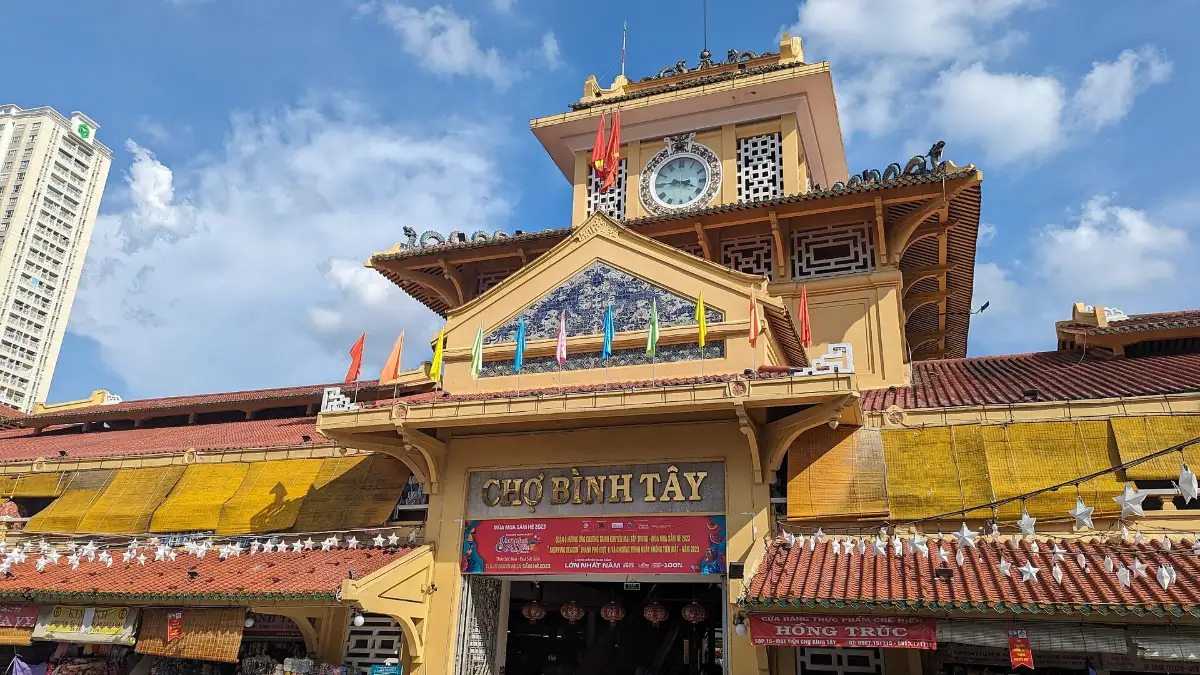
- Cholon and Binh Tay Market: Chinatown temples and markets.
- Mekong Delta day trip: river life in My Tho and Ben Tre.
- Landmark 81 SkyView: sunset views to end the day.
Sightseeing in Ho Chi Minh City for First-Time Visitors: Where the Cu Chi Tunnels Fit
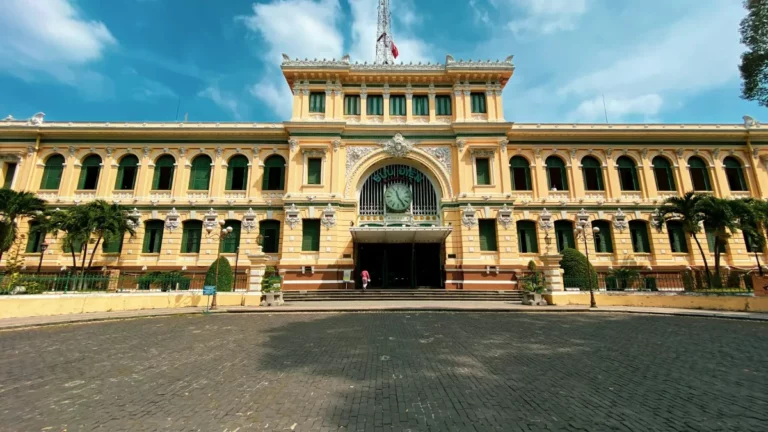
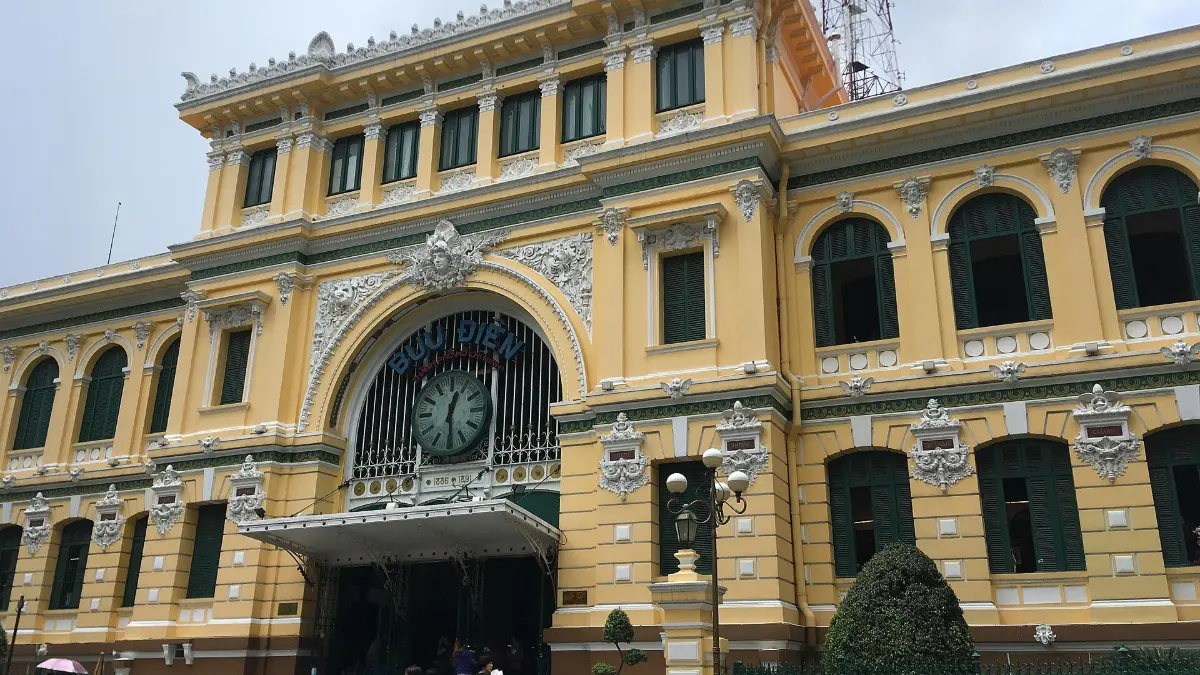
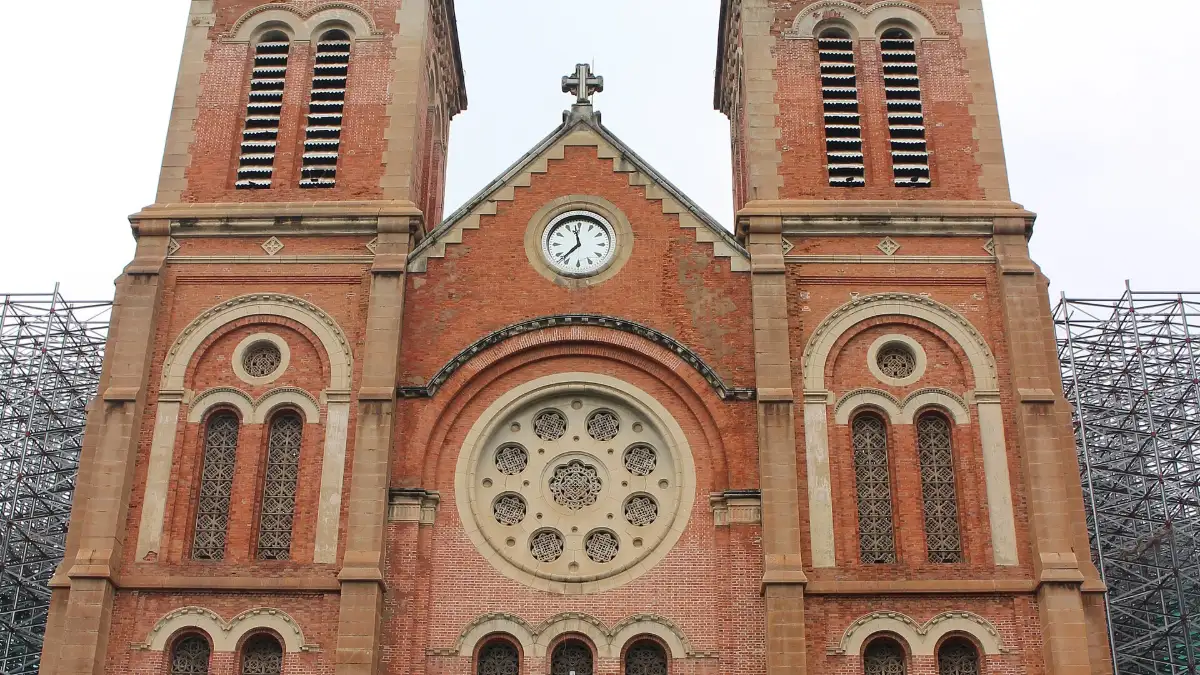
Most travellers spend one day on the city centre (Independence Palace, the War Remnants Museum, Notre Dame Cathedral and the Central Post Office), a half or full day at the Cu Chi Tunnels, and a third day in the Mekong Delta or on to Can Tho. Choose a central base with our Saigon hotel area guide and eat well with our Saigon food guide.
Plan your trip with our Saigon travel guide and Cu Chi and Saigon tours. Contact Vietnam Tour Expert Team for a free custom itinerary.
Frequently Asked Questions about the Cu Chi Tunnels
1. How much is the Cu Chi Tunnels ticket in 2026?
From 1 February 2026 foreign visitors pay 135,000 VND to enter the Cu Chi Tunnels (a 35,000 VND relic fee plus a 100,000 VND service and guiding ticket); Vietnamese visitors pay 35,000 VND, and children and students about half.
2. What are the Cu Chi Tunnels opening hours?
Both Cu Chi Tunnels sites, Ben Dinh and Ben Duoc, open daily from 7:00 to 17:00, with last tickets around 16:00.
3. Which is better, Ben Dinh or Ben Duoc Cu Chi Tunnels?
Ben Duoc Cu Chi Tunnels are quieter, keep part of the original system and have the memorial temple; Ben Dinh is closer and better for a short half-day trip.
4. How far are the Cu Chi Tunnels from Ho Chi Minh City?
Ben Dinh is about 50–60 km and Ben Duoc about 70 km from central Ho Chi Minh City, roughly 1.5–2 hours by road each way.
5. How long do you need at the Cu Chi Tunnels?
Plan 2–3 hours on site at the Cu Chi Tunnels, or a half day including transport to Ben Dinh and a longer half day to Ben Duoc.
6. Are the Cu Chi Tunnels real?
Yes. The Cu Chi Tunnels are real wartime tunnels; at Ben Dinh many sections are reconstructed and widened, while Ben Duoc preserves part of the original system.
7. Do you have to crawl through the Cu Chi Tunnels?
No. Crawling at the Cu Chi Tunnels is optional; you can see entrances, traps and rooms above ground, and tunnel sections have exits along the way.
8. Are the Cu Chi Tunnels suitable for children?
Older children usually enjoy the Cu Chi Tunnels; keep younger children close in the forest and near the shooting range, and skip tunnels if they are nervous.
9. Can you shoot guns at the Cu Chi Tunnels?
Yes. Both Cu Chi Tunnels sites have a shooting range where adults can fire wartime rifles, paying per bullet (about 20,000–50,000 VND each, with a minimum purchase).
10. What should I wear to the Cu Chi Tunnels?
Wear light clothes you do not mind getting dirty, closed shoes with grip and insect repellent at the Cu Chi Tunnels.
11. Can I visit the Cu Chi Tunnels by public bus?
Yes. Take bus 13 to Cu Chi bus station, then bus 79 to the Cu Chi Tunnels; allow 2.5–3 hours each way.
12. Can I go to the Cu Chi Tunnels by boat?
Yes. Speedboat tours run along the Saigon River to the Cu Chi Tunnels, taking about 1.5–2 hours each way.
13. How long are the Cu Chi Tunnels?
Estimates of the Cu Chi Tunnels network vary from about 120 km to more than 200 km, on several levels; only a small part is open to visitors.
14. Can I combine the Cu Chi Tunnels and the Mekong Delta in one day?
Combined Cu Chi Tunnels and Mekong Delta day tours exist, but they involve long drives; we recommend separate days, such as a Mekong Delta day trip from Saigon.
15. When is the best time to visit the Cu Chi Tunnels?
Visit the Cu Chi Tunnels early in the morning in the dry season (December–April) for cooler air, dry paths and fewer groups.
16. Which commune are the Cu Chi Tunnels in now?
Since July 2025 the Ben Dinh Cu Chi Tunnels are in Nhuận Đức Commune and Ben Duoc in An Nhơn Tây Commune, Ho Chi Minh City; the former Cu Chi District no longer exists.
17. Are the Cu Chi Tunnels claustrophobic?
Yes, the Cu Chi Tunnels are low, dark and hot even in widened sections; claustrophobic visitors can enjoy the site above ground.
Related Posts
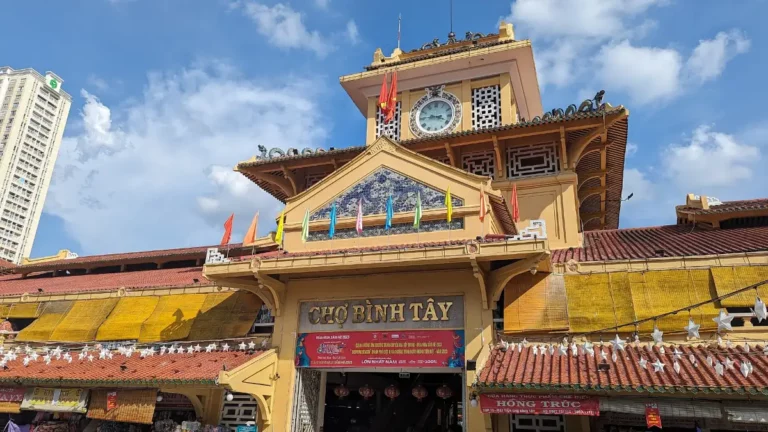
Cholon & Binh Tay Market: Saigon Chinatown Guide

Can Tho & Cai Rang Floating Market: Best Time & Guide
Ben Tre: Coconut Canals, Sampan Rides & Homestays
My Tho Mekong Delta: Vinh Trang Pagoda, Islands & Day Trip
Mekong Delta Day Trip from Saigon: Routes, Tips & Tours