Hanoi Opera House: History, Architecture & 2026 Renovation Update
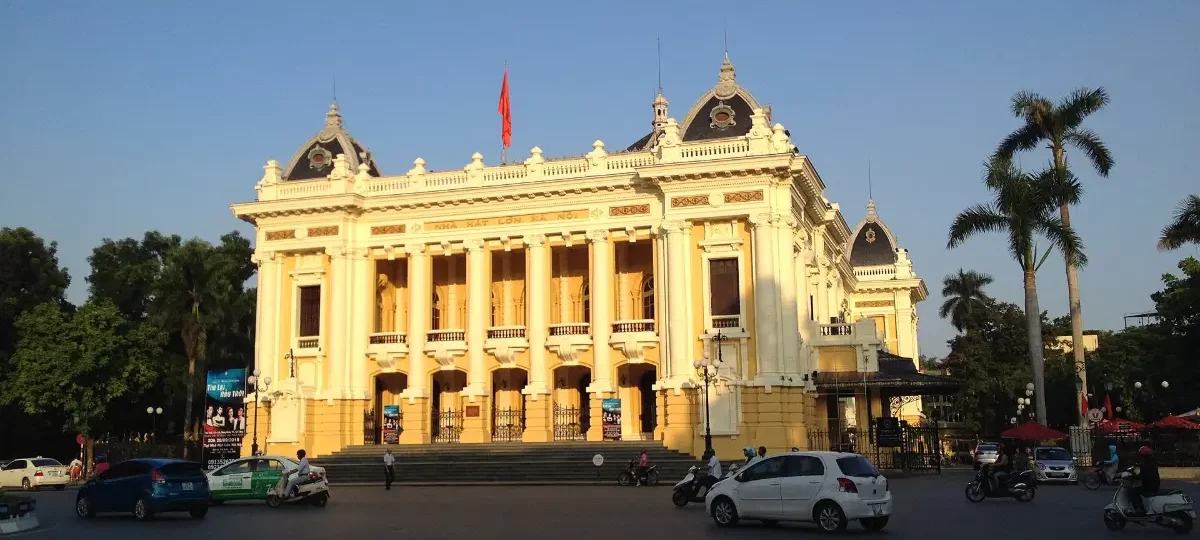
The Hanoi Opera House (Nhà hát Lớn Hà Nội) is a French colonial theatre at 1 Trang Tien Street, built in 1901–1911 and inspired by the Palais Garnier in Paris. It faces August Revolution Square, about 700 m south-east of Hoan Kiem Lake. In 2026 it is closed for a major restoration, but the façade is free to admire from outside.
Status (checked October 2026): closed for a major restoration that began after the theatre’s farewell exhibition ended on 31 December 2025 and is expected to take about two years. Performances and interior visits are suspended; you can still view and photograph the exterior and the square.
Why the Hanoi Opera House is still worth seeing:
- Architectural landmark: one of the finest French colonial buildings in Southeast Asia, with columns, balconies and a domed roof.
- Revolutionary history: the August Revolution rally of 19 August 1945 filled the square in front.
- Classic Hanoi photo stop: especially beautiful when floodlit at night.
- Elegant neighbourhood: the French Quarter’s boulevards, hotels and Trang Tien Street begin here.
Hanoi Opera House at a Glance
| Vietnamese name | Nhà hát Lớn Hà Nội |
|---|---|
| Location | 1 Trang Tien Street, Cua Nam Ward, Hanoi (August Revolution Square) |
| Distance | About 700 m south-east of Hoan Kiem Lake (10 minutes on foot) |
| Built | 1901–1911; architects Broyer and Victor Harlay, with later changes by François Lagisquet |
| Known for | French neoclassical façade, August Revolution Square, concerts and opera |
| Current status | Closed for restoration from early 2026 (about two years) |
| Entrance fee | Exterior free; tickets for shows when it reopens |
| Time needed | 15–20 minutes for the exterior |
| Best time | Evening, when floodlit; October–April for walking the French Quarter |
| Nearby | Hoan Kiem Lake, Vietnamese Women’s Museum, National Museum of History |
| Find it | Google Maps · Tripadvisor · Official website |
Is the Hanoi Opera House Worth Visiting?
Yes, as a short stop on a French Quarter walk, even during the restoration. While it is closed you cannot go inside or see a show, so do not make a special trip just for it. Combine it with Hoan Kiem Lake, Trang Tien Street and the nearby museums.
- Best for: architecture fans, photographers, travellers interested in colonial and revolutionary history.
- Skip if: you hoped to see a performance in 2026; look for shows at other venues instead.
- Short on time? See it from the square in 10 minutes on your way between Hoan Kiem Lake and the museums.
History of the Hanoi Opera House
A French theatre for colonial Hanoi (1901–1911)
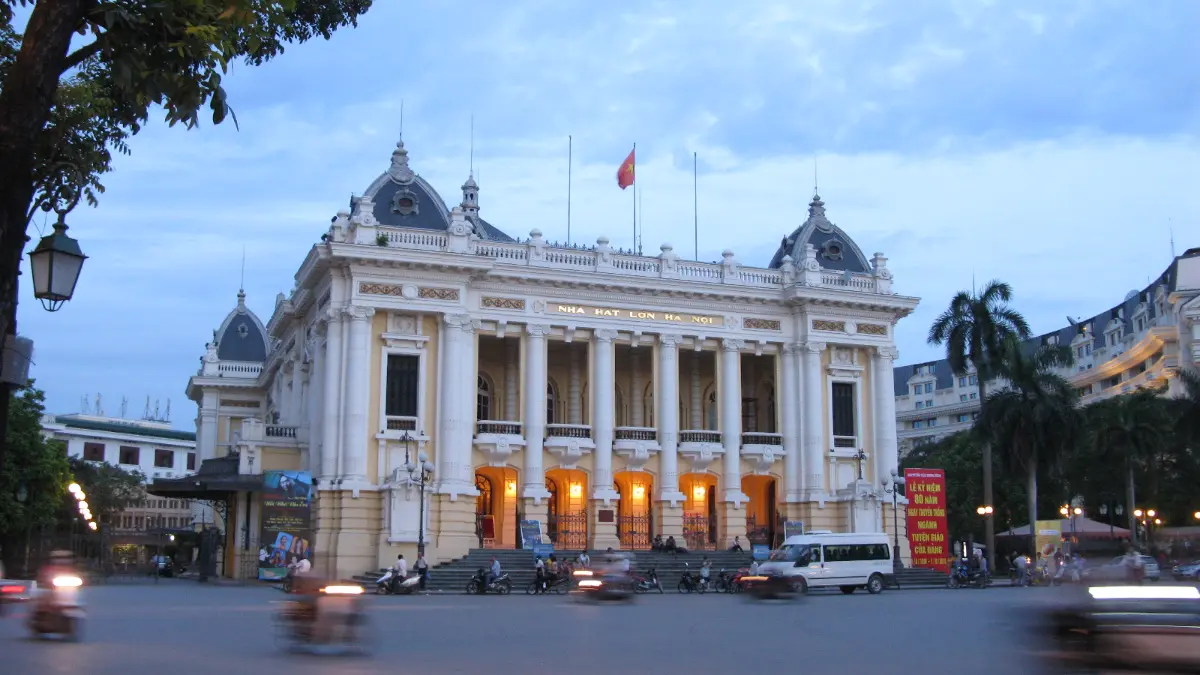
The French colonial government planned a grand municipal theatre for Hanoi at the end of the 19th century. Designed by Broyer and Victor Harlay and adapted by François Lagisquet to the local climate, it was built from 1901 to 1911 on land reclaimed from marshes, and modelled on the Palais Garnier in Paris. It opened in 1911 and staged French opera, drama and concerts for the colonial elite.
Stage of the revolution
On 19 August 1945, a huge Viet Minh rally on the square in front of the theatre launched the uprising that took power in Hanoi, part of the August Revolution; the square is now named after it. In 1946 the building hosted sessions of the first National Assembly of the Democratic Republic of Vietnam.
Restorations
The theatre was extensively restored in 1995–1997, in time for the 1997 Francophone Summit in Hanoi. After more than a century of use it closed again at the start of 2026 for a major restoration expected to last about two years. More history is on Wikipedia.
What to See at the Hanoi Opera House
1. The neoclassical façade
The front combines Ionic columns, arched windows, wrought-iron balconies, a pediment and a grey slate dome. Look for the decorative details above the entrance and the symmetrical wings on both sides.
2. August Revolution Square
The open square in front of the theatre is the best place for photos and a reminder of the 1945 rally. It is also a popular spot for wedding and graduation photo shoots.
3. The interior (after reopening)
Before the restoration, visitors could see the marble staircase, the Mirror Hall used for receptions and the horseshoe-shaped auditorium with its painted ceiling and chandeliers, either during a show or on a guided tour. Expect these to return when the building reopens.
4. Trang Tien Street and the French Quarter
Trang Tien Street links the Opera House to Hoan Kiem Lake, with bookshops and the famous Trang Tien ice-cream shop. To the south and east, tree-lined boulevards hold colonial villas, the Sofitel Legend Metropole and the State Bank building.
Hanoi Opera House Tickets, Tours and Hours (2026)
| Item | Details |
|---|---|
| Status | Closed for restoration since early 2026 (expected to last about two years) |
| Exterior and square | Free, open all day |
| Performances | Suspended during the restoration |
| Guided interior tours | Suspended during the restoration |
| Box office | 1 Trang Tien Street; check the official website for reopening news |
The theatre is run by the Hanoi Opera House management board; check the official website or ask your hotel before planning a show.
How to Get to the Hanoi Opera House
| From | How | Time |
|---|---|---|
| Hoan Kiem Lake | Walk along Trang Tien Street | About 10 minutes |
| Old Quarter | Walk, or taxi/Grab | 15–20 minutes on foot; 5–10 minutes by car |
| Hoa Lo Prison Museum | Walk east via Hai Ba Trung Street | About 15 minutes |
| Ho Chi Minh Mausoleum | Taxi or Grab | 15 minutes |
| Noi Bai Airport | Taxi, Grab or bus 86 | 40–60 minutes |
See our guide to getting around Hanoi for details.
Best Time to Visit the Hanoi Opera House
| When | What to expect |
|---|---|
| Evening | Floodlit façade, cooler air, lively square |
| Early morning | Light traffic for clean photos |
| October–April | Pleasant weather for a French Quarter walk |
| Christmas and New Year | Decorations and events on the square and nearby streets |
Local Expert Tips for the Hanoi Opera House
These tips come from years of arranging Hanoi tours for international travellers.
- For the best full-façade shot, cross to the corner by the Hilton Hanoi Opera hotel on Le Thanh Tong Street.
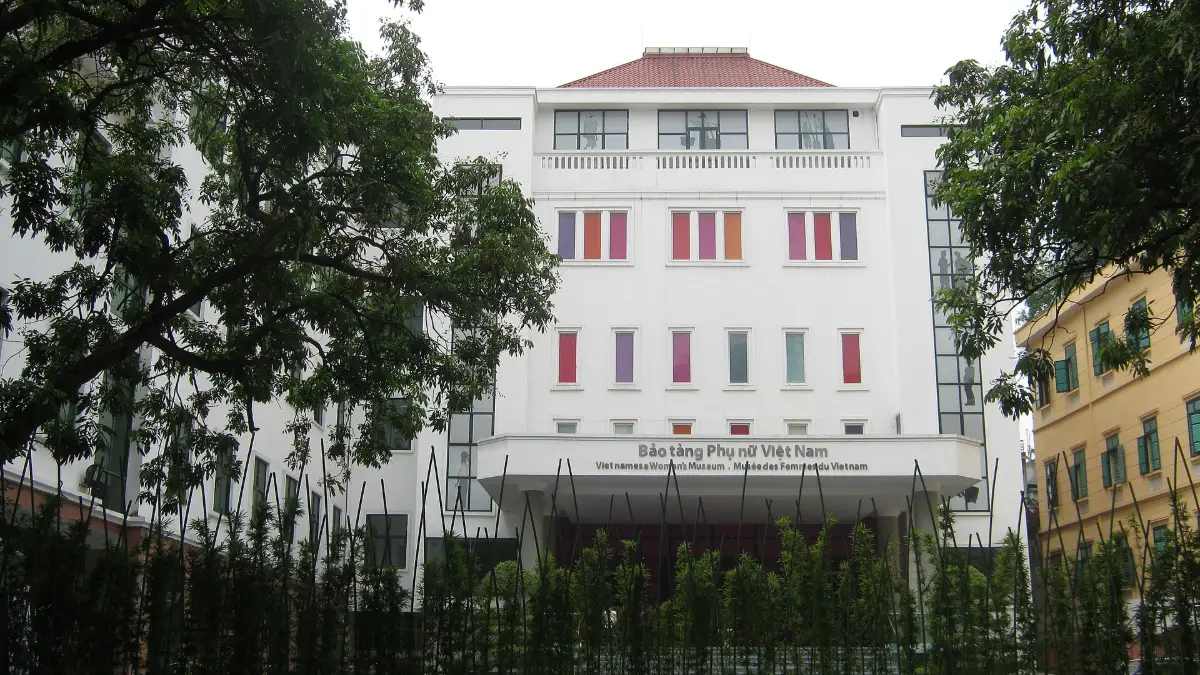
- Combine the Opera House with the Vietnamese Women’s Museum and the National Museum of History, both within 10 minutes’ walk.
- Treat yourself to a Trang Tien ice cream on the walk back to Hoan Kiem Lake.
- Want a show in 2026? Ask us about water puppetry or traditional music performances elsewhere in central Hanoi.
- Cross the busy roundabout at the pedestrian lights; traffic here is heavy.
Hanoi Opera House vs Saigon Opera House
| Hanoi Opera House | Saigon Opera House | |
|---|---|---|
| Built | 1901–1911 | 1898–1900 |
| Style | Neoclassical, inspired by Palais Garnier | French Third Republic, flamboyant façade |
| 2026 status | Closed for restoration | Open for shows |
| Setting | August Revolution Square, French Quarter | Lam Son Square, Dong Khoi Street |
Our view: both are beautiful colonial theatres; in 2026 the Saigon Opera House is the one where you can actually see a show. Explore more in our Saigon travel guide.
Nearby Attractions
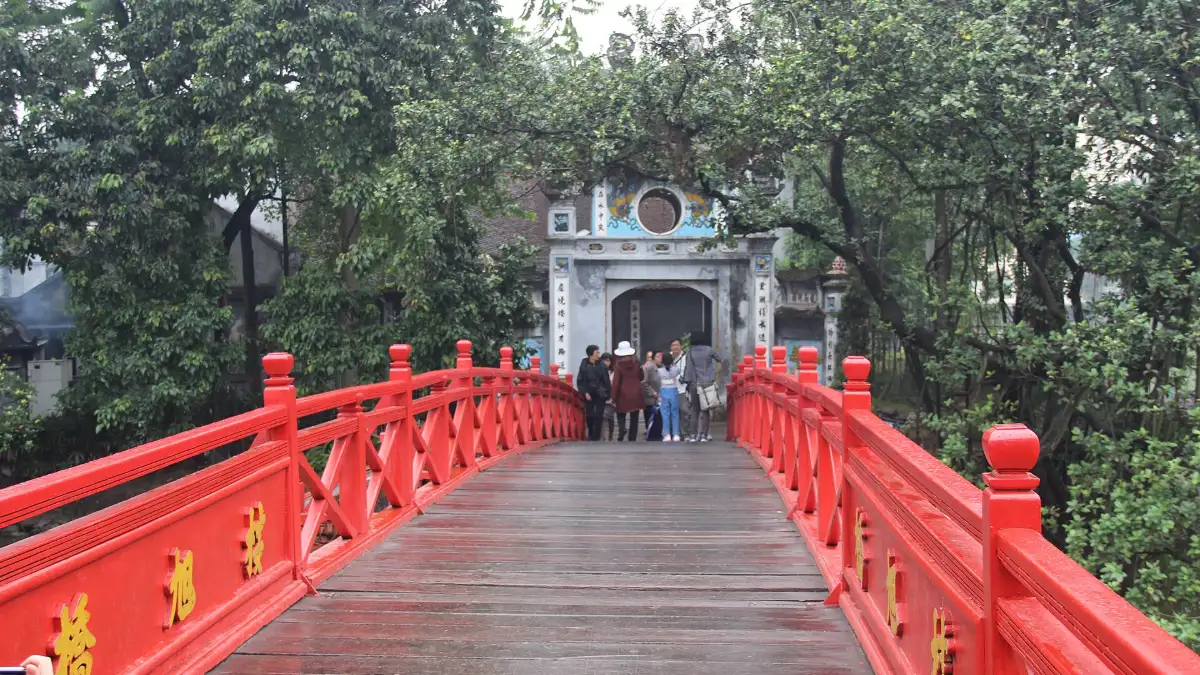
- Hoan Kiem Lake and Ngoc Son Temple: 10 minutes on foot.
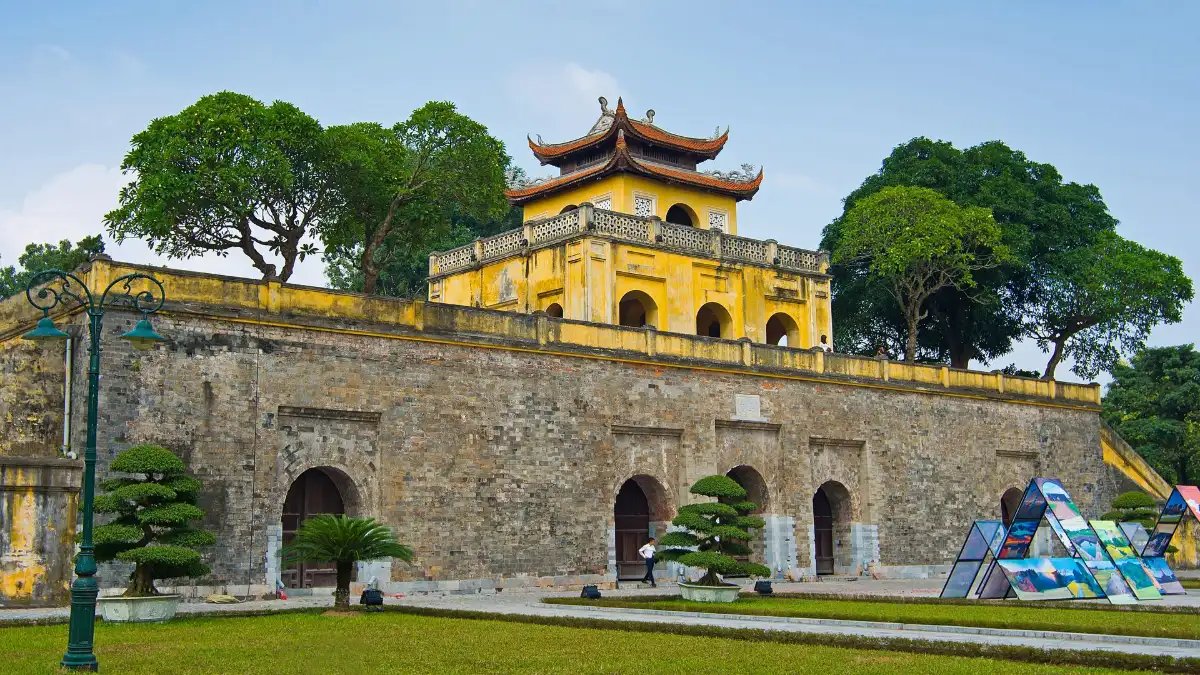
- Vietnam National Museum of History: about 400 m east.
- Vietnamese Women’s Museum: about 800 m south-west.
- Hoa Lo Prison Museum: about 1 km west.
- Hanoi Old Quarter: 15–20 minutes’ walk north.
Sightseeing in Hanoi for First-Time Visitors: Where the Opera House Fits
A French Quarter afternoon: start at Hoan Kiem Lake, walk down Trang Tien Street to the Opera House, visit the National Museum of History, then continue to the Women’s Museum and Hoa Lo Prison. End with dinner in the Old Quarter; our Hanoi food guide has ideas. More planning advice is in our Hanoi travel tips.
Plan your trip with our Hanoi travel guide and Hanoi tours. Contact Vietnam Tour Expert Team for a free custom itinerary.
Frequently Asked Questions about the Hanoi Opera House
1. Is the Hanoi Opera House open in 2026?
No. The Hanoi Opera House closed at the start of 2026 for a major restoration expected to last about two years; the exterior can still be viewed.
2. When will the Hanoi Opera House reopen?
The restoration is expected to take about two years from early 2026; no exact reopening date has been announced.
3. Can I go inside the Hanoi Opera House?
Not during the restoration. Before it closed, the interior was open during performances and on guided tours.
4. When was the Hanoi Opera House built?
It was built between 1901 and 1911 and opened in 1911.
5. Who designed the Hanoi Opera House?
The architects Broyer and Victor Harlay designed it, and François Lagisquet adapted the plans during construction.
6. Is the Hanoi Opera House based on the Paris Opera?
Yes, its design was inspired by the Palais Garnier in Paris, adapted to a smaller scale and a tropical climate.
7. Where is the Hanoi Opera House?
It is at 1 Trang Tien Street, Cua Nam Ward, about 700 m south-east of Hoan Kiem Lake.
8. What happened at the Hanoi Opera House in 1945?
On 19 August 1945 a huge rally on the square in front of the Hanoi Opera House launched the August Revolution uprising in Hanoi.
9. Is it free to see the Hanoi Opera House?
Yes, viewing the exterior and August Revolution Square is free.
10. How long do I need at the Hanoi Opera House?
About 15–20 minutes for photos of the exterior while it is closed.
11. What is the best time to photograph the Hanoi Opera House?
Early morning for light traffic, or evening when the façade is floodlit.
12. What is near the Hanoi Opera House?
The National Museum of History, the Women’s Museum, Hoan Kiem Lake and Trang Tien Street are all within walking distance.
13. Where can I see a show in Hanoi while the Hanoi Opera House is closed?
Try the Thang Long Water Puppet Theatre by Hoan Kiem Lake or traditional music venues in the Old Quarter.
14. Is the Hanoi Opera House worth visiting during the restoration?
Yes, as a short photo stop on a French Quarter walk, but not as a special trip.
15. How do I get to the Hanoi Opera House from the Old Quarter?
Walk 15–20 minutes south via Hoan Kiem Lake and Trang Tien Street, or take a 5–10 minute Grab.
Related Posts
Hanoi Egg Coffee (2026): Best Cafés, Prices, History & Recipe
Hanoi Train Street (2026): Is It Open? Train Times, Cafés & Rules
Hanoi Shopping Guide: Best Markets, Streets & Souvenirs to Buy (2026)
Hanoi Travel Tips: Essential Things to Know Before You Go (2026)
Hanoi Transportation: How to Get Around Hanoi & From Noi Bai Airport (2026 Guide)