Hanoi Train Street (2026): Is It Open? Train Times, Cafés & Rules
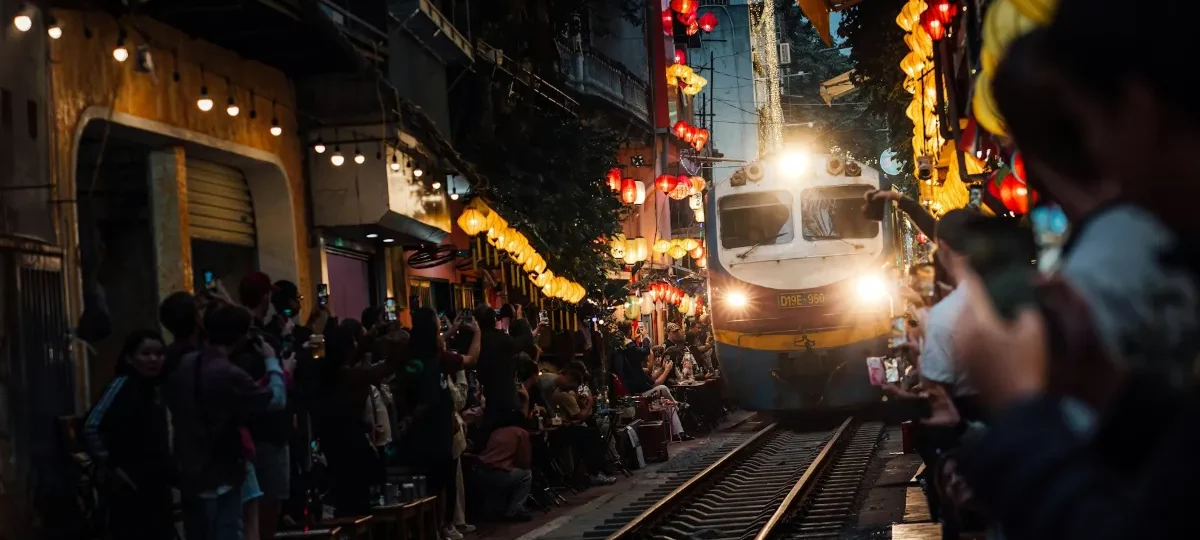
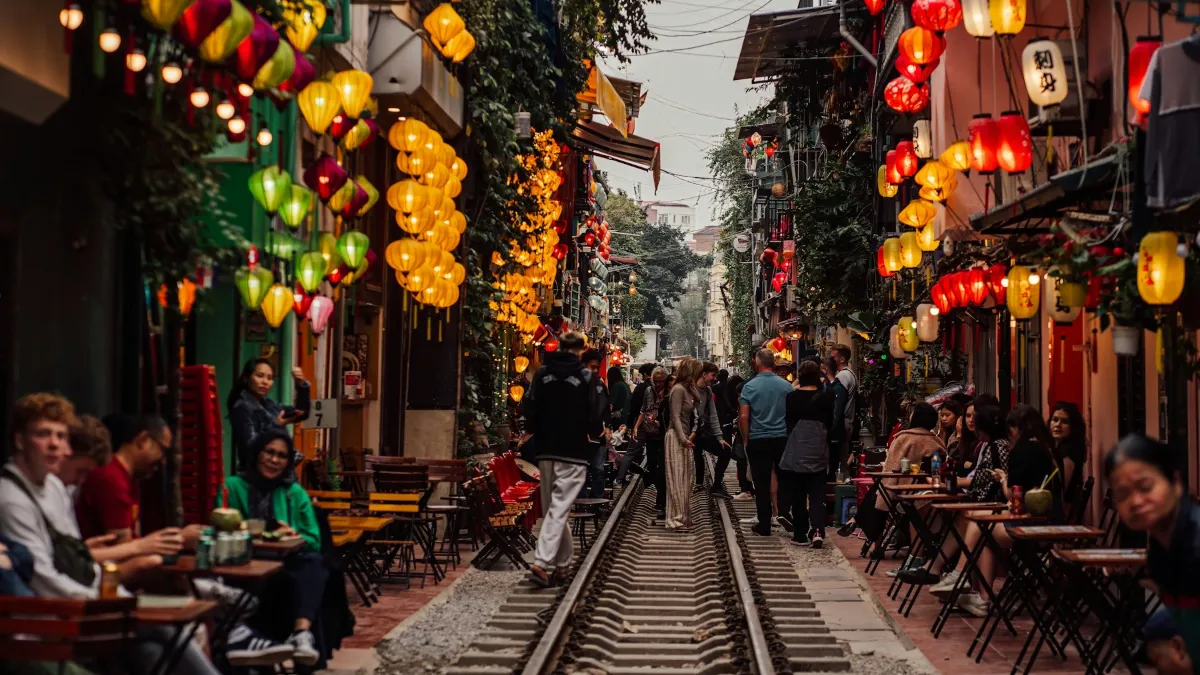
Hanoi Train Street (Phố Đường Tàu, also called Cà Phê Đường Tàu or Train Street Coffee) is a narrow strip of houses and cafés along the single-track railway that runs north from Hanoi Railway Station towards Long Bien Bridge, on the western edge of the Old Quarter. It is famous for trains squeezing past within arm’s reach. There is no entry fee, but the trackside cafés are unlicensed and access can be restricted at any time.
Status (checked October 2026): trains still run and, as of news reports in August 2026, cafés along Phung Hung Street were still serving visitors, with a traffic police officer warning people who sat too close to the rails. Officially, though, the cafés operate illegally in the railway safety corridor: since March 2025 the Hanoi Department of Tourism has asked travel companies not to bring tourists there, and in late February 2026 the Ministry of Construction and Hanoi agreed to cut passenger trains and stop freight trains on this section, with no start date announced. Barriers can go up without notice, so always follow police and café staff instructions and step well back when a train approaches.
Why Hanoi Train Street is worth seeing:
- A train inches from the doorsteps: houses and café tables sit so close to the rails that residents pull in chairs and potted plants each time a train passes.
- A piece of colonial railway history: the line was built by the French in 1902 together with Long Bien Bridge, and still carries trains north towards the Red River.
- Everyday Hanoi life: between trains it is a quiet residential lane where families cook, wash and chat on the tracks.
- Free to see: there is no ticket; you only pay for what you order if you sit in a café.
- Easy to combine: it lies a short walk from the Old Quarter, Long Bien Bridge and Dong Xuan Market.
Hanoi Train Street at a Glance
| Vietnamese name | Phố Đường Tàu; the café stretch is known as Cà Phê Đường Tàu (Train Street Coffee) |
|---|---|
| Location | Two main stretches: Phung Hung Street to Tran Phu Street and Dien Bien Phu Street (west edge of the Old Quarter), and a southern stretch near Kham Thien and Le Duan streets, south of Hanoi Railway Station. Since the 1 July 2025 ward reorganisation the Kham Thien – Le Duan stretch is in Van Mieu – Quoc Tu Giam Ward; the Phung Hung – Tran Phu area lies where the old Hang Bong, Cua Dong and Cua Nam wards were divided between the new Hoan Kiem, Cua Nam and Ba Dinh wards |
| Distance from Hoan Kiem Lake | About 1 – 1.5 km west (15 – 20 minutes on foot) to the Phung Hung – Tran Phu crossing |
| Known for | Trains passing within arm’s reach of houses and café tables; French-built railway and arched viaduct |
| Opening / access | A public residential lane and an active railway, not a managed attraction; cafés are unlicensed and entrances may be barricaded or guarded during enforcement campaigns |
| Cost | No entry fee; café drinks about 30,000 – 80,000 VND (roughly US$1.20 – 3) |
| Train times (typical) | Several trains a day, from early morning to late evening; crowds peak for the afternoon train around 3 – 4 pm. Times are not fixed and were being reduced in 2026, so check the board at a café |
| Time needed | 45 – 90 minutes, timed around one train |
| Best time | Late afternoon into early evening, when the lanterns come on; weekday mornings for a quieter look |
| Nearby | Hanoi Old Quarter, Long Bien Bridge, Dong Xuan Market, Hoan Kiem Lake, Hoa Lo Prison |
| Find it | Google Maps · Tripadvisor · Wikipedia |
Is Hanoi Train Street Worth Visiting?
Yes, if you go with realistic expectations and treat it as a live railway, not a theme park. Seeing a full-size locomotive edge between houses in the middle of a capital city is genuinely memorable, and the lane itself is a fascinating slice of local life. But it is crowded at train times, the cafés exist in a legal grey zone, and on some days police or barriers keep visitors out of the busiest section.
- Best for: photographers, railway fans, couples and friends who enjoy café culture, and anyone staying in the Old Quarter.
- Skip if: you are travelling with toddlers, dislike crowds, or have only a few hours in Hanoi; the Hoan Kiem Lake area gives you more for your time.
- Short on time? Walk the quiet lane between trains without sitting down, then continue to Long Bien Bridge to watch a train cross the Red River.
History of Hanoi Train Street
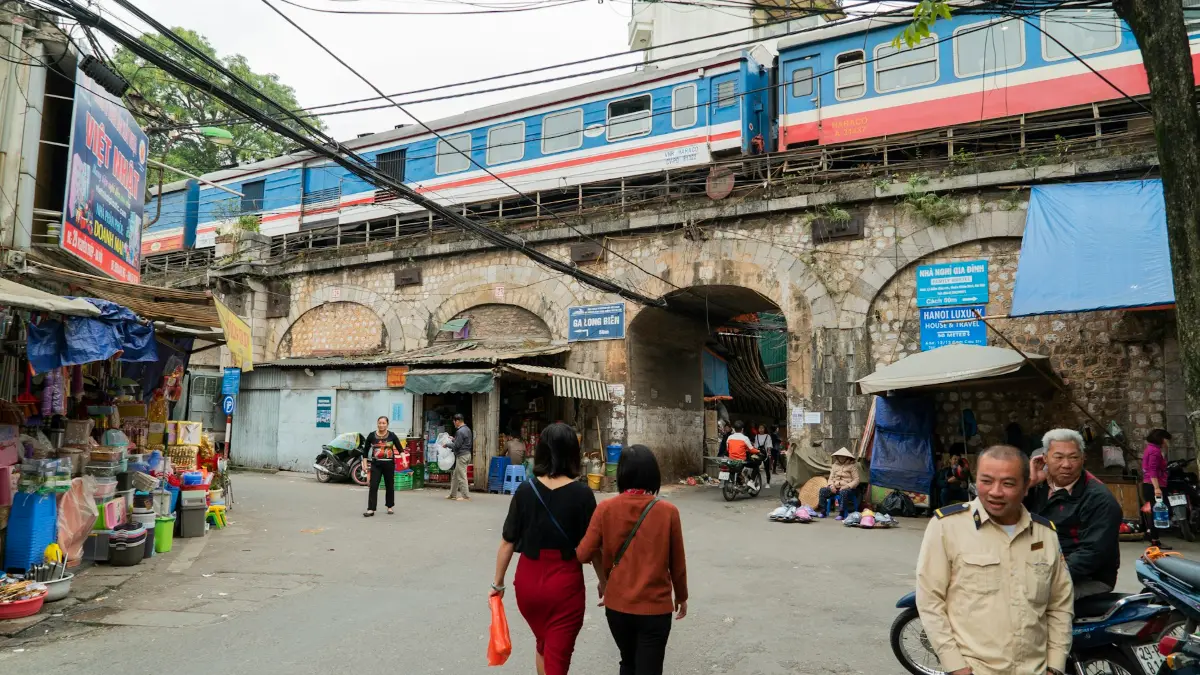
The railway through the lane was built by the French colonial administration in 1902, the same year Long Bien Bridge opened across the Red River. It is part of the Hanoi – Dong Dang railway, which leaves Hanoi Railway Station heading north and crosses the river on the bridge. Through the city centre the track runs at ground level through narrow residential lanes, then on a long colonial-era viaduct of 131 arches along Phung Hung Street towards the bridge.
Over the decades houses were built right up to the line, which is why front doors open almost directly onto the rails. During the American War parts of the railway were damaged by bombing and repaired, and for a long time the lane was simply a poor, overlooked corner of the city.
The café scene began around 2017, when photos of trains passing so close to homes spread on social media and residents started serving coffee from their front rooms. By 2019 most street-facing houses in the Phung Hung – Dien Bien Phu stretch had become cafés. Since then the street has gone through repeated cycles of crackdown and return:
- October 2019: citing overcrowding and railway safety, Hanoi ordered the trackside cafés to close and put up barriers and police checkpoints.
- September 2022: police barricaded the entrances in mid-September and Hoan Kiem District moved to revoke the cafés’ business registrations.
- Late 2022 – early 2023: cafés gradually reopened despite checkpoints at the entrances.
- June 2024: a video of a visitor running onto the track to pose in front of a train went viral, and the café owner involved was fined.
- February – March 2025: Hoan Kiem District asked for coordinated action, and the Hanoi Department of Tourism asked travel companies not to recommend or organise visits to the trackside cafés.
- January 2026: the Hanoi People’s Committee proposed ending passenger trains between Hanoi Station and Gia Lam Station, so that southern trains would terminate at Hanoi Station and northern trains at Gia Lam, freeing the Old Quarter section and Long Bien Bridge for urban renewal.
- Late February 2026: the Ministry of Construction and Hanoi agreed to reduce passenger services and stop freight trains on the Hanoi – Long Bien – Gia Lam section; a working group was set up to prepare the details.
The future of the street is therefore uncertain. If passenger trains are withdrawn, the experience that made Train Street famous may disappear, while the lane and the viaduct could be redeveloped as public space.
What to See and Do on Hanoi Train Street
1. Watch a train pass
This is the main event. Café staff clear tables and pull chairs back a few minutes before a train is due, horns sound, and the locomotive rolls slowly through, at roughly 10 km/h, with only a small gap on either side. The whole passage lasts less than a minute, so be ready but stay behind the line staff show you.
2. Sit in a trackside café
Most cafés offer Vietnamese drip coffee, coconut coffee, egg coffee, tea, beer and soft drinks, plus simple snacks. Sitting down is the most comfortable way to wait for a train, and café owners are usually the best source of the day’s train times. For the full story of egg coffee and other local drinks, see our Hanoi food and drinks guide.
3. Walk the lane between trains
When no train is due, the lane is calm. You will see residents drying laundry over the rails, children playing and neighbours chatting from doorways. Walk slowly, keep to the edges and remember that these are private homes.
4. Photograph the railway at different times of day
Mornings bring soft light and few people; evenings bring strings of lanterns and colourful café signs. A wide-angle lens or phone setting helps capture the narrowness of the street.
5. See the arched viaduct along Phung Hung Street
North of the café stretch, the track runs on a colonial-era viaduct of arches. Some arches house small shops and workshops, and murals have been painted beneath them. It is a pleasant, flat walk towards Long Bien Bridge.
6. Continue to Long Bien Bridge
Follow the railway north and you reach the approach to Long Bien Bridge, where trains, motorbikes and pedestrians share the old steel structure over the Red River. It is one of the best sunset spots near the Old Quarter.
Hanoi Train Street Train Times
There is no official public timetable for Train Street itself. Trains pass several times a day, mainly services heading north from Hanoi Railway Station towards Long Bien Bridge and back. Exact times change with the season, the day and Vietnam Railways’ schedule, and the agreed reduction of passenger services in 2026 means some trains may no longer run. Treat the table below as a guide only.
| Time of day | What to expect |
|---|---|
| Early morning | The first trains of the day; few visitors, residents starting their routines; good light for photos |
| Late morning – midday | Occasional trains; cafés open and quieter; hot in summer |
| Afternoon (around 3 – 4 pm) | The train that draws the biggest crowds; arrive 30 – 45 minutes early to get a seat |
| Evening | Trains after dark with lanterns lit; most atmospheric and very busy, especially at weekends |
| Late night | Some trains still pass; most cafés close and the lane becomes residential again |
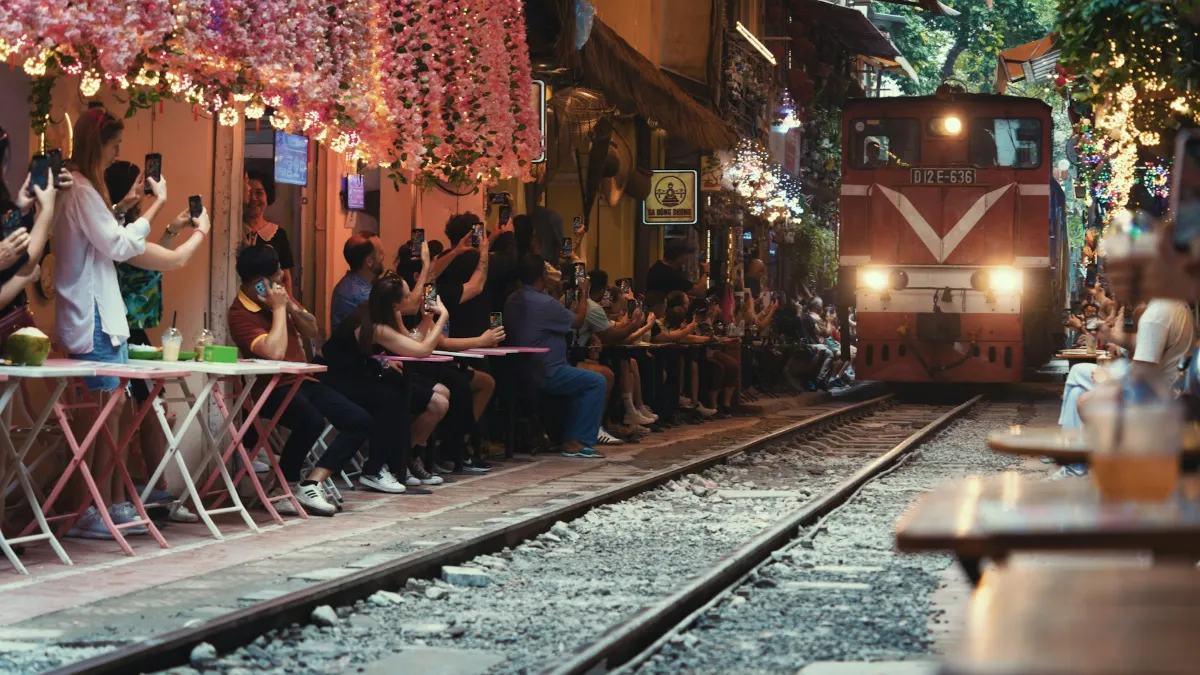
How to confirm the time: ask any café on the day. Owners follow the trains closely, many write the next times on a board by the door, and they will warn you a few minutes before a train arrives. Weekends and Vietnamese public holidays can bring extra or changed services, so do not rely on a time you read online weeks earlier.
Rules, Safety and Etiquette on Hanoi Train Street
Train Street is an active railway, and the strip next to the track is a protected safety corridor. Accidents and near misses have happened, and incidents involving careless visitors were still being reported in 2026. Follow these rules:
- Clear the track early. When staff or police call that a train is coming, move off the rails straight away and stand or sit where they show you.
- Keep everything behind the line. Pull in feet, bags, selfie sticks, phones and camera straps. Never lean out to film the locomotive.
- No photos on the track while a train approaches. Posing on the rails is dangerous, breaks railway safety rules and gets café owners fined.
- Hold children’s hands and keep them seated against the wall; do not bring pushchairs into the narrow stretch.
- Obey police and barriers. If an entrance is closed, do not climb over or slip through. Visiting is not a right, and authorities may ask you to leave.
- Respect residents. Do not walk into homes, photograph people at close range without asking, or block doorways. Keep noise down, especially at night.
- Buy something if you sit. Café seats are for customers; a drink is the courteous way to wait for a train.
- Agree prices first. Check the menu price before ordering, and ignore touts who insist you must pay them to enter.
For broader safety, scam and etiquette advice for the city, read our Hanoi travel tips.
How to Get to Hanoi Train Street
Most visitors walk from the Old Quarter. The best-known stretch is entered from Phung Hung Street, Tran Phu Street or Dien Bien Phu Street.
| From | How | Time |
|---|---|---|
| Old Quarter (Hang Ma, Hang Bo area) | Walk west to Phung Hung Street and follow the viaduct south to Tran Phu Street | 10 – 15 minutes |
| Hoan Kiem Lake | Walk west along Hang Gai and Hang Bong streets, or take a short Grab bike ride | 15 – 20 minutes walking; 5 – 10 minutes by Grab |
| Anywhere in central Hanoi | Grab, Xanh SM or Be car or motorbike to the Phung Hung – Tran Phu crossing | Usually 10 – 25 minutes, depending on traffic |
| Hanoi Railway Station (Le Duan Street) | Walk north along Le Duan and Dien Bien Phu streets | About 15 minutes |
Use the pin from our Google Maps link above and set the drop-off at the street corner rather than a specific café. More options are explained in our guide to getting around Hanoi.
Best Time to Visit Hanoi Train Street
| When | What to expect |
|---|---|
| Weekday morning | Quietest; best for slow walks and clean photos of the tracks |
| Afternoon train (around 3 – 4 pm) | Peak crowds; lively but cramped; arrive early |
| Early evening | Lanterns lit, cooler air, the most photogenic time; very busy |
| Weekend and holidays | Many domestic visitors as well as foreigners; tables fill fast |
| October – April | Cooler and drier; most comfortable months for Hanoi sightseeing |
| May – September | Hot and humid with heavy showers; go early or after dark |
Local Expert Tips for Hanoi Train Street
These tips come from years of arranging Hanoi tours for international travellers.
- Check the situation on the day: ask your hotel reception whether the street is open, as enforcement can change overnight.
- Arrive 30 – 45 minutes before the train you want and choose a café with seats set back against the wall, not right on the edge.
- Ask the price before you sit and pay when you order to avoid misunderstandings.
- Bring small notes; some cafés accept QR payment, but cash is simpler.
- Film in landscape from your seat and keep your phone close to your body as the train passes.
- Combine the visit with Long Bien Bridge at sunset and dinner in the Old Quarter afterwards.
- If the street is barricaded, watch a train from a legal public spot such as Long Bien Bridge instead of looking for a way in.
- Wear closed shoes; the ballast stones between the rails are uneven.
Hanoi Train Street vs Long Bien Bridge
| Hanoi Train Street | Long Bien Bridge | |
|---|---|---|
| What it is | Residential lane with cafés beside an active railway | French-era steel bridge opened in 1902 over the Red River |
| Experience | Train passes within arm’s reach | Trains, motorbikes and pedestrians cross together; river views |
| Legal status for visitors | Grey zone; cafés unlicensed, access may be restricted | Public walkway open to pedestrians |
| Cost | Free; drinks about 30,000 – 80,000 VND | Free |
| Best time | Around train times, late afternoon and evening | Sunset |
| Time needed | 45 – 90 minutes | 30 – 60 minutes |
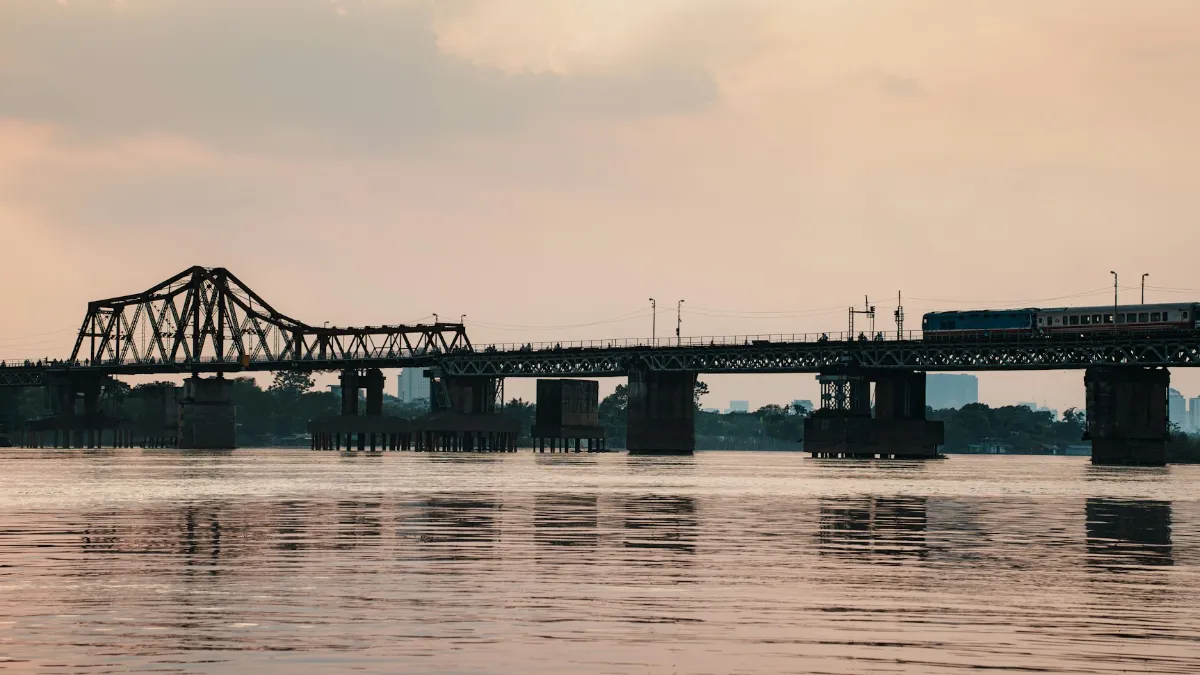
Our view: if the street is open and you follow the rules, Train Street is a memorable hour. If it is closed, or you are travelling with young children, Long Bien Bridge gives you trains, history and better views with far fewer risks. Ideally, walk from one to the other along the viaduct.
Nearby Attractions
- Hanoi Old Quarter: the 36 streets begin just east of Phung Hung Street.
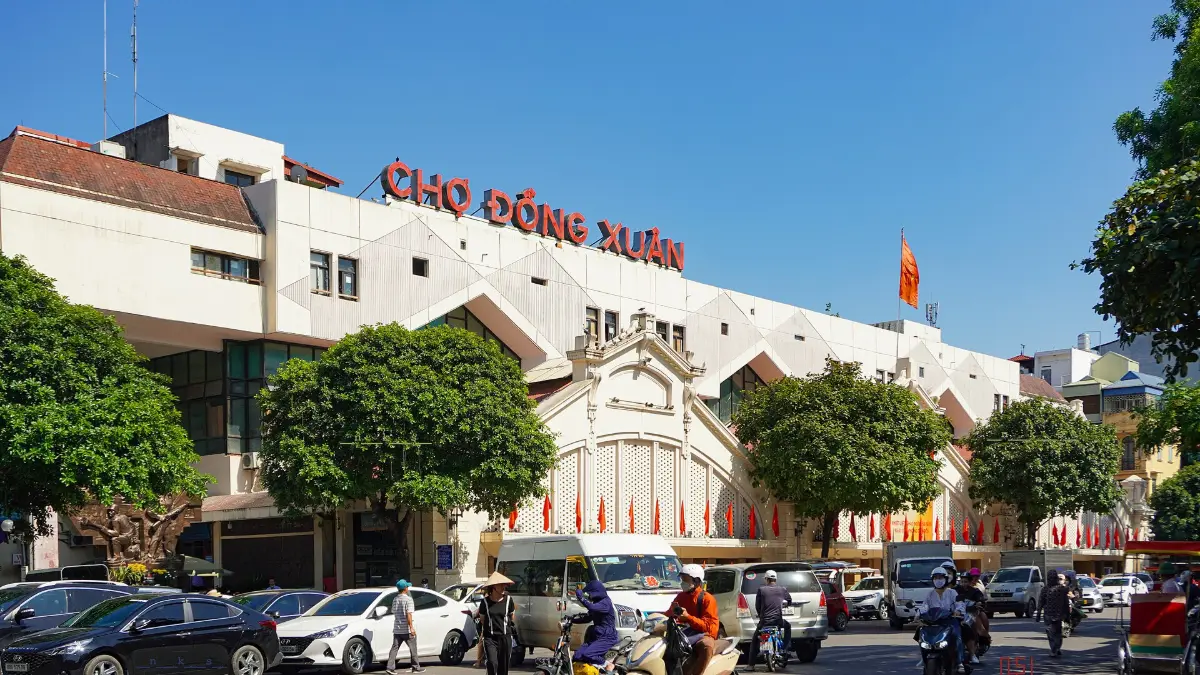
- Dong Xuan Market: Hanoi’s largest covered market, about 10 minutes’ walk north-east.
- Hoan Kiem Lake: the heart of the city, about 1 – 1.5 km east.
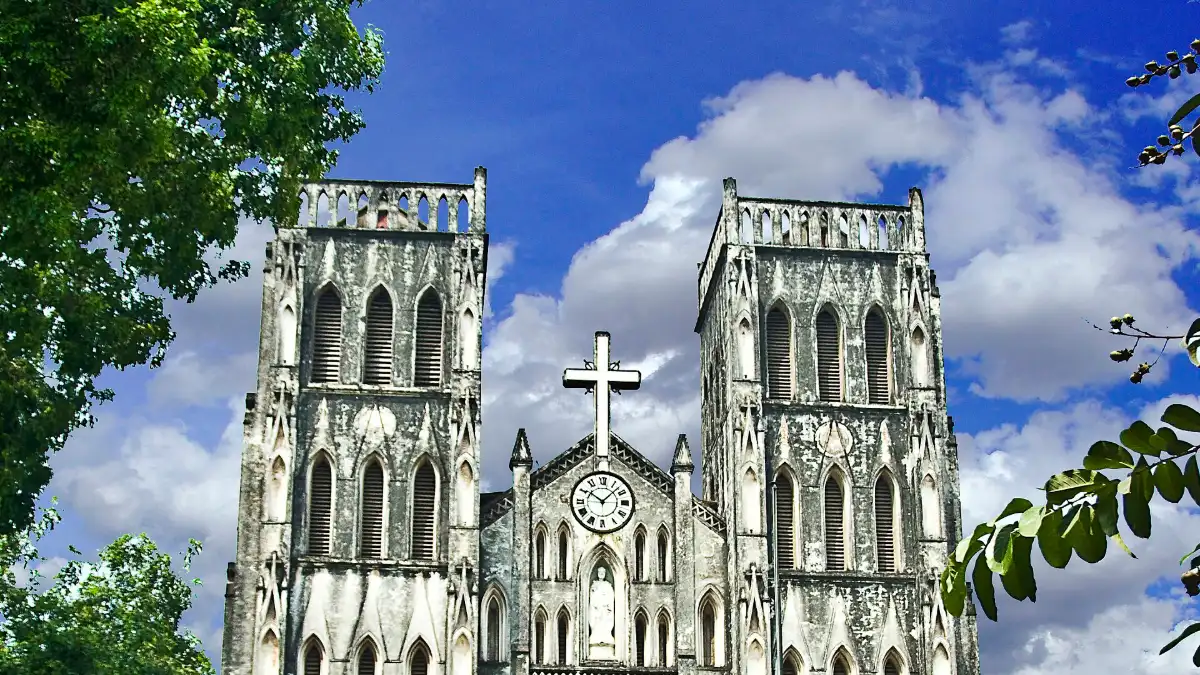
- St Joseph’s Cathedral: neo-Gothic cathedral, about 15 minutes’ walk.
- Hoa Lo Prison Museum: the “Hanoi Hilton”, a short walk south-east.
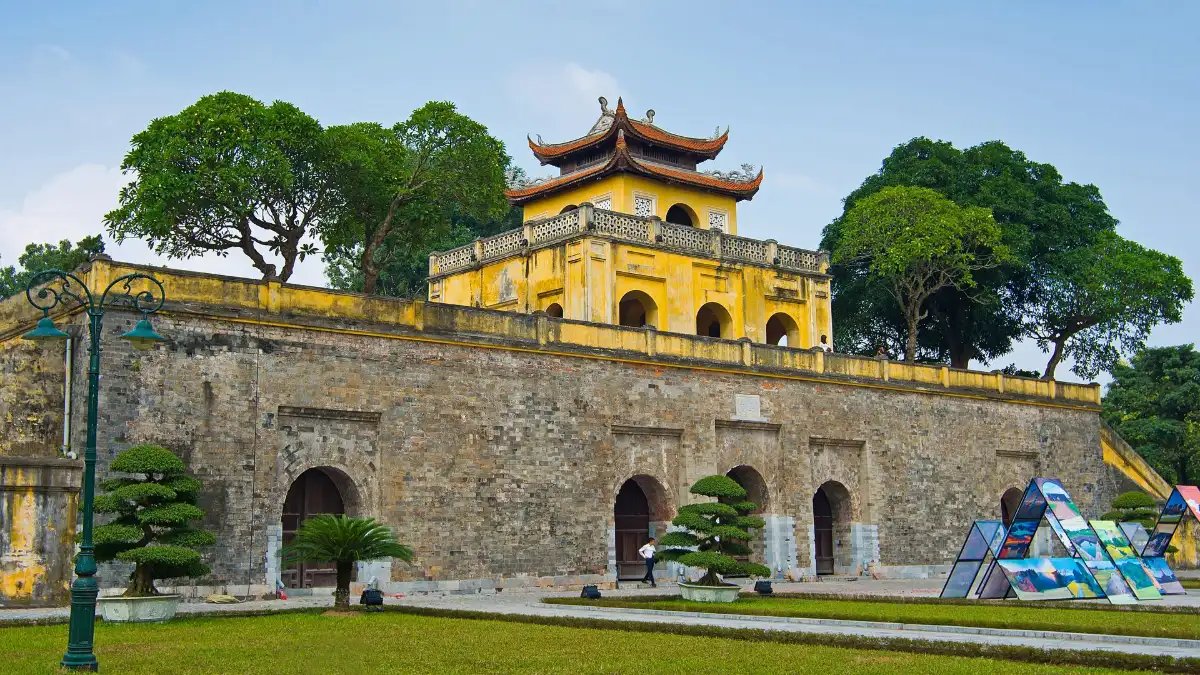
- Imperial Citadel of Thang Long: UNESCO-listed citadel, about 1 km west.
- Temple of Literature: Vietnam’s first university, south-west of the café stretch.
- Vietnam Fine Arts Museum: opposite the Temple of Literature.
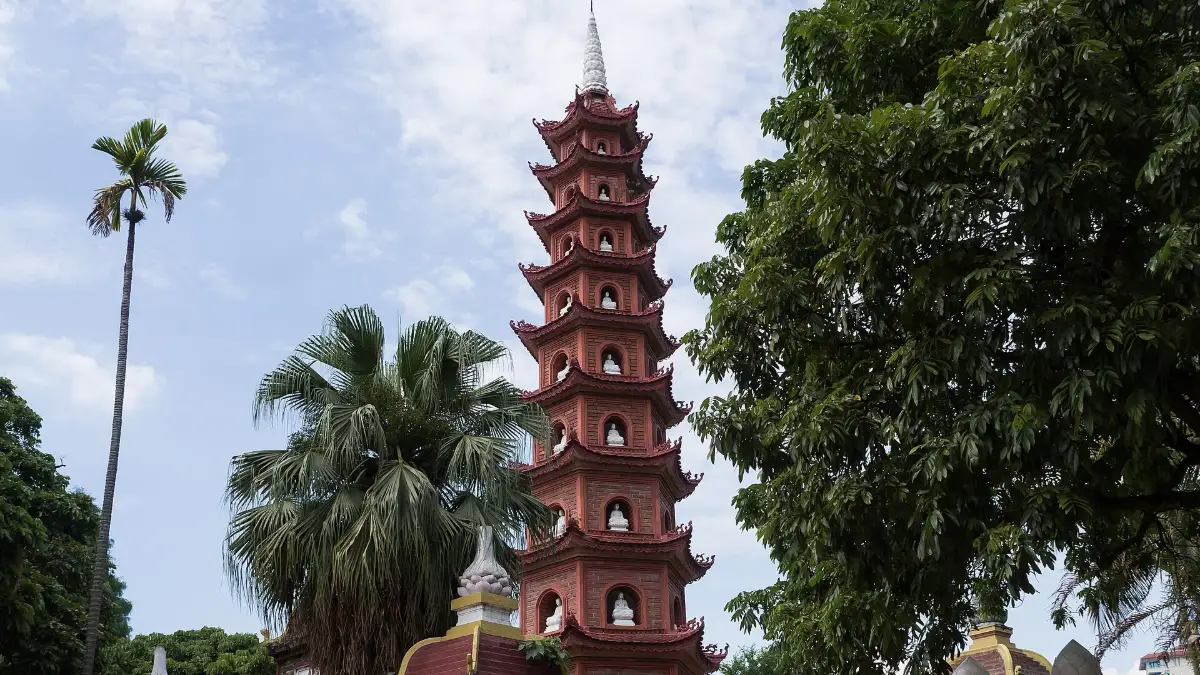
- Quan Thanh Temple and Tran Quoc Pagoda: on the way to West Lake.
Sightseeing in Hanoi for First-Time Visitors: Where Hanoi Train Street Fits
Only one day in Hanoi? Start at the Ho Chi Minh Mausoleum in the morning, continue to the Temple of Literature, then spend the afternoon around Hoan Kiem Lake and the Old Quarter. If the street is open, add Train Street for the afternoon or early-evening train, and finish at Long Bien Bridge.
Two or three days? Add the Imperial Citadel, Hoa Lo Prison, an evening at West Lake and some time for shopping in Hanoi. From Hanoi most travellers continue to Halong Bay or north to Sapa.
For safety reasons, the Hanoi Department of Tourism issued Document 221/SDL-QLLH on 7 March 2025 asking travel companies not to promote or organise tours that bring visitors to the trackside cafés. Long Bien Bridge and the colonial-era viaduct are good places to see the city’s railway heritage. Plan your trip with our Hanoi travel guide and browse our Hanoi tours. Contact Vietnam Tour Expert Team for a free custom itinerary.
Frequently Asked Questions about Hanoi Train Street
1. Is Hanoi Train Street open in 2026?
Trains still run, and news reports in August 2026 showed Hanoi Train Street cafés still serving visitors. However, the cafés are not licensed and authorities can barricade the entrances at any time, so check on the day.
2. Is it legal to visit Hanoi Train Street?
There is no ticket or permit for the public lane, but the area beside the track is a railway safety corridor where businesses are prohibited, and the trackside cafés on Train Street operate without permission. Follow any police instructions or barriers.
3. Is Hanoi Train Street safe?
Hanoi Train Street is reasonably safe if you stay seated or standing well back when a train passes and follow café staff. Accidents and near misses have happened when visitors stood on the track or leaned out to film.
4. What time does the train pass on Hanoi Train Street?
Trains pass Hanoi Train Street several times a day, from early morning to late evening, with the biggest crowds for the afternoon train around 3 – 4 pm. Times change, so ask a café for the next train.
5. How much does it cost to visit Hanoi Train Street?
There is no entrance fee for Hanoi Train Street. If you sit in a café, drinks usually cost about 30,000 – 80,000 VND (roughly US$1.20 – 3).
6. What is the best time to visit Hanoi Train Street?
Late afternoon into early evening is the most atmospheric time on Hanoi Train Street, with lanterns lit and a train passing. For a quiet walk and clean photos, go on a weekday morning.
7. How long should I spend on Hanoi Train Street?
Allow 45 – 90 minutes on Hanoi Train Street: enough to arrive early, order a drink, watch one train pass and walk the lane.
8. Can I walk on the tracks at Hanoi Train Street?
You can cross and walk along the Train Street lane when no train is due, but you must leave the rails as soon as a train is announced. Never stand on the track to take photos of an approaching train.
9. Is Hanoi Train Street suitable for children?
Older children who can follow instructions usually enjoy Hanoi Train Street, but keep them seated against the wall. With toddlers or pushchairs, watch a train from Long Bien Bridge instead.
10. Where exactly is Hanoi Train Street?
The best-known stretch of Hanoi Train Street runs between Phung Hung Street, Tran Phu Street and Dien Bien Phu Street, on the western edge of the Old Quarter. A second stretch lies near Kham Thien and Le Duan streets, south of Hanoi Railway Station.
11. How do I get to Hanoi Train Street from the Old Quarter?
Walk west to Phung Hung Street, about 10 – 15 minutes from most Old Quarter hotels, or take a short Grab ride to the Phung Hung – Tran Phu crossing. Our Hanoi transport guide covers the apps.
12. Can I drink egg coffee on Hanoi Train Street?
Yes, many Train Street cafés serve egg coffee alongside Vietnamese drip coffee, coconut coffee, beer and soft drinks. For the original egg coffee experience, see our Hanoi food and drinks guide.
13. Why was Hanoi Train Street closed?
Hanoi ordered the Train Street cafés closed in October 2019 and again barricaded the street in September 2022 because crowds on the track threatened railway safety. Each time the cafés later reopened.
14. Will Hanoi Train Street close permanently?
Possibly. In January 2026 Hanoi proposed ending passenger trains through the Train Street section, and in February 2026 the city and the Ministry of Construction agreed to reduce passenger trains and stop freight; no date for the change had been announced.
15. Do tours go to Hanoi Train Street?
For safety reasons, the Hanoi Department of Tourism issued Document 221/SDL-QLLH on 7 March 2025 asking travel companies not to promote or organise tours that bring visitors to the Train Street cafés. The request is addressed to travel companies; anyone who visits on their own does so at their own risk and must follow police and café staff instructions.
16. Can I take photos on Hanoi Train Street?
Yes, photography is common on Hanoi Train Street, but shoot from a safe spot behind the line, ask before photographing residents and never use the track as a photo set when a train is due.
17. What is the difference between Hanoi Train Street and Long Bien Bridge?
Hanoi Train Street is a narrow residential lane where trains pass houses; Long Bien Bridge is the 1902 steel bridge over the Red River that the same trains cross. The bridge is a public walkway and a safer place to watch trains.
18. Are there touts or scams at Hanoi Train Street?
Touts sometimes claim you must pay them to enter Hanoi Train Street; you do not. Check menu prices before ordering and pay only for what you consume. More advice is in our Hanoi travel tips.
Related Posts

Hanoi Egg Coffee (2026): Best Cafés, Prices, History & Recipe
Hanoi Shopping Guide: Best Markets, Streets & Souvenirs to Buy (2026)
Hanoi Travel Tips: Essential Things to Know Before You Go (2026)
Hanoi Transportation: How to Get Around Hanoi & From Noi Bai Airport (2026 Guide)
Hanoi Food & Drinks: 15 Must-Try Dishes, Egg Coffee & Where to Eat (2026)