Imperial Citadel of Thang Long: Hanoi’s UNESCO World Heritage Site – Visitor Guide (2026)
The Imperial Citadel of Thang Long (Hoàng thành Thăng Long) in Ba Dinh, central Hanoi, was the seat of Vietnamese royal power for about 13 centuries, from the 11th century onwards. Its Central Sector has been a UNESCO World Heritage Site since 2010, combining royal gates, palace foundations, archaeological digs and wartime bunkers. Tickets cost 100,000 VND; it opens daily 8:00–17:00.
Status (checked October 2026): open daily as normal, 8:00–17:00, at 100,000 VND per adult (the same price for Vietnamese and international visitors since 1 January 2025). The “Decoding Thang Long Imperial Citadel” night tour runs on weekend evenings and should be booked ahead.
Why the Imperial Citadel of Thang Long is worth seeing:
- UNESCO World Heritage: inscribed in 2010 for its long, continuous record of political power and cultural exchange.
- Thirteen centuries in layers: excavations at 18 Hoang Dieu reveal remains from the 7th century to the 19th century.
- Royal landmarks: Doan Mon Gate, the Kinh Thien Palace platform with its 1467 stone dragons, the Princess Pavilion and the North Gate.
- Secret wartime history: House D67 and its bunker, where Vietnam’s leaders directed the war.
- Calm and green: spacious grounds, rarely as crowded as the Old Quarter.
Imperial Citadel of Thang Long at a Glance
| Vietnamese name | Hoàng thành Thăng Long |
|---|---|
| Location | Main entrance at 19C Hoang Dieu Street, Ba Dinh Ward, Hanoi |
| Distance | About 2 km west of Hoan Kiem Lake; 500 m east of Ba Dinh Square |
| Known for | Doan Mon Gate, Kinh Thien Palace dragons, 18 Hoang Dieu excavations, D67 bunker, Bac Mon |
| Recognition | UNESCO World Heritage Site (2010), Special National Relic |
| Opening hours | Daily 8:00–17:00; night tour on weekend evenings |
| Entrance fee | 100,000 VND adults (about US$4); 50% off for students and seniors; children under 16 free |
| Time needed | 1.5–2 hours |
| Best time | Morning or late afternoon; October–April |
| Nearby | Ho Chi Minh Mausoleum, Hanoi Flag Tower, Temple of Literature |
| Find it | Google Maps · Tripadvisor · Official website |
Is the Imperial Citadel of Thang Long Worth Visiting?
Yes, especially if you enjoy history or archaeology. It is not a reconstructed palace like Hue or Beijing: most royal buildings were destroyed over the centuries, so you see gates, platforms, foundations and museum displays. With a little background (or a guide), it becomes one of the most rewarding sites in Hanoi, linking a thousand years of dynasties with the American War.
- Best for: history and archaeology lovers, war-history fans, travellers who like quiet, green spaces.
- Skip if: you expect grand intact palaces, or you only have half a day in Hanoi.
- Short on time? Focus on Doan Mon, the Kinh Thien dragons and House D67’s bunker in about an hour.
History of the Imperial Citadel of Thang Long
From Dai La to Thang Long (7th–11th centuries)
The site was already a fortified administrative centre under Chinese rule, known as Dai La in the 7th–9th centuries. In 1010 Emperor Ly Thai To moved his capital here from Hoa Lu and named it Thang Long, “Ascending Dragon”, after a legend of a dragon rising from the Red River.
Capital of the great dynasties (1010–1802)
For almost eight centuries Thang Long was the capital of the Ly, Tran and Le dynasties. Successive rulers rebuilt the palaces on the same central axis, which is why archaeologists find layer upon layer of foundations, roof tiles and ceramics from different eras.
Nguyen dynasty, French and modern era
When the Nguyen dynasty moved the capital to Hue in 1802, Thang Long became a provincial citadel, and the Hanoi Flag Tower and North Gate were built in the early 19th century. The French captured the citadel in 1873 and 1882 and later demolished most of it. From 1954 the site was the headquarters of the Vietnamese Ministry of Defence. Excavations at 18 Hoang Dieu began in 2002, and UNESCO inscribed the Central Sector on the World Heritage List in 2010, the year Hanoi celebrated its 1,000th anniversary. More detail is on Wikipedia.
What to See at the Imperial Citadel of Thang Long
1. Doan Mon Gate
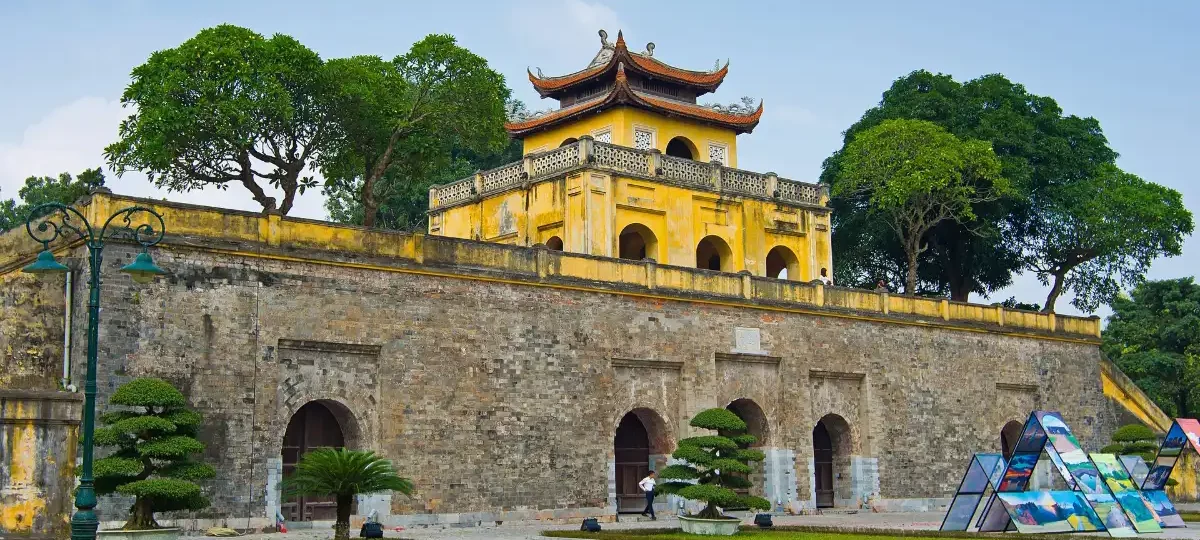
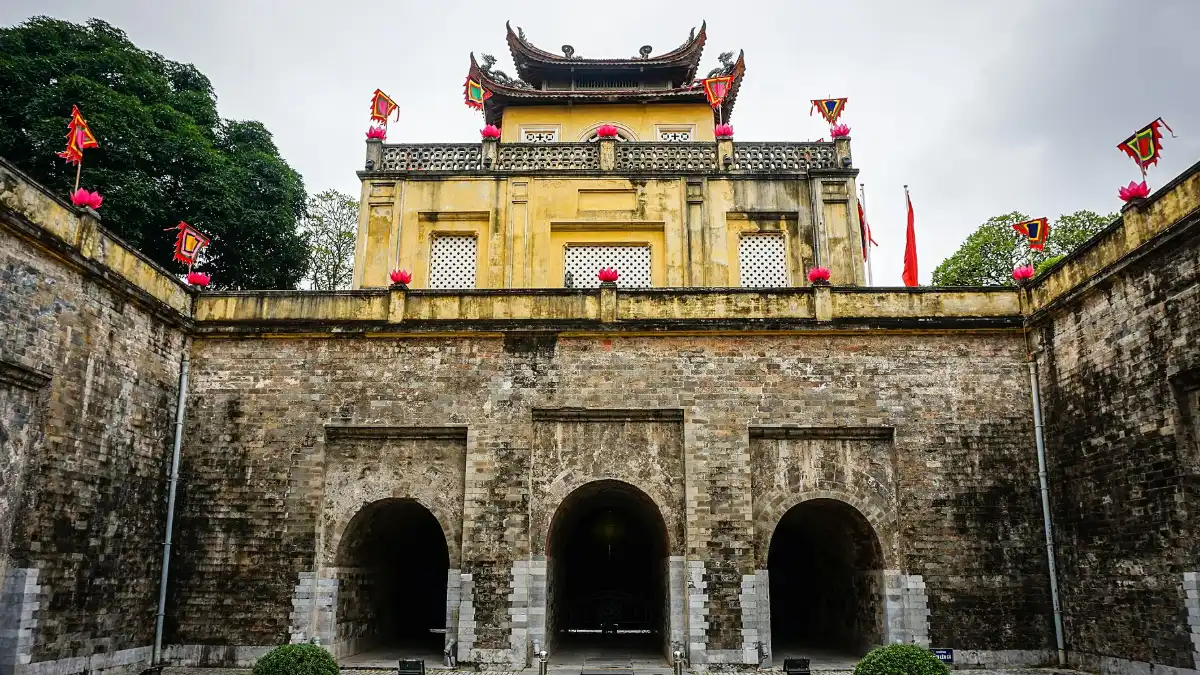
The main southern gate to the Forbidden City has five arched entrances; the central one was reserved for the emperor. Glass panels in the floor reveal older Ly-era paving and foundations beneath.
2. Kinh Thien Palace platform and stone dragons
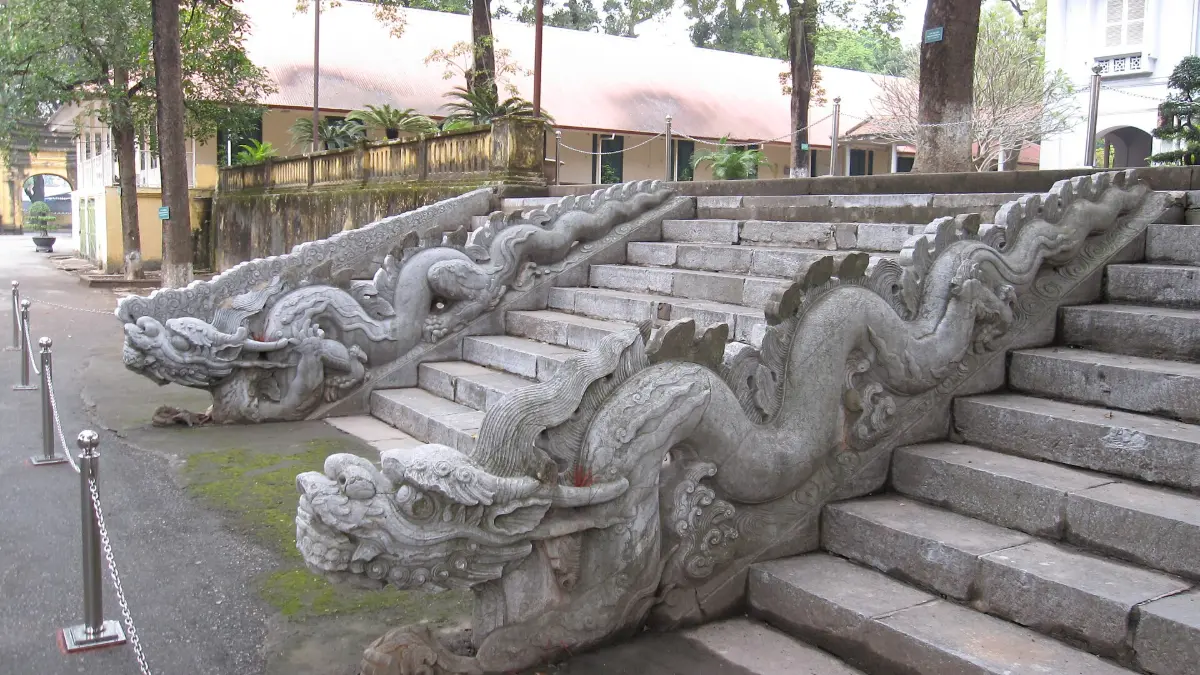
Kinh Thien was the main palace where emperors held court. Only its raised stone platform survives, with steps guarded by stone dragons carved in 1467 under Emperor Le Thanh Tong, among the finest examples of Le-dynasty sculpture.
3. 18 Hoang Dieu archaeological site
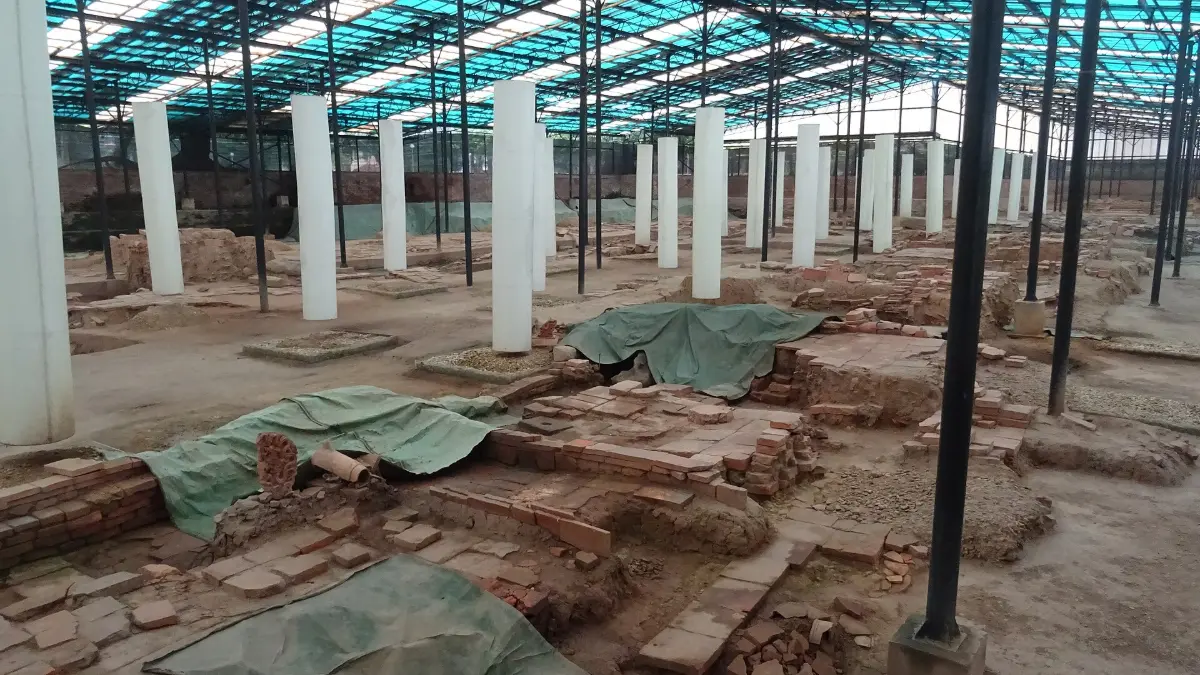
Across Hoang Dieu Street lies the largest excavation, uncovered from 2002 when the site was being cleared for a new National Assembly building. Walkways lead over wells, drainage systems, column bases and foundations dating from the Dai La period to the Nguyen dynasty. It is included in your ticket.
4. House D67 and the underground bunker
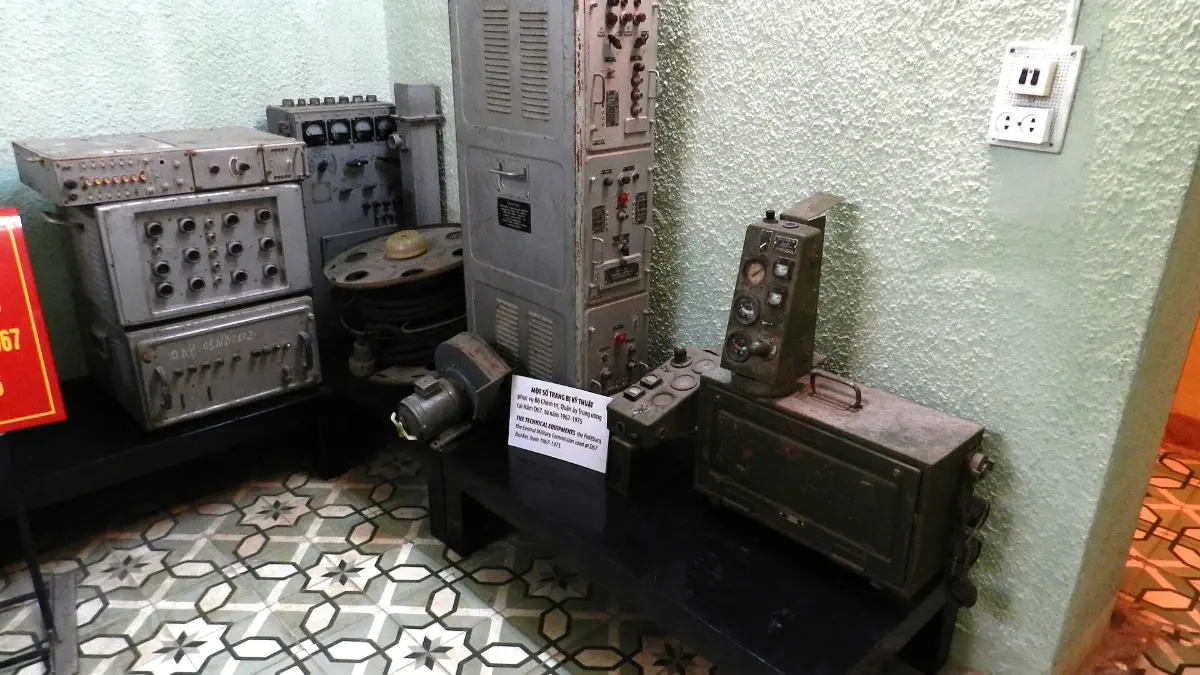
Built in 1967, House D67 was the meeting room of the Politburo and the Central Military Commission. Its original tables, chairs and maps are preserved. Behind it, steps lead down to a reinforced bunker deep underground, used during the American War, including during the 1972 bombing of Hanoi.
5. Hau Lau (Princess Pavilion)
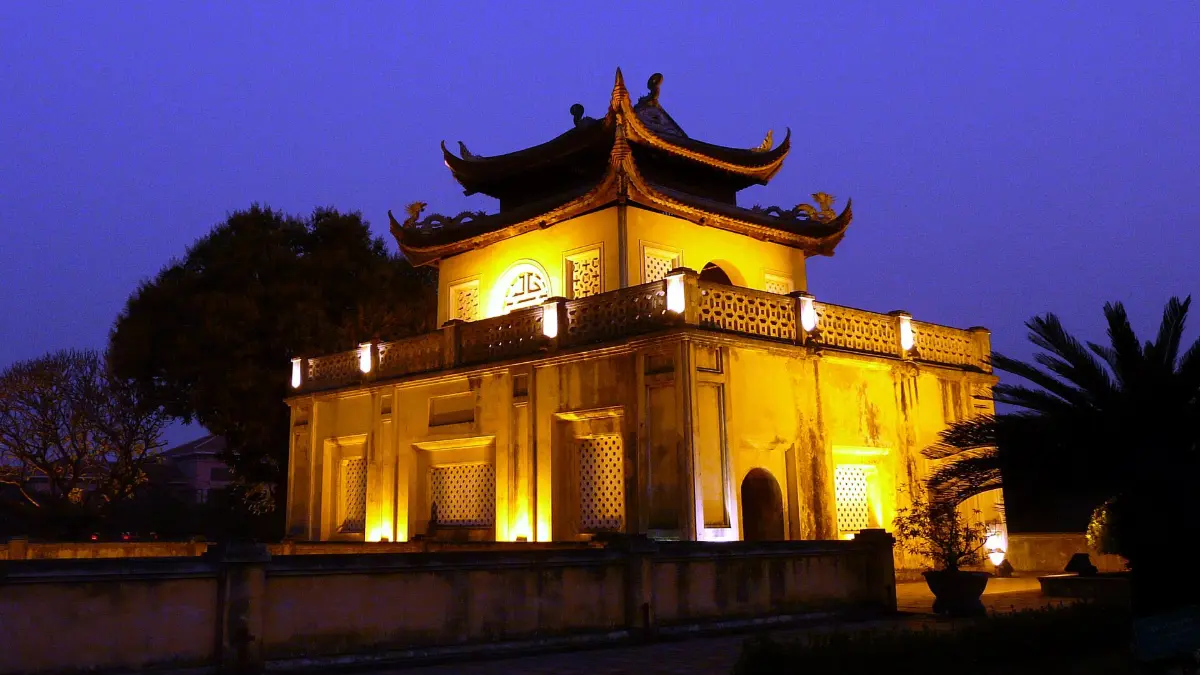
This elegant three-storey building at the northern end dates from the Nguyen era. It is called the Princess Pavilion because it is believed to have housed royal ladies.
6. Bac Mon (North Gate)
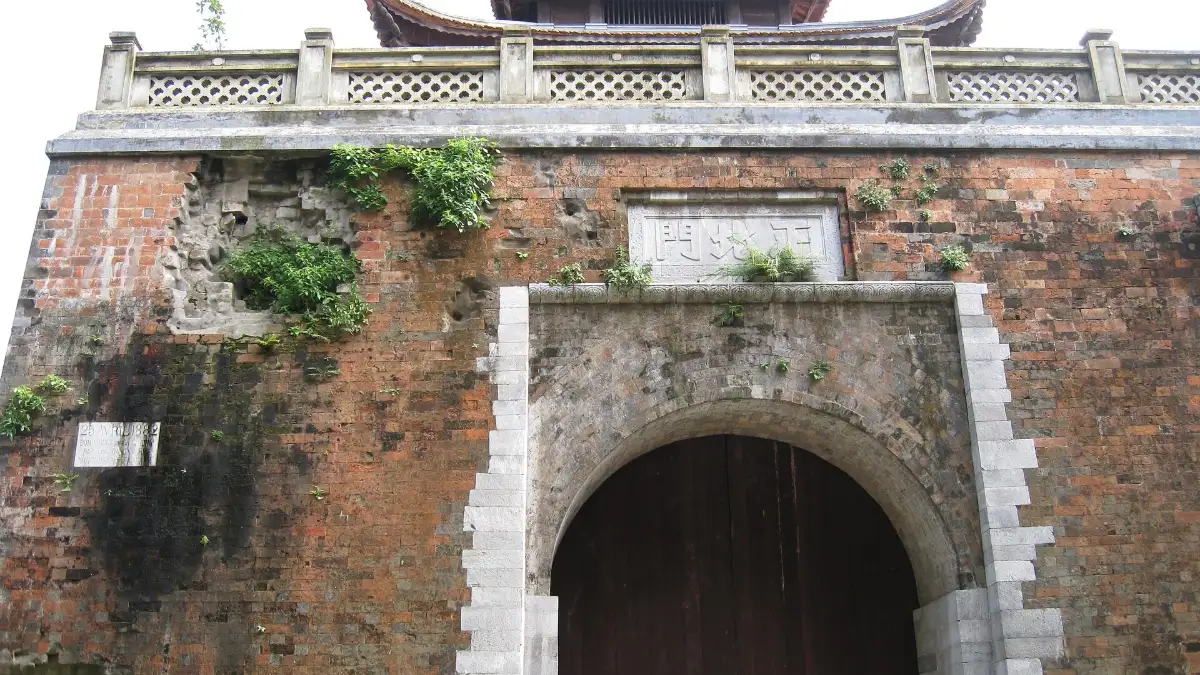
The North Gate, built in 1805 on Phan Dinh Phung Street, still shows the marks of French cannon fire from 1882. A small shrine on top honours the governors Hoang Dieu and Nguyen Tri Phuong, who died defending the citadel against the French.
7. Hanoi Flag Tower
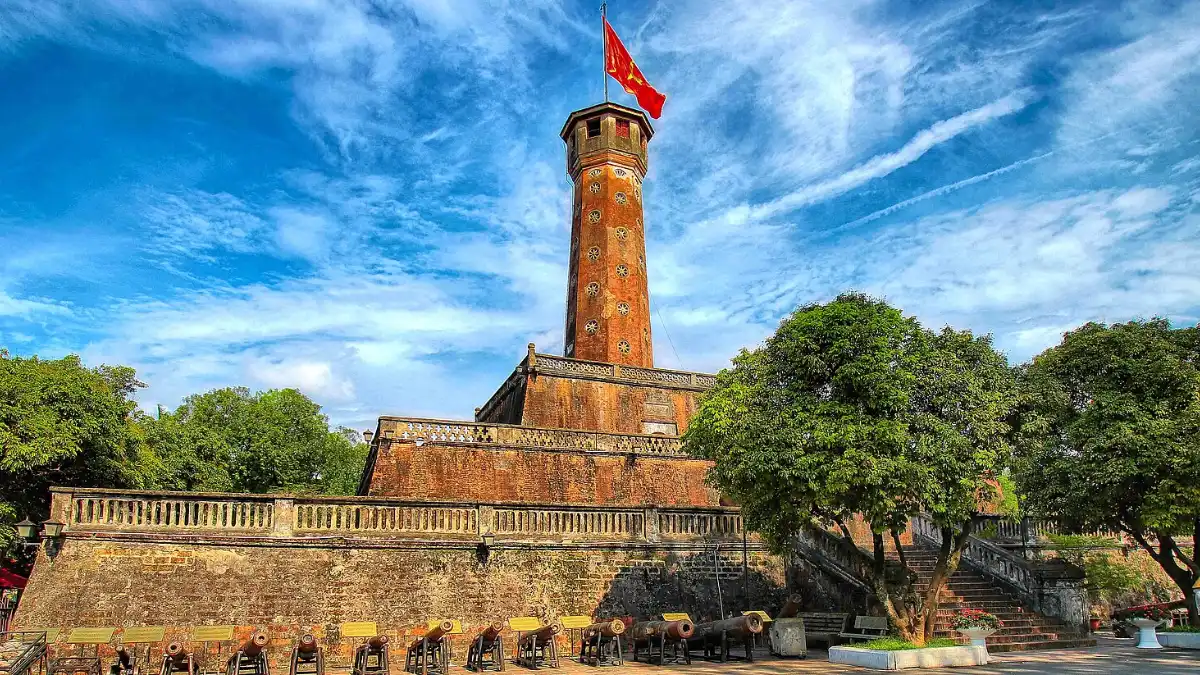
The 33-metre Flag Tower (Cot Co Hanoi), built in 1812 under the Nguyen dynasty, stands on Dien Bien Phu Street at the southern edge of the heritage area. Since 2025 it has been managed by the Thang Long–Hanoi Heritage Conservation Centre and charges its own entrance fee of 100,000 VND.
Imperial Citadel of Thang Long Tickets and Opening Hours (2026)
| Item | Details |
|---|---|
| Opening hours | Daily 8:00–17:00 |
| Adult ticket | 100,000 VND (about US$4), same for Vietnamese and foreign visitors, since 1 January 2025 |
| Students, people over 60, people with disabilities | 50,000 VND (50% off, with ID) |
| Children under 16 | Free |
| Included | Doan Mon, Kinh Thien platform, D67 and bunker, Hau Lau, exhibitions, 18 Hoang Dieu site |
| Hanoi Flag Tower | Separate ticket, 100,000 VND |
| Night tour “Decoding Thang Long Imperial Citadel” | Weekend evenings, about 1.5 hours, booked through the official hotline or website |
Prices are set by Hanoi People’s Council Resolution 16/2023 and published by the Thang Long–Hanoi Heritage Conservation Centre; check the official ticket page before you go.
How to Explore the Imperial Citadel, Step by Step
- Enter at 19C Hoang Dieu and buy your ticket; pick up a map at the counter.
- Walk through Doan Mon and look down through the glass floor at the older foundations.
- Continue to the Kinh Thien platform and its dragon staircase, then the exhibition rooms nearby.
- Visit House D67 and the bunker behind it, then Hau Lau at the northern end.
- Cross Hoang Dieu Street with your ticket to the 18 Hoang Dieu excavations.
- Optional: walk 10 minutes north to Bac Mon, or south to the Flag Tower.
How to Get to the Imperial Citadel of Thang Long
| From | How | Time |
|---|---|---|
| Hoan Kiem Lake / Old Quarter | Taxi or Grab (about 40,000–70,000 VND) | 10–15 minutes |
| Old Quarter | Walk west via Phan Dinh Phung Street | 25–35 minutes |
| Ho Chi Minh Mausoleum | Walk east along Bac Son or Dien Bien Phu streets | About 10 minutes |
| Temple of Literature | Taxi or walk north | 5 minutes by car, 20 minutes on foot |
| Noi Bai Airport | Taxi or Grab | 40–60 minutes |
More options are in our Hanoi transportation guide.
Best Time to Visit the Imperial Citadel of Thang Long
| When | What to expect |
|---|---|
| October–April | Cool, dry, comfortable for walking the large open grounds |
| May–September | Hot and humid with little shade on the central axis; bring water and a hat |
| 8:00–10:00 or after 15:00 | Softer light, fewer school groups |
| Weekend evenings | Night tour with royal music, lanterns and storytelling |
| Tet and national holidays | Special exhibitions and cultural events; busier |
Local Expert Tips for the Imperial Citadel of Thang Long
These tips come from years of arranging Hanoi tours for international travellers.
- Do it right after the Ho Chi Minh Mausoleum; they are a 10-minute walk apart.
- Do not miss the bunker under House D67: it is the part most of our guests remember.
- Keep your ticket for the 18 Hoang Dieu excavation site across the road; many visitors forget it.
- A guide brings the ruins to life, because the site is about what used to stand here.
- Bring water and sun protection in summer; there are few cafés inside.
- Consider the weekend night tour if you have already seen the site by day.
Imperial Citadel of Thang Long vs Hue Imperial City
| Thang Long Citadel (Hanoi) | Hue Imperial City | |
|---|---|---|
| Period | 7th–19th centuries, mainly Ly, Tran and Le dynasties | 1802–1945, Nguyen dynasty |
| What survives | Gates, platforms, foundations, archaeology, wartime bunker | Walls, moats, gates and many restored palaces |
| UNESCO | Central Sector, 2010 | Complex of Hue Monuments, 1993 |
| Time needed | 1.5–2 hours | Half a day |
Our view: Hue is more impressive for royal architecture; Thang Long is deeper and older history in the heart of the capital. If you travel the length of Vietnam, see both: read our Hue Imperial Citadel guide.
Nearby Attractions
- Ho Chi Minh Mausoleum and Ba Dinh Square: 500 m west.
- Vietnam Military History Museum: now in its new building on Thang Long Avenue.
- Temple of Literature: about 1.5 km south-west.
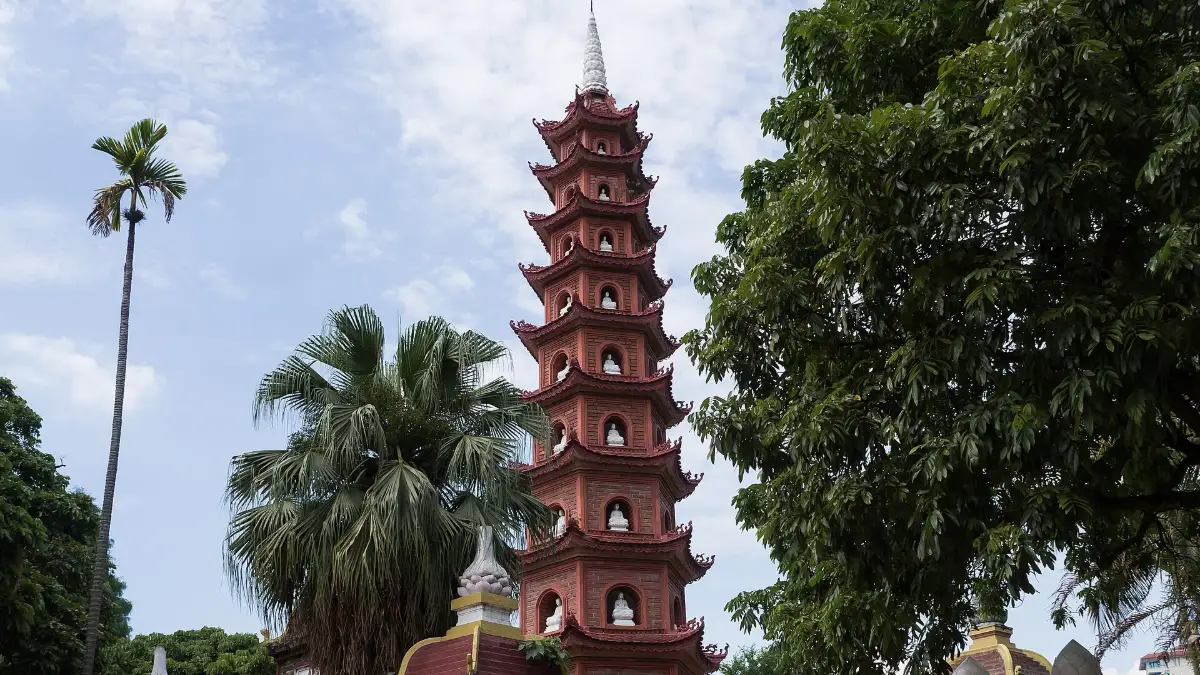
- Quan Thanh Temple and Tran Quoc Pagoda: about 1.5 km north.
- Hanoi Old Quarter: 2 km east.
Sightseeing in Hanoi for First-Time Visitors: Where the Imperial Citadel Fits
Two days in Hanoi? On day one, see the Mausoleum complex, the Imperial Citadel and the Temple of Literature. On day two, explore Hoan Kiem Lake, the Old Quarter and the Museum of Ethnology, with dinner from our Hanoi food guide. Our Hanoi travel tips help with planning.
Plan your trip with our Hanoi travel guide and Hanoi tours. Contact Vietnam Tour Expert Team for a free custom itinerary.
Frequently Asked Questions about the Imperial Citadel of Thang Long
1. How much is the Imperial Citadel of Thang Long ticket?
The adult ticket is 100,000 VND (about US$4) for both Vietnamese and foreign visitors; students and seniors get 50% off and children under 16 enter free.
2. What are the Imperial Citadel of Thang Long opening hours?
It opens daily from 8:00 to 17:00.
3. Is the Imperial Citadel of Thang Long open on Mondays?
Yes. According to the official website, the Imperial Citadel of Thang Long opens every day of the week.
4. Why is the Imperial Citadel of Thang Long a UNESCO site?
UNESCO inscribed the Central Sector in 2010 for its 13 centuries of continuous use as a seat of power and its evidence of cultural exchange in the region.
5. How long do I need at the Imperial Citadel of Thang Long?
Allow 1.5 to 2 hours, including the 18 Hoang Dieu excavation site across the road.
6. Where is the Imperial Citadel of Thang Long?
The main entrance is at 19C Hoang Dieu Street, Ba Dinh Ward, about 2 km west of Hoan Kiem Lake.
7. What is House D67 at the Imperial Citadel of Thang Long?
Built in 1967, it was the meeting room of the Politburo and Central Military Commission, with a wartime bunker below.
8. Is the 18 Hoang Dieu site included in the Imperial Citadel of Thang Long ticket?
Yes, the same ticket covers the archaeological site across Hoang Dieu Street.
9. Is there a night tour at the Imperial Citadel of Thang Long?
Yes, the “Decoding Thang Long Imperial Citadel” night tour runs on weekend evenings for about 1.5 hours; book in advance.
10. Is the Hanoi Flag Tower part of the Imperial Citadel of Thang Long?
It belongs to the same heritage area but has a separate entrance on Dien Bien Phu Street and its own 100,000 VND ticket.
11. When was the Imperial Citadel of Thang Long built?
Emperor Ly Thai To founded Thang Long in 1010 on the site of the earlier Dai La citadel.
12. Is the Imperial Citadel of Thang Long worth visiting?
Yes, for history lovers; it combines a thousand years of royal history with the D67 wartime bunker.
13. What is the difference between the Imperial Citadel of Thang Long and the Hue Citadel?
Thang Long is older and mostly archaeological, while Hue preserves many restored Nguyen palaces from 1802–1945; see our Hue Imperial Citadel guide.
14. Can I walk from the Ho Chi Minh Mausoleum to the Imperial Citadel of Thang Long?
Yes, it is about a 10-minute walk.
15. Is there a dress code at the Imperial Citadel of Thang Long?
There is no strict dress code, but modest clothes are recommended, especially at the shrines.
16. Is the Imperial Citadel of Thang Long good for children?
Yes, the open grounds and the bunker interest children, and under-16s enter free.
17. When is the best time to visit the Imperial Citadel of Thang Long?
Visit from October to April, ideally in the morning or late afternoon to avoid the midday heat.
Related Posts

Hanoi Egg Coffee (2026): Best Cafés, Prices, History & Recipe
Hanoi Train Street (2026): Is It Open? Train Times, Cafés & Rules
Hanoi Shopping Guide: Best Markets, Streets & Souvenirs to Buy (2026)
Hanoi Travel Tips: Essential Things to Know Before You Go (2026)
Hanoi Transportation: How to Get Around Hanoi & From Noi Bai Airport (2026 Guide)