Bai Dinh Pagoda: Vietnam’s Largest Buddhist Complex in Ninh Binh – Visitor Guide (2026)
Bai Dinh Pagoda (Chùa Bái Đính) is Vietnam’s largest Buddhist complex, on Bai Dinh Mountain in Tay Hoa Lu ward, about 18 km from Ninh Binh city. Built from 2003 to 2010 beside an ancient cave pagoda founded in 1136, it is famous for a 100-tonne bronze Buddha, a 36-tonne bell, 500 arhat statues and a 13-storey stupa. Entry is free; the electric car costs extra.
Status (checked October 2026): open daily as normal. Entry is free; the round-trip electric car from the car park costs about 100,000 VND per adult (2025 provincial price list), and the 13-storey Bao Thien stupa has a separate ticket. Expect big crowds during the spring festival (January–March).
Why Bai Dinh Pagoda is worth seeing:
- Record-breaking scale: Vietnam’s largest pagoda complex, with a string of national and Asian records.
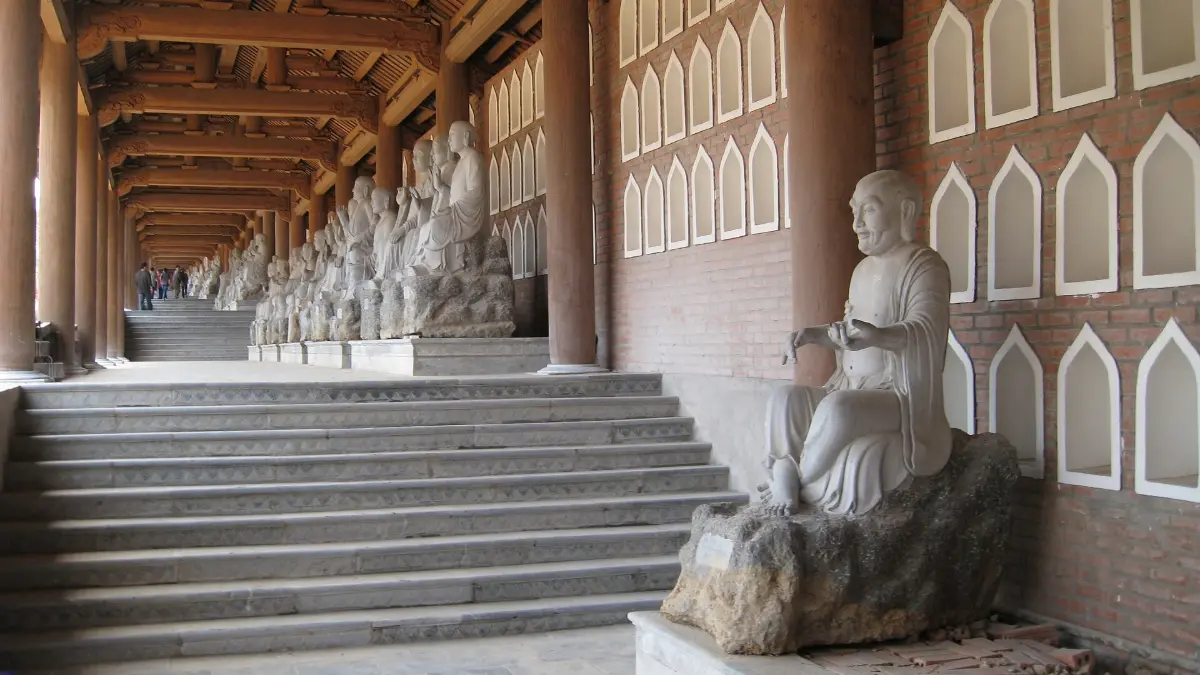
- The arhat corridor: hundreds of carved stone arhats lining covered walkways nearly 3 km long in total.
- Giant bronze Buddhas, including a gilded 10 m, 100-tonne Shakyamuni in Phap Chu Hall.
- Ancient roots: the old cave pagoda dates from 1136, under the Ly dynasty.
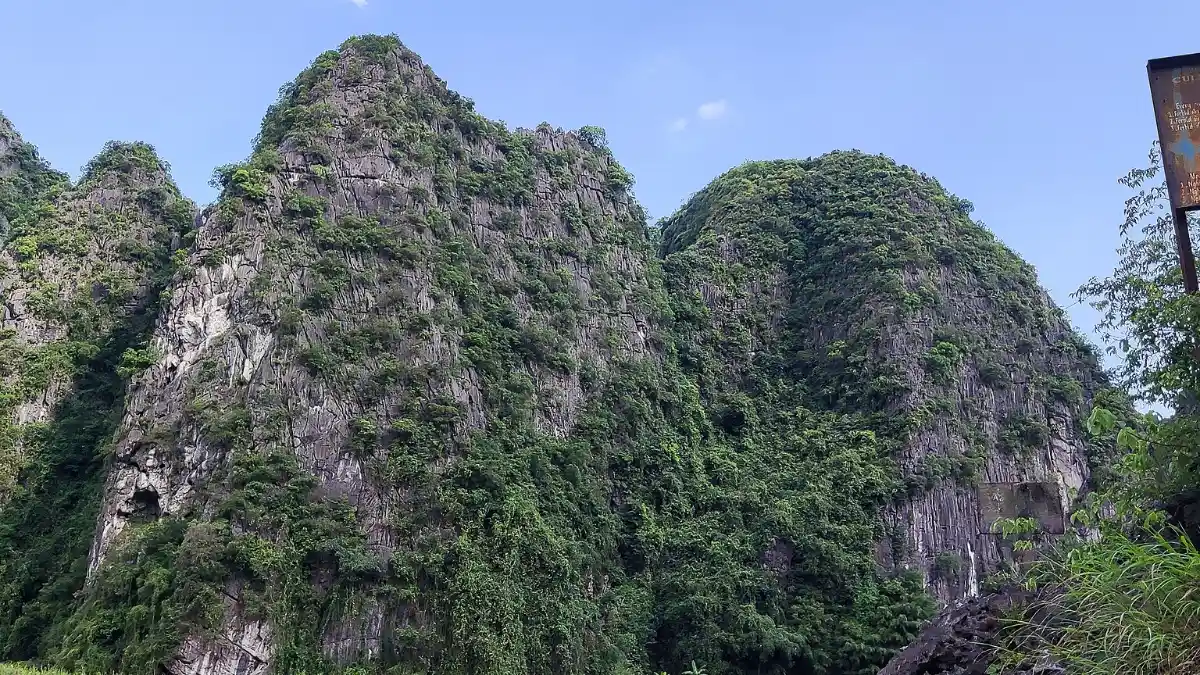
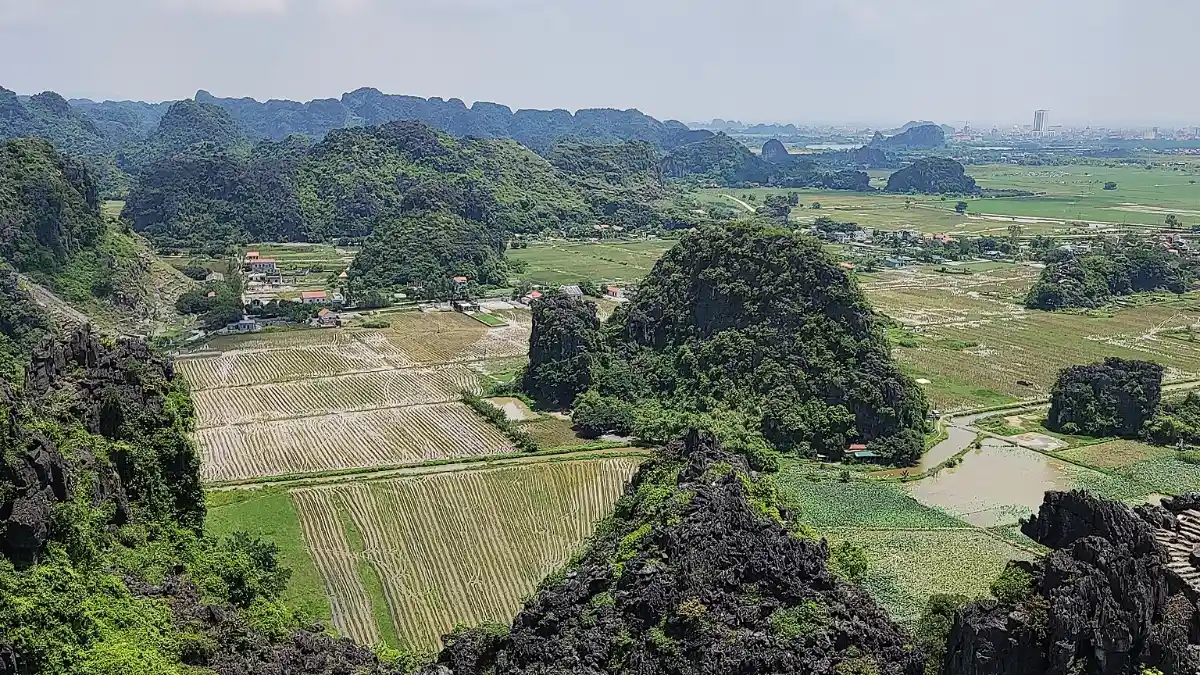
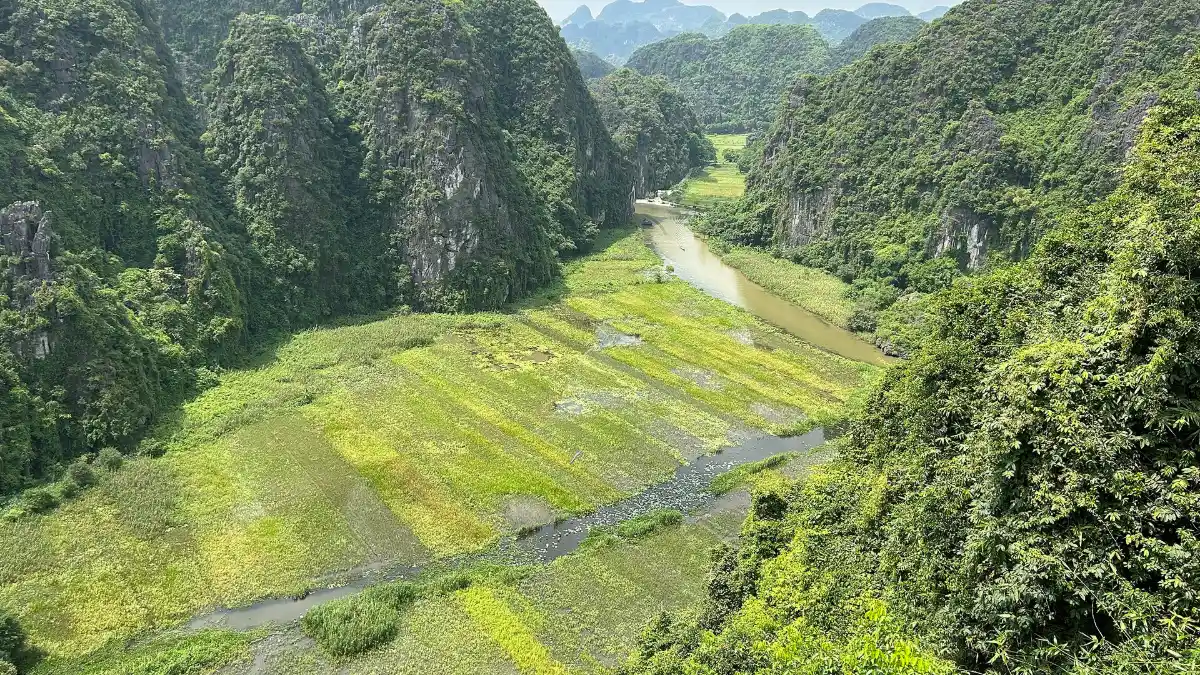
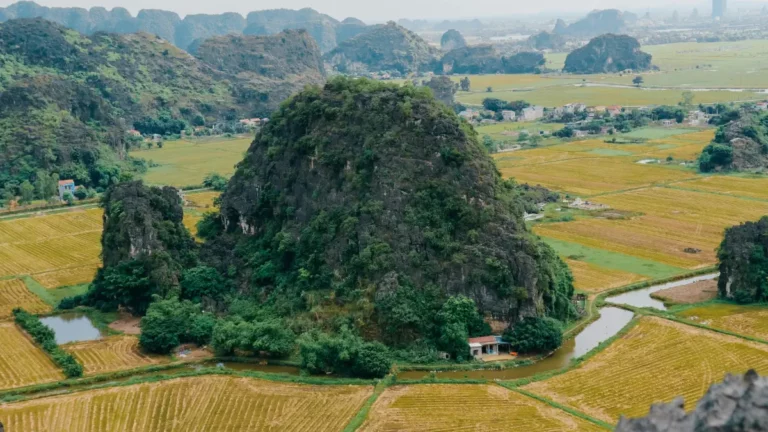
- Views over karst hills and the Hoang Long River plain from the upper halls and stupa.
Bai Dinh Pagoda at a Glance
| Vietnamese name | Chùa Bái Đính |
|---|---|
| Location | Bai Dinh Mountain, Tay Hoa Lu ward (formerly Gia Sinh commune, Gia Vien district), Ninh Binh province |
| Distance | About 18 km north-west of Ninh Binh city; about 95–100 km (2 hours) from Hanoi |
| Known for | Vietnam’s largest Buddhist complex; bronze Buddhas, 36-tonne bell, 500 arhats, 13-storey stupa, ancient cave pagoda |
| Built | Old pagoda founded 1136; new complex 2003–2010 |
| Recognition | Lies within the area of the Trang An Landscape Complex (UNESCO, 2014); host of the United Nations Day of Vesak 2014 |
| Opening hours | Daily from early morning to early evening; electric cars run in daytime |
| Entrance fee | Free; electric car about 100,000 VND (adult round trip); stupa about 60,000 VND |
| Time needed | 2–3 hours |
| Best time | Weekday mornings, October–April; festival season January–March if you like crowds |
| Nearby | Trang An, Hoa Lu, Van Long, Kenh Ga |
| Find it | Google Maps · Tripadvisor · Wikipedia |
Is Bai Dinh Pagoda Worth Visiting?
Yes, for the sheer scale and the contrast between new and old. The new complex is modern and monumental rather than ancient, so some travellers find it less atmospheric than small village pagodas; the old cave pagoda on the hillside restores the sense of history. It fits easily into a day with the Trang An boat trip, just a short drive away.
- Best for: first-time visitors, photographers, families and anyone interested in Vietnamese Buddhism.
- Skip if: you prefer intimate, centuries-old temples; Bich Dong Pagoda or Hoa Lu will suit you better.
- Short on time: take the electric car, walk the arhat corridor up to Phap Chu Hall and return; allow about 90 minutes.
History of Bai Dinh Pagoda
The ancient pagoda (1136)
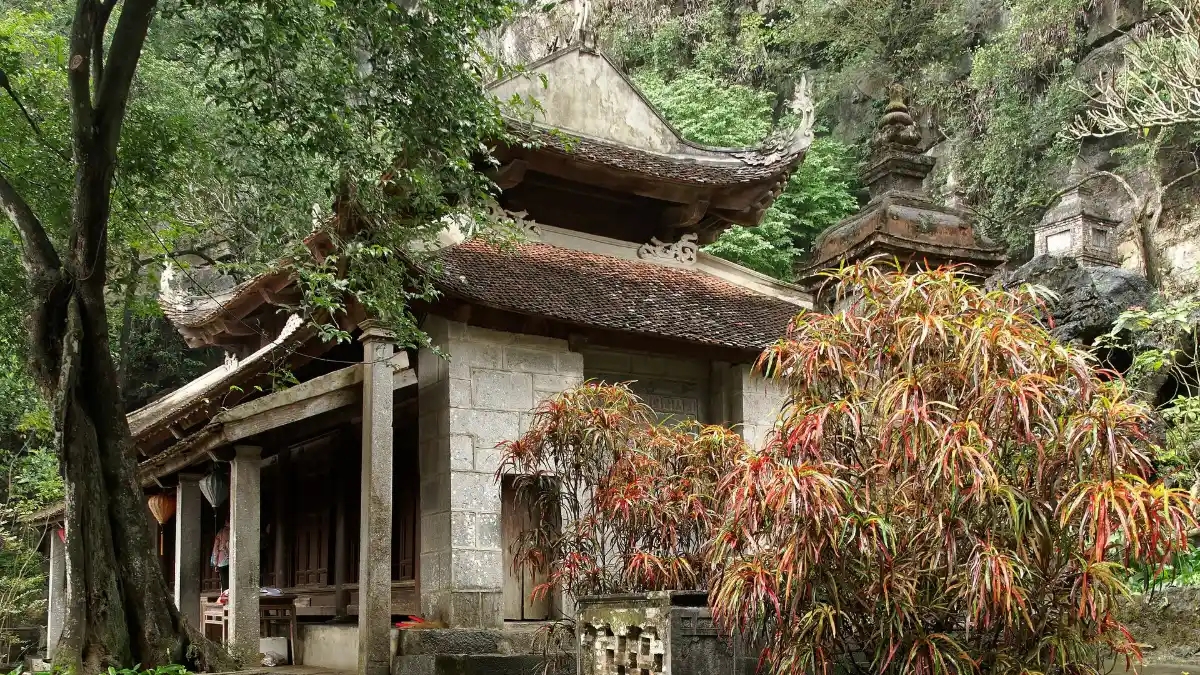
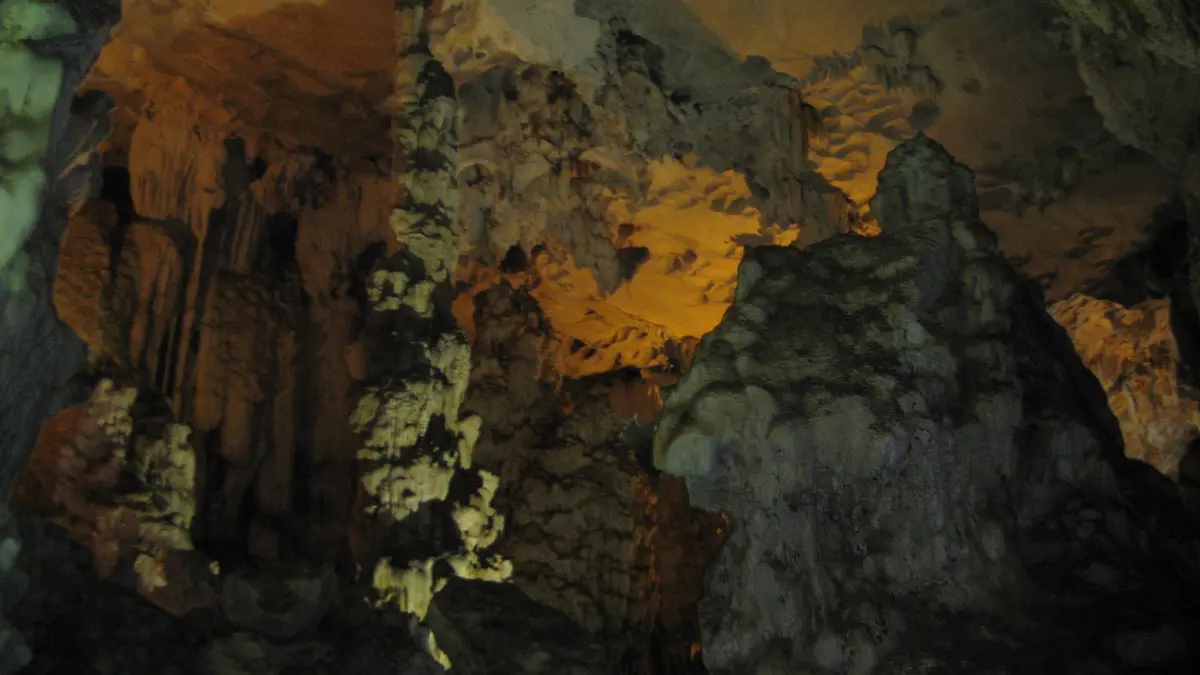
Bai Dinh Mountain has been a sacred place for almost a thousand years. Tradition says the Zen master Nguyen Minh Khong, a famous healer monk of the Ly dynasty, founded a pagoda here in 1136 in the mountain’s caves. The old pagoda sits on the hillside, about 800 m from the new complex, with a Light Cave (Động Sáng), a Dark Cave (Động Tối) and the Ngoc Well.
The new complex (2003–2010)
Construction of the new Bai Dinh began in 2003 and the main works were completed in 2010, the year of Hanoi’s 1,000th anniversary. The complex spreads over a vast area (figures range from about 539 to over 700 hectares including the surrounding land), with the new pagoda covering about 80 hectares. In May 2014 Bai Dinh hosted the United Nations Day of Vesak, attended by Buddhist delegations from around the world.
Since the administrative reorganisation of 1 July 2025, the pagoda lies in Tay Hoa Lu ward of the enlarged Ninh Binh province, which now also includes the former Ha Nam and Nam Dinh provinces.
What to See at Bai Dinh Pagoda
1. Tam Quan Gate and the arhat corridor
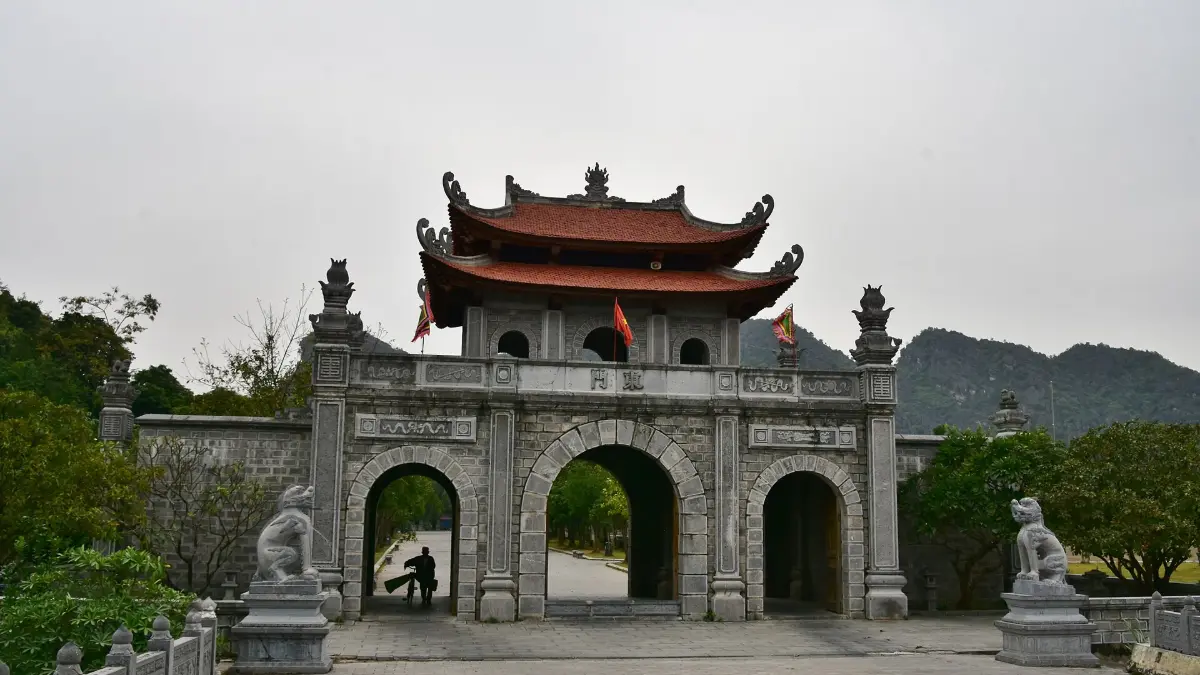
The visit starts at the triple gate, from where covered corridors climb the hillside on both sides. They are lined with about 500 stone arhat statues, each with a different face and pose; together the corridors run for nearly 3 km.
2. Bell Tower
The bell tower holds a bronze bell of about 36 tonnes, one of the largest in Vietnam. Its deep sound carries across the valley during ceremonies.
3. Quan Am Hall
The first of the main halls is dedicated to Quan Am, the Bodhisattva of Compassion, with a gilded statue of about 80 tonnes.
4. Phap Chu Hall
The largest hall houses the gilded bronze Shakyamuni Buddha, about 10 m tall and weighing about 100 tonnes, recognised by the Asia Book of Records as the largest of its kind in Asia.
5. Tam The Hall
At the top of the main axis, three huge bronze Buddhas, each about 7.2 m tall, represent the past, present and future. The terrace gives sweeping views over the karst landscape.
6. Bao Thien Stupa
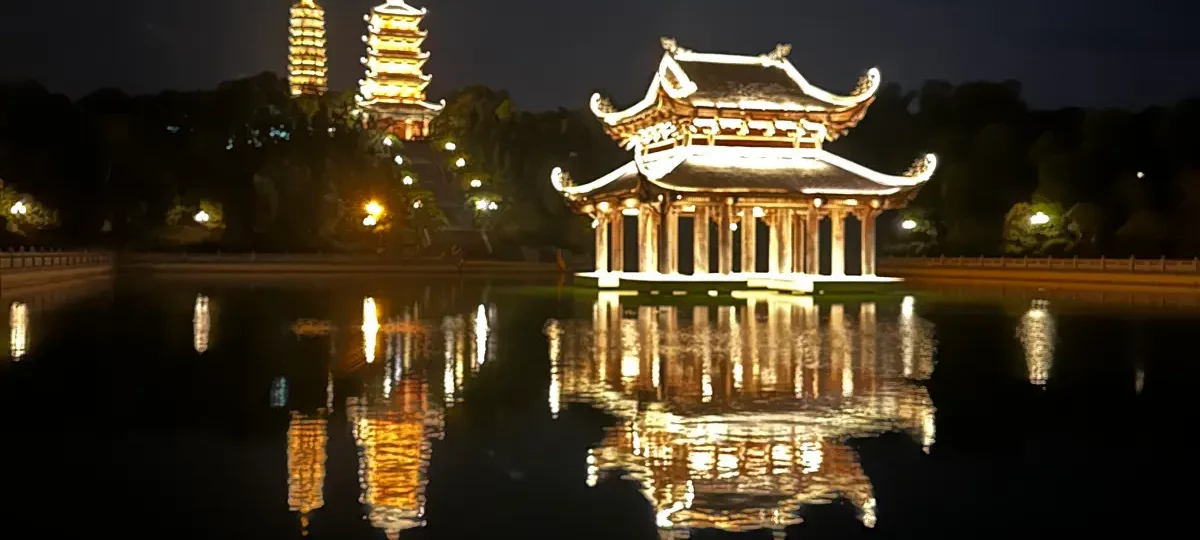
The 13-storey stupa, about 100 m tall, stands apart from the main halls and houses Buddha relics. A lift takes visitors to the upper floors for panoramic views; a separate ticket is required.
7. The old Bai Dinh cave pagoda
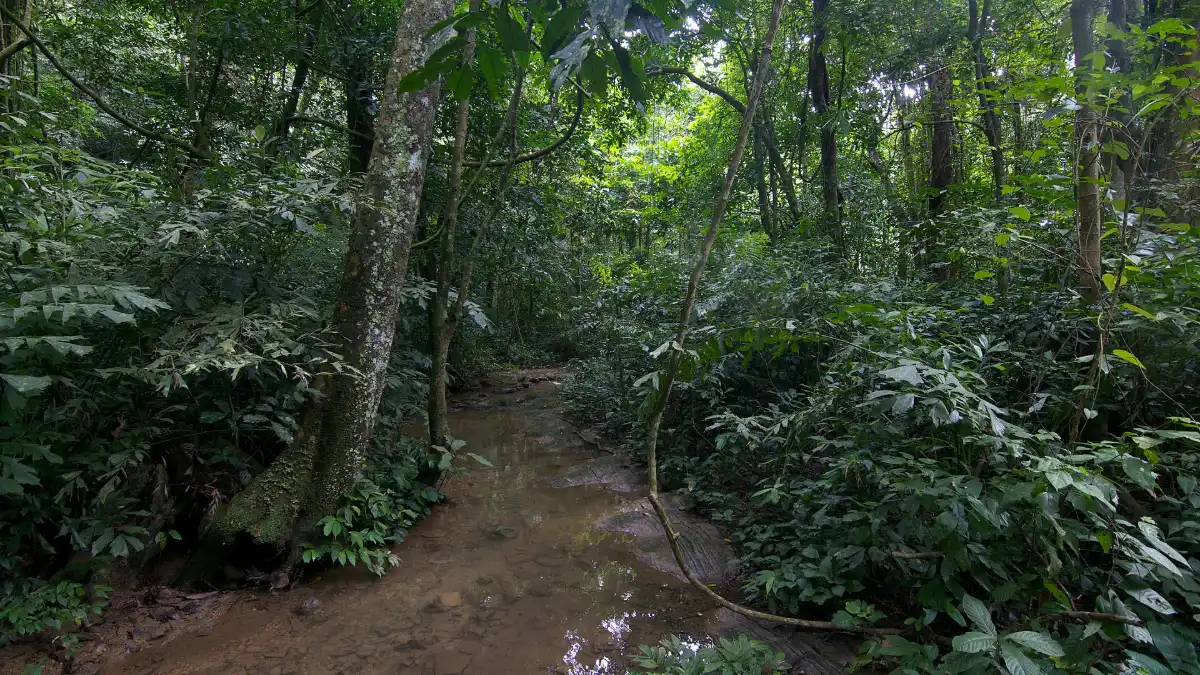
Reached by more than 300 stone steps through the forest, the old pagoda is set in small caves on the mountainside. It is quieter and more spiritual than the new complex, and worth the extra 30–45 minutes.
8. Maitreya Buddha and Ngoc Well
A large bronze Maitreya Buddha and the round Ngoc Well, a sacred pond, complete the complex; both are popular photo stops.
Bai Dinh Pagoda Tickets and Opening Hours (2026)
| Item | Adult | Child |
|---|---|---|
| Pagoda entry | Free | Free |
| Electric car, round trip from the car park | About 100,000 VND (about US$4) | About 70,000 VND |
| Bao Thien Stupa | About 60,000 VND | About 40,000 VND |
| Combo (electric car + stupa) | About 150,000 VND | About 100,000 VND |
| Children under 1 m | Free | |
| Opening hours | Daily, early morning to early evening | |
Prices follow the Ninh Binh tourism price list published in 2025; fares are set by the site operator and may change, and guided packages are sold at the visitor centre.
How to Visit Bai Dinh Pagoda, Step by Step
- Park at the main visitor area and buy electric car tickets.
- Ride to Tam Quan Gate and walk up through the arhat corridor.
- Visit the Bell Tower, Quan Am Hall, Phap Chu Hall and Tam The Hall in order.
- Take the side path or electric car to Bao Thien Stupa if you want the view.
- Finish at the old cave pagoda before returning by electric car.
Dress code and etiquette
- Cover shoulders and knees; avoid short shorts, crop tops and see-through clothing.
- Remove hats inside halls and speak quietly.
- Do not touch or climb on statues, and do not point your feet at Buddha images.
- Photography is generally allowed outside; follow signs inside the halls.
- Put donations in the boxes, not on the statues.
How to Get to Bai Dinh Pagoda
| From | How | Time |
|---|---|---|
| Ninh Binh city | Taxi, Grab or private car | About 25–30 minutes |
| Trang An wharf | Taxi, car or bicycle | About 15 minutes |
| Tam Coc | Taxi, car or motorbike | About 30 minutes |
| Hanoi | Private car, tour or limousine bus | About 2 hours |
| Hanoi by public transport | Train or bus to Ninh Binh, then taxi | About 3 hours |
All the options are compared in our Ninh Binh transport guide.
Best Time to Visit Bai Dinh Pagoda
| When | What to expect |
|---|---|
| January–March (lunar 1st–3rd months) | Bai Dinh Festival from the 6th day of the 1st lunar month; very crowded, especially at weekends. |
| April–June | Warm to hot; fewer visitors after the festival. |
| July–September | Hot with heavy showers; carry an umbrella. |
| October–December | Dry and pleasant; the best season for walking. |
| Time of day | Before 9:00 or after 15:00 for softer light and smaller crowds. |
Local Expert Tips for Bai Dinh Pagoda
These tips come from years of arranging Ninh Binh tours for international travellers.
- Visit on a weekday morning; weekends and festival days bring huge pilgrim crowds.
- Take the electric car both ways; the walk from the car park is long and adds little.
- Wear comfortable shoes: the main axis involves many steps.
- Do not skip the old cave pagoda; it is the most authentic part of Bai Dinh.
- Pair Bai Dinh with Trang An in one day, or with Van Long’s wetland boats for a quieter route.
- For a calmer base, browse our best areas to stay in Ninh Binh.
Bai Dinh Pagoda vs Bich Dong Pagoda
| Feature | Bai Dinh | Bich Dong |
|---|---|---|
| Age | Old pagoda 1136; new complex 2003–2010 | Founded in the 15th century |
| Scale | Vast, monumental | Small, three pagodas on a mountainside |
| Atmosphere | Grand, busy | Quiet, intimate |
| Cost | Free entry; electric car extra | Free |
| Time needed | 2–3 hours | About 1 hour |
Our view: Bai Dinh impresses with size; Bich Dong charms with age and setting. If you have time, see both: Bai Dinh with Trang An, Bich Dong with Tam Coc.
Nearby Attractions
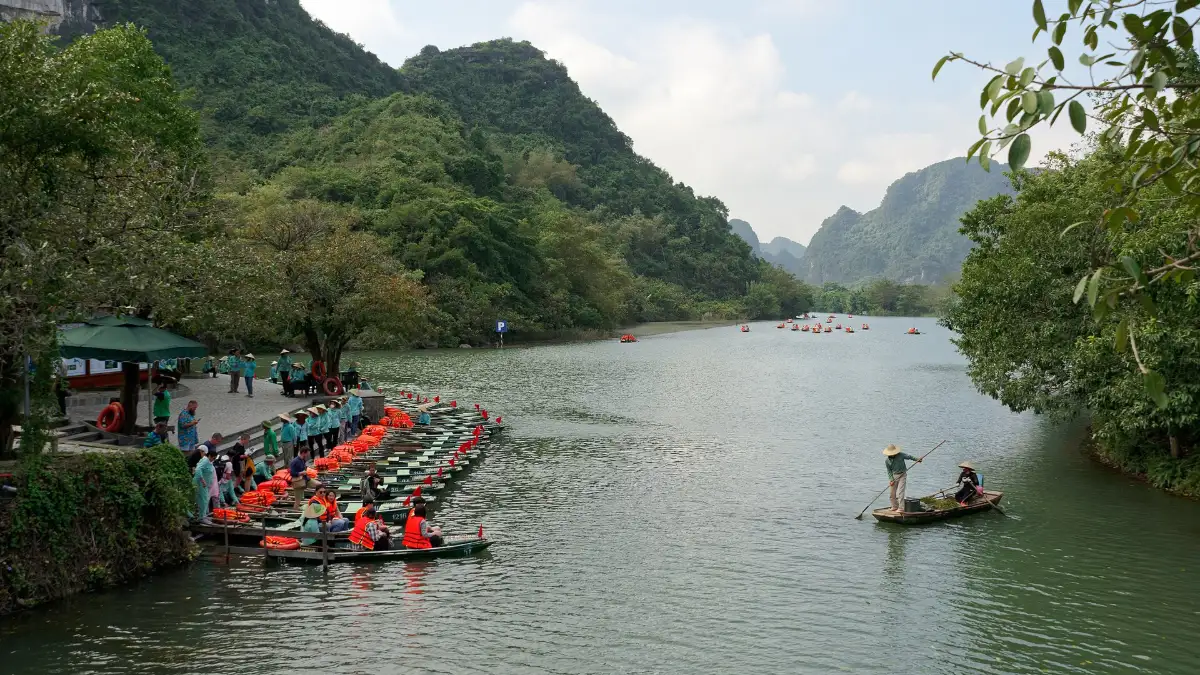
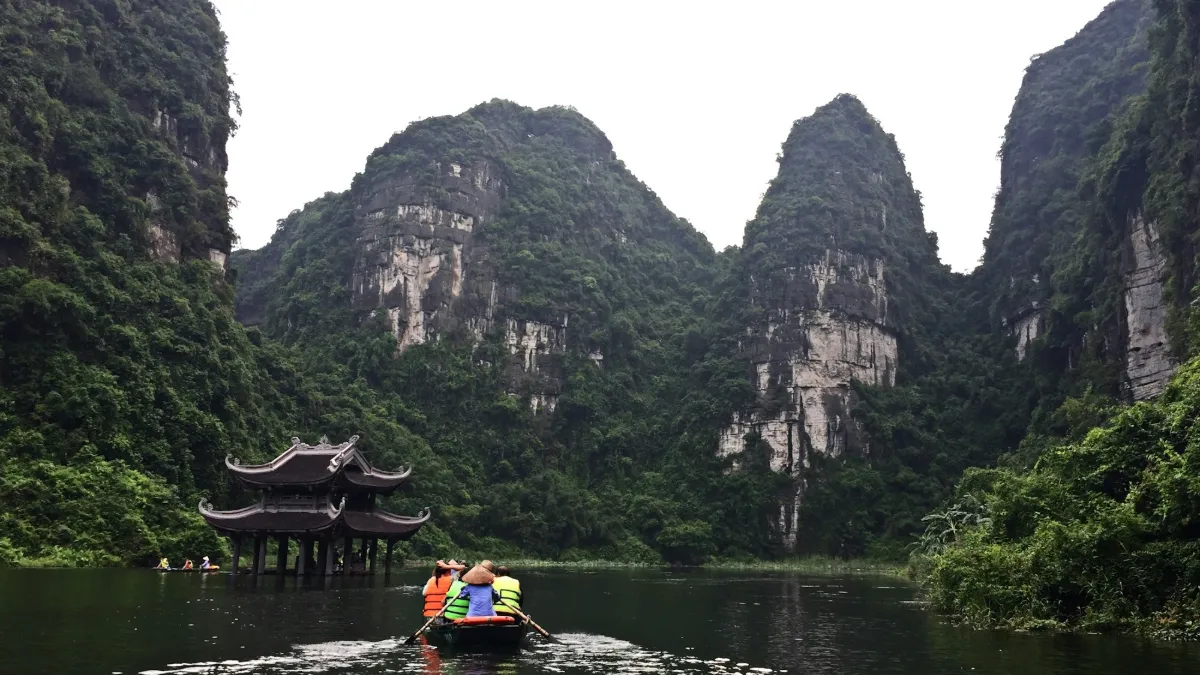
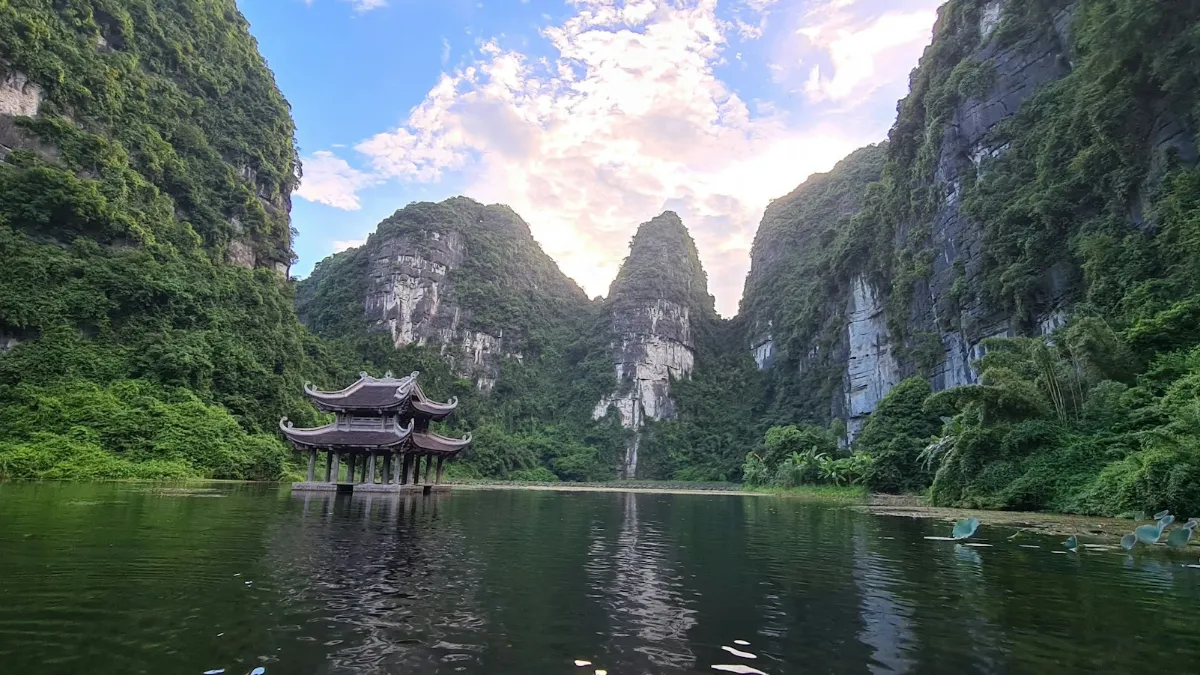
- Trang An: the UNESCO karst boat trip, about 15 minutes away.
- Hoa Lu Ancient Capital: temples of the Dinh and Le kings.
- Mua Cave: the famous dragon-topped viewpoint.
- Van Long Nature Reserve: the quietest boat trip in the province.
- Kenh Ga Floating Village: river life to the north.
- Tam Coc: river caves through rice fields.
Sightseeing in Ninh Binh for First-Time Visitors: Where Bai Dinh Fits
One day in Ninh Binh? Start with Bai Dinh at 8:00, take the Trang An boat trip late morning, eat lunch near the wharf with tips from our Ninh Binh food guide, and climb the Hang Mua steps for sunset. With a second day, add Tam Coc, Bich Dong and the old capital at Hoa Lu. Our Ninh Binh travel tips cover weather, money and etiquette.
Plan your trip with our Ninh Binh travel guide and Ninh Binh tours. Contact Vietnam Tour Expert Team for a free custom itinerary.
Frequently Asked Questions about Bai Dinh Pagoda
1. What is Bai Dinh Pagoda famous for?
Bai Dinh Pagoda is famous as Vietnam’s largest Buddhist complex, with a 100-tonne bronze Buddha, a 36-tonne bell, about 500 arhat statues and a 13-storey stupa.
2. Where is Bai Dinh Pagoda?
Bai Dinh Pagoda is on Bai Dinh Mountain in Tay Hoa Lu ward, Ninh Binh province, about 18 km from Ninh Binh city and 95–100 km from Hanoi.
3. Is there an entrance fee for Bai Dinh Pagoda?
No, Bai Dinh Pagoda is free to enter; you pay only for the electric car (about 100,000 VND per adult round trip) and the stupa if you go up.
4. What are Bai Dinh Pagoda’s opening hours?
Bai Dinh is open daily from early morning to early evening, and electric cars run throughout the day.
5. How old is Bai Dinh Pagoda?
The old Bai Dinh cave pagoda dates from 1136, while the new complex was built from 2003 to 2010.
6. How long does it take to visit Bai Dinh?
Allow 2–3 hours for Bai Dinh, or about 90 minutes for the main axis only.
7. Is Bai Dinh Pagoda worth visiting?
Yes, Bai Dinh is worth visiting for its scale and records, especially when combined with Trang An nearby.
8. What should I wear to Bai Dinh Pagoda?
At Bai Dinh, wear clothes that cover your shoulders and knees, and comfortable shoes for the steps.
9. How tall is the Bai Dinh stupa?
The Bao Thien Stupa at Bai Dinh has 13 storeys and is about 100 m tall, with a lift to the upper floors.
10. How many arhat statues are there at Bai Dinh?
Bai Dinh’s covered corridors are lined with about 500 stone arhat statues.
11. How heavy is the Bai Dinh bell?
The bronze bell in Bai Dinh’s bell tower weighs about 36 tonnes.
12. Can you walk instead of taking the Bai Dinh electric car?
Walking from the Bai Dinh car park is possible but long; most visitors take the electric car to Tam Quan Gate.
13. When is the Bai Dinh Festival?
The Bai Dinh Festival opens on the 6th day of the 1st lunar month and runs to the end of the 3rd lunar month, usually February to April.
14. How do I get to Bai Dinh from Hanoi?
Bai Dinh is about 2 hours from Hanoi by private car, tour or limousine bus.
15. Is Bai Dinh part of the Trang An UNESCO site?
Bai Dinh lies within the area of the Trang An Landscape Complex, which UNESCO inscribed as a mixed World Heritage Site in 2014.
16. Bai Dinh or Trang An: which should I visit first?
Visit Bai Dinh early in the morning, then take the Trang An boat trip, as the two are only about 15 minutes apart.
17. Did Bai Dinh host the UN Day of Vesak?
Yes, Bai Dinh hosted the United Nations Day of Vesak celebrations in May 2014.
Related Posts
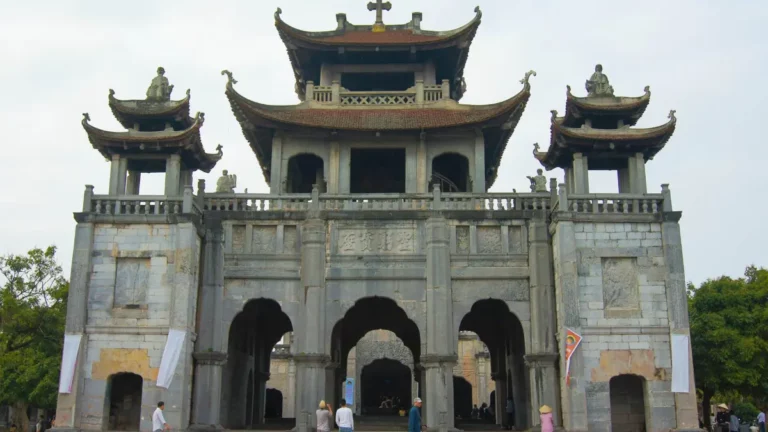
Phat Diem Cathedral: Vietnam’s Pagoda-Style Stone Cathedral in Ninh Binh (2026 Guide)
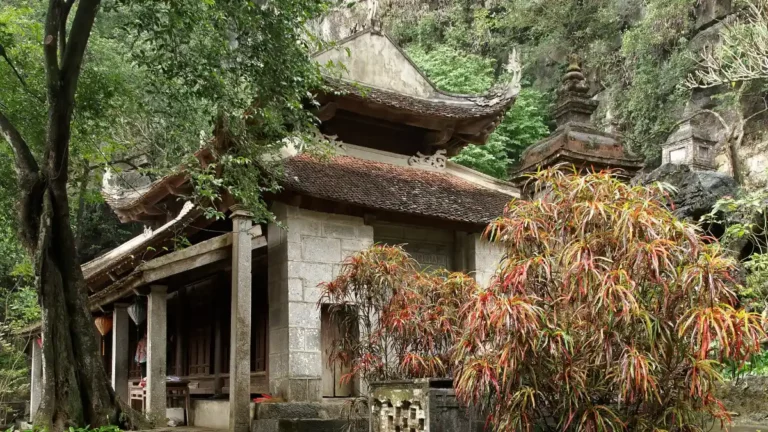
Bich Dong Pagoda: The Three-Level Cave Pagoda Near Tam Coc, Ninh Binh (2026)
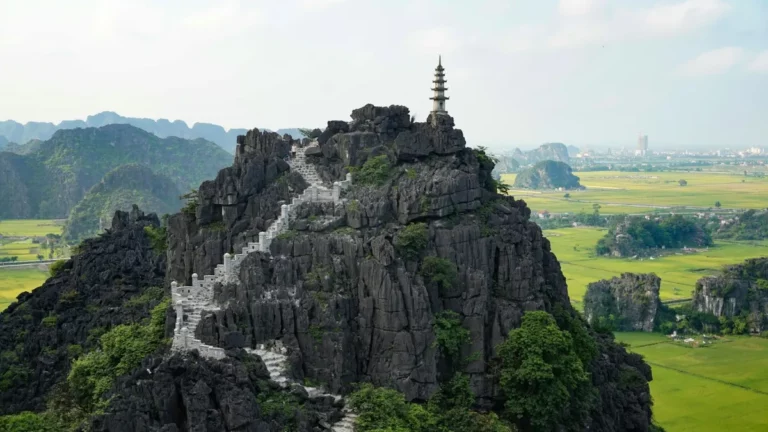
Ninh Binh Travel Tips: Itineraries, Best Time & Things to Know (2026)
Where to Stay in Ninh Binh: Best Areas, Homestays & Resorts (2026)

Ninh Binh Transportation: Hanoi to Ninh Binh & Getting Around (2026 Guide)