Independence Palace Saigon: Tickets, History & Bunker
Independence Palace (Dinh Độc Lập), officially Reunification Hall, is the 1960s presidential palace at 135 Nam Kỳ Khởi Nghĩa Street in central Ho Chi Minh City. It is famous as the place where a tank crashed through the gates on 30 April 1975, ending the Vietnam War. It is open daily from 7:00 to 18:00 and an adult ticket costs 80,000 VND.
Status (checked October 2026): open daily as normal, including public holidays and Tết, from 7:00 to 18:00; adult tickets are 80,000 VND and can also be bought online with a QR code for the automatic gates. The palace occasionally closes, fully or partly, for state events, especially around 30 April and 2 September, so check the official website before those dates.
Why Independence Palace is worth seeing:
- The end of the war in one place: the gates, the lawn and the rooftop are where the fall of Saigon played out on 30 April 1975.
- A time capsule of the 1960s: state rooms, offices and private quarters remain much as they were left, with original furniture, carpets and lacquerwork.
- The command bunker: a basement of war rooms, radio equipment and wall maps used by the South Vietnamese leadership.
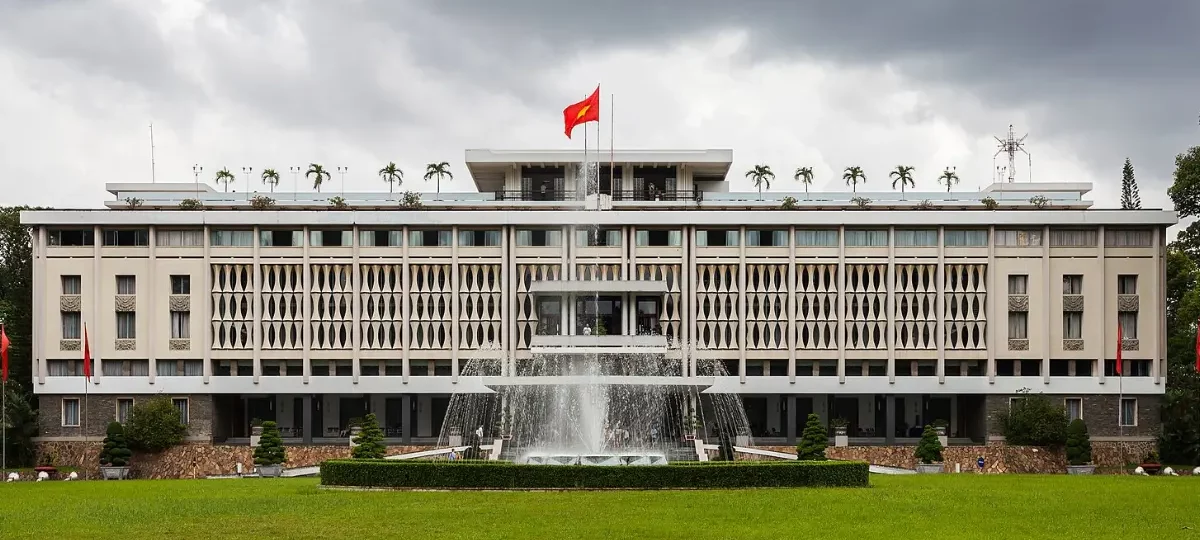
- Landmark modernist architecture: architect Ngô Viết Thụ blended a modern concrete building with Vietnamese symbolism.
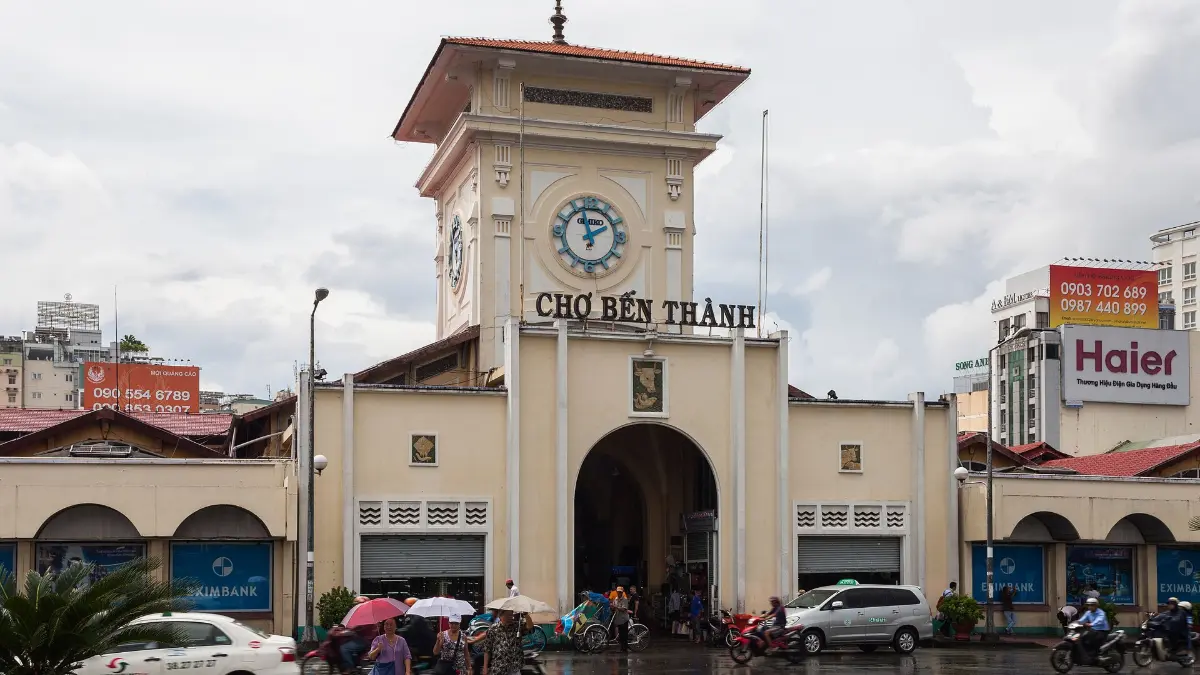
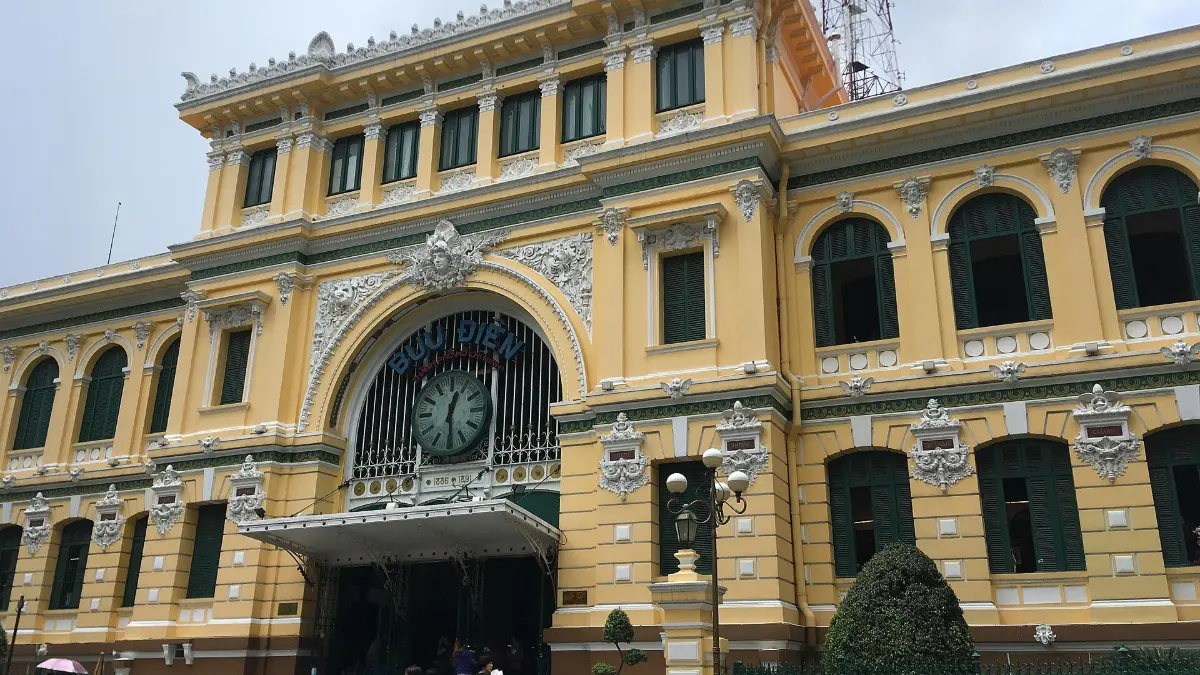
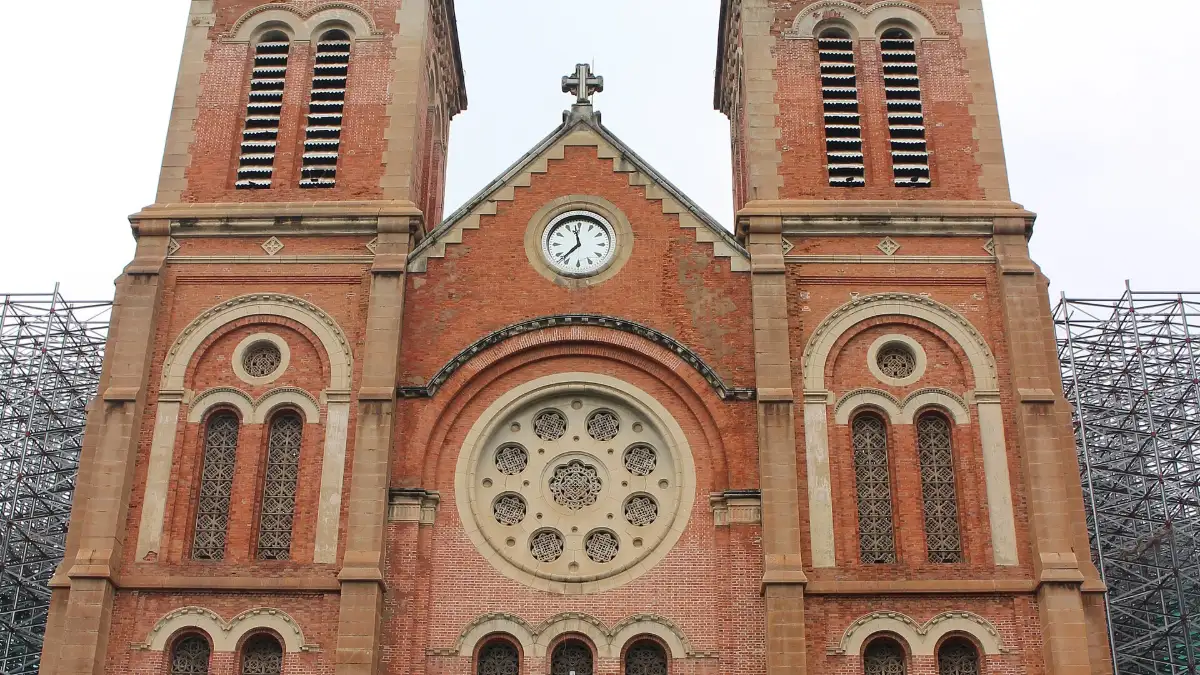
- Easy to combine: the War Remnants Museum, Notre Dame Cathedral and the old post office are all a short walk away.
Independence Palace at a Glance
| Vietnamese name | Dinh Độc Lập; officially Hội trường Thống Nhất (Reunification Hall) |
|---|---|
| Location | 135 Nam Kỳ Khởi Nghĩa Street, Bến Thành Ward, Ho Chi Minh City (the former District 1) |
| Distance | About 1 km from Ben Thanh Market; about 7 km from Tan Son Nhat International Airport |
| Known for | The tank at the gates on 30 April 1975, the 1960s state rooms, the basement command bunker |
| Recognition | National historical and cultural site (1976); one of Vietnam’s first 10 Special National Sites (2009) |
| Opening hours | Daily 7:00–18:00, including holidays (except special announced closures) |
| Entrance fee | Adults 80,000 VND (about US$3); students and seniors 40,000 VND; children 20,000 VND |
| Time needed | 1.5–2 hours |
| Best time | At opening (7:00–8:30) or late afternoon; December–April is the dry season |
| Nearby | War Remnants Museum, Notre Dame Cathedral, Saigon Central Post Office, Ben Thanh Market |
| Find it | Google Maps · Tripadvisor · Official website · Wikipedia |
Is Independence Palace Worth Visiting?
Yes. Independence Palace is the single best place in Ho Chi Minh City to understand how the Vietnam War ended, and it is also one of the best-preserved 1960s government buildings anywhere in Asia. Even travellers with little interest in politics usually enjoy the retro interiors, the rooftop and the labyrinth of the basement bunker.
- Best for: history lovers, architecture and design fans, first-time visitors, families with older children.
- Skip if: you only have a few hours in the city and have already chosen the War Remnants Museum as your one history stop, or you dislike rooms full of furniture and little else.
- Short on time: walk straight to the ground-floor state rooms, take the stairs to the rooftop, then finish in the basement bunker; this takes about 60 minutes.
History of Independence Palace
Norodom Palace (1868–1954)
The first building on the site was Norodom Palace. Construction began on 23 February 1868, when French Governor Lagrandière laid the foundation stone, and was completed in 1871. It served as the residence of the French Governor of Cochinchina and later of the Governor-General of Indochina, and it took its name from the boulevard in front, named after King Norodom of Cambodia.
The 1962 bombing and the new palace
After the French withdrawal, the palace was handed to the government of Ngô Đình Diệm in 1955 and renamed Independence Palace. On 27 February 1962 two dissident South Vietnamese air force pilots bombed it in an attempt to kill the president, badly damaging the left wing. Diệm ordered the old building demolished and commissioned a new one from Ngô Viết Thụ, a Vietnamese architect who had won the Grand Prix de Rome. Work started on 1 July 1962; Diệm was killed in the November 1963 coup and never lived in it. President Nguyễn Văn Thiệu inaugurated the finished palace on 31 October 1966.
The architecture
The palace has four main floors, two mezzanines, a basement and a rooftop terrace, rising about 26 m, set in grounds of about 12 ha. Its most recognisable feature is the facade of slender concrete “stone curtain” panels, inspired by bamboo, which shades the interiors from the tropical sun while letting air flow through. The layout and roofline are often said to echo Chinese characters with auspicious meanings, a nod to East Asian tradition within a clearly modernist building.
8 April and 30 April 1975
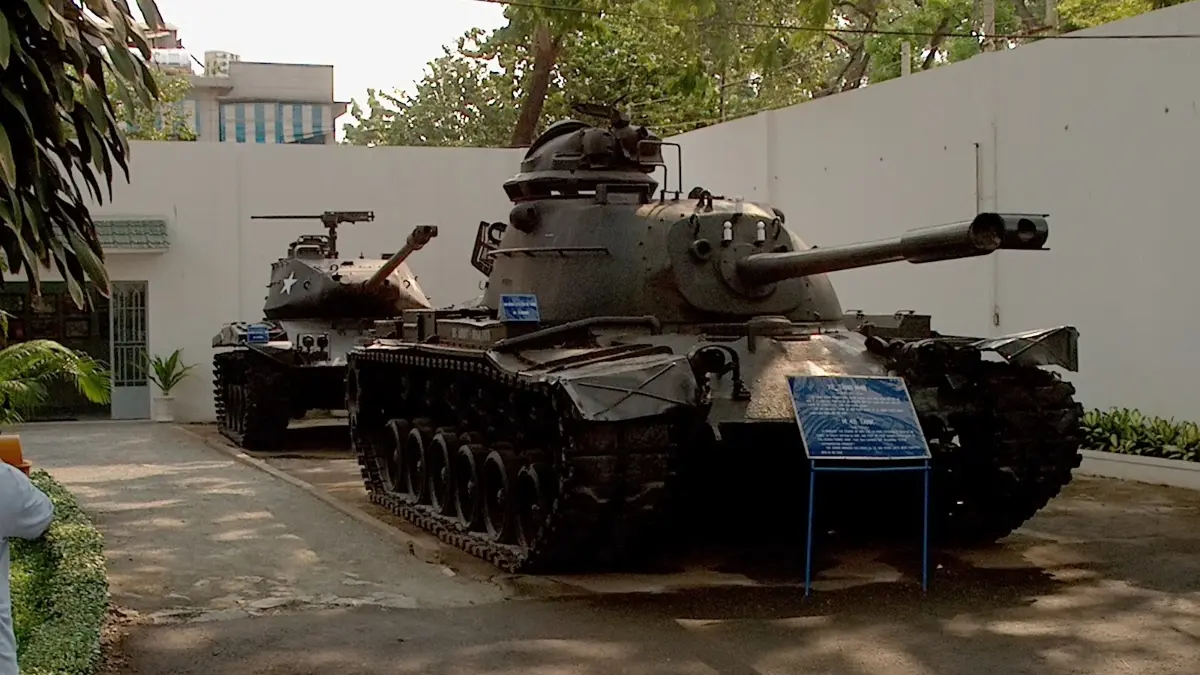
On 8 April 1975 pilot Nguyễn Thanh Trung, a South Vietnamese air force officer secretly working for the North, flew an F-5E jet from Biên Hòa and dropped bombs on the palace; red circles on the rooftop mark where they struck. Three weeks later, on the morning of 30 April 1975, North Vietnamese tanks reached the palace: tank 843 hit the side gate, and tank 390 smashed through the main gate. The new president, Dương Văn Minh, and his cabinet were waiting inside and announced the surrender of South Vietnam the same day, ending the war. Both tanks were later declared National Treasures and are kept in military museums in Hanoi, including the Vietnam Military History Museum; two tanks of the same types stand on the palace lawn today.
Reunification Hall today
After 1975 the building was renamed Reunification Hall. It was recognised as a national historical and cultural site on 25 June 1976 and in 2009 became one of the first 10 Special National Sites of Vietnam. It is still used for official receptions and conferences, which is why some rooms are occasionally closed, but most of the time it works as a museum with more than 150 rooms and over 3,700 artefacts.
What to See at Independence Palace
1. The main gate and the tanks on the lawn
Start outside. The wrought-iron main gate facing Lê Duẩn Boulevard is the one tank 390 broke through, and the two tanks on the lawn recreate the scene of 30 April 1975. This is also the classic photo of the palace facade, with its fountain and long front lawn.
2. The ground-floor state rooms
The ground floor holds the Cabinet Room, the large Conference Hall and the Banquet Hall, all with original 1960s furniture. Look for the huge lacquer and stone artworks commissioned for the building, which mix national legends with modern design.
3. The president’s offices and reception rooms
On the first floor are the President’s Office, the Vice President’s reception room and the room where foreign ambassadors presented their credentials. These are the most formal interiors in the palace, with heavy wooden panelling, red carpets and large artworks.
4. The private quarters and entertainment floor
Upper floors include the presidential family’s living rooms, a library, a small cinema and an entertainment room with a bar and card tables. They give a rare look at the private side of life in the palace in the late 1960s and early 1970s.
5. The rooftop and helipad
The rooftop terrace has a helipad with a helicopter of the type used by President Thiệu, and red circles marking the April 1975 bomb strikes. It also offers a good view over the lawn and Lê Duẩn Boulevard towards Notre Dame Cathedral.
6. The basement bunker
For many visitors the highlight is the basement: narrow corridors, a war room with wall maps of the battlefields, the telecommunications centre, radio transmitters and the president’s emergency quarters. It was designed to keep the government working during air raids, and the original equipment is still in place.
7. The exhibition on Norodom Palace
A separate exhibition on the grounds tells the story of the site from Norodom Palace to Independence Palace (1868–1966), with photographs, models and artefacts from the French colonial era.
8. The grounds and the F-5E jet
On the lawn near the palace you can see an F-5E fighter of the same type flown by Nguyễn Thanh Trung. The shady gardens are a pleasant place to rest before or after the tour.
Independence Palace Tickets and Opening Hours
| Ticket / item | Price or time | Notes |
|---|---|---|
| Adult | 80,000 VND (about US$3) | Buy at the gate or online |
| Students and seniors | 40,000 VND | Bring a student card or ID |
| Children (from 6 years) | 20,000 VND | Age bands shown at the ticket office |
| Opening hours | 7:00–18:00 daily | Including weekends, public holidays and Tết |
| Visiting options | Audio guide, guided tour, electric car around the grounds (about 10 minutes), or free exploration | Ask at the ticket office for current prices and languages |
Prices are set by the Reunification Hall management; check the official Independence Palace website or its online ticket page before your visit.
How to Visit Independence Palace Step by Step
- Arrive at the visitor entrance on Nam Kỳ Khởi Nghĩa Street (the main gate on Lê Duẩn Boulevard is usually closed to visitors).
- Buy your ticket at the counter or show your online QR ticket at the automatic gate; bags may be checked.
- Walk around the lawn to see the tanks and the F-5E jet, then enter the palace.
- Follow the numbered route through the ground floor, first floor, upper floors and rooftop.
- Finish in the basement bunker, then visit the Norodom Palace exhibition if you have time.
Rules and etiquette
- There is no strict dress code, but it is a state building: tidy clothing is appropriate.
- Stay behind the ropes; many rooms are viewed from the doorway.
- Photography for personal use is fine; drones and commercial filming need permission.
- The palace is still used for official events, so follow staff instructions if an area is closed.
How to Get to Independence Palace
| From | How | Time |
|---|---|---|
| Ben Thanh Market | Walk along Lê Thánh Tôn or Nam Kỳ Khởi Nghĩa Street | 12–15 minutes on foot |
| Notre Dame Cathedral / Post Office | Walk down Lê Duẩn Boulevard and around to the visitor entrance | 8–10 minutes on foot |
| Bui Vien / Pham Ngu Lao backpacker area | Grab or taxi, or walk through 23/9 Park | 5–10 minutes by car; 25 minutes on foot |
| Metro Line 1 | Get off at Ben Thanh station, then walk | About 15 minutes on foot |
| Tan Son Nhat Airport | Grab, taxi or bus to the city centre | 25–45 minutes depending on traffic |
For more options see our guide to getting around Saigon.
Best Time to Visit Independence Palace
| When | What to expect |
|---|---|
| December–April (dry season) | Sunny, less humid weather; ideal for the rooftop and grounds. |
| May–November (rainy season) | Short afternoon downpours; the palace is mostly indoors, so it is a good rainy-day choice. |
| 7:00–8:30 | Coolest time and fewest tour groups. |
| 10:00–14:00 | Busiest with groups and hottest on the rooftop. |
| Around 30 April and 2 September | Celebrations and official events; partial closures are possible. |
Local Expert Tips for Independence Palace
These tips come from years of arranging Saigon tours for international travellers.
- Go at 7:00 and you will have the bunker almost to yourself before the tour buses arrive.
- Do the palace before the War Remnants Museum; the order makes the history easier to follow.
- Bring water: the rooftop and grounds are hot, and air-conditioning is limited inside.
- Take a guide or audio guide; the rooms are beautiful but the labels are short.
- Combine it with Notre Dame and the post office in one morning, then have lunch near Ben Thanh Market.
- Read up on what to eat nearby in our Saigon food guide.
Independence Palace vs War Remnants Museum
| Independence Palace | War Remnants Museum | |
|---|---|---|
| What it is | Preserved 1960s presidential palace | Museum of the war’s impact on people |
| Perspective | Government, power and the end of the war | Civilian suffering, photojournalism, Agent Orange |
| Atmosphere | Architectural, retro, mostly calm | Emotional and graphic in parts |
| Adult ticket | 80,000 VND | 40,000 VND |
| Time needed | 1.5–2 hours | 1.5–2 hours |
Our view: the two are about 10 minutes apart on foot and tell complementary halves of the same story. If you can, see both in one morning; if you can only choose one and travel with children, pick Independence Palace.
Nearby Attractions
- War Remnants Museum: the city’s most visited museum, a short walk north-west.
- Saigon Notre Dame Cathedral: the red-brick cathedral at the end of Lê Duẩn Boulevard.
- Saigon Central Post Office: French colonial post office opposite the cathedral.
- Ben Thanh Market: the city’s best-known market, about 1 km south.
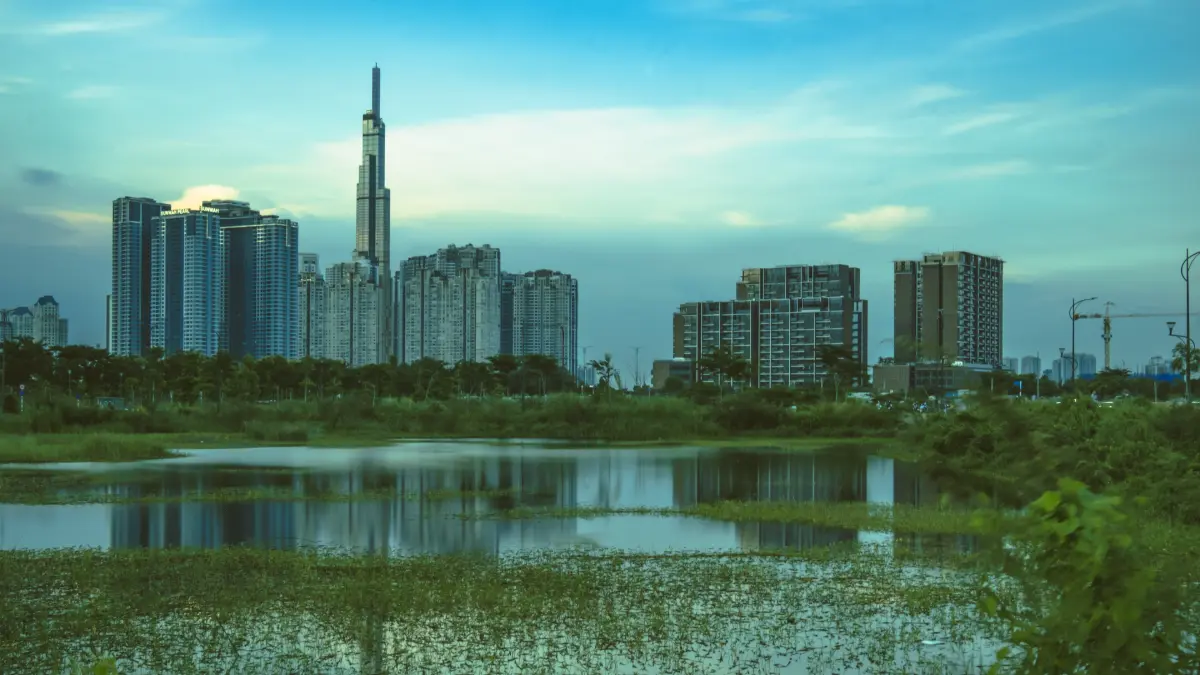
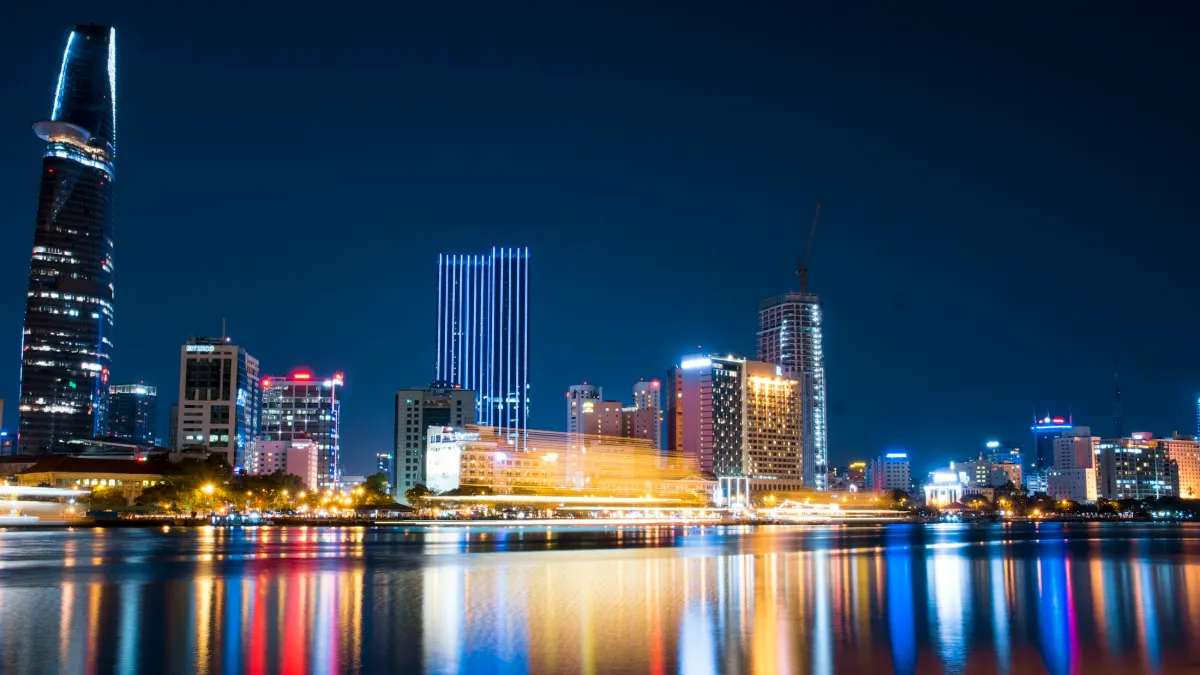
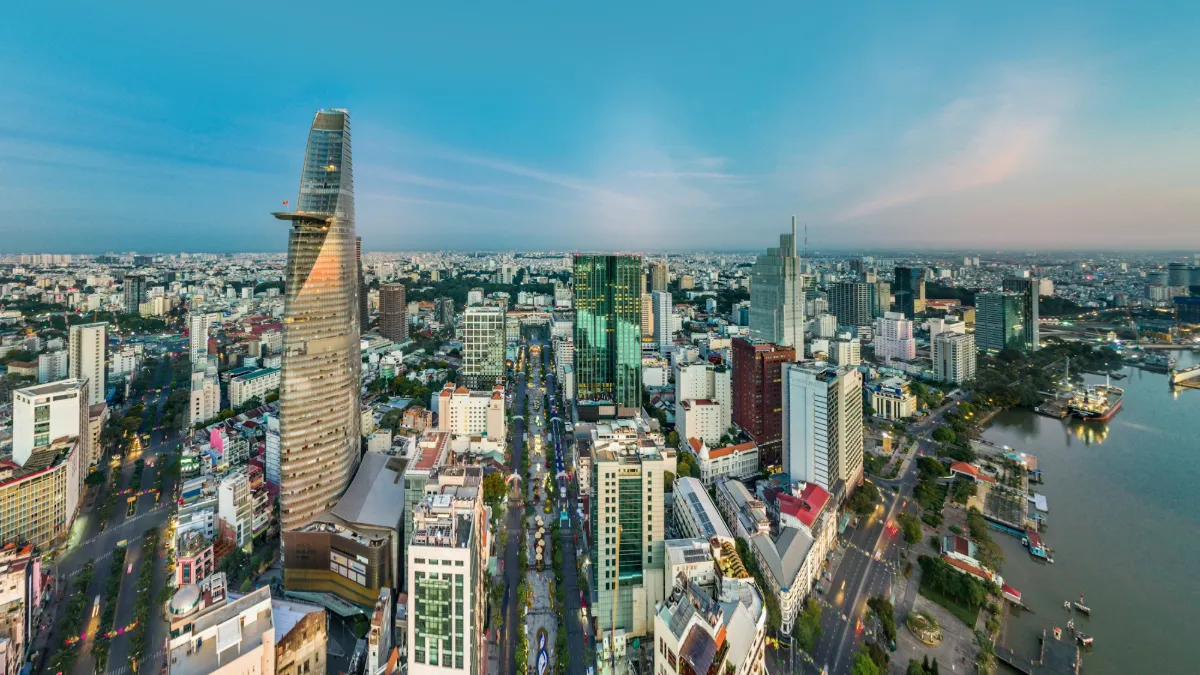
- Landmark 81 SkyView: Vietnam’s tallest building, for views over the city at sunset.
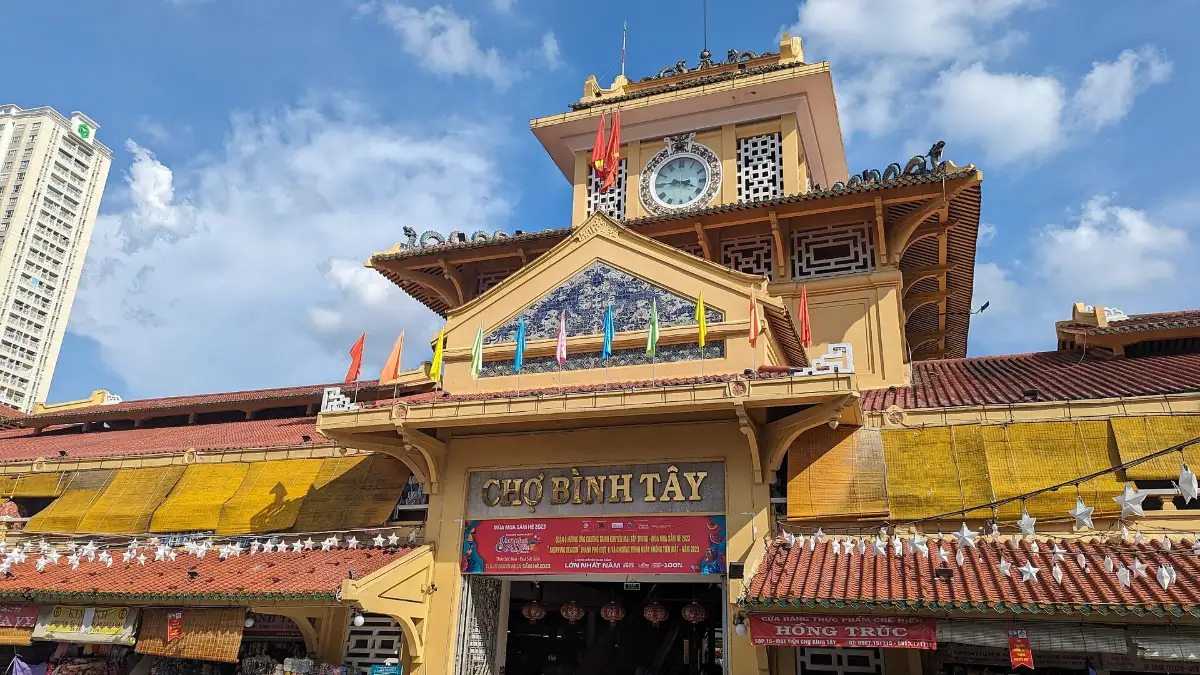
- Cholon and Binh Tay Market: Saigon’s Chinatown, about 20–30 minutes by car.
Sightseeing in Ho Chi Minh City for First-Time Visitors: Where Independence Palace Fits
Most first-time visitors spend a morning in the historic centre: Independence Palace, the War Remnants Museum, Notre Dame Cathedral and the Central Post Office, then Ben Thanh Market for lunch. A second day usually goes to the Cu Chi Tunnels, and a third to a Mekong Delta day trip. Our Saigon travel tips and where to stay in Saigon guides help you plan the rest.
Plan your trip with our Ho Chi Minh City travel guide and Saigon tours. Contact Vietnam Tour Expert Team for a free custom itinerary.
Frequently Asked Questions about Independence Palace
1. How much is the Independence Palace ticket in 2026?
An adult ticket to Independence Palace costs 80,000 VND (about US$3). Students and seniors pay 40,000 VND and children 20,000 VND.
2. What are the Independence Palace opening hours?
Independence Palace is open every day from 7:00 to 18:00, including weekends, public holidays and Tết, except for special closures announced in advance.
3. Is Independence Palace the same as Reunification Palace?
Yes. Dinh Độc Lập (Independence Palace) was renamed Hội trường Thống Nhất (Reunification Hall) after 1975, so you will see both names, plus Reunification Palace.
4. Where is Independence Palace located?
Independence Palace is at 135 Nam Kỳ Khởi Nghĩa Street, Bến Thành Ward, in the centre of Ho Chi Minh City, about 1 km from Ben Thanh Market.
5. How long do you need at Independence Palace?
Allow 1.5 to 2 hours to see the state rooms, the rooftop, the basement bunker and the grounds of Independence Palace. A quick visit takes about an hour.
6. What happened at Independence Palace on 30 April 1975?
North Vietnamese tanks crashed through the gates of Independence Palace, and President Dương Văn Minh announced the surrender of South Vietnam the same day, ending the Vietnam War.
7. Are the tanks at Independence Palace the original ones?
No. The original tanks 390 and 843 are National Treasures kept in military museums in Hanoi; the two tanks on the Independence Palace lawn are of the same types.
8. Can you visit the bunker at Independence Palace?
Yes. The basement bunker of Independence Palace, with its war room, maps and radio equipment, is included in the standard ticket and is a highlight of the visit.
9. Who designed Independence Palace?
Independence Palace was designed by Vietnamese architect Ngô Viết Thụ, winner of the Grand Prix de Rome, and completed in 1966.
10. Is there a dress code at Independence Palace?
There is no strict dress code at Independence Palace, but tidy clothing is appropriate because it is still an official state building.
11. Can I buy Independence Palace tickets online?
Yes. Independence Palace sells tickets on its official ticket website, and the QR code opens the automatic entry gates; you can also buy at the counter.
12. Is there an audio guide at Independence Palace?
Yes. Independence Palace offers audio guides, guided tours and an electric car ride around the grounds; ask at the ticket office for current prices and languages.
13. Is Independence Palace open on public holidays?
Usually yes, Independence Palace opens on holidays and during Tết, but it can close for state ceremonies, especially around 30 April and 2 September.
14. Which entrance do visitors use at Independence Palace?
Visitors normally enter Independence Palace from Nam Kỳ Khởi Nghĩa Street; the main gate on Lê Duẩn Boulevard is kept for ceremonies.
15. Is Independence Palace suitable for children?
Yes. Independence Palace is less graphic than the War Remnants Museum, and children usually enjoy the tanks, the helicopter on the roof and the bunker.
16. What is near Independence Palace?
The War Remnants Museum, Notre Dame Cathedral, the Central Post Office and Ben Thanh Market are all within a 15-minute walk of Independence Palace; see our Saigon destination guide for more.
17. Should I visit Independence Palace or the War Remnants Museum first?
Visit Independence Palace first for the political story of the war’s end, then the War Remnants Museum for its human cost; they are about 10 minutes apart on foot.
Related Posts
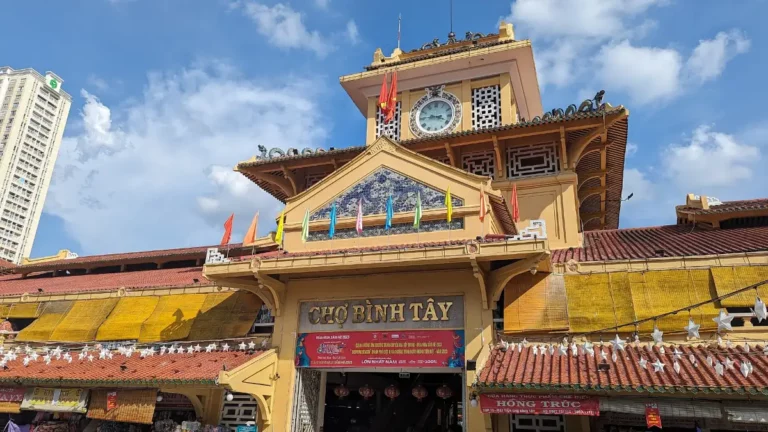
Cholon & Binh Tay Market: Saigon Chinatown Guide
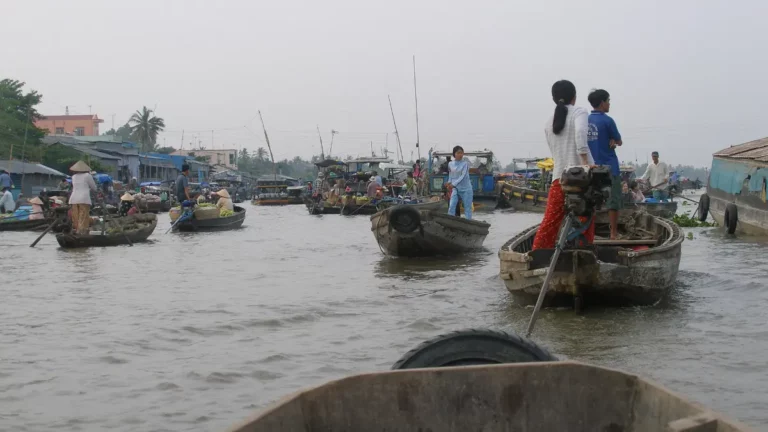
Can Tho & Cai Rang Floating Market: Best Time & Guide
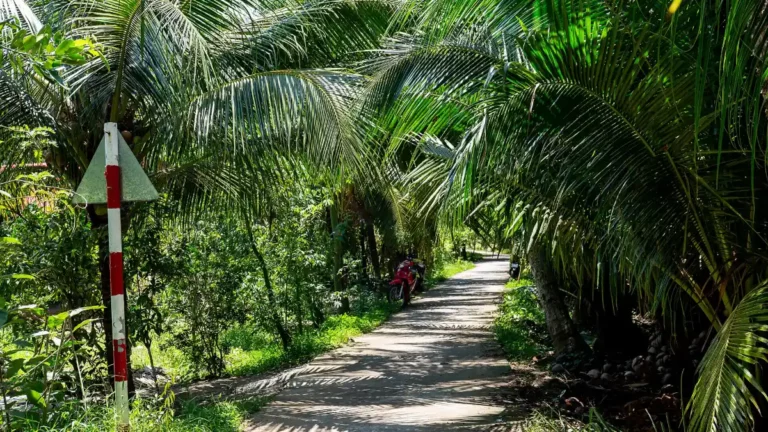
Ben Tre: Coconut Canals, Sampan Rides & Homestays
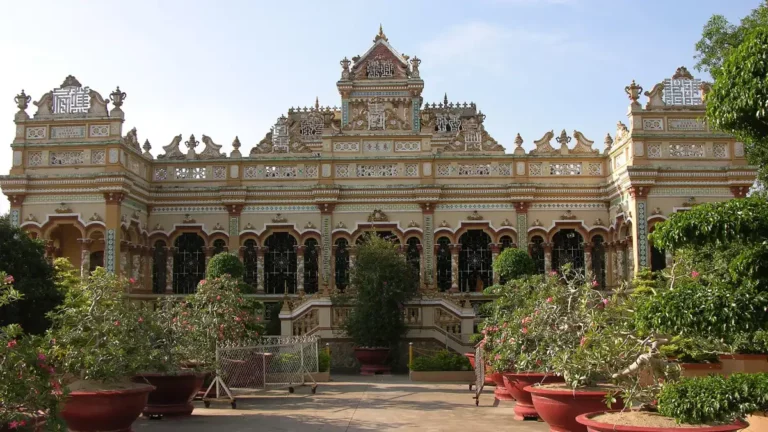
My Tho Mekong Delta: Vinh Trang Pagoda, Islands & Day Trip
Mekong Delta Day Trip from Saigon: Routes, Tips & Tours