Temple of Literature Hanoi: A Must-Visit Attraction in Hanoi – Complete Visitor Guide (2026)
The Temple of Literature (Văn Miếu – Quốc Tử Giám) in Hanoi is a Confucian temple founded in 1070 and home to Vietnam’s first national university, opened in 1076. Its five walled courtyards hold Khue Van Cac pavilion and 82 stone stelae of doctoral laureates listed by UNESCO’s Memory of the World. Entry costs 70,000 VND; it opens daily 8:00–17:00.
Status (checked October 2026): open daily as normal, 8:00–17:00 (last entry around 16:30), with the adult ticket at 70,000 VND. The evening “Tinh hoa đạo học” night tour runs on selected evenings and must be booked in advance.
Why the Temple of Literature is worth seeing:
- Nearly 1,000 years of learning: founded in 1070 to honour Confucius; the Imperial Academy followed in 1076.
- The 82 Doctors’ Stelae: stone tablets on turtle backs, recognised by UNESCO’s Memory of the World Programme in 2010.
- Khue Van Cac: the 1805 pavilion that appears on Vietnam’s 100,000 VND banknote and is the official symbol of Hanoi.
- Classic Vietnamese architecture: tiled roofs, lotus ponds and red-lacquered halls in five peaceful courtyards.
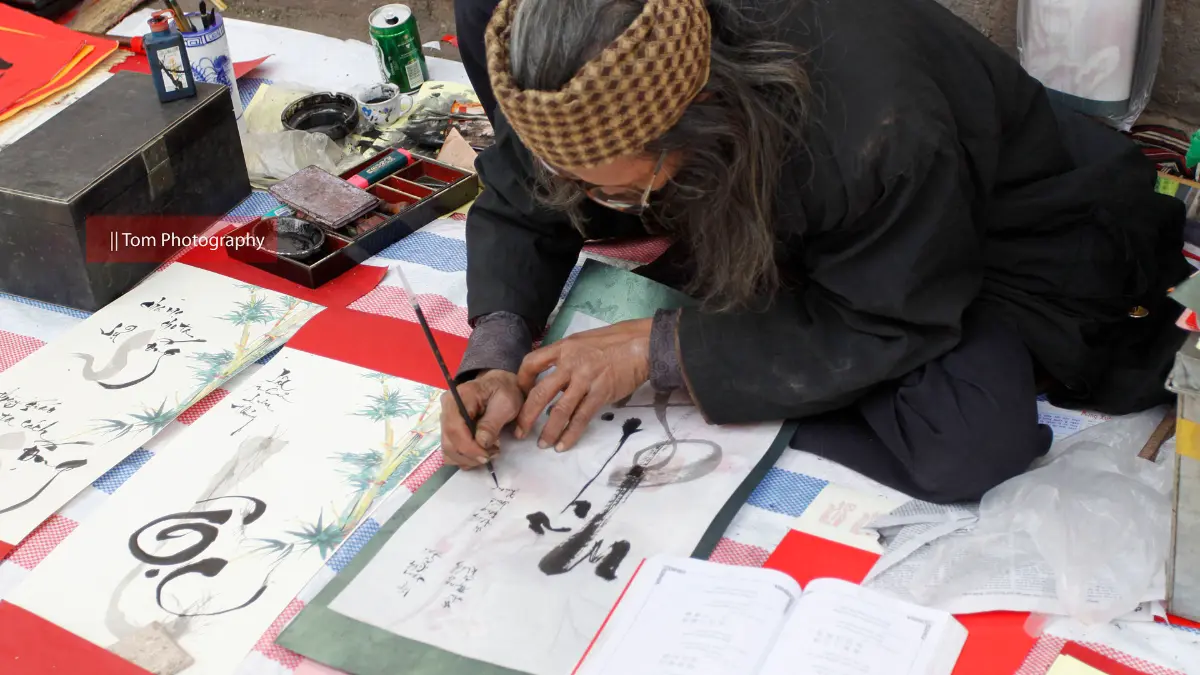
- Living tradition: students still come to pray for exam success, and calligraphers write wishes at Tet.
Temple of Literature at a Glance
| Vietnamese name | Văn Miếu – Quốc Tử Giám |
|---|---|
| Location | 58 Quoc Tu Giam Street, Van Mieu – Quoc Tu Giam Ward, Hanoi (main gate on Quoc Tu Giam Street) |
| Distance | About 2 km west of Hoan Kiem Lake; 1.5 km south of the Ho Chi Minh Mausoleum |
| Known for | Vietnam’s first university, Khue Van Cac, 82 Doctors’ Stelae, Confucian architecture |
| Recognition | Special National Relic; Doctors’ Stelae on UNESCO’s Memory of the World Register (2010) |
| Size | About 5.4 ha, five courtyards about 350 m long |
| Opening hours | Daily 8:00–17:00 (last entry about 16:30); night tour on selected evenings |
| Entrance fee | 70,000 VND adults (about US$2.70); students 35,000 VND; children under 16 free |
| Time needed | 1–1.5 hours |
| Best time | 8:00–9:30 before tour groups; October–April for weather |
| Nearby | Vietnam Fine Arts Museum, Ho Chi Minh Mausoleum, Thang Long Citadel |
| Find it | Google Maps · Tripadvisor · Official website |
Is the Temple of Literature Worth Visiting?
Yes, it is one of the two or three sights in Hanoi that no first-time visitor should miss. It is compact, beautiful and easy to understand, and it explains the Confucian values of learning and respect that still shape Vietnamese society. It is busy with tour groups and graduation photo shoots, so timing matters.
- Best for: culture and history lovers, photographers, families, anyone with only a day in Hanoi.
- Skip if: you have already seen several Confucian temples in China or Korea and dislike crowds.
- Short on time? Walk straight through the five courtyards in 45 minutes, pausing at Khue Van Cac and the stelae.
History of the Temple of Literature
Founding under the Ly dynasty (1070–1076)
Emperor Ly Thanh Tong built the Van Mieu (Temple of Literature) in 1070 to honour Confucius and his disciples. In 1076 his successor, Ly Nhan Tong, founded the Quoc Tu Giam (Imperial Academy) beside it, at first to educate princes and the sons of high officials. It is regarded as Vietnam’s first national university.
The academy of scholars
Under the Tran dynasty the academy opened to talented commoners, and the respected teacher Chu Van An taught here in the 14th century. The Le dynasty made royal examinations the path to office, and from 1484 Emperor Le Thanh Tong began erecting stelae to honour the doctoral laureates.
Later history
When the Nguyen dynasty moved the capital to Hue in 1802, the national academy moved too, and the Hanoi complex became a regional school and temple. Khue Van Cac was added in 1805. After war damage in the 20th century, the Thai Hoc (Imperial Academy) buildings in the fifth courtyard were rebuilt in 2000 for the 990th anniversary of Thang Long–Hanoi. More background is on Wikipedia.
What to See at the Temple of Literature
The complex is laid out on a north–south axis. You enter from Quoc Tu Giam Street and walk through five courtyards, each separated by a gate.
1. Van Mieu Gate and the first courtyard
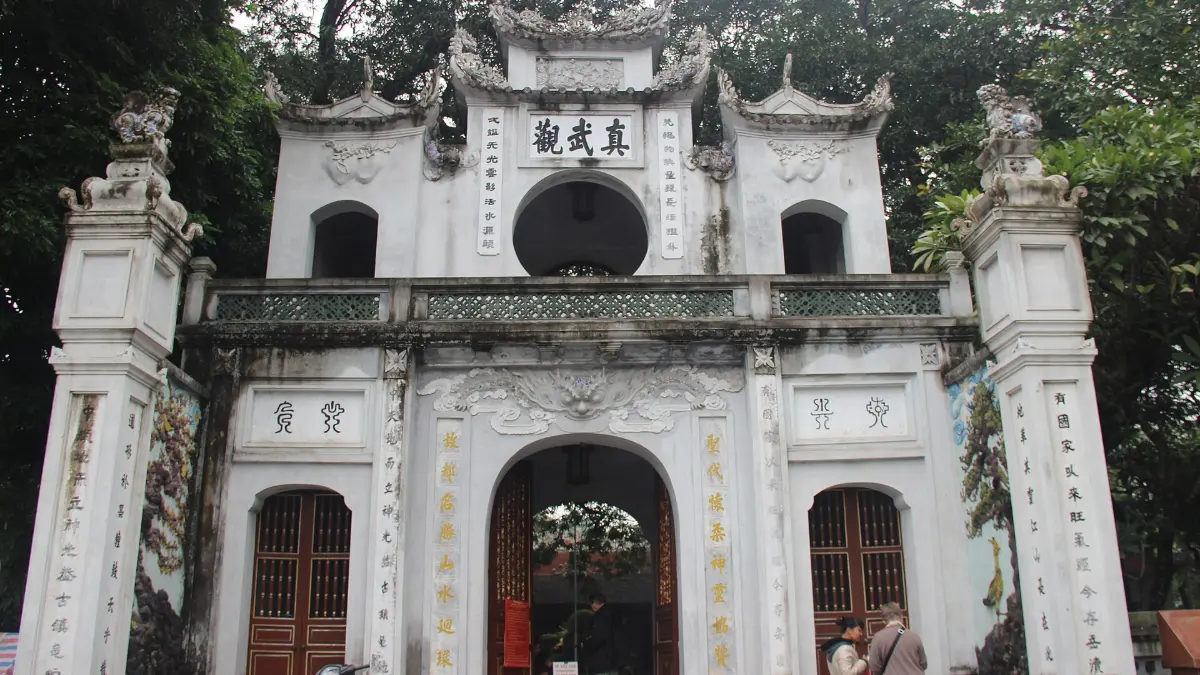
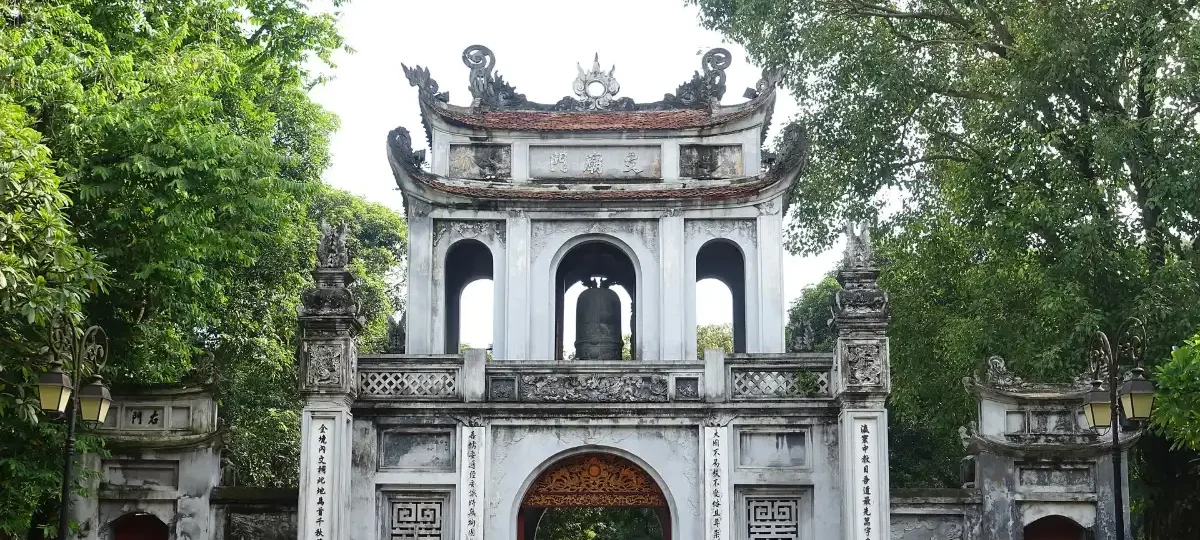
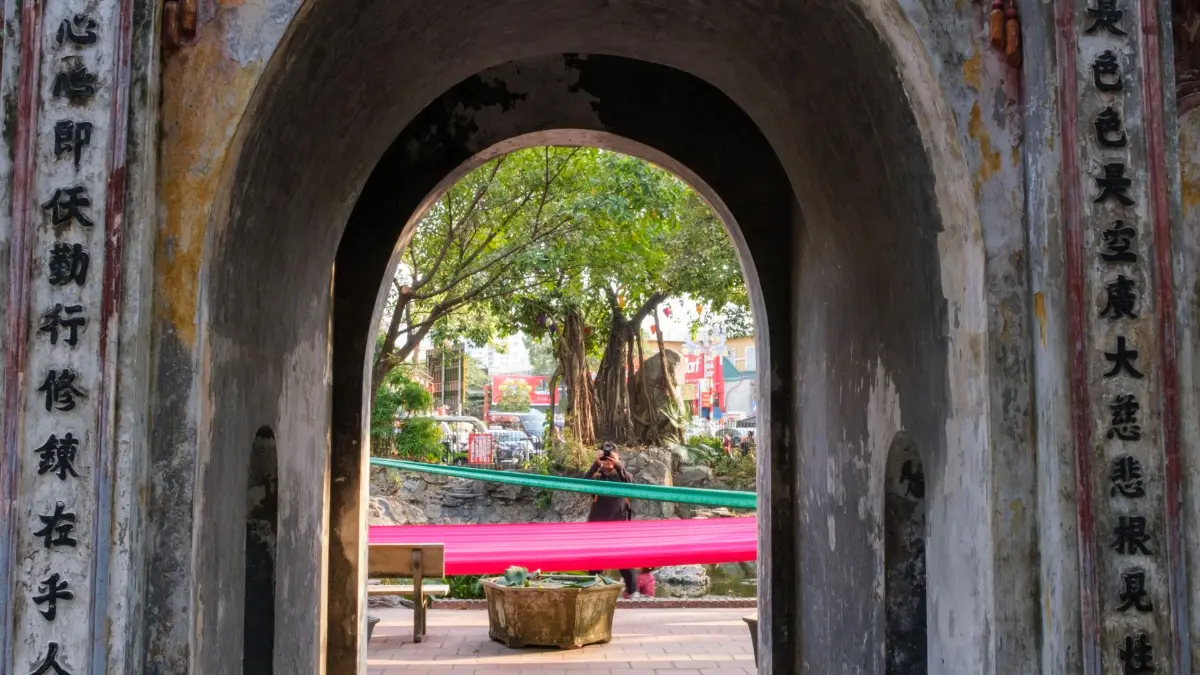
The two-storey Van Mieu Gate opens onto a quiet first courtyard of lawns, old trees and the Great Middle Gate (Dai Trung Mon), flanked by smaller gates for scholars of different ranks.
2. Khue Van Cac (Constellation of Literature Pavilion)
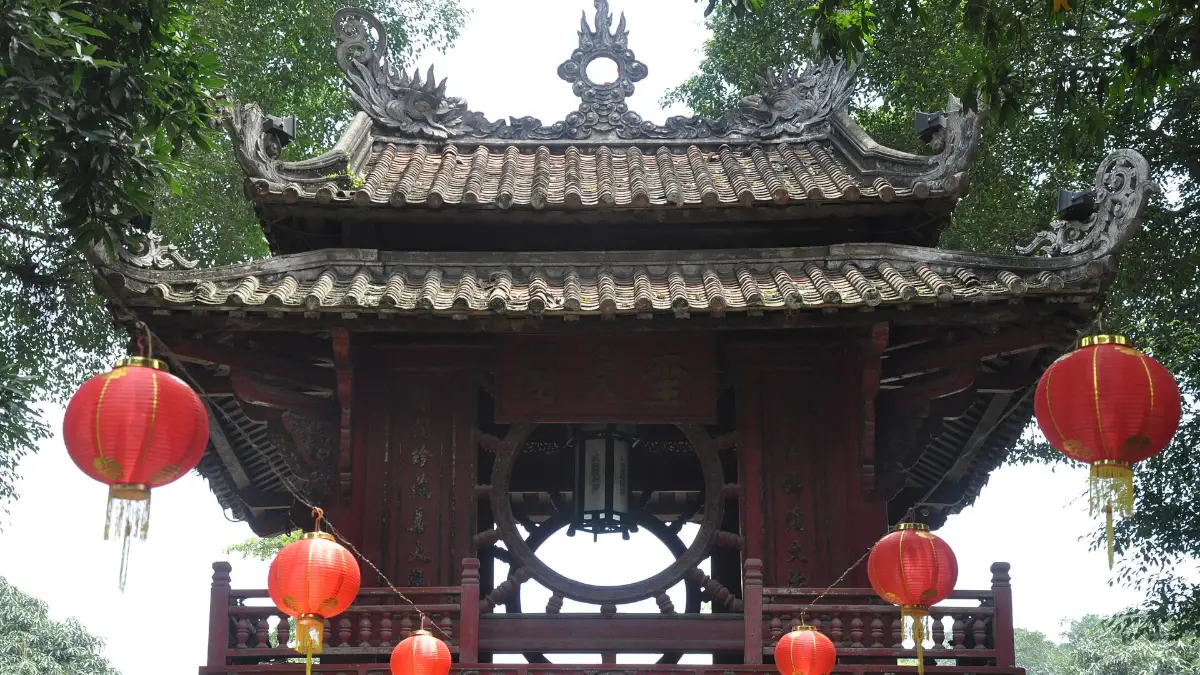
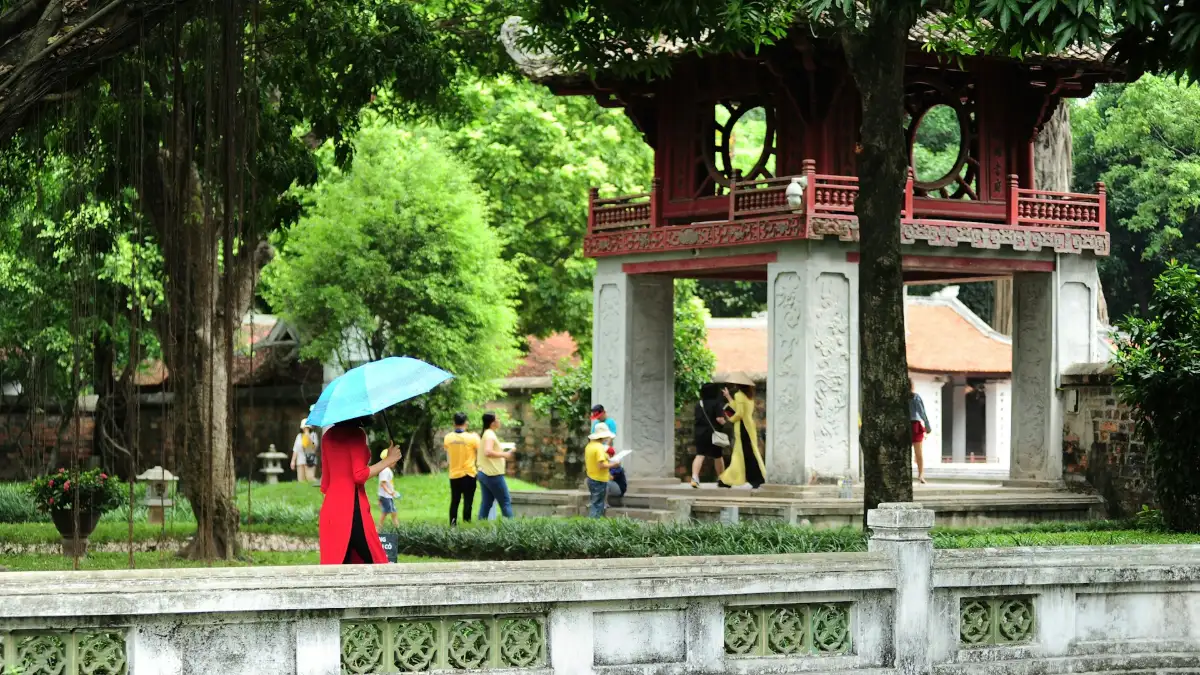
Built in 1805, this small red pavilion on four white stone pillars marks the second courtyard. Its round windows represent the rays of the Khue star, the star of literature. Khue Van Cac is the official symbol of Hanoi and appears on the 100,000 VND note.
3. Thien Quang Well (Well of Heavenly Clarity)
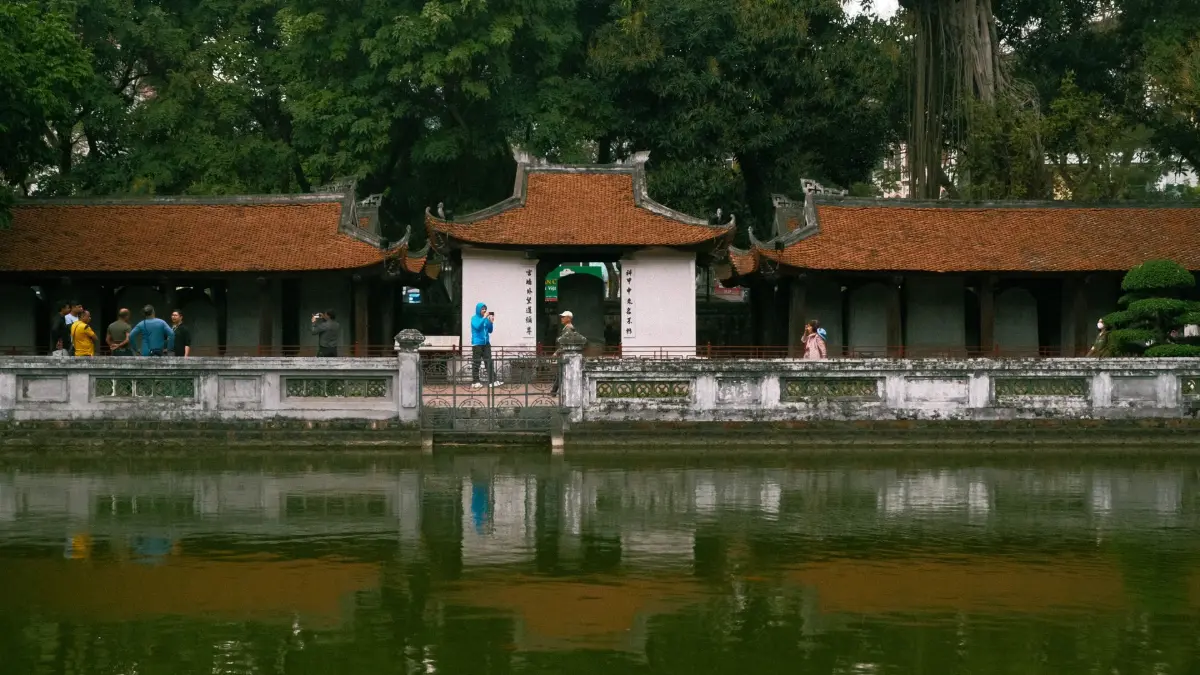
The third courtyard centres on a square pond called Thien Quang Tinh. Its still water symbolises the clarity of learning.
4. The 82 Doctors’ Stelae
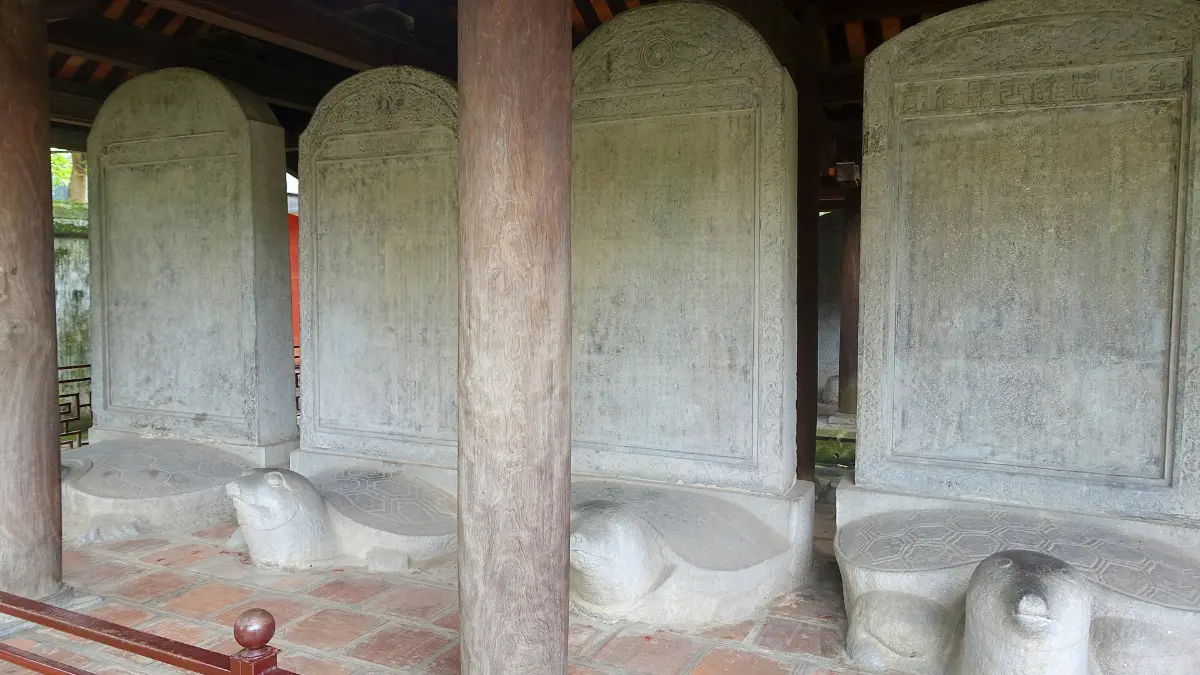
On both sides of the pond stand 82 stone stelae, each on the back of a stone turtle, a symbol of longevity. Erected between 1484 and 1780, they record the names and birthplaces of 1,307 laureates from 82 royal examinations held between 1442 and 1779. In 2010 UNESCO added them to its Memory of the World Register. The stelae are now fenced off; please do not touch the turtles’ heads.
5. House of Ceremonies and Dai Thanh Sanctuary
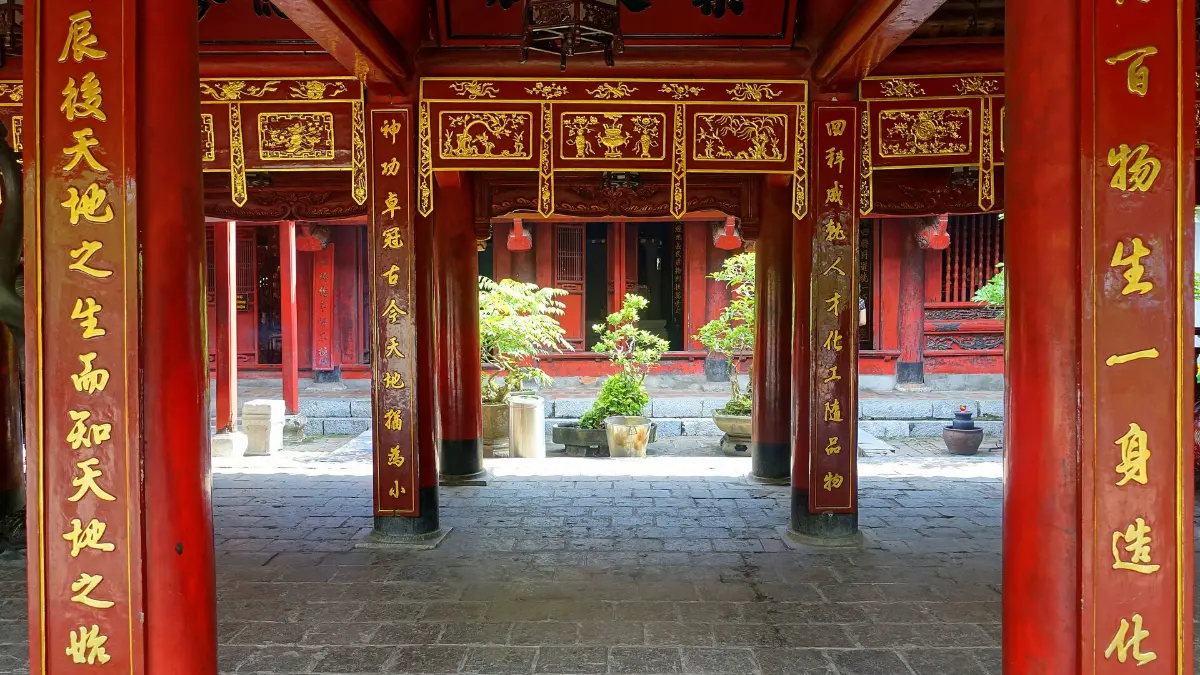
Through the Dai Thanh Gate lies the fourth courtyard, the spiritual heart of the temple. The House of Ceremonies (Bai Duong), with its red-lacquered columns, leads into the Thuong Dien sanctuary, where Confucius is honoured with his four closest disciples. Side halls honour other Confucian scholars, including Chu Van An.
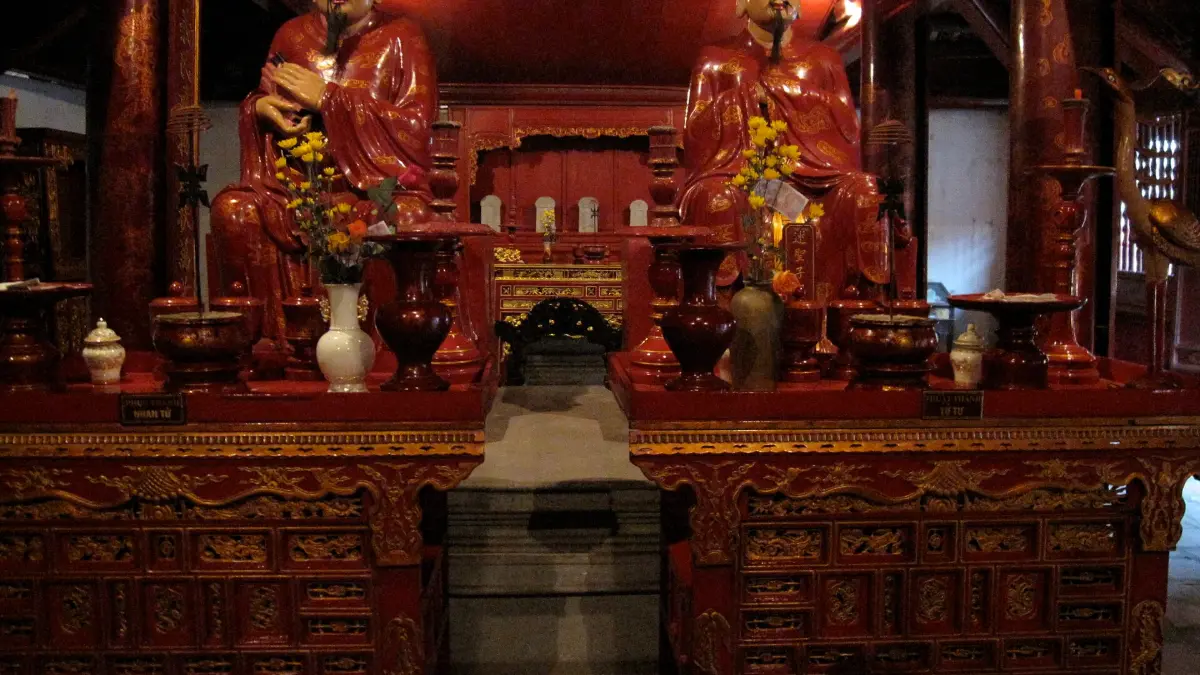
6. Thai Hoc courtyard (Imperial Academy)
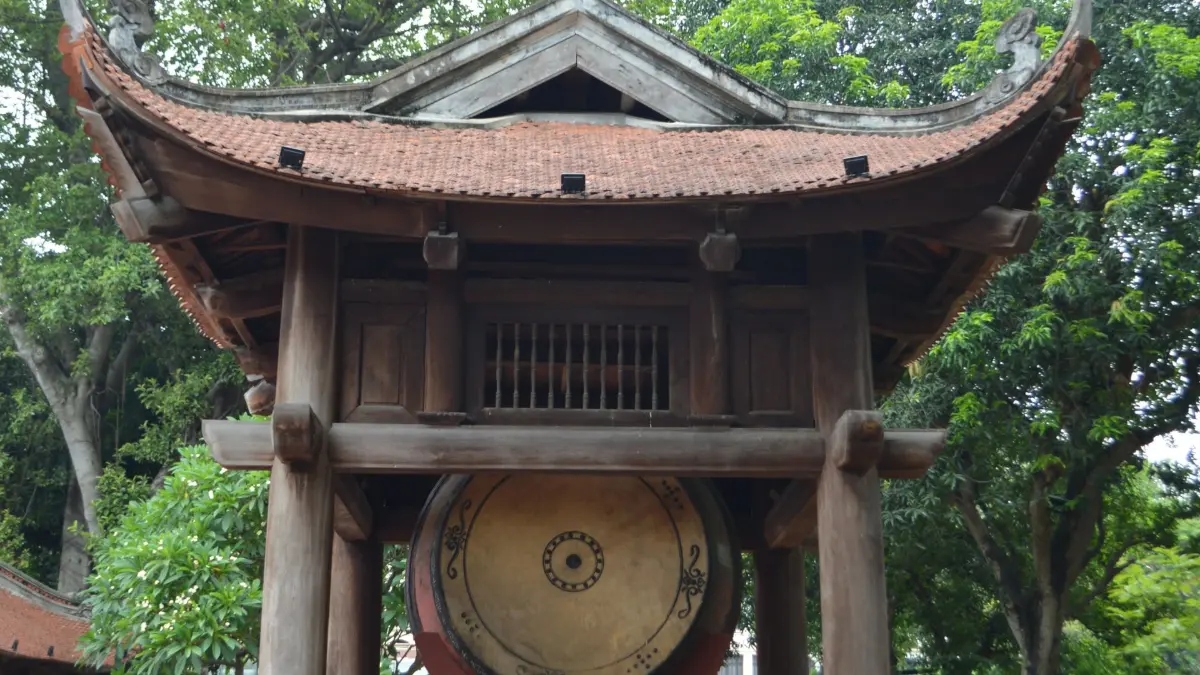
The fifth courtyard stands on the site of the old Imperial Academy. The two-storey Thai Hoc hall, rebuilt in 2000, honours Chu Van An downstairs and three emperors linked to the academy upstairs: Ly Thanh Tong, Ly Nhan Tong and Le Thanh Tong. A great drum and a bronze bell hang in pavilions on either side.
Temple of Literature Tickets and Opening Hours (2026)
| Item | Details |
|---|---|
| Opening hours | Daily 8:00–17:00; last entry about 16:30; may close on some Tet holidays |
| Adult ticket | 70,000 VND (about US$2.70) |
| Students (with card), seniors 60+, people with disabilities | 35,000 VND |
| Children under 16 | Free |
| Night tour “Tinh hoa đạo học” | About 199,000 VND; selected evenings, roughly 18:30/19:00–21:30/22:00; advance booking |
| Free entry day | 23 November (Vietnam Cultural Heritage Day) |
Prices are set by Hanoi People’s Council resolution and collected by the Van Mieu – Quoc Tu Giam Culture and Science Activities Centre; check the official website for night tour dates.
How to Explore the Temple of Literature, Step by Step
- Buy your ticket at the counter beside the main gate on Quoc Tu Giam Street (cash is safest).
- Walk the central axis through the first two courtyards to Khue Van Cac; side paths are quieter for photos.
- Read the stelae around the Thien Quang Well and look for the different turtle styles of each period.
- Visit the Dai Thanh sanctuary quietly; hats off inside the halls.
- Finish in the Thai Hoc courtyard, climb to the upper floor and see the bell and drum, then leave by the same gate.
Dress Code and Etiquette at the Temple of Literature
- Wear modest clothes: shoulders and knees covered is the safe standard; very short shorts and crop tops may be refused.
- Remove hats inside the shrines and speak softly.
- Do not touch, sit on or climb the stelae or turtles.
- Photography is allowed in the courtyards; be respectful of people praying at the altars.
How to Get to the Temple of Literature
| From | How | Time |
|---|---|---|
| Hoan Kiem Lake / Old Quarter | Taxi or Grab (about 40,000–70,000 VND) | 10–15 minutes |
| Hoan Kiem Lake | Walk via Trang Thi and Nguyen Thai Hoc streets | About 30 minutes |
| Ho Chi Minh Mausoleum | Walk south | 15–20 minutes |
| Hanoi Railway Station | Walk west along Nguyen Khuyen Street | About 10 minutes |
| Noi Bai Airport | Taxi or Grab | 40–60 minutes |
Our Hanoi transport guide explains Grab, taxis and city buses.
Best Time to Visit the Temple of Literature
| When | What to expect |
|---|---|
| October–April | Mild, dry weather; the most pleasant months |
| May–September | Hot and humid with sudden showers; shade under the old trees helps |
| 8:00–9:30 | Soft light and the fewest tour groups |
| Late morning, weekends | Busy with groups and graduation photo shoots |
| Tet (Lunar New Year) | Calligraphers write lucky characters; festive but very crowded |
| Exam season (May–June) | Students pray for luck; lively, local atmosphere |
Local Expert Tips for the Temple of Literature
These tips come from years of arranging Hanoi tours for international travellers.
- Go at 8:00 sharp, or after 15:30 when the big groups have left.
- Pair it with the Ho Chi Minh Mausoleum in the morning; the two are a short walk apart.
- Cross the road afterwards to the Vietnam Fine Arts Museum, an underrated gem.
- Look at the turtles’ faces: styles change from dynasty to dynasty, an easy way to date the stelae.
- Hire a guide or use an audio guide; most signs are brief and the history behind each courtyard is what makes the visit.
- For lunch, the streets west of the temple have good local eateries; see our Hanoi food guide.
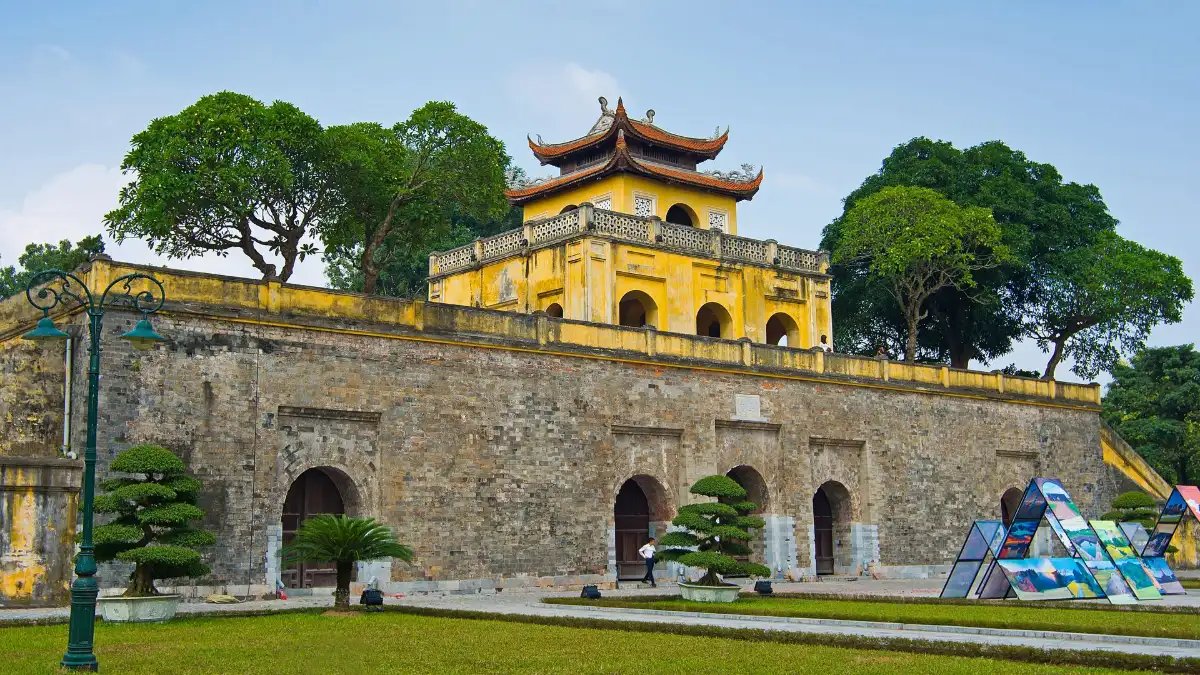
Temple of Literature vs Imperial Citadel of Thang Long
| Temple of Literature | Imperial Citadel of Thang Long | |
|---|---|---|
| Theme | Confucian learning and scholars | Royal power and archaeology, plus 20th-century military history |
| Look and feel | Compact, well kept, very photogenic | Spacious grounds, ruins and excavations |
| Ticket | 70,000 VND | 100,000 VND |
| Time needed | 1–1.5 hours | 1.5–2 hours |
| Recognition | Stelae on UNESCO Memory of the World | UNESCO World Heritage Site |
Our view: if you only have time for one, choose the Temple of Literature for beauty and atmosphere; history enthusiasts should add the Imperial Citadel as well.
Nearby Attractions
- Vietnam Fine Arts Museum: across Nguyen Thai Hoc Street.
- Ho Chi Minh Mausoleum and One Pillar Pagoda: about 1.5 km north.
- Imperial Citadel of Thang Long: about 1.5 km north-east.
- Hoa Lo Prison Museum: about 1.5 km east.
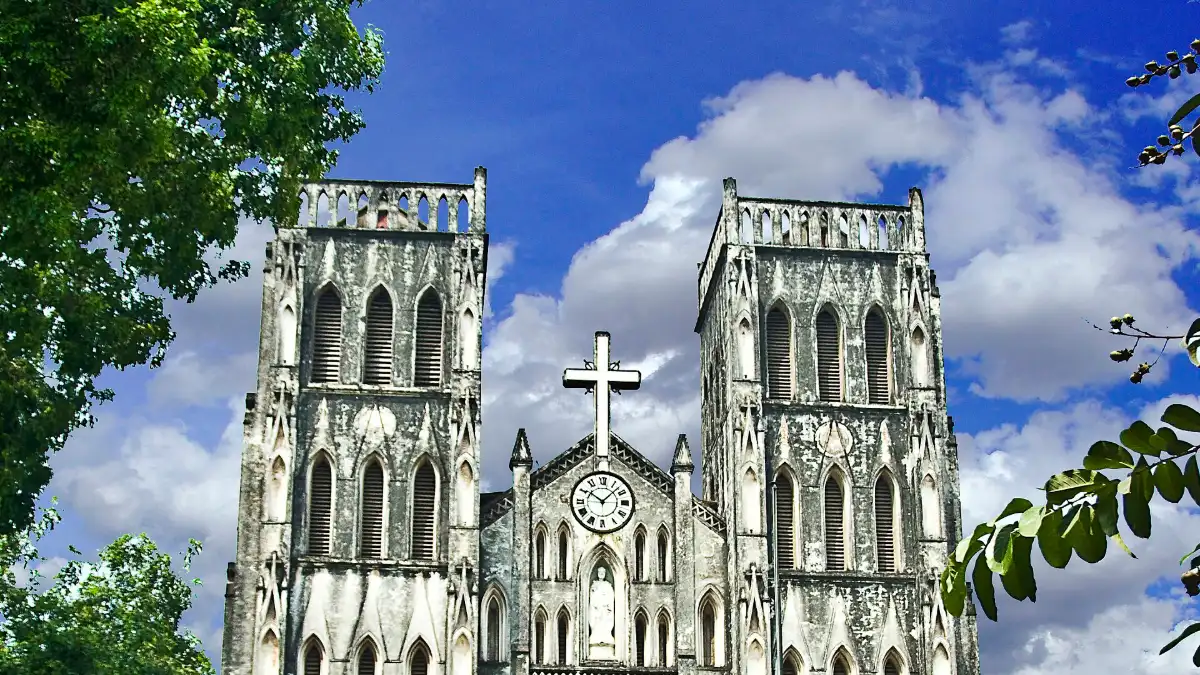
- St Joseph’s Cathedral and the Old Quarter: 10 minutes by taxi.
Sightseeing in Hanoi for First-Time Visitors: Where the Temple of Literature Fits
One day in Hanoi? Begin at the Ho Chi Minh Mausoleum complex, walk to the Temple of Literature, have lunch, then visit Hoan Kiem Lake and the Old Quarter in the afternoon, and finish with a water puppet show or shopping in Hanoi. With more time, add the Vietnam Museum of Ethnology and West Lake. See our Hanoi travel tips before you go.
Plan your trip with our Hanoi travel guide and Hanoi tours. Contact Vietnam Tour Expert Team for a free custom itinerary.
Frequently Asked Questions about the Temple of Literature
1. How much is the Temple of Literature ticket in 2026?
The adult ticket is 70,000 VND (about US$2.70). Students, seniors and people with disabilities pay 35,000 VND, and children under 16 enter free.
2. What are the Temple of Literature opening hours?
It opens daily from 8:00 to 17:00, with last entry around 16:30.
3. Is the Temple of Literature open on Mondays?
Yes, the Temple of Literature opens every day of the week, including Mondays; it may close on some Tet holidays.
4. How long do I need at the Temple of Literature?
Allow 1 to 1.5 hours to walk the five courtyards; 45 minutes is enough for a quick visit.
5. What is the Temple of Literature famous for?
It was founded in 1070 to honour Confucius and housed Vietnam’s first national university from 1076, and it holds the 82 Doctors’ Stelae.
6. Is the Temple of Literature a UNESCO site?
The complex is a Special National Relic of Vietnam; its 82 Doctors’ Stelae were inscribed on UNESCO’s Memory of the World Register in 2010.
7. How many stelae are at the Temple of Literature?
There are 82 stone stelae on turtle backs, recording 1,307 laureates of 82 royal examinations between 1442 and 1779.
8. What should I wear to the Temple of Literature?
Wear modest clothing that covers shoulders and knees; very short shorts and crop tops may be refused.
9. Is there a night tour at the Temple of Literature?
Yes. The “Tinh hoa đạo học” night tour runs on selected evenings for about 199,000 VND and should be booked in advance.
10. Where is the Temple of Literature in Hanoi?
It is at 58 Quoc Tu Giam Street, Van Mieu – Quoc Tu Giam Ward, about 2 km west of Hoan Kiem Lake.
11. Can I walk from the Old Quarter to the Temple of Literature?
Yes, it is about a 30-minute walk from Hoan Kiem Lake, or 10–15 minutes by Grab or taxi.
12. What is Khue Van Cac at the Temple of Literature?
Khue Van Cac, the Constellation of Literature Pavilion built in 1805, is the official symbol of Hanoi and appears on the 100,000 VND banknote.
13. Can I take photos at the Temple of Literature?
Yes, photography is allowed in the courtyards; be discreet near the altars and people praying.
14. Is the Temple of Literature good for children?
Yes, the gardens and ponds are pleasant for families, and children under 16 enter free.
15. Why do students visit the Temple of Literature before exams?
Vietnamese students come to pray to Confucius and the scholars for good luck before exams; touching the stelae is no longer allowed.
16. What is near the Temple of Literature?
The Vietnam Fine Arts Museum is opposite, and the Ho Chi Minh Mausoleum and Thang Long Citadel are about 1.5 km away.
17. When is the best time to visit the Temple of Literature?
Visit at 8:00 or after 15:30 to avoid groups; October to April has the most comfortable weather.
18. Is the Temple of Literature worth visiting?
Yes. It is one of the most beautiful and meaningful historic sites in Hanoi and easy to combine with other central sights.
Related Posts

Hanoi Egg Coffee (2026): Best Cafés, Prices, History & Recipe
Hanoi Train Street (2026): Is It Open? Train Times, Cafés & Rules
Hanoi Shopping Guide: Best Markets, Streets & Souvenirs to Buy (2026)

Hanoi Travel Tips: Essential Things to Know Before You Go (2026)

Hanoi Transportation: How to Get Around Hanoi & From Noi Bai Airport (2026 Guide)