Halong Bay: UNESCO Islands, Legend & Geology of Vietnam’s Iconic Bay
 By Jimmy Nguyen, Founder & Director of Asia Travel Expert Co., Ltd.
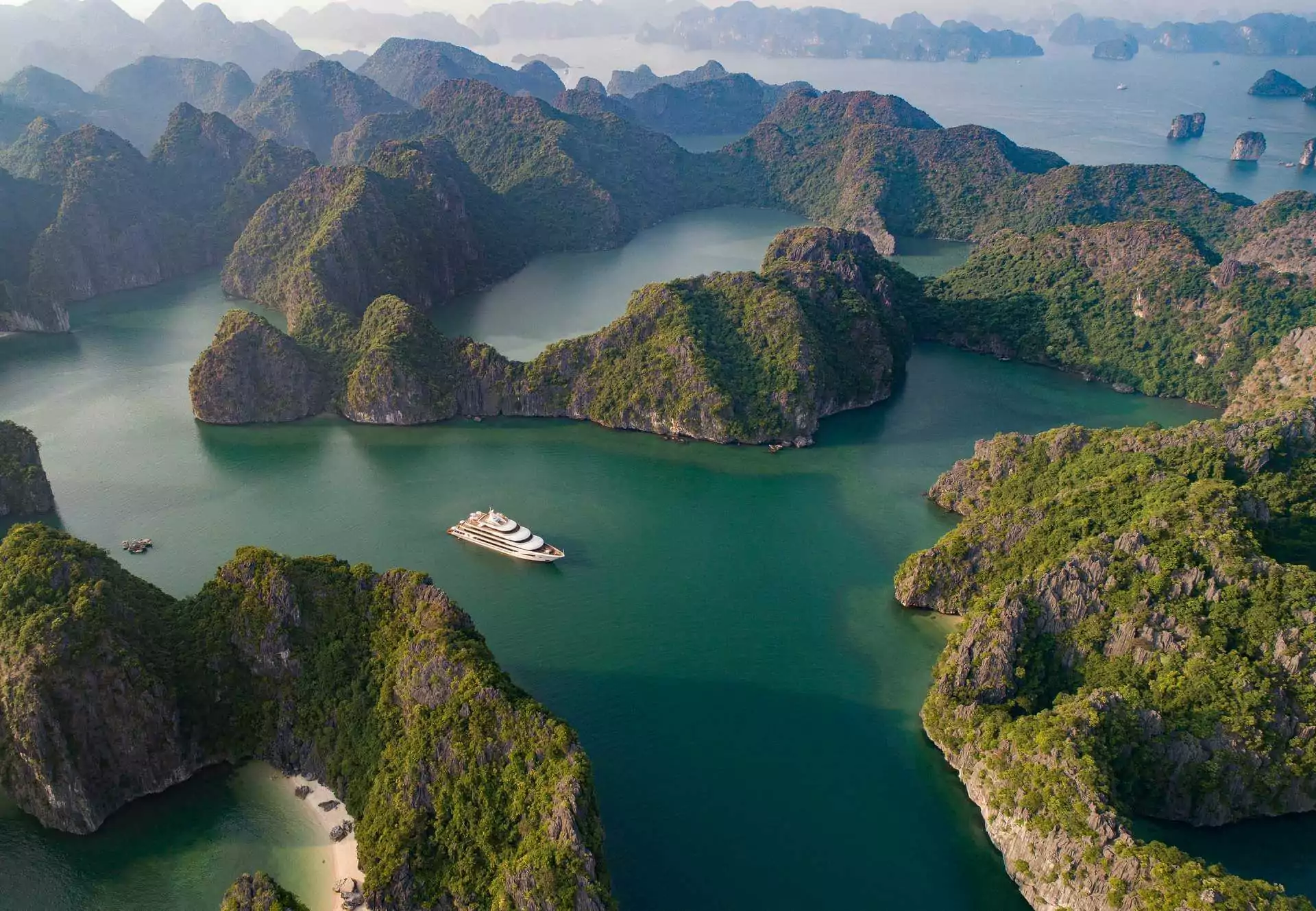
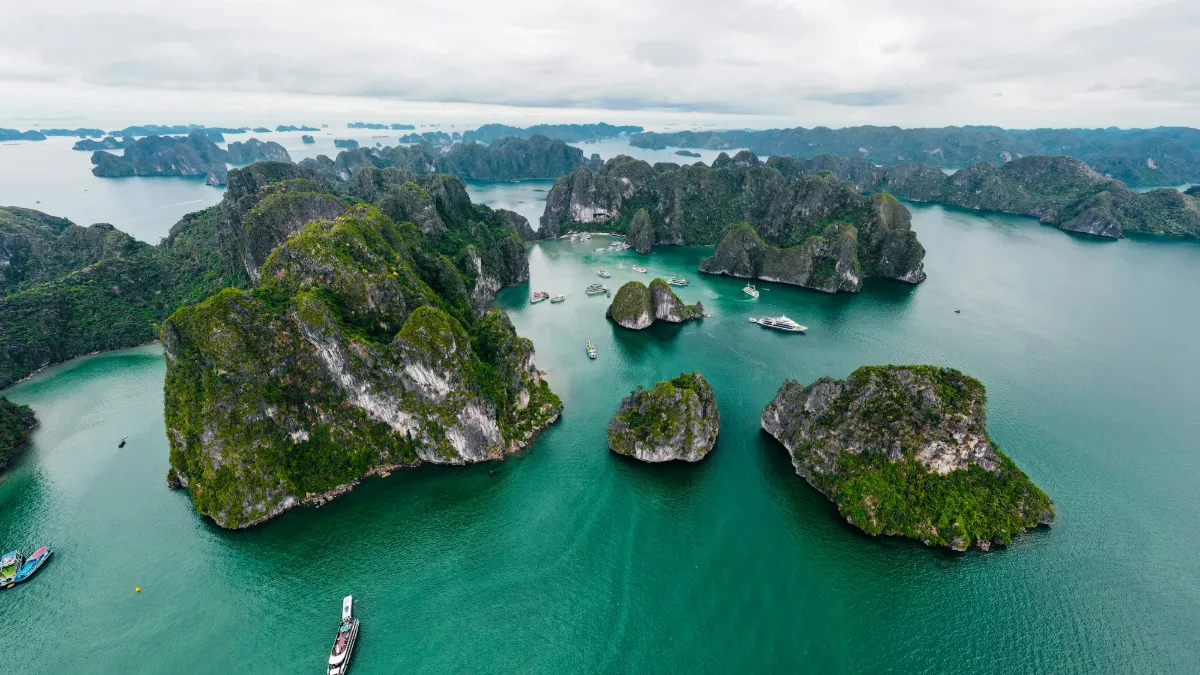
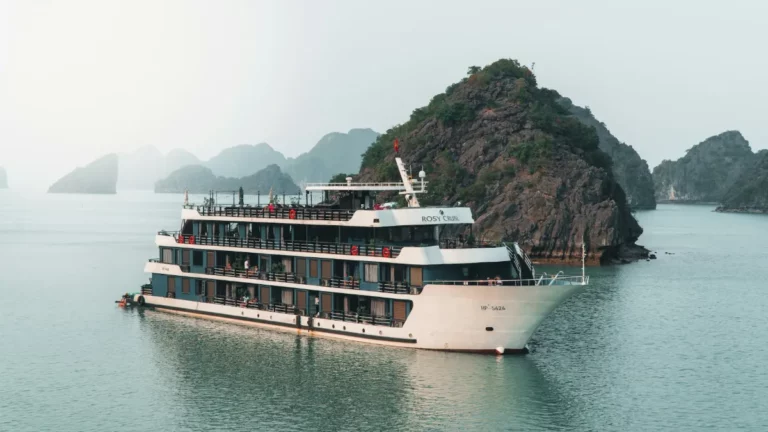
Halong Bay (Vịnh Hạ Long, “Bay of the Descending Dragon”) is a seascape of nearly 2,000 limestone islands and islets in Quang Ninh province, north-east Vietnam, about 2.5 hours from Hanoi. A UNESCO World Heritage Site since 1994, it is famous for its karst towers, caves and floating-village heritage. You visit it by boat on official routes, with day fees of 200,000–250,000 VND per adult.
Status (checked October 2026): open as normal. Day and overnight cruises run every day on the official routes VHL1–VHL8; route fees are unchanged at 200,000–250,000 VND per adult for the classic day routes. Boats are suspended at short notice when storms or typhoon warnings are issued, mainly between June and October.
Why Halong Bay is worth seeing:
- World-class scenery: UNESCO calls it the most extensive and best-known example of marine-invaded tower karst on Earth.
- Double UNESCO recognition: listed for its natural beauty in 1994 and for its geology in 2000, then extended in 2023 to include the Cat Ba Archipelago.
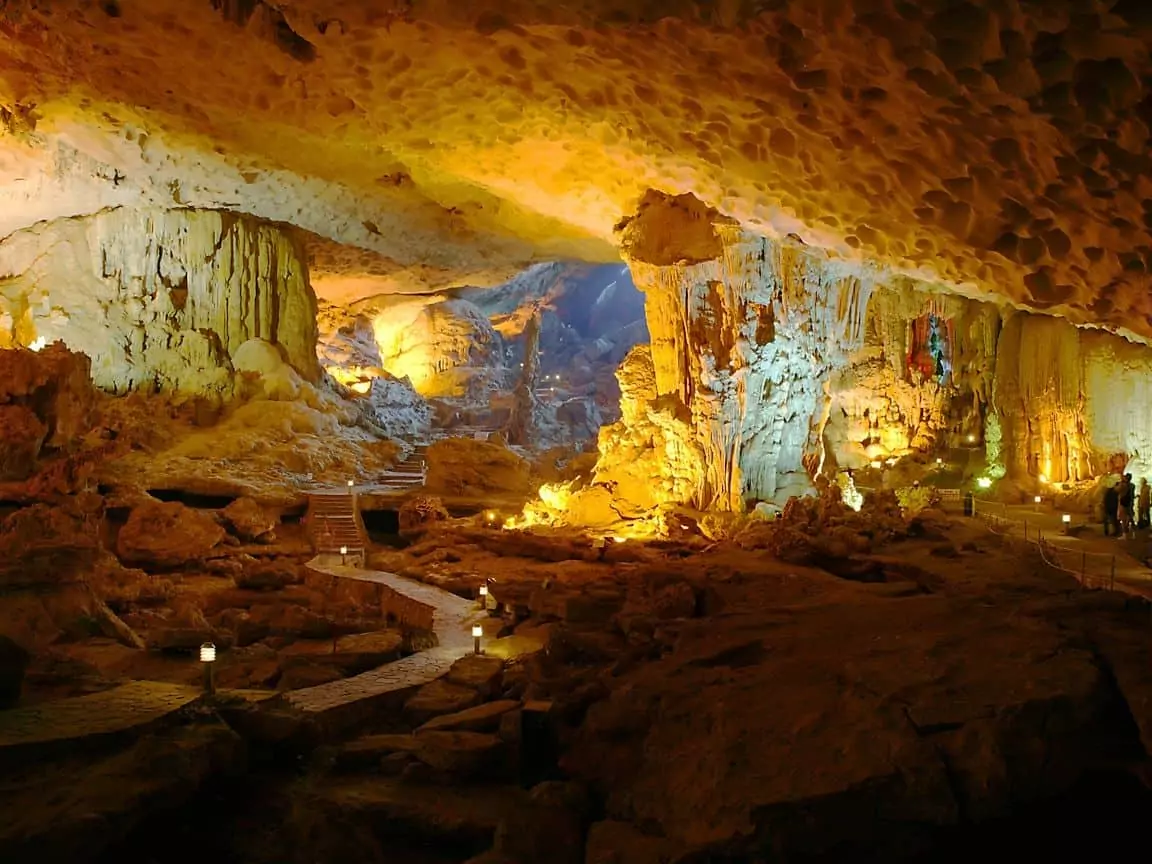
- Spectacular caves: walk through Sung Sot, Thien Cung and Dau Go, or kayak through Luon Cave into a hidden lagoon.
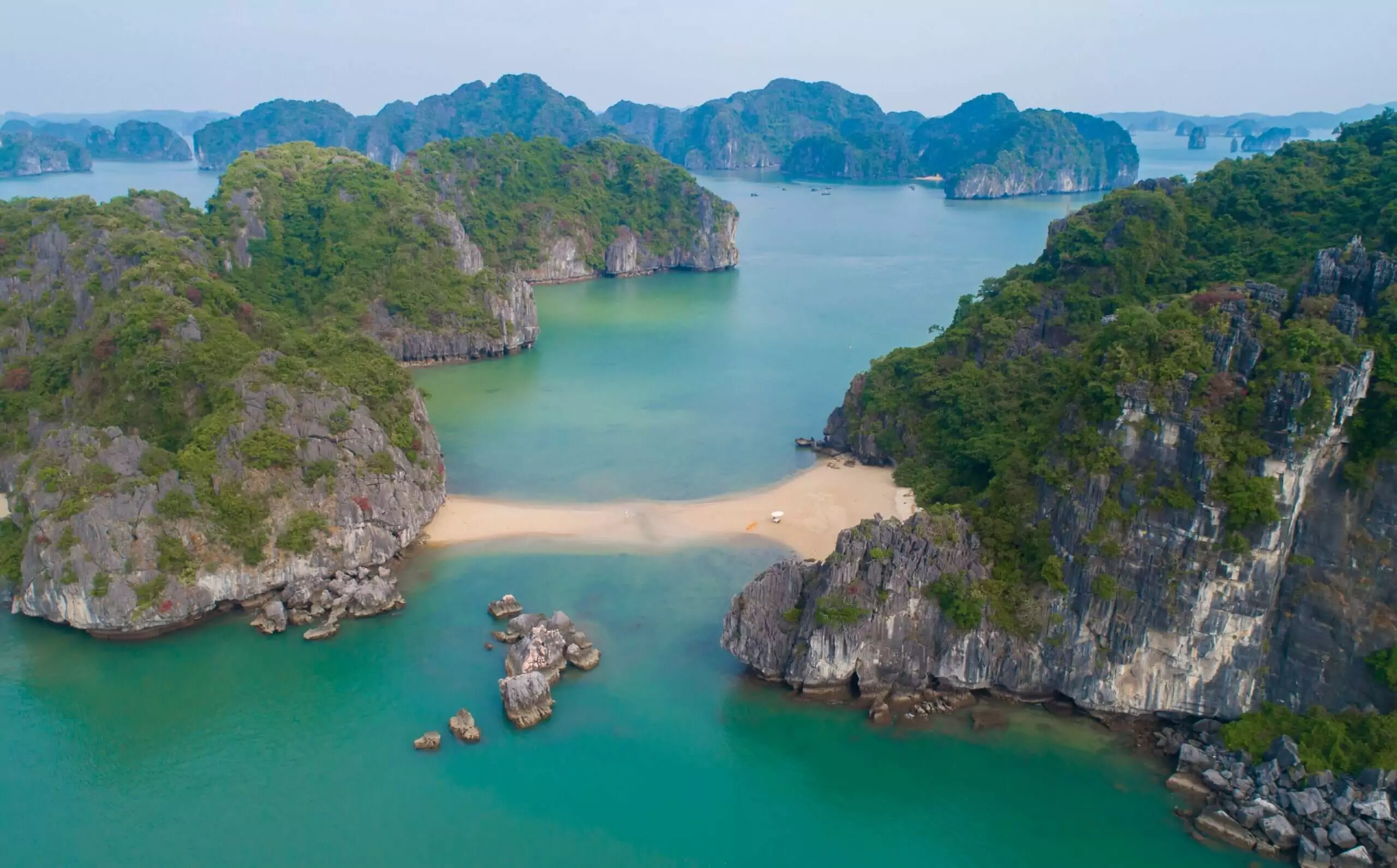
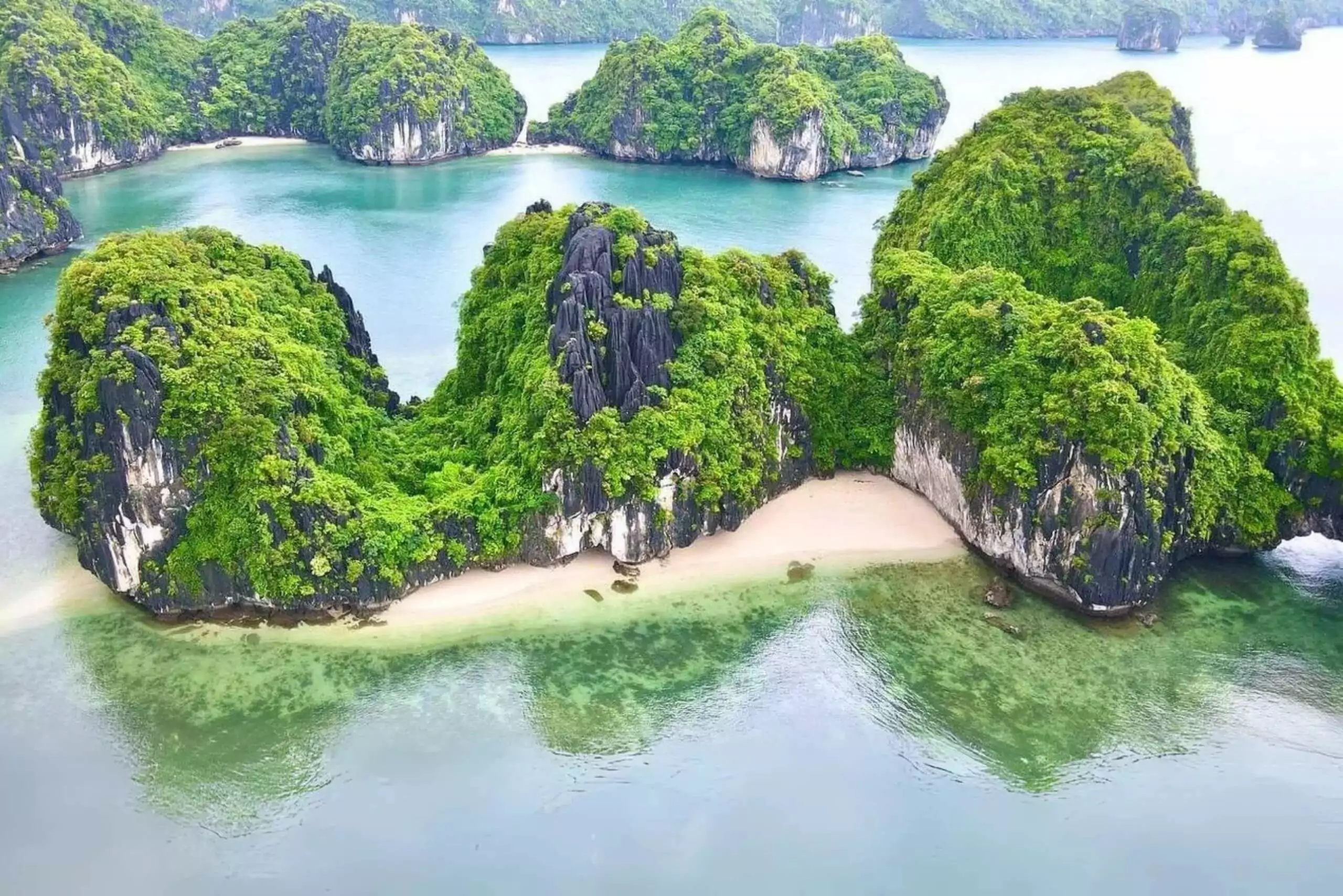
- Island viewpoints and beaches: climb Ti Top Island for the classic panorama, or swim at Soi Sim.
- Living heritage: fishing-village culture at Cua Van and Vung Vieng, and prehistoric sites dating back about 18,000 years.
Halong Bay at a Glance
| Vietnamese name | Vịnh Hạ Long (“Descending Dragon Bay”); often written Ha Long Bay |
|---|---|
| Location | Quang Ninh province, north-east Vietnam, on the Gulf of Tonkin; cruises leave from Tuan Chau and the Ha Long International Passenger Port in the Bai Chay area |
| Distance | About 150–180 km from central Hanoi (2–2.5 hours by expressway) |
| Size | About 1,553 km² with nearly 2,000 islands and islets |
| Known for | Limestone karst islands, caves, Fighting Cocks Islet, Ti Top viewpoint, overnight cruises, kayaking |
| Recognition | UNESCO World Heritage Site (1994, 2000), extended in 2023 as “Ha Long Bay – Cat Ba Archipelago” (65,650 ha, 1,133 islands); one of the New7Wonders of Nature |
| Opening hours | Daily; sightseeing boats and caves operate in daylight hours, overnight cruises anchor in permitted areas |
| Entrance fee | Route fee per adult: 250,000 VND (VHL1, VHL2, VHL5), 200,000 VND (VHL3, VHL4), plus a port fee; children under 1.2 m free |
| Time needed | A 4–6 hour day cruise at minimum; one or two nights for the full experience |
| Best time | March–May and September–November |
| Nearby | Ha Long City (Bai Chay, Hon Gai), Lan Ha Bay, Cat Ba Island, Bai Tu Long Bay |
| Find it | Google Maps · Tripadvisor · UNESCO |
Is Halong Bay Worth Visiting?
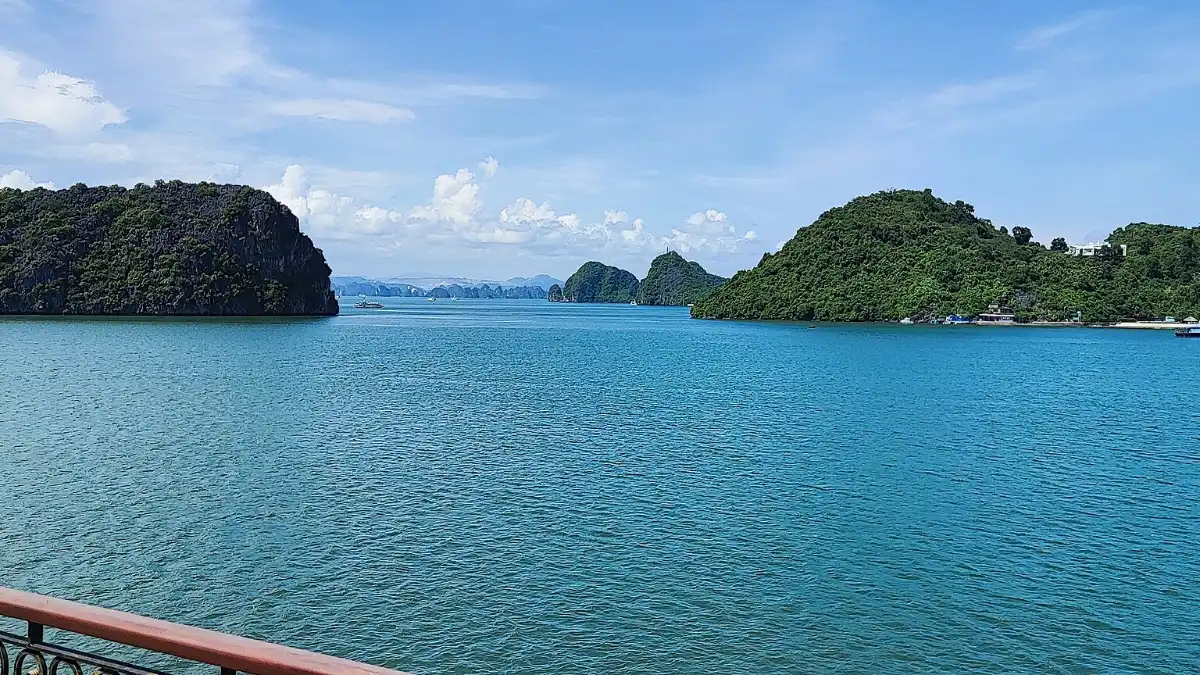
Yes. Few landscapes anywhere match the scale of Halong Bay’s limestone seascape, and it is the one natural sight most visitors to northern Vietnam should not miss. It is busy, with hundreds of tourist boats on the classic routes, so the way you visit matters. An overnight cruise lets you see the bay at sunrise and sunset when the day boats have gone, while the neighbouring Lan Ha Bay and Bai Tu Long Bay feel quieter.
- Best for: first-time visitors to Vietnam, couples, families, photographers and anyone who enjoys kayaking and boat trips.
- Skip if: you dislike crowds and only have a few hours; in that case choose a quieter bay or a longer cruise rather than a rushed day trip.
- Short on time: a day cruise on route VHL2 (Sung Sot Cave, Ti Top Island, Luon Cave) shows the highlights in about 5–6 hours on the water.
The Legend of the Descending Dragon
According to Vietnamese legend, when the country was threatened by invaders from the sea, the gods sent a family of dragons to help. The dragons spat out jewels and jade, which turned into the countless islands of the bay and formed a stone wall that wrecked the enemy fleet. After the victory the dragons stayed on Earth: the mother dragon descended at Ha Long (“descending dragon”), and her children at Bai Tu Long, a name usually explained as “the young dragons paying homage”. The story explains why so many places in the bay carry dragon names.
Why Halong Bay Is a UNESCO World Heritage Site
UNESCO describes the Ha Long Bay – Cat Ba Archipelago as the most extensive and best-known example of marine-invaded tower karst in the world. The limestone formed over about 500 million years, and the karst landscape was shaped over roughly 20 million years in a hot, wet climate. When the sea rose after the last ice age, it flooded the valleys between the towers, leaving steep islands with caves, lagoons and wave-cut notches at their base. Read the official description on the UNESCO World Heritage Centre website.
| Year | Milestone |
|---|---|
| 1994 | Inscribed as a World Heritage Site for its outstanding natural beauty (criterion vii) |
| 2000 | Recognised again for its geological and geomorphological value (criterion viii) |
| 2012 | Confirmed as one of the New7Wonders of Nature |
| 2023 | Extended to include the Cat Ba Archipelago (Hai Phong): “Ha Long Bay – Cat Ba Archipelago”, 65,650 ha with 1,133 islands and a 34,140 ha buffer zone |
The 2023 extension made it Vietnam’s first natural World Heritage Site shared by two provinces, Quang Ninh and Hai Phong. That is why many cruises now combine Ha Long Bay with Cat Ba Island and Lan Ha Bay.
History of Halong Bay
Prehistoric cultures
People have lived around the bay for about 18,000 years. Archaeologists identify three prehistoric cultures here: Soi Nhu (about 18,000–7,000 BC), Cai Beo (about 7,000–5,000 BC) and the Ha Long culture (about 5,000–3,500 years ago), known for finely polished stone tools and pottery.
The Bach Dang victories
The Bach Dang River at the western edge of the bay saw Vietnam’s most famous naval victories. In 1288 General Tran Hung Dao destroyed a Mongol-Yuan fleet by planting iron-tipped wooden stakes in the riverbed, hidden by the high tide. Local tradition links the stakes to Dau Go Cave, the “Cave of Wooden Stakes”.
Fishing villages and the bay today
For generations, fishing families lived in floating houses sheltered among the islands. From 2014 more than 300 households were resettled on the mainland in Ha Phong, and the old village at Cua Van now tells their story through a floating cultural centre. In 2024 the bay welcomed about 3.2 million visitors, according to the Ha Long Bay Management Board. Learn more on Wikipedia.
What to See at Halong Bay
1. Sung Sot Cave
The largest show cave in the bay, on Bo Hon Island, with two huge chambers covering about 10,000 m². Read our Sung Sot Cave guide.
2. Ti Top Island
The classic viewpoint: a path of about 170 m climbs to a summit pavilion above a small crescent beach. The island was named after Soviet cosmonaut Gherman Titov, who visited with President Ho Chi Minh in 1962. See Ti Top Island.
3. Luon Cave
A low sea tunnel under Bo Hon Island that leads into a lagoon ringed by cliffs and home to wild macaques; you pass through by kayak or bamboo boat. See Luon Cave.
4. Thien Cung and Dau Go caves
Two caves on the same island close to the mainland: Thien Cung (“Heavenly Palace”), discovered in 1993, and Dau Go, known to the French as the “Grotte des Merveilles”. Read about Thien Cung Cave and Dau Go Cave.
5. Fighting Cocks Islet (Hon Trong Mai)
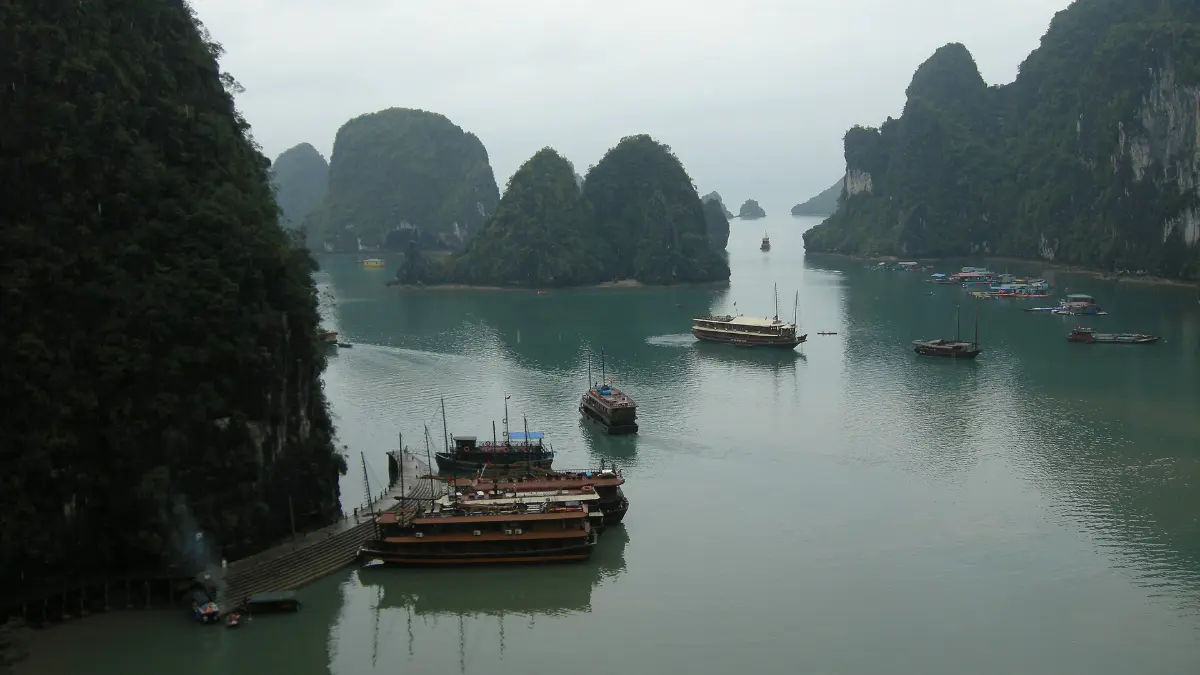
Two rocks facing each other like a rooster and a hen, the most photographed symbol of Halong Bay, seen from the boat on route VHL1, together with the Incense Burner Islet (Hon Dinh Huong) and Dog Rock (Hon Cho Da).
6. Soi Sim Island
A small island with a 200 m sandy beach and a viewpoint, named after the sim (rose myrtle) shrubs on its slopes. See Soi Sim Island.
7. Cua Van and Vung Vieng fishing villages
Former floating villages where you can take a bamboo boat between the karsts and learn about fishing life: Cua Van on route VHL3 and Vung Vieng on route VHL4.
8. Tung Sau Pearl Farm
Some cruises stop at a pearl farm in the Tung Sau area to show how pearl oysters are raised and seeded. See Tung Sau Pearl Farm.
Halong Bay Routes and Fees (2026)
All boats must follow the official routes set by Quang Ninh Province. In 2025 the province renamed the old Routes 1–5 as VHL1–VHL5 and added VHL6–VHL8 (Resolution 51/2025/NQ-HĐND, with the new routes charged from 1 May 2025).
| Route | Main sights | Day fee per adult |
|---|---|---|
| VHL1 | Thien Cung Cave, Dau Go Cave, Dog Rock, Incense Burner and Fighting Cocks islets | 250,000 VND (about US$10) |
| VHL2 | Sung Sot Cave, Ti Top Island, Soi Sim Island, Luon Cave, Me Cung Grotto | 250,000 VND |
| VHL3 | Cua Van Floating Cultural Centre, Tien Ong Cave, Ba Ham Lake | 200,000 VND (about US$8) |
| VHL4 | Vung Vieng fishing village, Cap La, Cong Do, Thay and Co caves | 200,000 VND |
| VHL5 | Route VHL1 sights, then on to Gia Luan pier (Cat Ba) | 250,000 VND |
| VHL6 | Chan Voi islet, Ba Cua cove, Tung Lam Island, Cap Bai islet (linking to Lan Ha Bay) | 150,000 VND |
| VHL7 | Combined VHL1 + VHL2 + VHL3 + VHL4 | 600,000 VND |
| VHL8 | Short route between Tuan Chau port, Ha Long International Passenger Port and the Nam Cau Trang area | 70,000 VND |
Children under 7 or under 1.2 m are free and children aged 7–15 pay 20% less; a port fee (about 60,000 VND at Tuan Chau) is charged on top, and overnight stays have their own fees (route VHL2: 550,000 VND for 1 night, 750,000 VND for 2 nights; VHL3/VHL4: 500,000 and 650,000 VND). Most cruise prices already include all of these. Fees are set by the Quang Ninh People’s Council and collected by the Ha Long Bay Management Board; check the official website for updates.
How to Visit Halong Bay, Step by Step
- Choose your style: a day cruise (4–8 hours), a one-night cruise or a two-night cruise. Our Halong Bay cruise guide compares them.
- Pick a route: VHL1 or VHL2 for the famous caves and viewpoints, VHL3 or VHL4 for quieter fishing-village scenery.
- Book transfers from Hanoi or arrange your own (see below); most cruises include a shuttle.
- Bring your passport: cruise operators must register every passenger before boarding.
- Board at Tuan Chau port or the Ha Long International Passenger Port, then follow the cruise programme of caves, kayaking and swimming.
How to Get to Halong Bay
| From | How | Time |
|---|---|---|
| Hanoi Old Quarter | Cruise shuttle bus, limousine van, private car or public bus via the expressway | About 2–2.5 hours |
| Noi Bai Airport (Hanoi) | Private car or limousine | About 2.5–3 hours |
| Van Don International Airport | Taxi or private car via the Ha Long – Van Don expressway | About 50–60 minutes |
| Ninh Binh | Private car or limousine | About 3–3.5 hours |
| Cat Ba Island | Boat to Gia Luan or via Lan Ha Bay, or car ferry and road | About 1.5–3 hours |
Full details are in our Hanoi to Halong Bay transport guide.
Best Time to Visit Halong Bay
| When | What to expect |
|---|---|
| March – May | Warm, mostly dry and clear; one of the best periods for cruising |
| June – August | Hot and humid, good for swimming and kayaking; storms can cancel sailings |
| September – November | Pleasant temperatures and clearer skies; typhoon risk lasts into October |
| December – February | Cool (around 15–20°C) and often misty; atmospheric but chilly for swimming |
| Time of day | Early morning and late afternoon have the softest light and fewer boats |
Local Expert Tips for Halong Bay
These tips come from years of arranging Halong Bay tours for international travellers.
- Stay at least one night on board if you can; the bay is at its best at dawn, when the day boats have not yet arrived.
- Take travel insurance and keep your plans flexible from June to October: the port authority can stop all sailings when a storm approaches, and cruises then refund or rebook.
- Wear shoes with grip for the cave steps and the climb on Ti Top Island.
- Kayak in the morning or late afternoon, when the water is calm and the light is softer.
- Avoid Vietnamese public holidays and summer weekends if you prefer quieter caves.
- Read our Halong Bay travel tips and try the local squid cakes from our Halong food guide.
Halong Bay vs Lan Ha Bay
| Feature | Halong Bay | Lan Ha Bay |
|---|---|---|
| Famous sights | Sung Sot, Thien Cung, Ti Top, Fighting Cocks Islet | Small beaches, lagoons, Dark and Bright Cave |
| Crowds | Busier, especially on VHL1 and VHL2 | Quieter, fewer boats |
| Activities | Caves, viewpoints, kayaking | Kayaking, swimming, cycling on Cat Ba |
| Access | Cruise ports in Ha Long, 2–2.5 hours from Hanoi | Via Cat Ba or by cruise from Ha Long |
Our view: on a first visit, choose Halong Bay for its iconic caves and viewpoints; if you have been before or prefer peace and swimming, choose Lan Ha Bay or a cruise that combines both.
Nearby Attractions
- Ha Long City: the gateway town with Sun World, Bai Chay and the Quang Ninh Museum.
- Lan Ha Bay: the quieter southern neighbour, reached via Cat Ba.
- Cat Ba Island: national park, beaches and Cat Ba town.
- Bai Tu Long Bay: the wilder bay to the north-east.
- Quan Lan Island: long beaches in Van Don.
- Co To Island: a remote island for an extra few days.
Northern Vietnam for First-Time Visitors: Where Halong Bay Fits
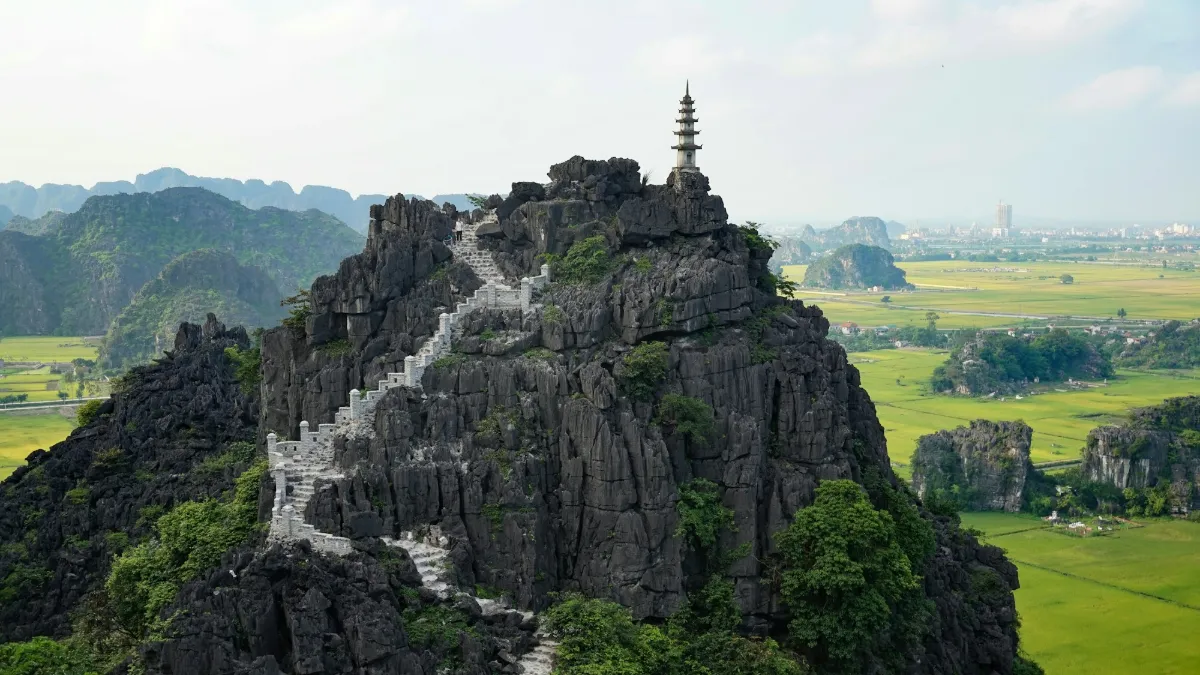
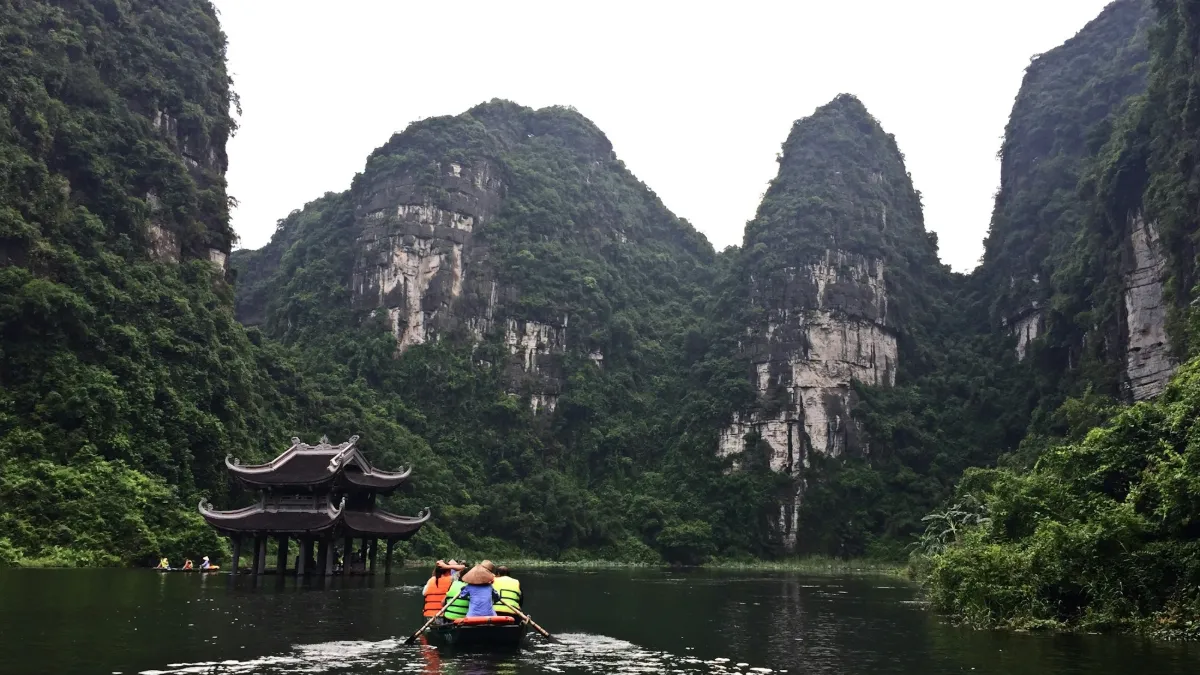
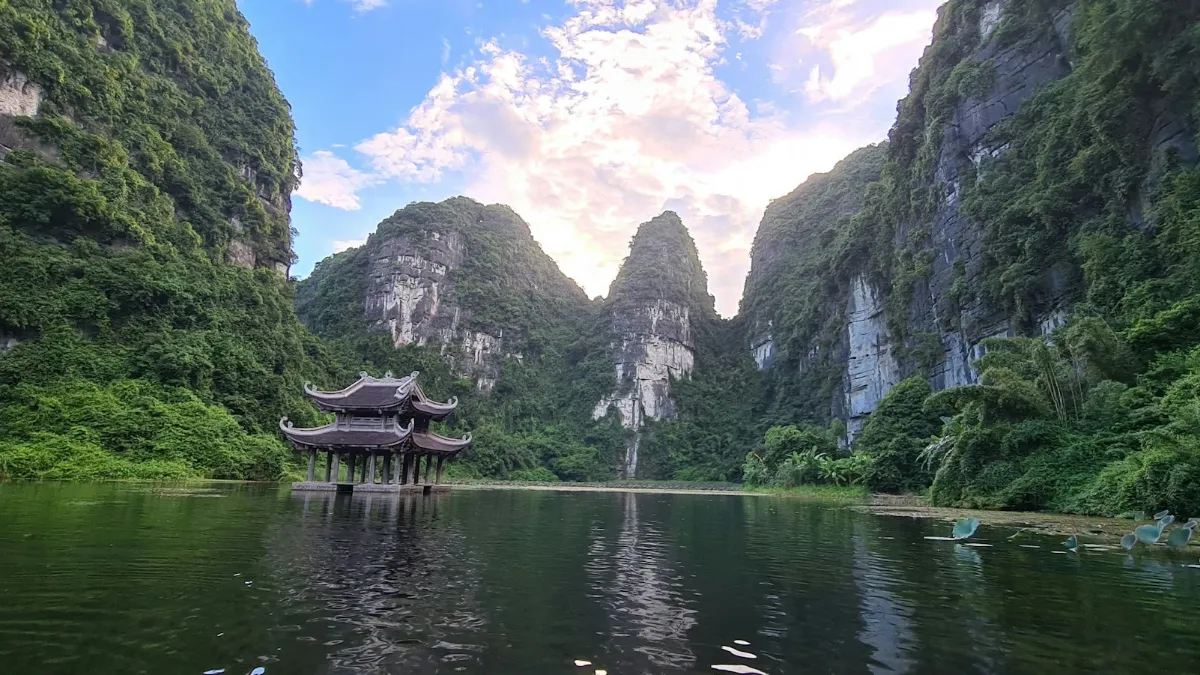
A classic first trip? Spend two days in Hanoi, take a one-night Halong Bay cruise, then continue to Ninh Binh for the boat trip at Trang An. With an extra day, add Cat Ba and Lan Ha Bay or a night in Ha Long City.
Plan your trip with our Halong Bay travel guide and Halong Bay tours. Contact Vietnam Tour Expert Team for a free custom itinerary.
Frequently Asked Questions about Halong Bay
1. Why is Halong Bay a UNESCO World Heritage Site?
Halong Bay was inscribed in 1994 for its outstanding natural beauty and recognised again in 2000 for its geology, as the world’s best-known example of marine-invaded tower karst.
2. What does the name Halong Bay mean?
Ha Long means “descending dragon”, from the legend of a dragon family that created the islands to protect Vietnam from invaders.
3. How many islands are there in Halong Bay?
The whole bay has nearly 2,000 islands and islets; the UNESCO property, including the Cat Ba Archipelago, contains 1,133 islands.
4. Is Halong Bay worth visiting?
Yes. Halong Bay is Vietnam’s most famous natural landscape; an overnight cruise gives the best experience and avoids the busiest hours.
5. How much is the Halong Bay entrance fee?
Route fees are 250,000 VND per adult for VHL1, VHL2 and VHL5 and 200,000 VND for VHL3 and VHL4, plus a port fee; children under 1.2 m are free.
6. What are the VHL routes in Halong Bay?
They are the official sightseeing routes: in 2025 Quang Ninh renamed the old Routes 1–5 as VHL1–VHL5 and added VHL6, VHL7 and VHL8.
7. Which Halong Bay route is best?
VHL2 (Sung Sot Cave, Ti Top Island, Luon Cave) is the most popular first-time route; VHL3 and VHL4 are quieter and focus on fishing villages.
8. How far is Halong Bay from Hanoi?
About 150–180 km, or 2–2.5 hours by expressway; see our Hanoi to Halong Bay guide.
9. Can you visit Halong Bay as a day trip from Hanoi?
Yes, a Halong Bay day trip takes about 10–12 hours door to door, with 4–6 hours on the water.
10. Is one night enough in Halong Bay?
One night on a Halong Bay cruise covers the main caves, kayaking and a sunrise; two nights let you reach quieter areas such as Lan Ha Bay.
11. When is the best time to visit Halong Bay?
March to May and September to November usually bring the most pleasant weather in Halong Bay.
12. Are Halong Bay cruises cancelled in typhoon season?
Yes, the authorities suspend Halong Bay sailings when storms approach, mainly between June and October; operators then refund or rebook.
13. Can you swim in Halong Bay?
Yes, at designated beaches such as Ti Top and Soi Sim, and from some cruise boats in permitted areas, mainly from April to October.
14. Can you kayak in Halong Bay?
Yes, kayaking is offered at points such as Luon Cave and the fishing-village areas, usually included in your Halong Bay cruise.
15. Is Cat Ba part of Halong Bay?
Since 2023 the Cat Ba Archipelago has been part of the same World Heritage Site, now called “Ha Long Bay – Cat Ba Archipelago”, although Cat Ba belongs to Hai Phong.
16. What is the difference between Halong Bay and Lan Ha Bay?
Halong Bay has the famous caves and viewpoints but more boats; Lan Ha Bay, south of it near Cat Ba, is quieter and better for swimming and kayaking.
17. Do I need my passport for a Halong Bay cruise?
Yes, Halong Bay cruise operators must register each passenger, so bring your passport (or a clear copy if your operator allows it).
18. Is Halong Bay one of the New7Wonders of Nature?
Yes, Halong Bay was confirmed as one of the New7Wonders of Nature in 2012.
Related Posts
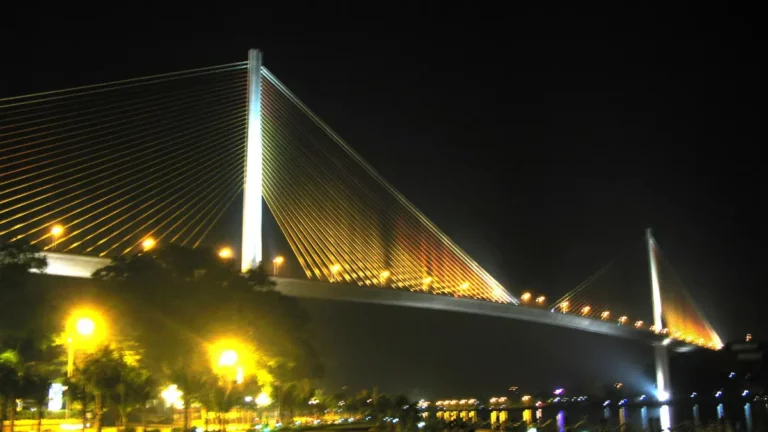
Ha Long City Guide 2026: Top Things to Do Beyond the Bay
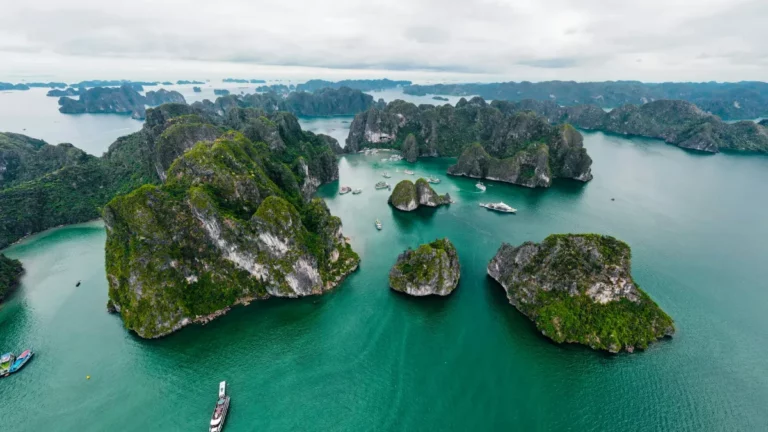
Halong Bay Travel Tips 2026: Essential Things to Know Before You Go

Halong Food Guide: Squid Cake, Seafood & Where to Eat

Hanoi to Halong Bay 2026: Bus, Shuttle, Private Car & Times
Halong Bay Cruise Guide 2026: How to Choose the Best Cruise