Fansipan Mountain: Cable Car Tickets, Trekking & Tips (2026)
Fansipan (Phan Xi Păng) is the highest mountain in Vietnam and the whole Indochinese peninsula, at about 3,143 m, rising about 9 km south-west of Sa Pa in Lao Cai province. Most visitors ride the Sun World Fansipan Legend cable car (850,000 VND return for adults) in about 20 minutes, then climb roughly 600 steps to the summit; fit hikers trek it in one to two days.
Status (checked October 2026): the cable car runs daily, generally from about 8:00 (7:30 at weekends) with last boarding around 14:30–15:30 and last descent around 16:00–17:00; hours shift with weather and holidays. Adult tickets cost 850,000 VND and children 1–1.4 m tall 550,000 VND. A new mountain train now links the Van Son tea house area with the summit pagodas. Since 1 July 2025 Sa Pa has been a ward of the enlarged Lao Cai province (merged with Yen Bai).
Why Fansipan is worth seeing:
- The Roof of Indochina: stand on the highest point of Vietnam, Laos and Cambodia.
- A record-breaking cable car: a 6.3 km three-rope line that climbs about 1,410 m over the Muong Hoa Valley.
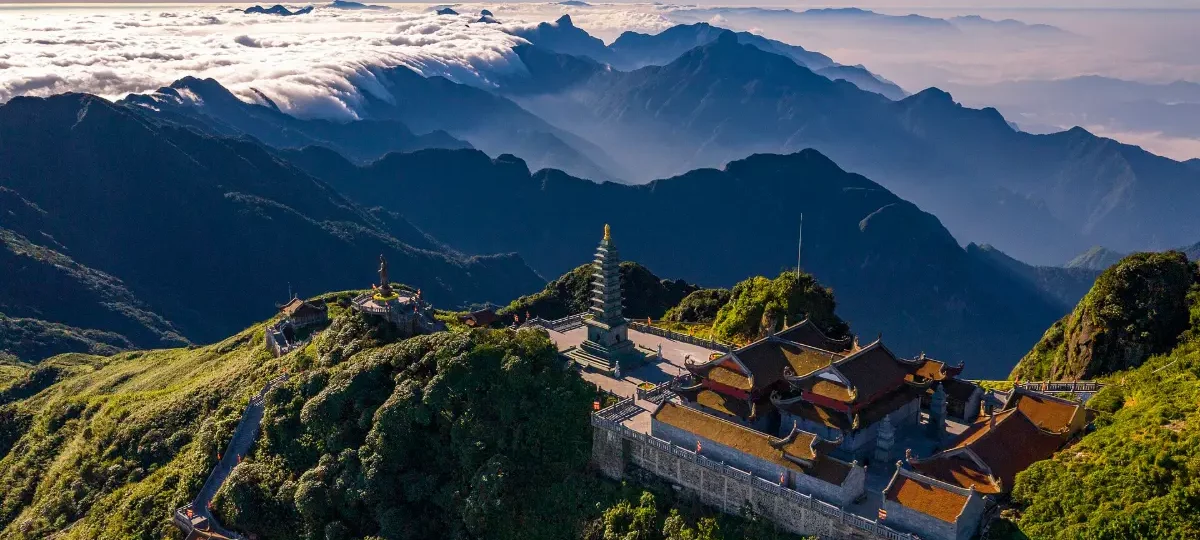
- Spiritual complex in the clouds: Kim Son Bao Thang pagoda and a 21.5 m bronze Amitabha Buddha at about 3,075 m.
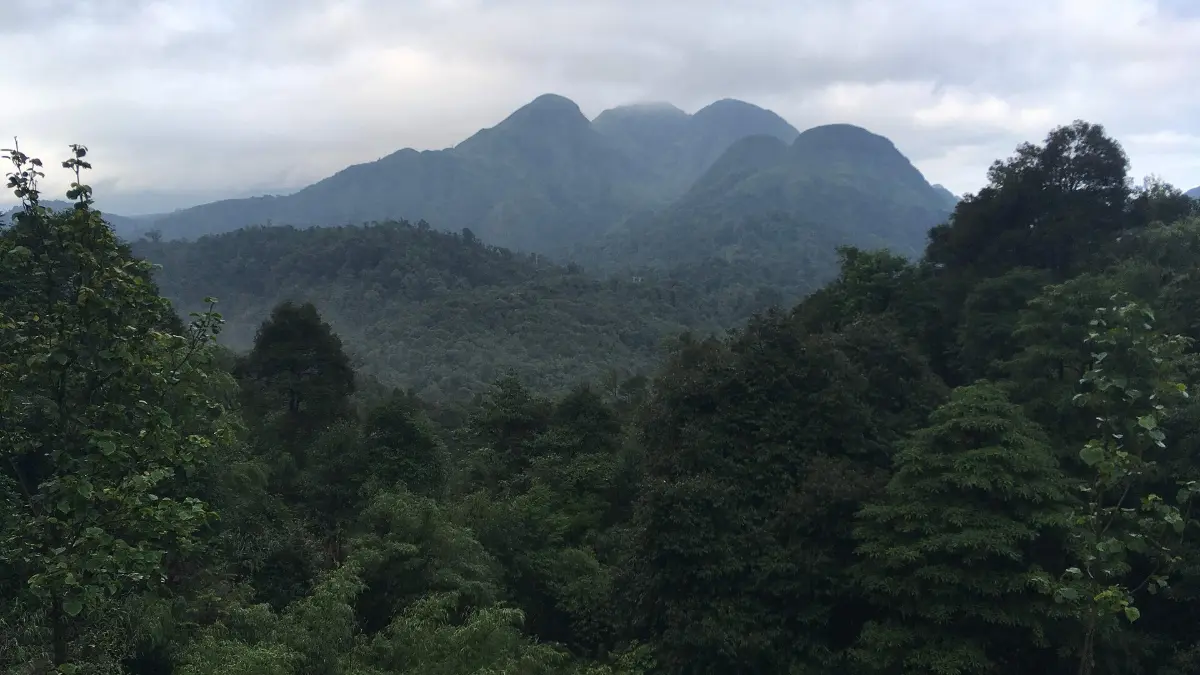
- Sea of clouds: on clear mornings the Hoang Lien Son range floats above the clouds.
- Two ways up: an easy half-day by cable car or a serious mountain trek through Hoang Lien National Park.
Fansipan at a Glance
| Vietnamese name | Đỉnh Phan Xi Păng (Fansipan); cable car area: Sun World Fansipan Legend |
|---|---|
| Location | Hoang Lien Son range, Sa Pa ward, Lao Cai province (Lao Cai merged with Yen Bai on 1 July 2025) |
| Height | About 3,143 m (first measured in 1909; later surveys give about 3,147 m) |
| Distance | About 9 km south-west of Sa Pa centre; the lower cable car station is in the Muong Hoa Valley, a short drive or funicular ride from town |
| Known for | Highest peak in Indochina, Fansipan cable car, summit pagodas and Great Buddha, trekking |
| Recognition | Part of Hoang Lien National Park; cable car holds two Guinness World Records (2016) |
| Opening hours | Cable car: about 8:00–14:30 Mon–Thu, 8:00–15:30 Fri, 7:30–15:30 Sat, 7:30–14:30 Sun (last boarding); last return about 16:00–17:00 |
| Entrance fee | Cable car return 850,000 VND adults (about US$32); 550,000 VND children 1–1.4 m; under 1 m free; trains extra |
| Time needed | 4–5 hours by cable car from Sa Pa; 1–2 days on foot (2 days, 1 night is standard) |
| Best time | March–May and September–November; go up early in the morning |
| Nearby | Muong Hoa Valley, Cat Cat Village, Tram Ton Pass, Silver Waterfall |
| Find it | Google Maps · Tripadvisor · Official website · Wikipedia |
Is Fansipan Worth Visiting?
Yes, on a reasonably clear day it is the most spectacular half-day in Sa Pa. The cable car ride over the terraced Muong Hoa Valley is an experience in itself, and the summit area, with its pagodas, bronze Buddha and the stainless-steel peak marker, is well built and easy to reach. The main risk is weather: Fansipan is often wrapped in cloud, and the ticket is not refunded if you see nothing, so keep your plans flexible.
- Best for: first-time visitors to Sa Pa, families, photographers and anyone who wants to stand on Vietnam’s highest point without a two-day trek.
- Skip if: the forecast shows thick cloud all day, you are on a very tight budget, or you prefer quiet nature to a large, busy tourist complex.
- Short on time: take the cable car straight up after breakfast, spend 1.5–2 hours at the top and be back in town for a late lunch.
History of Fansipan and the Cable Car
The French surveyed the peak in 1909 and recorded a height of 3,143 m, the figure still painted on the summit marker; later measurements put it at about 3,147 m. Fansipan sits in the Hoang Lien Son range, the south-eastern tail of the Himalayan system, and the mountain lies on the boundary between Lao Cai and Lai Chau provinces within Hoang Lien National Park.
For most of the 20th century the summit was reached only by expeditions taking five or six days. Trails improved over time and a strong hiker can now climb it in one or two days. In February 2016 Sun Group opened the Fansipan cable car, a three-rope line of about 6.3 km with an elevation gain of about 1,410 m. Guinness World Records recognised it for the longest non-stop three-rope cable car and the greatest elevation difference for such a line.
The spiritual complex at the top, including Kim Son Bao Thang pagoda and the Great Amitabha Buddha, was inaugurated in January 2018. The Muong Hoa funicular from Sa Pa town opened in 2018, and 2026 marks ten years of the cable car.
What to See at Fansipan
1. The cable car ride over the Muong Hoa Valley
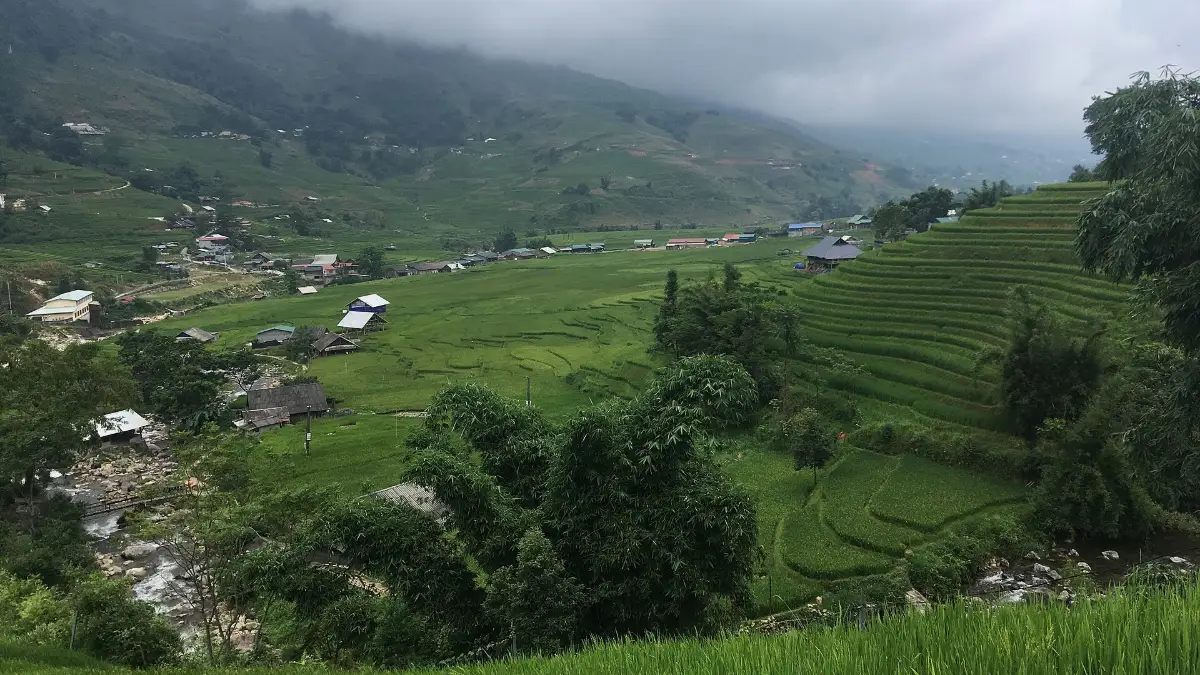
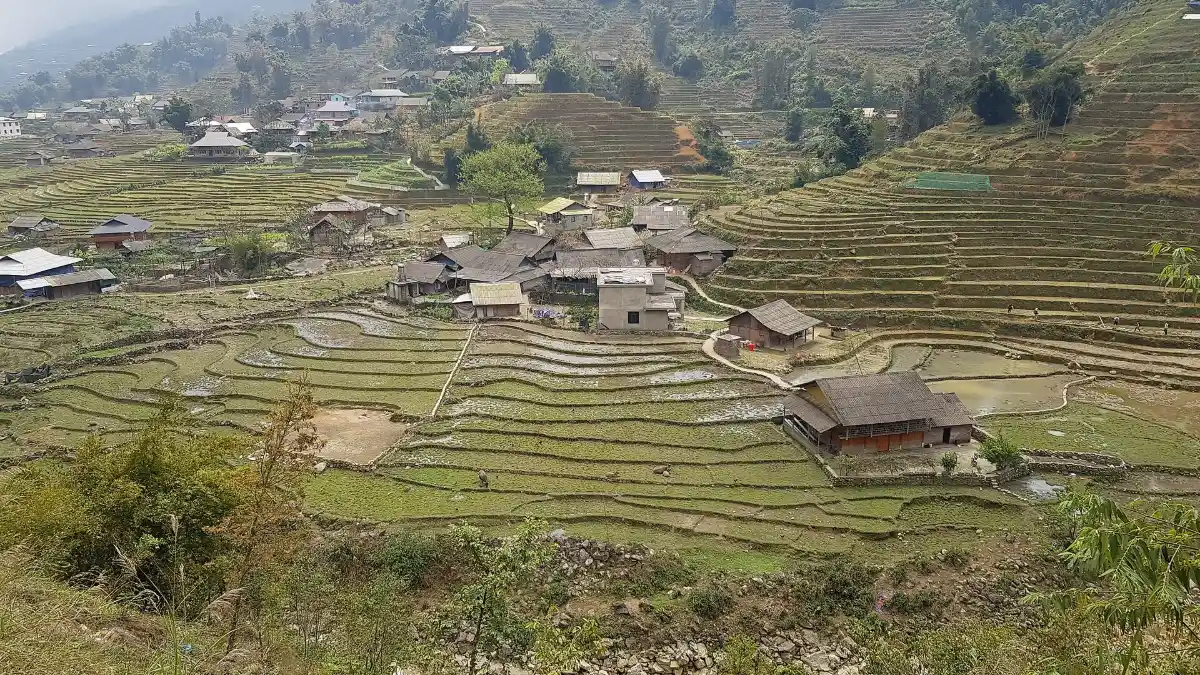
The cabins leave Hoang Lien station and climb for about 15–20 minutes over rice terraces, Hmong villages and primeval forest before reaching the upper station just below the peak. Sit facing the valley for the best views and photos.

2. The Muong Hoa mountain funicular
From the Sun Plaza station in central Sa Pa, a Swiss-built funicular runs about 2 km down to the cable car station in roughly 6 minutes, passing through tunnels and over viaducts. It saves a taxi ride and is fun for children.
3. Kim Son Bao Thang pagoda and the summit temples
Below the summit stands a complex of pagodas, bell towers and stone stupas built in traditional northern Vietnamese style. Kim Son Bao Thang pagoda and the smaller temples along the route make the final climb feel like a pilgrimage.
4. The Great Amitabha Buddha
The 21.5 m bronze Amitabha Buddha, weighing about 62 tonnes, stands at roughly 3,075 m. It was assembled from thousands of 5 mm copper sheets and was recognised in 2021 as the bronze statue at the highest altitude in Asia.
5. The La Han path and the 600 steps
From the upper station, a stone path lined with arhat (La Han) statues leads up about 600 steps to the peak. Allow 20–30 minutes, walk slowly because of the altitude, or use the short summit train to save energy.
6. The Fansipan summit marker
The triangular stainless-steel marker reading Fansipan 3,143 m is the classic photo. Queues build up from late morning, so arrive early if you want a clean shot.
7. Sea of clouds and the Hoang Lien Son range
On cold, clear mornings, especially in autumn and winter, a sea of clouds fills the valleys below the summit. Sunrise visitors do not get this, as the cable car does not run at dawn, but the first cabins often catch the clearest views.
8. Trekking through Hoang Lien National Park
Hikers follow forest trails with rhododendrons, bamboo and moss-covered trees. The Tram Ton route is the most popular; Sin Chai and Cat Cat routes are steeper and longer. A licensed local guide is required.
Fansipan Cable Car Tickets and Opening Hours (2026)
| Item | Details |
|---|---|
| Cable car, adult (over 1.4 m) | 850,000 VND return (about US$32); one-way costs the same |
| Cable car, child (1–1.4 m) | 550,000 VND return |
| Children under 1 m | Free |
| Muong Hoa funicular (town to cable station) | From about 200,000 VND; price varies by season |
| Summit train (upper station to peak area) | About 150,000–170,000 VND |
| Cable car + buffet lunch combo | About 1,100,000 VND adults, 750,000 VND children |
| Hours (last boarding) | Mon–Thu 8:00–14:30; Fri 8:00–15:30; Sat 7:30–15:30; Sun 7:30–14:30 |
| Last cabin down | About 16:00 (Mon–Thu, Sun) or 17:00 (Fri–Sat) |
Prices and hours are set by Sun World Fansipan Legend (Sun Group) and can rise at Tet and on public holidays or change in bad weather; check the official Sun Paradise Land Sa Pa website before you go.
How to Visit Fansipan by Cable Car, Step by Step
- Check the forecast the evening before and choose the clearest morning of your stay.
- Buy tickets online, through your hotel or tour operator, or at the Sun Plaza or Hoang Lien station counters.
- Go down to Hoang Lien station by the Muong Hoa funicular from Sun Plaza or by taxi (about 10–15 minutes).
- Ride the cable car for about 15–20 minutes to the upper station.
- Walk the 600 steps or take the summit train, visiting the pagodas and Great Buddha on the way.
- Photograph the summit marker, warm up with a hot drink and head down well before the last cabin.
Trekking Fansipan: Routes and Rules
Climbing Fansipan on foot is a real mountain trek with steep, often muddy steps and big temperature drops. A licensed local guide is mandatory under Hoang Lien National Park rules, and permits are arranged by the park board or your trekking company. See our Sapa trekking guide for gear and fitness advice.
| Route | Start | Typical duration | Notes |
|---|---|---|---|
| Tram Ton | Near Tram Ton Pass, about 1,900 m | 1 long day or 2 days, 1 night | Most popular and least steep; camp at about 2,800 m |
| Sin Chai | Sin Chai village, lower altitude | 2 days or more | Steeper and quieter, more forest |
| Cat Cat | Cat Cat Village | 3 days, 2 nights | Longest and toughest, for experienced hikers |
Many trekkers walk up and ride the cable car down; because a one-way ticket costs the same as a return, budget the full fare.
How to Get to Fansipan
| From | How | Time |
|---|---|---|
| Sa Pa centre (Sun Plaza) | Muong Hoa funicular to Hoang Lien cable car station | About 6 minutes |
| Sa Pa hotels | Taxi or private car to Hoang Lien station | 10–15 minutes |
| Hanoi | Limousine or sleeper bus on the Noi Bai–Lao Cai expressway to Sa Pa (about 320 km) | 5–6 hours |
| Hanoi by train | Overnight train to Lao Cai station, then about 35 km by road to Sa Pa | About 8 hours + 1 hour |
| Tram Ton Pass (trek start) | Car to the trailhead, then on foot | About 20 minutes by car |
For all transport options, read our guide to getting from Hanoi to Sapa.
Best Time to Visit Fansipan
| When | What to expect |
|---|---|
| March–May (spring) | Mild weather, rhododendrons and wildflowers, good visibility |
| June–August (summer) | Warmest but rainiest; cloud often hides the summit, trekking trails get slippery |
| September–November (autumn) | Often the clearest skies; golden rice terraces in the valley until about early October |
| December–February (winter) | Very cold at the top, frost and occasional snow, beautiful seas of clouds on clear days |
| Time of day | Go on the first cabins; cloud usually builds from late morning |
Local Expert Tips for Fansipan
These tips come from years of arranging Sa Pa tours for international travellers.
- Keep a flexible day: plan Fansipan for your clearest morning and swap it with a village walk if it is cloudy.
- Dress in layers: the summit can be 10–15°C colder than Sa Pa town, and wind makes it feel colder.
- Pace yourself: at over 3,000 m, walk the steps slowly and drink water; take the summit train if you have heart or knee problems.
- Avoid weekends and holidays: Vietnamese holidays bring long queues at the stations.
- Bring cash and ID: carry your passport for trekking permits and small change for drinks at the top.
- Trek with a licensed guide: never attempt the trails alone; weather changes fast in the Hoang Lien range.
Fansipan vs Ham Rong Mountain
| Feature | Fansipan | Ham Rong Mountain |
|---|---|---|
| Height | About 3,143 m | About 1,800 m viewpoint above town |
| Access | Cable car or 1–2 day trek | Walk up from Sa Pa centre |
| Cost | 850,000 VND cable car | Low entrance fee |
| Time needed | Half a day | 1.5–2 hours |
| Highlights | Peak marker, pagodas, Great Buddha, sea of clouds | Gardens, rock formations, views over Sa Pa |
Our view: if you can only do one, choose Fansipan on a clear day for the once-in-a-lifetime summit; on a cloudy day, the cheaper Ham Rong Mountain next to town is the smarter choice.
Nearby Attractions
- Muong Hoa Valley: the terraced valley you fly over on the cable car.
- Cat Cat village of the Black Hmong: an easy walk from Sa Pa centre.
- Lao Chai and Ta Van villages: the classic rice-terrace trek.
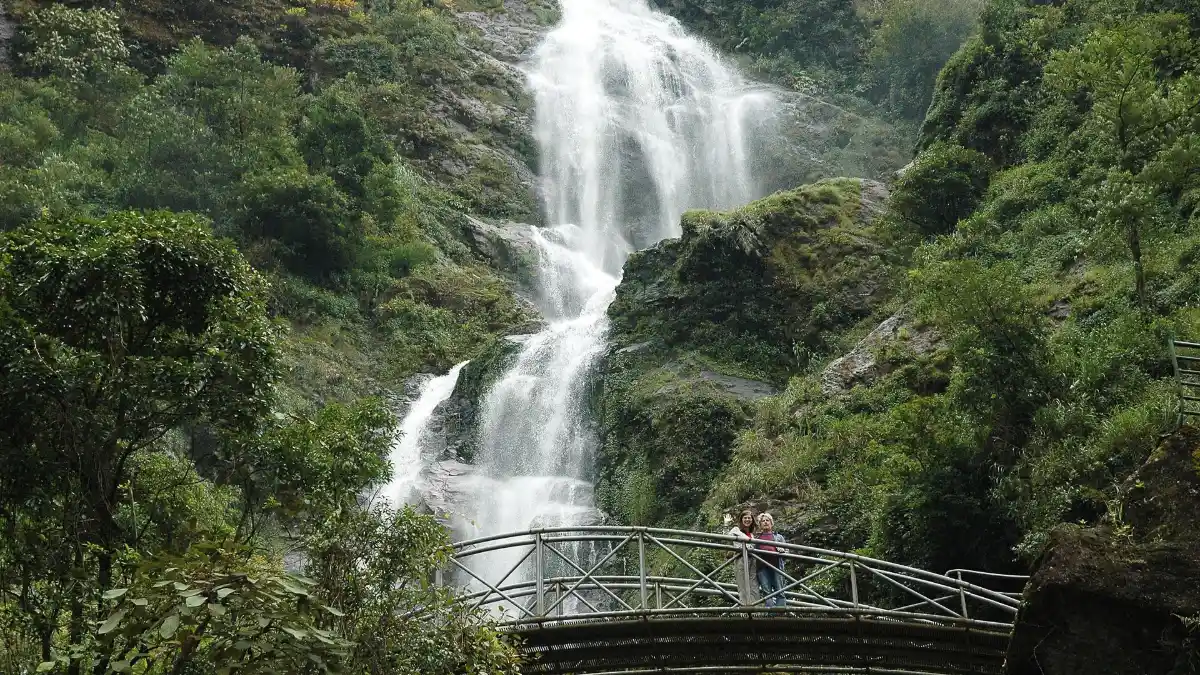
- Tram Ton Pass and the Silver Waterfall: on the road to Lai Chau.
- Rong May Glass Bridge: a glass skywalk beyond the pass.
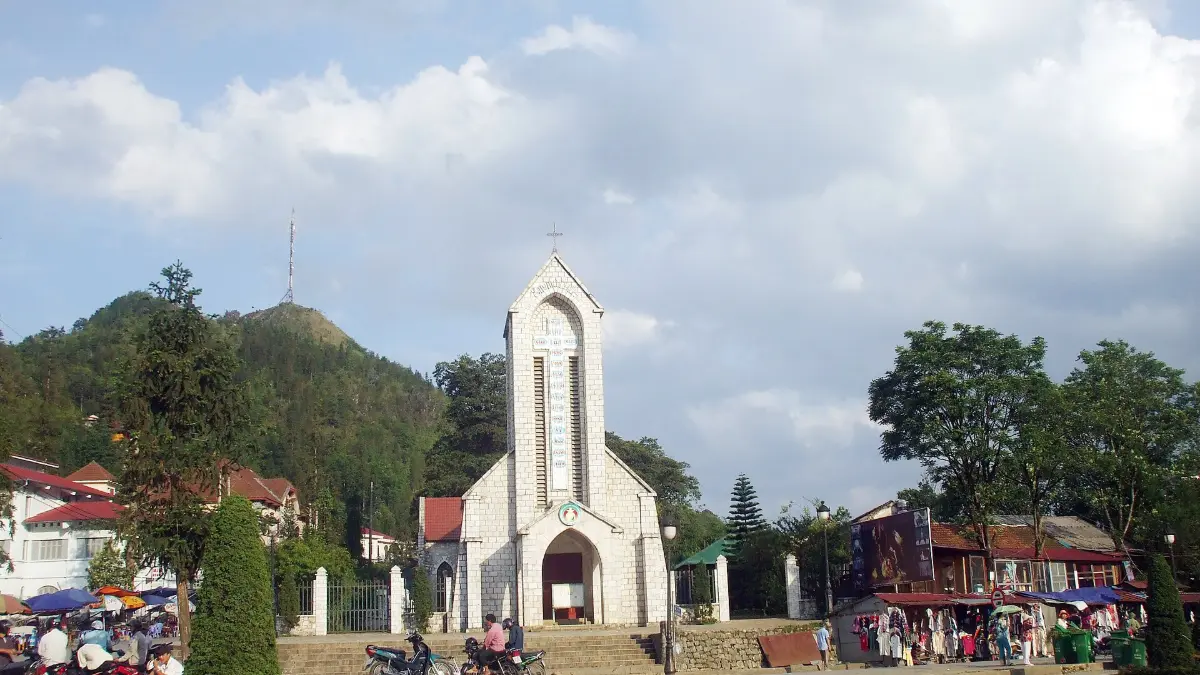
- Sapa Stone Church: the landmark in the town square.
Sightseeing in Sa Pa for First-Time Visitors: Where Fansipan Fits
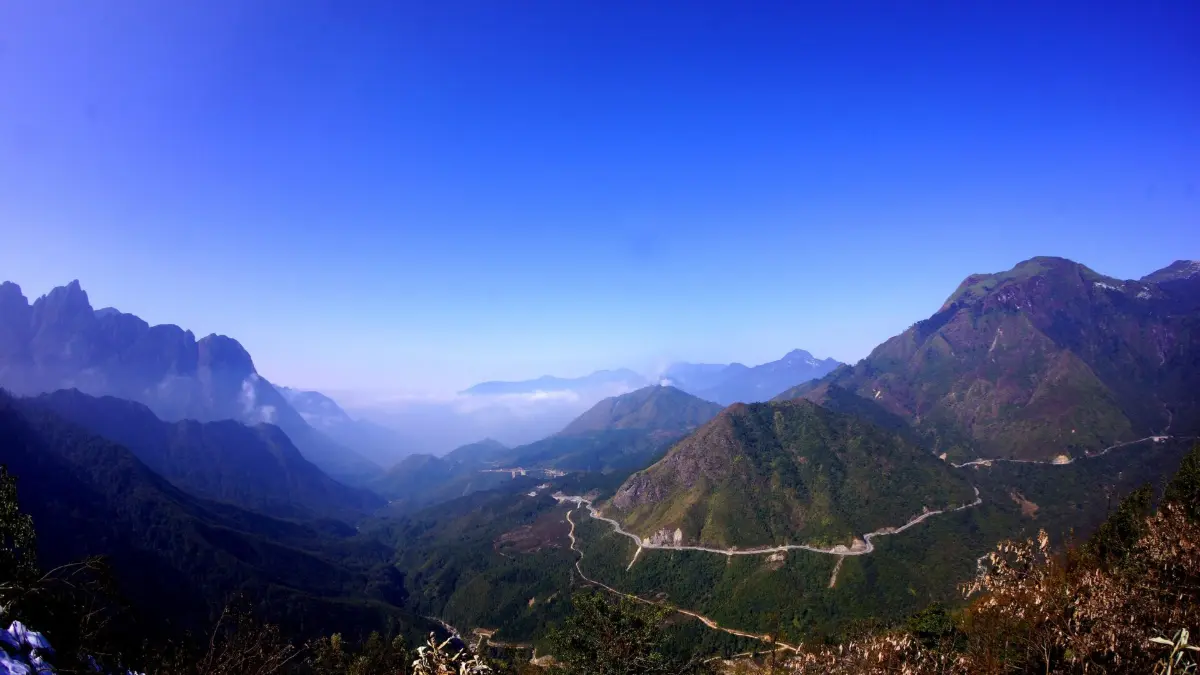
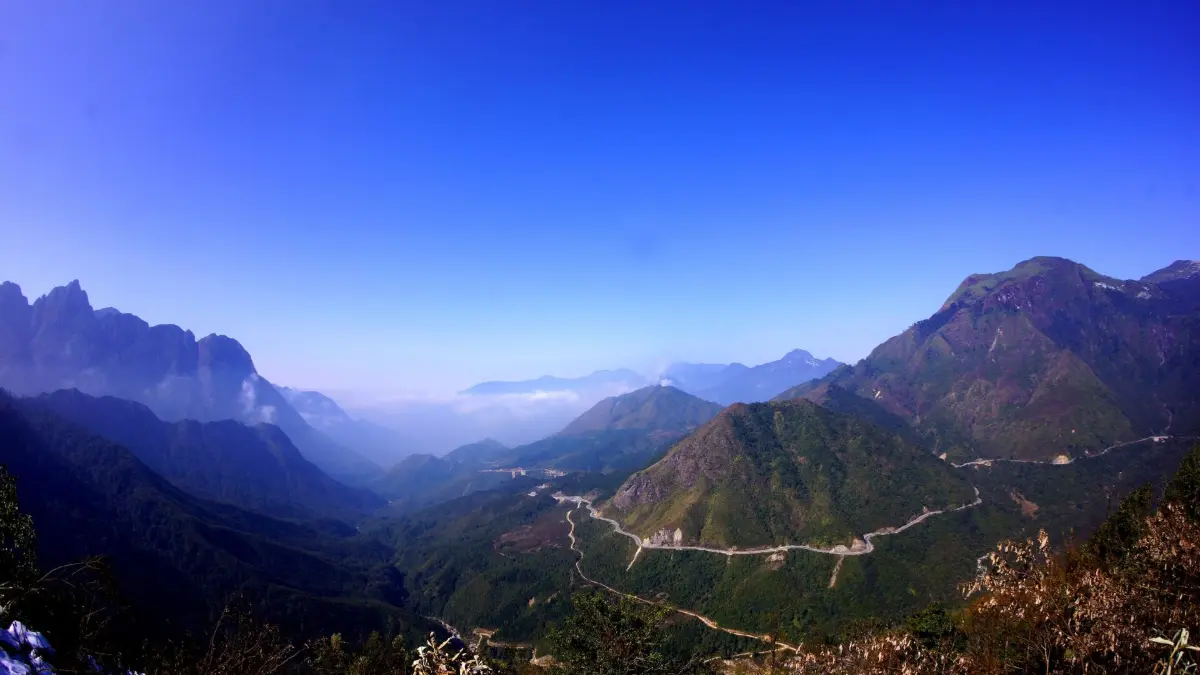
Two days in Sa Pa? Spend the clearer morning on Fansipan and the afternoon walking down to Cat Cat; on day two, trek through Lao Chai and Ta Van in the Muong Hoa Valley. With a third day, visit the Red Dao of Ta Phin or drive over O Quy Ho Pass. Our Sapa travel tips and Sapa food guide help with the rest.
Plan your trip with our Sapa travel guide and Sapa tours. Contact Vietnam Tour Expert Team for a free custom itinerary.
Frequently Asked Questions about Fansipan
1. How high is Fansipan?
Fansipan is about 3,143 m high, the figure from the 1909 survey shown on the summit marker; later surveys give about 3,147 m.
2. Why is Fansipan called the Roof of Indochina?
Fansipan is the highest mountain in Vietnam, Laos and Cambodia, the three countries of former French Indochina.
3. How much is the Fansipan cable car ticket in 2026?
A return ticket costs 850,000 VND for adults and 550,000 VND for children 1–1.4 m tall; children under 1 m ride free.
4. What are the Fansipan cable car opening hours?
Boarding usually runs from about 8:00 (7:30 at weekends) until 14:30–15:30, with the last cabin down around 16:00–17:00.
5. How long is the Fansipan cable car ride?
The ride takes about 15–20 minutes over a line of roughly 6.3 km.
6. How many steps are there to the top of Fansipan?
There are about 600 steps from the upper cable car station to the summit marker, or you can use the summit train for most of the way.
7. Is Fansipan worth it on a cloudy day?
The pagodas are still atmospheric, but you may see nothing beyond the clouds; if possible, move your Fansipan visit to a clearer morning.
8. How long do you need for Fansipan?
Allow 4–5 hours from Sa Pa town by cable car, including the funicular, the steps and time at the summit.
9. Can you climb Fansipan without the cable car?
Yes, fit hikers trek Fansipan in one long day or, more commonly, two days and one night via Tram Ton, with a licensed guide; see our trekking guide.
10. Do you need a guide to trek Fansipan?
Yes, a licensed local guide is required under Hoang Lien National Park rules, and permits are arranged through the park or a trekking company.
11. How cold is it on top of Fansipan?
The summit is often 10–15°C colder than Sa Pa town, and in December–February it can fall below zero with frost or snow.
12. What is the best time to visit Fansipan?
March–May and September–November usually offer the clearest views; go on the first cabins in the morning.
13. Does it snow on Fansipan?
Snow and frost occur on Fansipan in some winters, usually between late December and February during cold spells.
14. Is Fansipan suitable for children and seniors?
Yes, by cable car; the summit train reduces the walk, but people with heart problems should take care at over 3,000 m.
15. How do I get from Sa Pa town to the Fansipan cable car?
Take the Muong Hoa funicular from Sun Plaza in central Sa Pa (about 6 minutes) or a 10–15 minute taxi to Hoang Lien station.
16. What is at the top of Fansipan?
Fansipan’s summit area has Kim Son Bao Thang pagoda, a 21.5 m bronze Amitabha Buddha, the La Han path and the 3,143 m marker.
17. Can I visit Fansipan as a day trip from Hanoi?
It is possible with the expressway but very tiring (about 11 hours on the road); we recommend at least one night in Sa Pa, see Hanoi to Sapa.
18. Where is Fansipan located?
Fansipan is in the Hoang Lien Son range in Lao Cai province, about 9 km south-west of Sa Pa ward.
Related Posts

Sapa Travel Tips 2026: Weather, Best Time & What to Know

Sapa Trekking Guide 2026: Best Routes, Guides & Tips

Sapa Food Guide: Salmon Hotpot, Thang Co & Where to Eat
Hanoi to Sapa 2026: Bus, Train, Private Car & Travel Times
Rong May Glass Bridge: Tickets, Views & Is It Worth It?