Fujian Assembly Hall Hoi An (Phuc Kien): Visitor Guide
The Fujian Assembly Hall (Hội quán Phúc Kiến, also Phước Kiến) is the largest Chinese clan hall in Hoi An Ancient Town, at 46 Tran Phu Street near Hoi An Market in Da Nang city. Founded as a temple in 1697 and rebuilt by Fujian merchants from 1757, it honours Thien Hau, goddess of the sea. Entry uses one coupon of the 120,000 VND old-town ticket.
Status (checked October 2026): open daily as normal during daytime hours. It remains an active temple used by the Fujian Chinese community, which gathers here in large numbers on the 16th day of the second lunar month. Since July 2025 the hall lies in Hoi An Ward, Da Nang city.
Why the Fujian Assembly Hall is worth seeing:
- The grandest hall in Hoi An: a complex about 120 metres deep with three courtyards, gates, ponds and halls.
- Over 300 years of history: from a small temple of 1697 to the Fujian guild’s hall from 1757.
- Thien Hau, protector of sailors: the sea goddess every merchant prayed to before sailing.
- Colour and symbolism: a triple gate, dragon sculpture, model trading junk and hanging incense coils.
- A prayer for children: couples come to pray to the birth goddesses and twelve midwives in the rear hall.
Fujian Assembly Hall at a Glance
| Vietnamese name | Hội quán Phúc Kiến / Phước Kiến (Chùa Phước Kiến); original name Kim Sơn Tự |
|---|---|
| Address | 46 Tran Phu Street, Hoi An Ancient Town, Hoi An Ward, Da Nang |
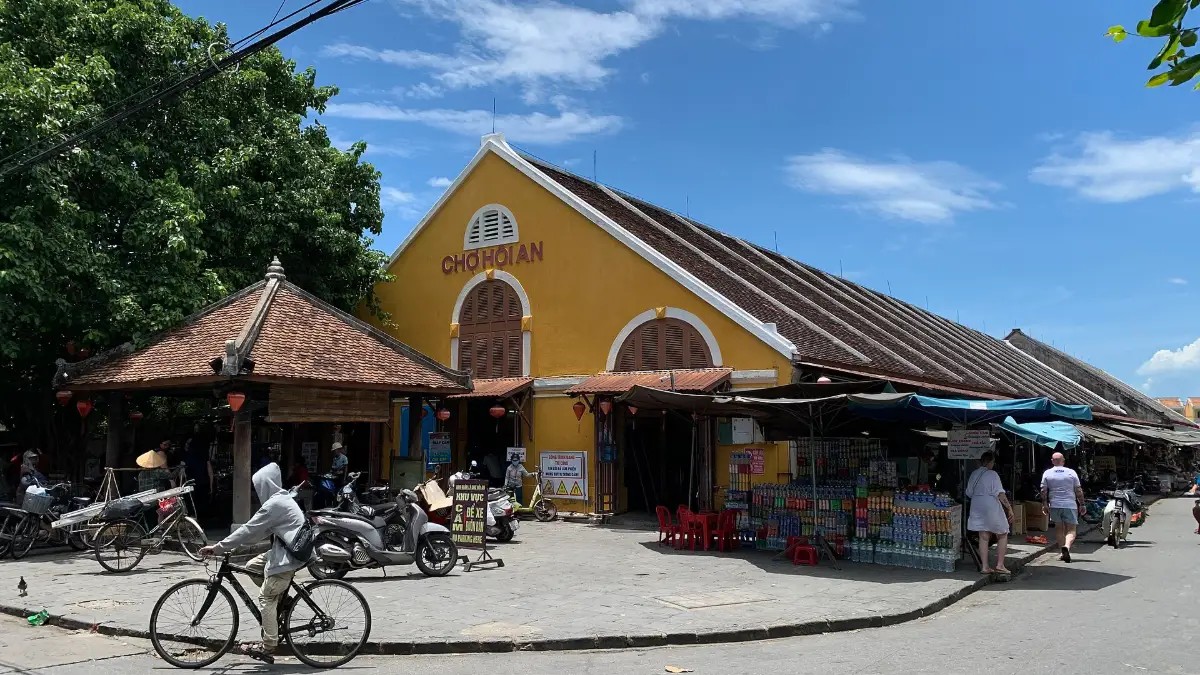
| Distance | About 3 minutes’ walk from Hoi An Market and 7–10 minutes from the Japanese Covered Bridge |
| Founded | 1697 as Kim Son temple; renovated and renamed by the Fujian guild from 1757; major rebuilding 1970–1974 |
| Dedicated to | Thien Hau (Mazu), goddess of the sea; also Quan Am, six Fujian founders, the God of Wealth and the birth goddesses |
| Recognition | National historical and cultural relic (1989); part of the UNESCO Hoi An Ancient Town site (1999) |
| Opening hours | Daily, daytime (from early morning to late afternoon; hours vary) |
| Entrance fee | One coupon of the Hoi An Ancient Town ticket (120,000 VND for foreigners, 5 sites) |
| Time needed | 20–40 minutes |
| Best time | Early morning, or late afternoon on the way to the river |
| Nearby | Hoi An Market, Trung Hoa and Hainan assembly halls, Tan Ky Old House, An Hoi Bridge |
| Find it | Google Maps · Tripadvisor · Official heritage record (Vietnamese PDF) |
Is the Fujian Assembly Hall Worth Visiting?
Yes, it is the most impressive Chinese hall in Hoi An and a highlight of any walk through the old town. Its scale, colour and the sense of an active community make it more memorable than most single houses in Hoi An Ancient Town.
- Best for: photographers, lovers of temples and Chinese culture, first-time visitors.
- Skip if: you have seen many Chinese temples elsewhere and prefer merchant homes like Tan Ky.
- Short on time: walk straight through the gates to the main hall, then the rear hall, and leave by the side to Hoi An Market.
History of the Fujian Assembly Hall
From Kim Son temple to guild hall
According to the Hoi An heritage centre record, a temple called Kim Son Tu was built on this site in 1697. Legend says it was funded with gold found on a Buddha statue that drifted ashore. In 1757 the Fujian merchant guild, the largest Chinese community in Hoi An, bought the temple, enlarged it and renamed it Phuoc Kien Hoi Quan.
A centre for the Fujian community
The hall served for worship, for honouring early settlers and as a meeting place where the guild helped members in need. It was recognised as a national historical and cultural relic in 1989 and remains collectively owned by the community, under the professional management of Hoi An’s heritage authorities.
The 1970s rebuilding
The biggest renovation took place between 1970 and 1974, when the triple gate and the outer gate on Tran Phu Street were rebuilt and the courtyards and ponds laid out. Smaller repairs have continued since.
What to See at the Fujian Assembly Hall
1. The outer gate and the triple gate
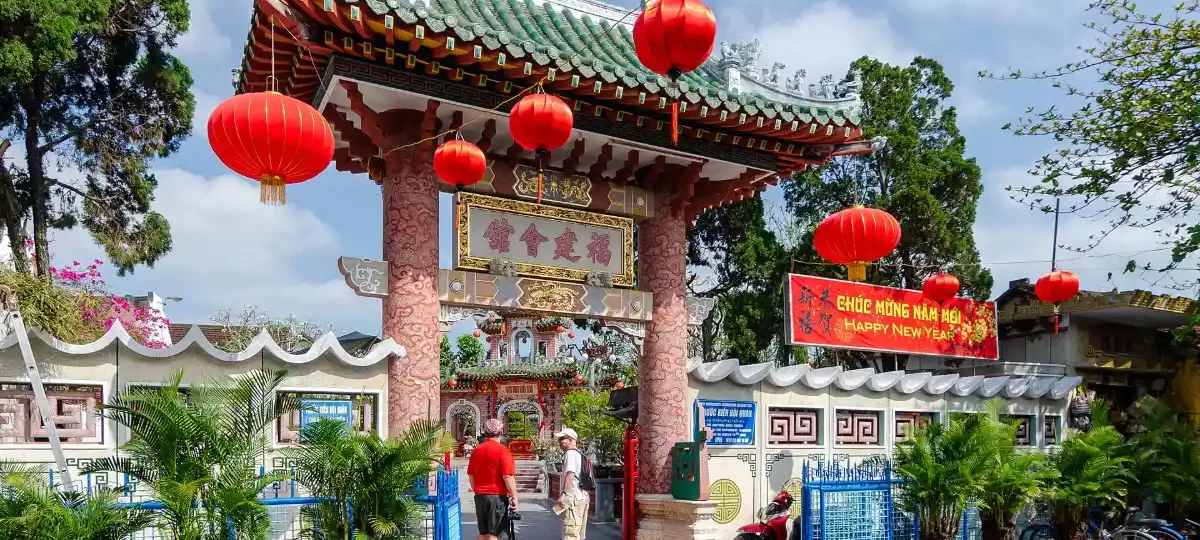
The colourful outer gate on Tran Phu Street leads to the tiled triple gate (tam quan), with curved roofs and glazed decorations, one of the most photographed facades in town.
2. The courtyards, ponds and dragon
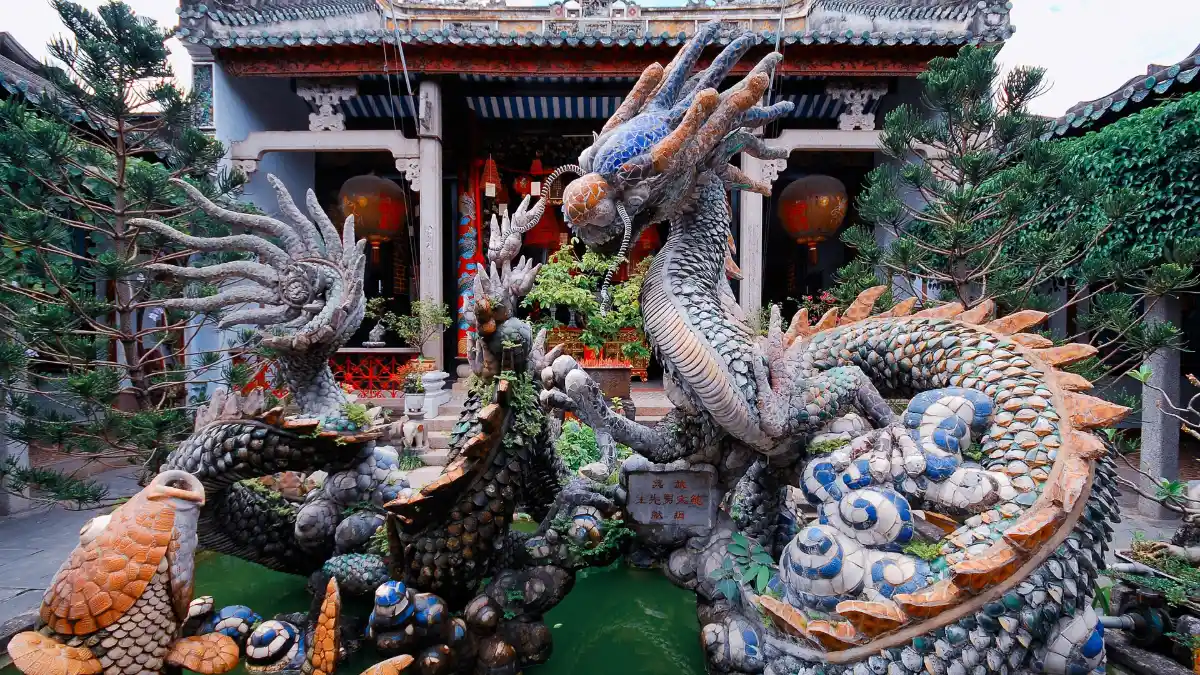
Ornamental ponds, bonsai and a dragon sculpture fill the courtyards, with the halls arranged one behind another along a central axis.
3. The front hall
The front hall’s solid ironwood door bears the characters for “a prosperous nation, a peaceful people”. Two reliefs on the walls show the six Fujian founders and Thien Hau rescuing a ship in a storm.
4. The main hall of Thien Hau
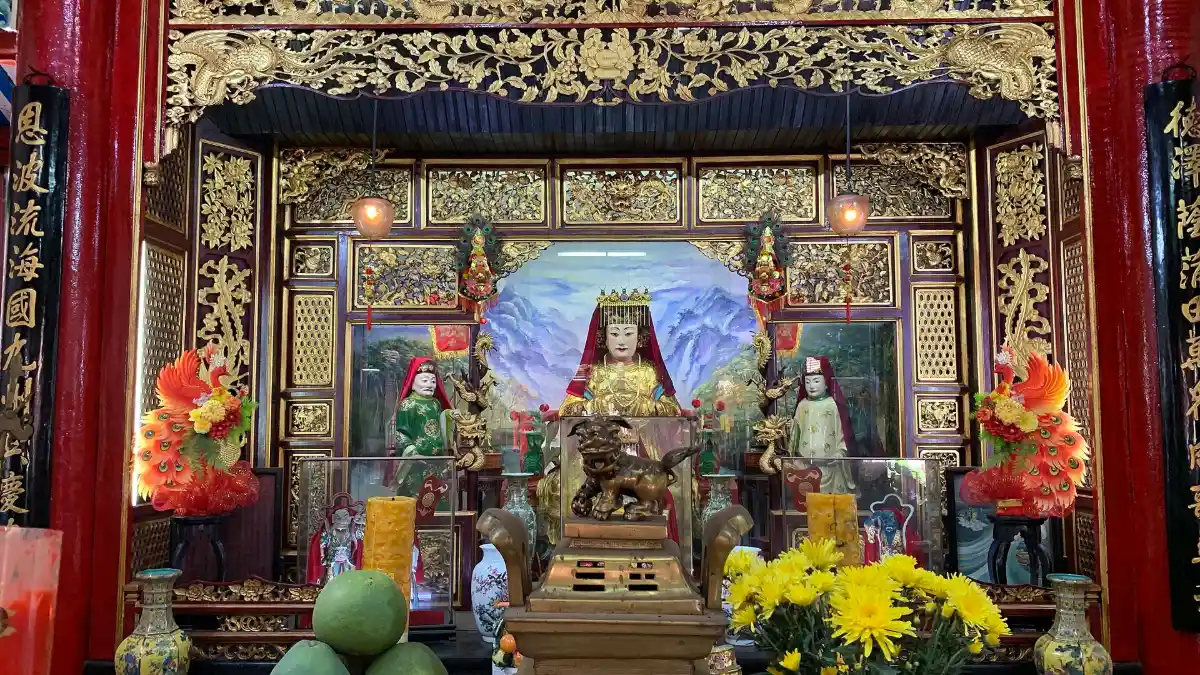
The heart of the complex is the altar of Thien Hau, the sea goddess believed to rescue sailors in storms. In front stands an altar to Quan Am, the bodhisattva of compassion. Large incense coils hang from the ceiling; worshippers attach prayer cards and they burn slowly for many days.
5. The model trading junk
A replica of a Chinese merchant sailing ship recalls the voyages that brought Fujian traders to Hoi An.
6. The rear hall
Behind the main hall are altars to the six Fujian founders (remembered as Ming loyalists who resisted the Qing), the God of Wealth, and the three birth goddesses with twelve midwives, where couples pray for children.
Festivals at the Fujian Assembly Hall
- Ancestors’ day: on the 16th day of the second lunar month, 4,000–5,000 descendants gather to honour the early settlers.
- Lunar New Year and full moons: the hall is busy with worshippers burning incense and buying incense coils.
Fujian Assembly Hall Tickets and Opening Hours (2026)
| Item | Price / hours | Notes |
|---|---|---|
| Hoi An Ancient Town ticket (foreigners) | 120,000 VND | The hall counts as one of the 3 “heritage site” choices |
| Hoi An Ancient Town ticket (Vietnamese) | 80,000 VND | Smaller selection of sites |
| Opening hours | Daily, daytime | Arrive before late afternoon; ceremonies may limit access |
| Incense coil | Optional donation | Sold inside; you can add your name and a wish |
Tickets are sold at booths around the old town, not at the hall. Rules are set by the Hoi An heritage authorities; see the official tourism information for updates.
Etiquette at the Fujian Assembly Hall
- Cover shoulders and knees; it is an active temple.
- Walk around, not in front of, people praying at the altars.
- Do not touch offerings or climb on sculptures and ponds.
- Photos are usually fine; avoid flash at the main altar.
How to Get to the Fujian Assembly Hall
| From | How | Time |
|---|---|---|
| Hoi An Market | Walk west along Tran Phu Street | About 3 minutes |
| Japanese Covered Bridge | Walk east along Tran Phu Street | 7–10 minutes |
| Hotels near the old town | Walk or bicycle | 5–15 minutes |
| Da Nang | Car, taxi or Grab to the old-town edge, then walk | 40–50 minutes |
See the Hoi An transport guide for prices.
Best Time to Visit the Fujian Assembly Hall
| When | What to expect |
|---|---|
| Early morning | Peaceful, with locals lighting incense |
| Midday | Busy with tour groups |
| Late afternoon | Warm light on the gates before the evening crowds |
| February–April | Best weather in Hoi An |
| Lunar festivals | Lively ceremonies; more crowded |
Local Expert Tips for the Fujian Assembly Hall
These tips come from years of arranging Hoi An tours for international travellers.
- Start your walk at the market end: Fujian hall first, then west to the Cantonese hall and the bridge.
- Take a moment in the rear hall, which many visitors miss.
- Combine with breakfast at Hoi An Market just down the street.
- For more practical advice, read our Hoi An travel tips.
Fujian Assembly Hall vs Cantonese Assembly Hall
| Feature | Fujian Assembly Hall | Cantonese Assembly Hall |
|---|---|---|
| Address | 46 Tran Phu (market end) | 176 Tran Phu (bridge end) |
| Founded | 1697 temple; guild hall from 1757 | Around 1885 |
| Main deity | Thien Hau | Quan Cong |
| Scale | Largest hall, about 120 m deep | Compact |
| Signature sight | Triple gate, incense coils, ship model | Granite columns, ceramic dragon fountain |
Our view: the Fujian hall wins for scale and atmosphere, the Cantonese Assembly Hall for detail. With five coupons, see both.
Nearby Attractions
- Hoi An Market: food stalls and riverside fish market.
- Tan Ky Old House: merchant home on Nguyen Thai Hoc Street.
- Cantonese Assembly Hall: further west on Tran Phu.
- Japanese Covered Bridge: at the end of Tran Phu Street.
- Cham Islands: boats leave from Cua Dai, 15 minutes by car.
Sightseeing in Hoi An for First-Time Visitors: Where the Fujian Assembly Hall Fits
The Fujian hall anchors the eastern end of the classic old-town walk. Pair it with breakfast at the market, then work west to the bridge. Afternoons suit Tra Que village or An Bang Beach, and a second day can take in My Son Sanctuary.
Plan your trip with our Hoi An travel guide and Hoi An tours. Contact Vietnam Tour Expert Team for a free custom itinerary.
Frequently Asked Questions about the Fujian Assembly Hall
1. Where is the Fujian Assembly Hall in Hoi An?
The Fujian Assembly Hall is at 46 Tran Phu Street, near Hoi An Market in the Ancient Town.
2. When was the Fujian Assembly Hall built?
The Fujian Assembly Hall began as Kim Son temple in 1697 and was bought and rebuilt by the Fujian guild from 1757.
3. Who is worshipped at the Fujian Assembly Hall?
The main altar of the Fujian Assembly Hall honours Thien Hau, goddess of the sea; there are also altars to Quan Am, six Fujian founders, the God of Wealth and the birth goddesses.
4. How much does it cost to enter the Fujian Assembly Hall?
The Fujian Assembly Hall uses one coupon of the Hoi An Ancient Town ticket, which costs 120,000 VND for foreigners and covers five sites.
5. Is the Fujian Assembly Hall the largest in Hoi An?
Yes, the Fujian Assembly Hall is the largest of Hoi An’s five Chinese assembly halls, about 120 metres from front to back.
6. What are the incense coils in the Fujian Assembly Hall?
The hanging incense coils in the Fujian Assembly Hall are offerings with prayer cards attached; they burn slowly for many days.
7. How long should I spend at the Fujian Assembly Hall?
Allow 20–40 minutes to see all the courtyards and halls of the Fujian Assembly Hall.
8. What is the Vietnamese name of the Fujian Assembly Hall?
The Fujian Assembly Hall is called Hoi quan Phuc Kien or Phuoc Kien, also Chua Phuoc Kien; its original name was Kim Son Tu.
9. Why do couples pray at the Fujian Assembly Hall?
The rear hall of the Fujian Assembly Hall has altars to the birth goddesses and twelve midwives, where couples pray for children.
10. What should I wear to the Fujian Assembly Hall?
Cover shoulders and knees at the Fujian Assembly Hall, as it is an active place of worship.
11. When is the main festival at the Fujian Assembly Hall?
The Fujian Assembly Hall’s biggest gathering is on the 16th day of the second lunar month, when thousands of descendants honour their ancestors.
12. When was the Fujian Assembly Hall gate built?
The triple gate and outer gate of the Fujian Assembly Hall were rebuilt during the major renovation of 1970–1974.
13. Is the Fujian Assembly Hall worth visiting?
Yes, the Fujian Assembly Hall is the most impressive Chinese hall in Hoi An and one of the best uses of a ticket coupon.
14. Can I take photos at the Fujian Assembly Hall?
Photography is generally allowed at the Fujian Assembly Hall; avoid flash at the altars and be discreet around worshippers.
15. What is near the Fujian Assembly Hall?
Hoi An Market, the Trung Hoa and Hainan halls and Tan Ky Old House are all within a few minutes of the Fujian Assembly Hall.
16. Is the Fujian Assembly Hall a national relic?
Yes, the Fujian Assembly Hall was recognised as a national historical and cultural relic in 1989 and is part of the Hoi An UNESCO site.
Related Posts
Hoi An Travel Tips 2026: Best Time, Lantern Nights & Tickets

Where to Stay in Hoi An: Best Areas & Hotels by Budget
Hoi An Transportation: Da Nang Airport, Hue & Getting Around
Hoi An Food Guide: Cao Lau, Banh Mi & Where to Eat
Hoi An Market: Local Life & Street Food in the Old Town