Hoi An Market: Local Life & Street Food in the Old Town
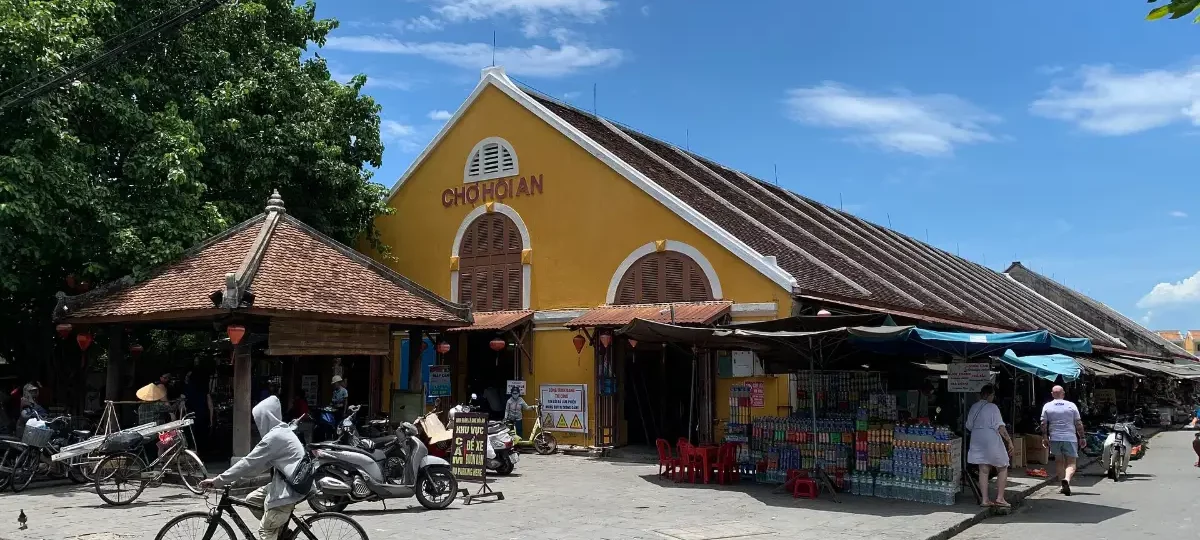
Hoi An Market (Chợ Hội An), also called Hoi An Central Market, is the town’s main produce and food market, on the Thu Bon riverside at the eastern end of the UNESCO-listed Ancient Town. Locals shop here for fish, herbs and fruit from dawn, and its food hall serves cao lau, mi Quang and banh xeo at local prices. Entry is free.
Status (checked October 2026): open daily as normal, from about 6:00 until early evening, and free to enter. October–November is Hoi An’s flood season: when the Thu Bon River rises, the riverside lanes around the market can flood for a day or two and some stalls close temporarily.
Why Hoi An Market is worth seeing:
- Real local life: the busiest place in the old town in the early morning, when traders unload fish, herbs and vegetables.
- Cheap, authentic food: the food hall serves Hoi An specialities from roughly 20,000–50,000 VND a dish.
- Centuries of trade: a market has stood near this riverbank since Hoi An was an international port in the 17th–18th centuries.
- Heritage setting: inside the Hoi An Ancient Town World Heritage Site (UNESCO, 1999), facing the Quan Cong Temple.
- Ingredients and souvenirs: spices, dried goods, coffee, conical hats and local sweets to take home.
Hoi An Market at a Glance
| Vietnamese name | Chợ Hội An |
|---|---|
| Location | Corner of Tran Phu and Bach Dang streets on the Thu Bon riverside, Hoi An Ward (formerly Minh An Ward), Da Nang city |
| Distance | About 600 m east of the Japanese Covered Bridge, along Tran Phu Street; about 30 km south of central Da Nang |
| Known for | Morning produce and seafood market, food hall, spices and souvenirs |
| Recognition | Within Hoi An Ancient Town, UNESCO World Heritage Site (1999) |
| Opening hours | About 6:00 until early evening daily; busiest 6:00–9:00 |
| Entrance fee | Free |
| Time needed | 45 minutes to 1.5 hours (longer with a meal) |
| Best time | Early morning for the market; late morning or lunch for the food hall |
| Nearby | Quan Cong Temple, Japanese Covered Bridge, Tan Ky Old House |
| Find it | Google Maps · Tripadvisor · UNESCO · Wikipedia |
Is Hoi An Market Worth Visiting?
Yes, especially early in the morning and for an inexpensive lunch. It is a working local market rather than a polished attraction: wet floors, strong smells and lots of motorbikes. That is exactly what makes it the most authentic slice of daily life in the old town.
- Best for: food lovers, photographers, cooking-class guests and travellers curious about local life.
- Skip if: you dislike crowds, fish smells or bargaining.
- Short on time: walk through between 6:30 and 8:00, then have breakfast in the food hall.
History of Hoi An Market
From the late 16th century Hoi An was one of Southeast Asia’s busiest ports, where Japanese, Chinese, Portuguese and Dutch merchants traded silk, porcelain, sugar and spices. Western travellers in the 17th and 18th centuries described a lively market and seasonal trade fairs lasting several months, when ships arrived on the monsoon winds.
In the 19th century, under the Nguyen dynasty, the market area remained a major trading hub where Chinese communities from Guangdong, Fujian, Chaozhou and Hainan did business, bringing goods down from upland markets and shipping them through the Cua Dai estuary. UNESCO describes the World Heritage town as including “an open market and a ferry quay” beside the Thu Bon River.
Today’s market occupies the same riverside quarter, with a covered main hall, a food court and open-air stalls spilling towards the river. Since 1 July 2025 the area has been part of Hoi An Ward, Da Nang city.
What to See at Hoi An Market
1. The morning produce stalls
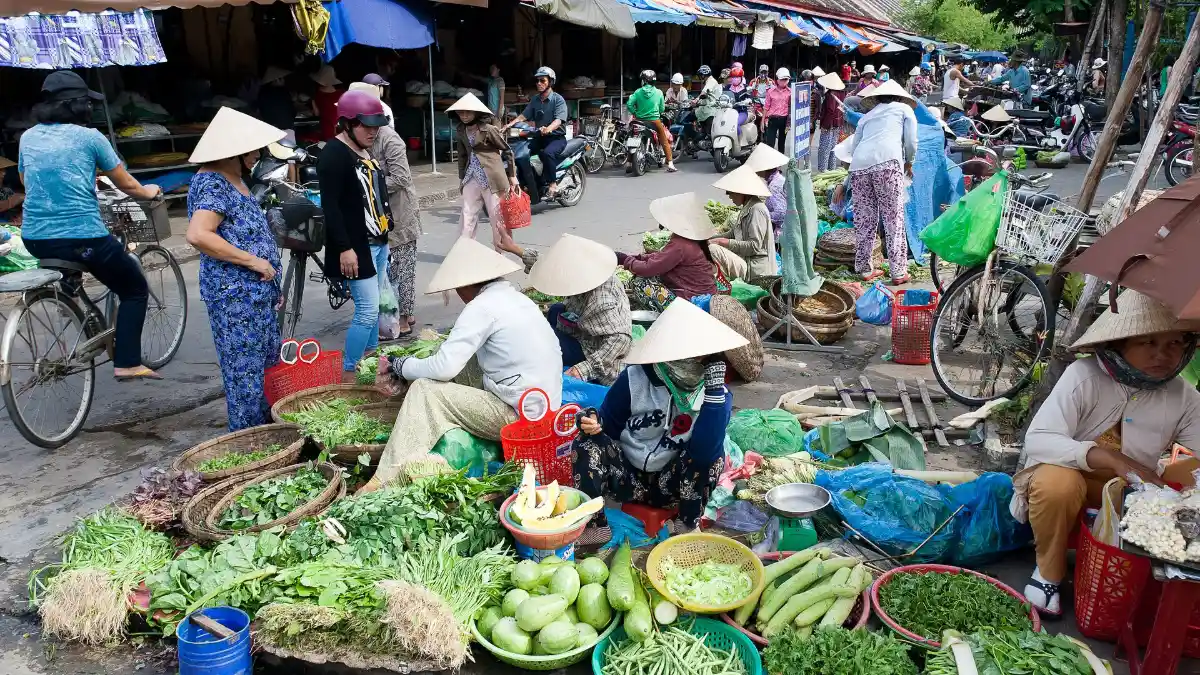
From dawn, traders lay out piles of herbs from Tra Que Village, vegetables, tropical fruit and flowers. Watch locals choose and bargain, and try seasonal fruit such as mangosteen, rambutan or dragon fruit.
2. The seafood section
Towards the river, women in conical hats sell fish, squid, crab and shellfish landed in the early morning. It is the most atmospheric part of the market but also the wettest; wear closed shoes.
3. The food hall
Rows of family stalls inside the covered hall cook Hoi An’s signature dishes: cao lau noodles, mi Quang, banh xeo pancakes, com ga (chicken rice), banh beo and sweet che. Point at what others are eating, sit on a stool and pay at the stall.
4. Spices, dried goods and souvenirs
Stalls sell star anise, pepper, chilli, coffee, dried squid, local sweets such as banh in and green-bean cakes, plus conical hats and woven baskets.
5. Quan Cong Temple opposite
Across Tran Phu Street, the Quan Cong Temple honours the Chinese general Guan Yu and is one of the old-town monuments on the heritage ticket. Pair it with a market visit.
6. The riverside
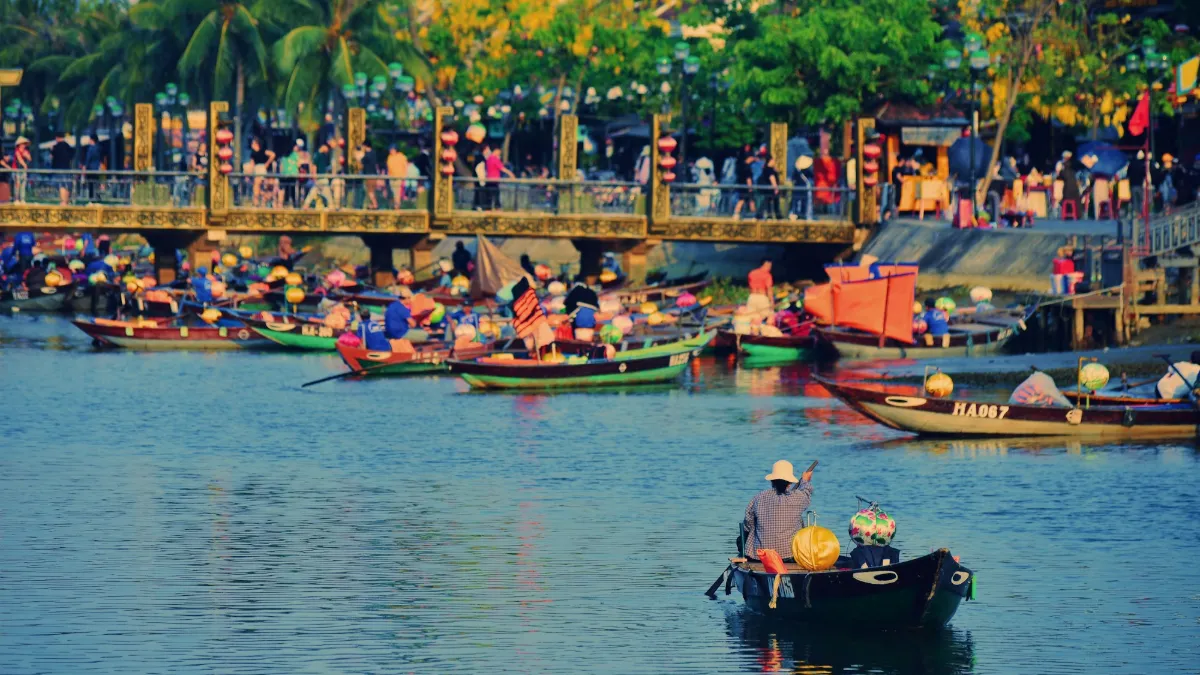
Behind the market, Bach Dang Street runs along the Thu Bon River, where boats wait to take visitors downstream and lantern sellers set up in the evening.
Hoi An Market Prices and Opening Hours
| Item | Details |
|---|---|
| Entrance | Free |
| Market hours | About 6:00 until early evening daily |
| Food hall | Breakfast to early evening; dishes roughly 20,000–50,000 VND |
| Fresh fruit | Sold by the kilogram; ask the price first |
| Souvenirs | Bargaining expected at non-food stalls |
There is no ticket office or official website for the market; prices are set by individual stalls. For the Old Town heritage ticket and monuments, see our Hoi An Ancient Town guide.
Market Etiquette and Tips for Shopping
- Ask before photographing traders up close, and buy something if you take many pictures.
- Food prices are usually fixed and low; bargain politely only for souvenirs and fabric.
- Carry small notes; most stalls do not take cards.
- Watch for motorbikes in the narrow lanes and keep bags in front of you.
- Agree the price before ordering if no menu is shown.
How to Get to Hoi An Market
| From | How | Time |
|---|---|---|
| Japanese Covered Bridge | Walk east along Tran Phu Street | About 8–10 minutes |
| Old-town hotels | Walk or bicycle | 5–15 minutes |
| An Bang Beach | Grab, taxi or bicycle | 10–20 minutes |
| Da Nang | Car, taxi or bus to Hoi An, then walk | About 45–60 minutes |
The old-town core is closed to cars and, at set times, to motorbikes, so plan to walk the last stretch. Our Hoi An transport guide has the details.
Best Time to Visit Hoi An Market
| When | What to expect |
|---|---|
| 6:00 – 8:00 | Busiest and most photogenic: fish landed, herbs and vegetables arriving |
| 8:00 – 11:00 | Food hall serving breakfast; easier to walk around |
| 11:00 – 14:00 | Lunch at the food hall; quieter produce stalls |
| February – August | Dry season, easiest walking |
| October – November | Flood season; riverside lanes can flood briefly |
Local Expert Tips for Hoi An Market
These tips come from years of arranging Hoi An tours for international travellers.
- Join a cooking class that starts with a guided market tour; the guide explains ingredients and helps you taste.
- For breakfast, order cao lau or mi Quang in the food hall and watch it being made.
- Wear closed shoes; floors in the seafood area are wet.
- Combine the market with the Japanese Covered Bridge and old houses before the tour groups arrive.
- Read our Hoi An food guide first so you know which dishes to look for.
Hoi An Market vs Hoi An Night Market
| Feature | Hoi An Market | Hoi An Night Market (Nguyen Hoang Street) |
|---|---|---|
| Hours | Early morning to early evening | Evening, roughly 17:00–23:00 |
| Focus | Fresh produce, seafood, food hall | Lanterns, souvenirs, street snacks |
| Atmosphere | Local and working | Touristy and festive |
| Location | Old Town riverside (Tran Phu–Bach Dang) | An Hoi islet, across the river |
Our view: visit the central market in the morning for local life and food, and save the night market for lantern photos and souvenirs after dinner.
Nearby Attractions
- Hoi An Ancient Town: the UNESCO-listed heritage quarter.
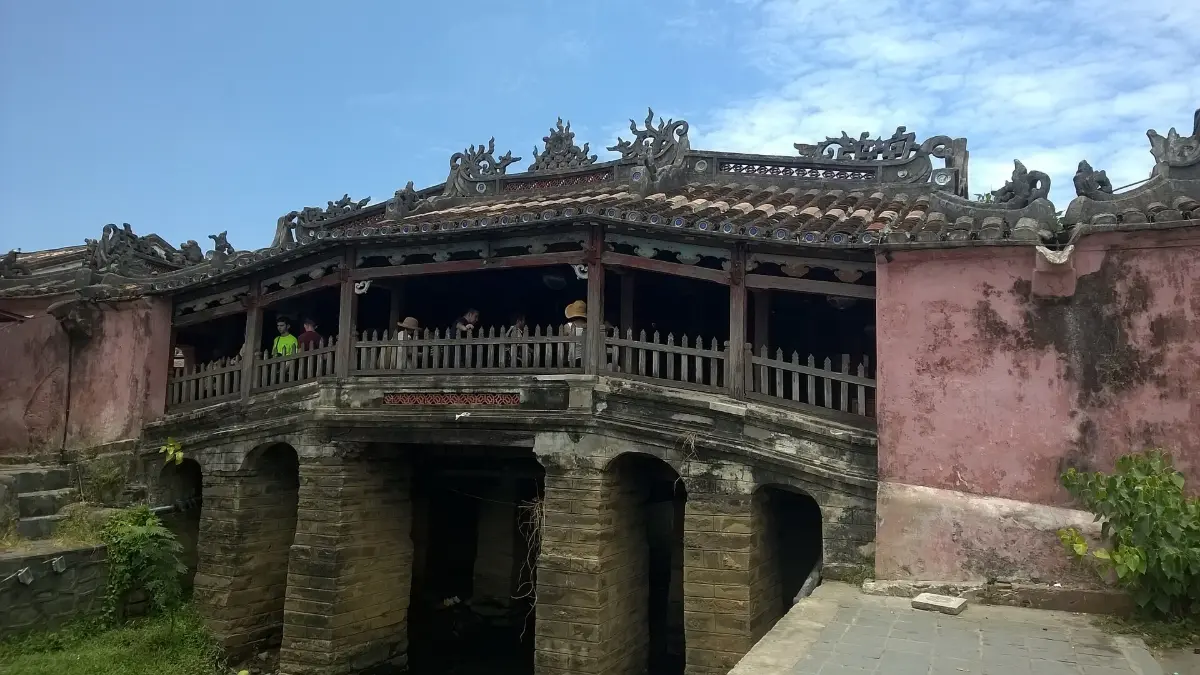
- Japanese Covered Bridge: Hoi An’s symbol, at the western end of Tran Phu.
- Tan Ky Old House: a merchant house on Nguyen Thai Hoc Street.
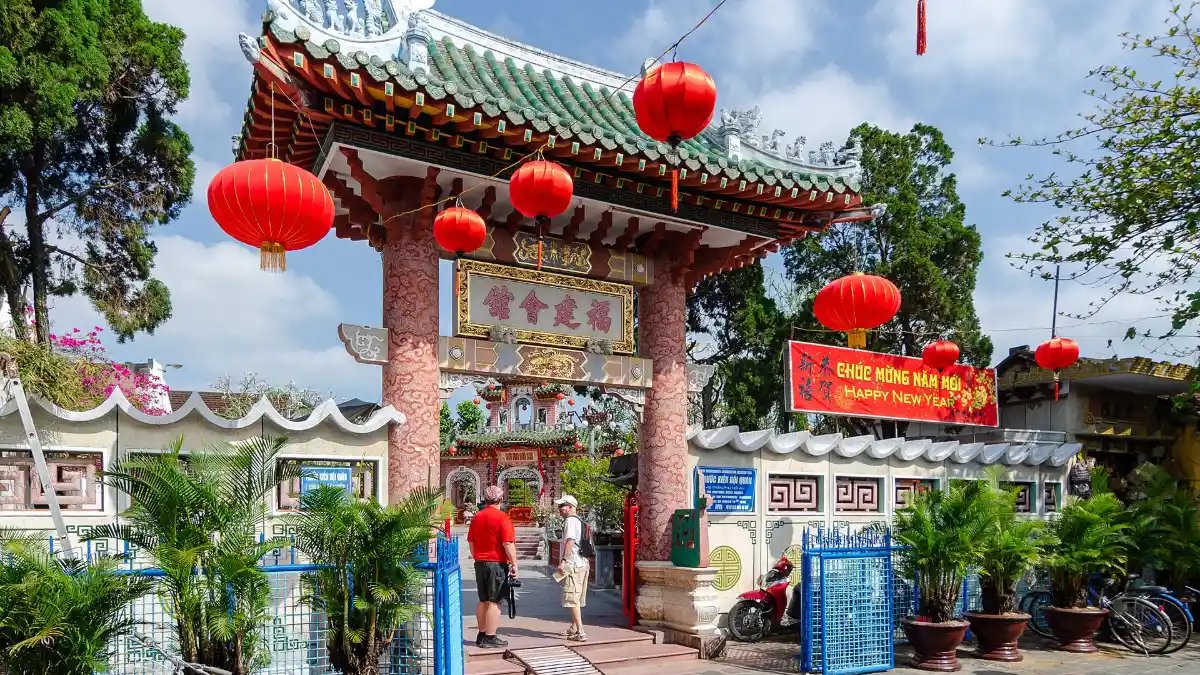
- Fujian Assembly Hall: the grandest Chinese assembly hall in town.
- Cantonese Assembly Hall: near the Covered Bridge.
- Thanh Ha Pottery Village: 3 km west by bike or boat.
Sightseeing in Hoi An for First-Time Visitors: Where Hoi An Market Fits
One day in Hoi An? Start at the market at 6:30 with breakfast in the food hall, then walk Tran Phu Street past the assembly halls to the Covered Bridge before the crowds. After lunch rest or take a cooking class, and return at dusk for lanterns on the river. With an extra day, add My Son Sanctuary or the Cham Islands, and choose a central hotel from where to stay in Hoi An. Coming from Da Nang? See our Da Nang travel guide.
Plan your trip with our Hoi An travel guide and Hoi An tours. Contact Vietnam Tour Expert Team for a free custom itinerary.
Frequently Asked Questions about Hoi An Market
1. Where is Hoi An Market?
Hoi An Market is at the corner of Tran Phu and Bach Dang streets on the Thu Bon riverside, at the eastern end of Hoi An Ancient Town in Hoi An Ward, Da Nang city.
2. What are Hoi An Market opening hours?
Hoi An Market opens daily from about 6:00 until early evening; it is busiest between 6:00 and 9:00.
3. Is there an entrance fee for Hoi An Market?
No, Hoi An Market is free to enter; you only pay for what you buy or eat.
4. What is the best time to visit Hoi An Market?
The best time to visit Hoi An Market is 6:00–8:00 for fresh produce and seafood, or late morning for the food hall.
5. What food can I eat at Hoi An Market?
The Hoi An Market food hall serves cao lau, mi Quang, banh xeo, com ga, banh beo and che, usually for about 20,000–50,000 VND per dish.
6. Is Hoi An Market the same as Hoi An Central Market?
Yes, Hoi An Market (Cho Hoi An) is often called Hoi An Central Market and is different from the evening night market on Nguyen Hoang Street.
7. Is Hoi An Market expensive?
No, food at Hoi An Market is inexpensive and usually fixed-price; bargain politely only for souvenirs.
8. Can I bargain at Hoi An Market?
Bargaining at Hoi An Market is normal for souvenirs and non-food goods, but cooked food and most produce have set prices.
9. How long should I spend at Hoi An Market?
Allow 45 minutes to 1.5 hours at Hoi An Market, longer if you have breakfast or lunch in the food hall.
10. Is Hoi An Market part of the UNESCO site?
Yes, Hoi An Market lies within Hoi An Ancient Town, inscribed as a UNESCO World Heritage Site in 1999.
11. How far is Hoi An Market from the Japanese Covered Bridge?
Hoi An Market is about 600 m east of the Japanese Covered Bridge, an 8–10-minute walk along Tran Phu Street.
12. Is Hoi An Market good for a cooking class tour?
Yes, many Hoi An cooking classes begin with a guided tour of Hoi An Market to buy herbs and seafood.
13. What can I buy at Hoi An Market as souvenirs?
At Hoi An Market you can buy spices, coffee, dried squid, local sweets like banh in, conical hats and baskets.
14. Does Hoi An Market flood?
The riverside lanes around Hoi An Market can flood briefly during high water in October–November, when some stalls close temporarily.
15. Is Hoi An Market safe?
Hoi An Market is generally safe; watch for motorbikes in narrow lanes and keep bags in front of you in crowds.
16. What is near Hoi An Market?
The Quan Cong Temple is directly opposite Hoi An Market, and the Fujian Assembly Hall is a short walk west.
Related Posts
Hoi An Travel Tips 2026: Best Time, Lantern Nights & Tickets

Where to Stay in Hoi An: Best Areas & Hotels by Budget
Hoi An Transportation: Da Nang Airport, Hue & Getting Around
Hoi An Food Guide: Cao Lau, Banh Mi & Where to Eat

Thanh Ha Pottery Village Hoi An: 500-Year Craft & Tickets