Hoi An Ancient Town 2026: Tickets, Lantern Nights & Guide
Hoi An Ancient Town (Phố cổ Hội An) is a 15th–19th-century trading port on the Thu Bon River, about 30 km south of central Da Nang, and a UNESCO World Heritage Site since 1999. It is famous for the Japanese Covered Bridge, Chinese assembly halls, merchant houses and lantern-lit nights. Foreign visitors pay 120,000 VND for a ticket covering five heritage sites.
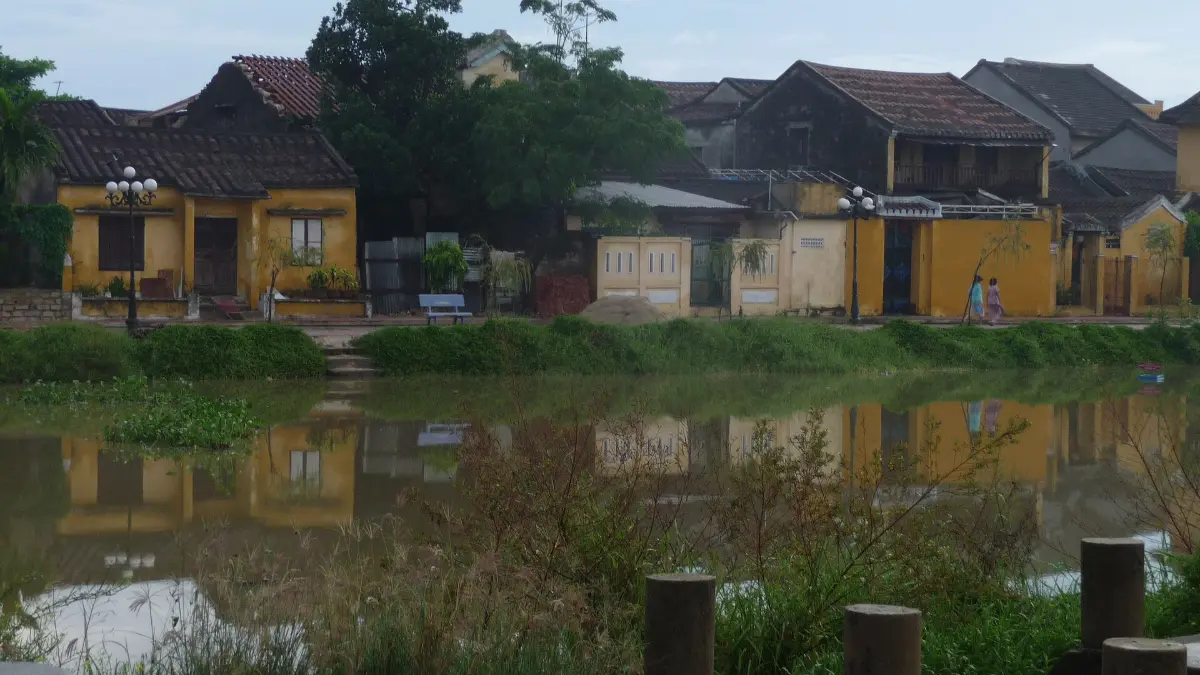
Status (checked October 2026): open daily as normal. Since 1 July 2025 the old town lies in Hoi An Ward of Da Nang city (the former Quang Nam province merged into Da Nang). The restored Japanese Covered Bridge reopened in August 2024, and October–November is flood season, when low-lying riverside streets can go under water for a day or two.
Why Hoi An Ancient Town is worth seeing:
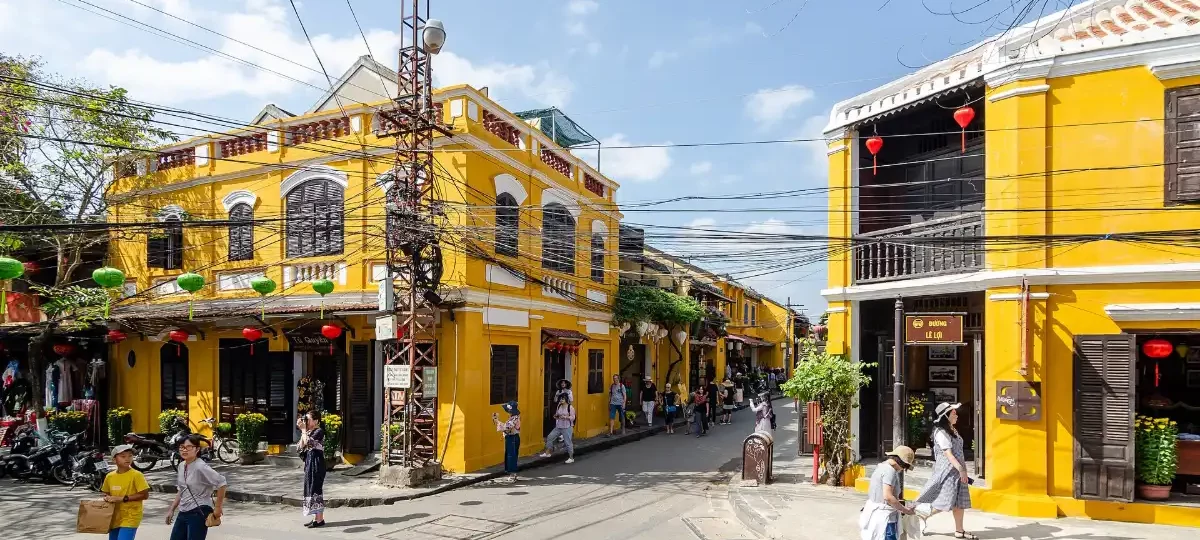
- UNESCO World Heritage Site: an exceptionally well-preserved Southeast Asian trading port, inscribed in 1999 for its blend of local, Chinese, Japanese and later European influences.
- Over 1,000 timber-frame buildings: shophouses, family chapels, pagodas and assembly halls still lined up on the original 17th–18th-century street plan.
- The Japanese Covered Bridge: the town’s 400-year-old emblem, printed on the 20,000 VND banknote.
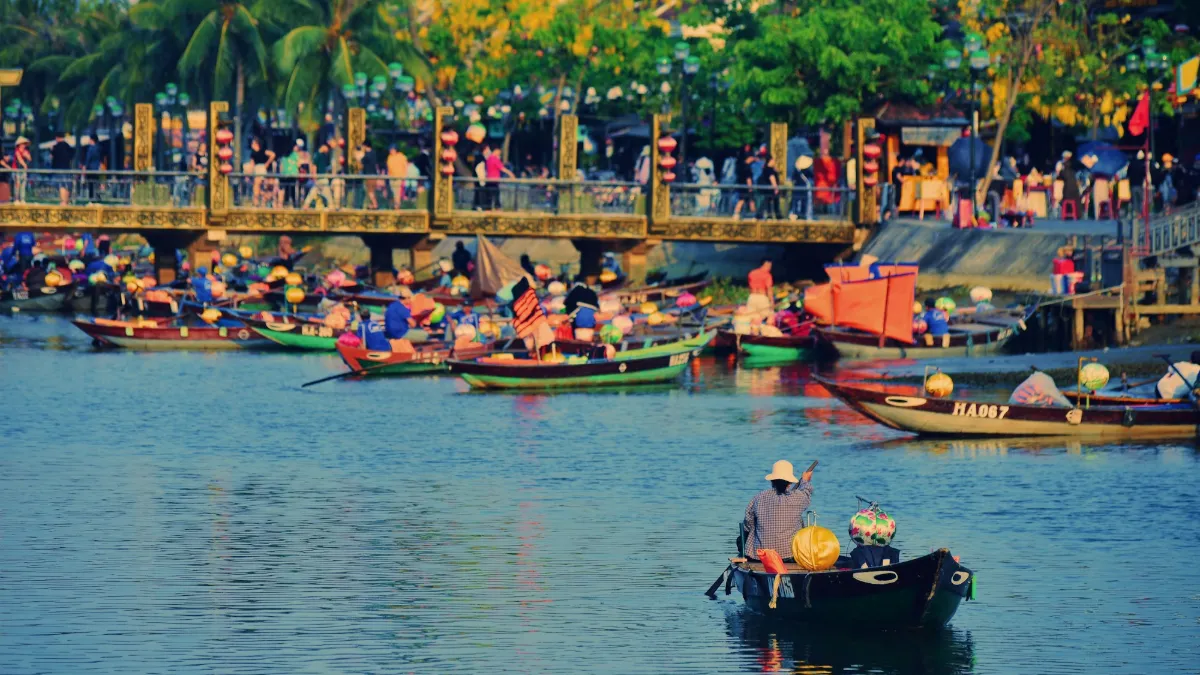
- Lantern nights on the Hoai River: silk lanterns, wooden sampans and floating paper candles every evening.
- A walkable, car-free core: the heart of the town is closed to motor vehicles for most of the day.
- A food town: cao lau noodles, banh mi, white rose dumplings and some of Vietnam’s best street food.
Hoi An Ancient Town at a Glance
| Vietnamese name | Phố cổ Hội An (Đô thị cổ Hội An) |
|---|---|
| Location | Hoi An Ward, Da Nang city (formerly Hoi An city, Quang Nam province), on the north bank of the Thu Bon River |
| Distance | About 30 km south of central Da Nang and Da Nang International Airport (40–50 minutes by car); about 45 km from My Son Sanctuary |
| Known for | Japanese Covered Bridge, Chinese assembly halls, merchant houses, lanterns, tailors, cao lau noodles |
| Recognition | UNESCO World Heritage Site (1999, ref. 948); Special National Heritage Site of Vietnam (2009) |
| Size | Core heritage area about 30 ha, buffer zone about 280 ha |
| Opening hours | Streets open 24 hours; car-free hours 9:00–21:30 (summer) and 9:00–21:00 (winter); most ticketed houses and halls open from about 8:00 until late afternoon or evening |
| Entrance fee | 120,000 VND (foreign visitors, 5 heritage sites); 80,000 VND (Vietnamese citizens) |
| Time needed | Half a day for the main sights; 2–3 days to enjoy the town, beaches and villages |
| Best time | February–April; early morning (6:00–8:00) and after 17:30 for lanterns |
| Nearby | An Bang Beach, Tra Que Village, Thanh Ha Pottery Village, Cham Islands, My Son Sanctuary |
| Find it | Google Maps · Tripadvisor · Official ticket information · UNESCO |
Is Hoi An Ancient Town Worth Visiting?
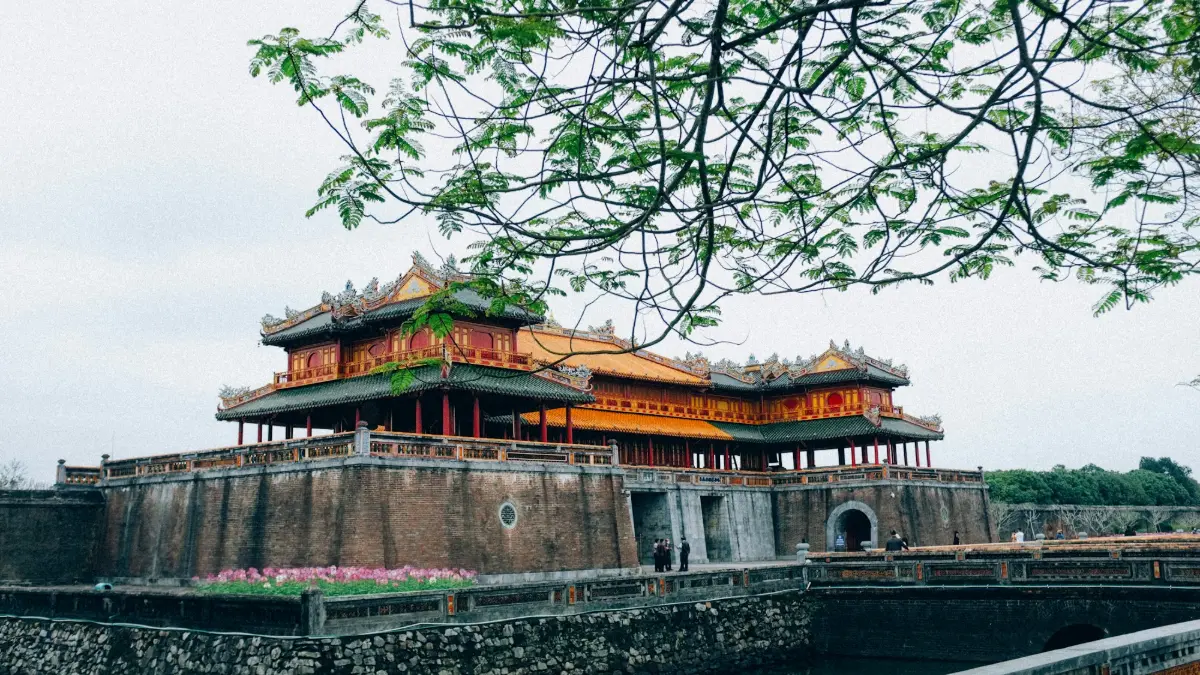
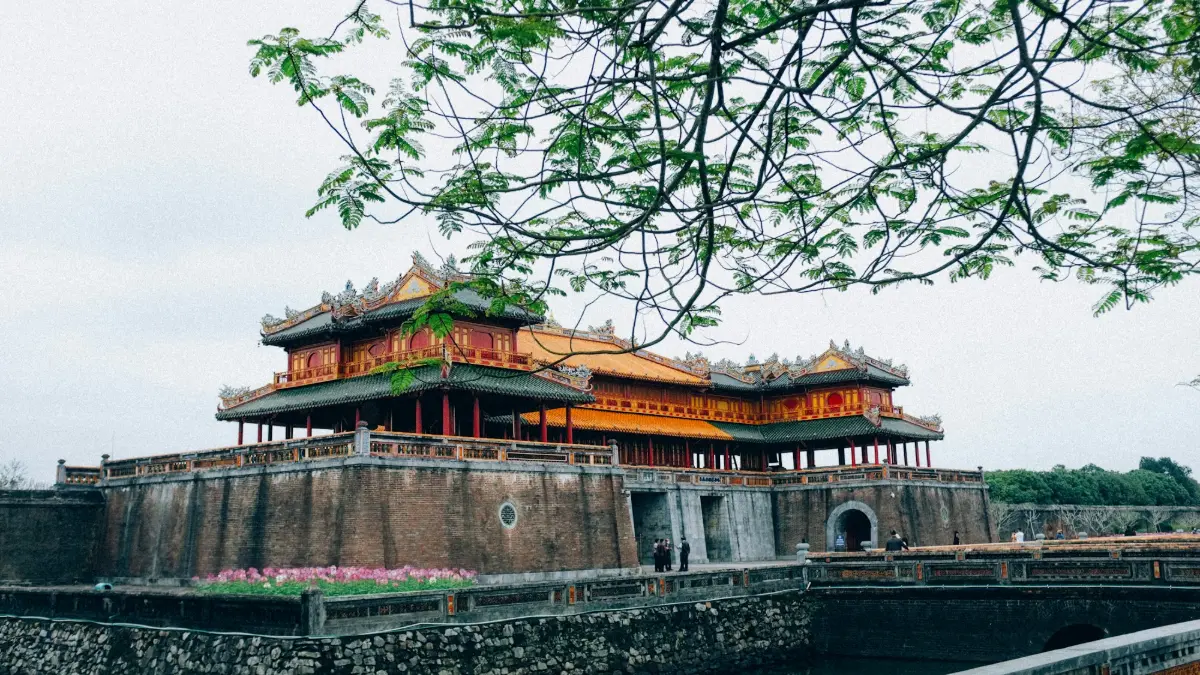
Yes, it is one of the few places in Vietnam that almost every first-time visitor should see. No other Vietnamese town keeps such a complete historic street scene, and it is compact enough to explore on foot in a morning. The trade-off is crowds: from late afternoon the lanes around the bridge and the river fill with visitors, so plan your time well. Hoi An pairs naturally with Da Nang and the Hue Imperial City on any Central Vietnam trip.
- Best for: history and architecture lovers, photographers, food travellers, couples and families who enjoy walking.
- Skip if: you dislike busy tourist towns and can only come in the evening peak, or you want nightlife rather than heritage.
- Short on time: come at 7:00, see the Japanese Covered Bridge, one merchant house and one assembly hall, then return at dusk for the lanterns.
History of Hoi An Ancient Town
From Champa port to Faifo
The mouth of the Thu Bon River was a trading place long before the Vietnamese arrived. The area belonged to the Sa Huynh culture and later to the Champa kingdom, whose holy valley at My Son lies upstream. From the late 15th century Vietnamese settlers moved in, and under the Nguyen lords the port, known to Western sailors as Faifo, became the busiest harbour of Dang Trong (southern Vietnam).
Japanese and Chinese merchants
From the late 16th and early 17th centuries, Japanese and Chinese traders came on the monsoon winds and stayed for months, waiting for the wind to turn. Each community built its own quarter. The Japanese left the Japanese Covered Bridge; when Japan closed its ports in the 1630s, their quarter faded and the Chinese community grew. Chinese families from Fujian, Guangdong, Chaozhou and Hainan built five assembly halls, including the Fujian Assembly Hall and the Cantonese Assembly Hall, which still serve their descendants today.
Decline and preservation
In the 19th century the Thu Bon estuary silted up and Da Nang became the region’s main port under the French. Hoi An slowly fell asleep, and because nobody had money to rebuild, its old timber houses survived. Vietnam listed the town as a national heritage site in 1985 (see the Wikipedia overview of Hoi An Old Town), UNESCO inscribed it in 1999, and it became a Special National Heritage Site in 2009. In 2025 Hoi An city was dissolved and its old quarter became Hoi An Ward of Da Nang city.
What to See in Hoi An Ancient Town
1. The Japanese Covered Bridge (Chua Cau)
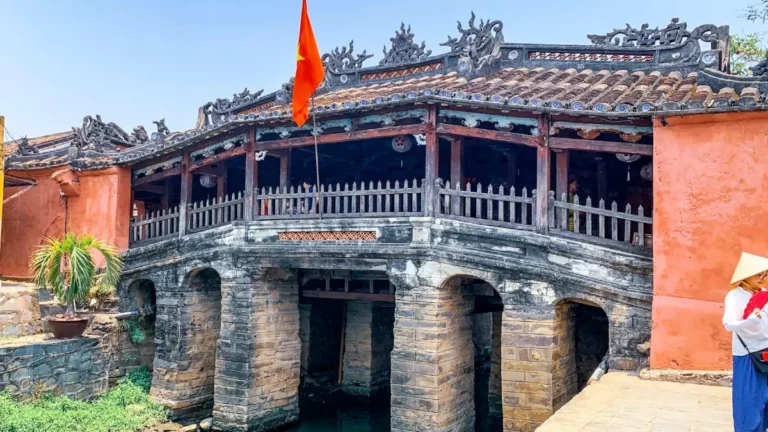
Built by Japanese merchants in the 1590s and named Lai Vien Kieu (“bridge for friends from afar”) by Lord Nguyen Phuc Chu in 1719, the bridge has a tiny temple on its north side. A monkey statue guards one end and a dog the other. After a 20-billion-VND restoration it reopened in August 2024. Read our full guide to the Chua Cau bridge.
2. Tan Ky Old House
At 101 Nguyen Thai Hoc Street, this merchant house is more than 200 years old and still lived in by the same family. It runs from the street to the riverbank, with carved beams, mother-of-pearl inlay and marks showing past flood levels. See Tan Ky Old House.
3. Phung Hung Old House
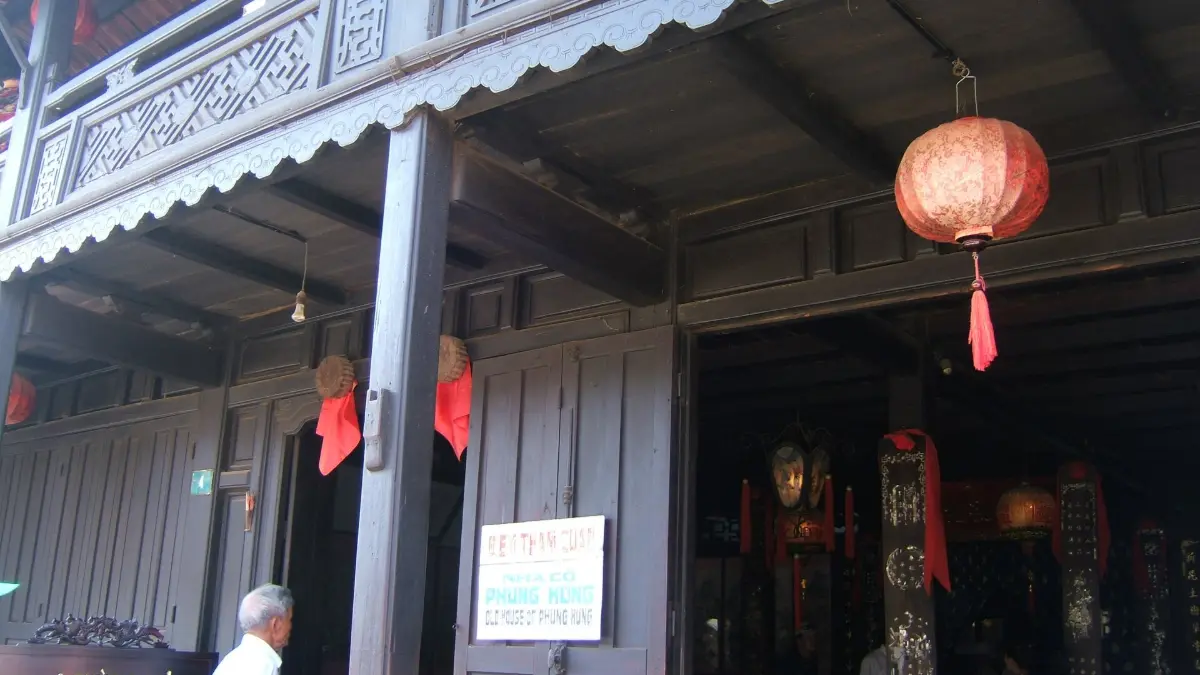
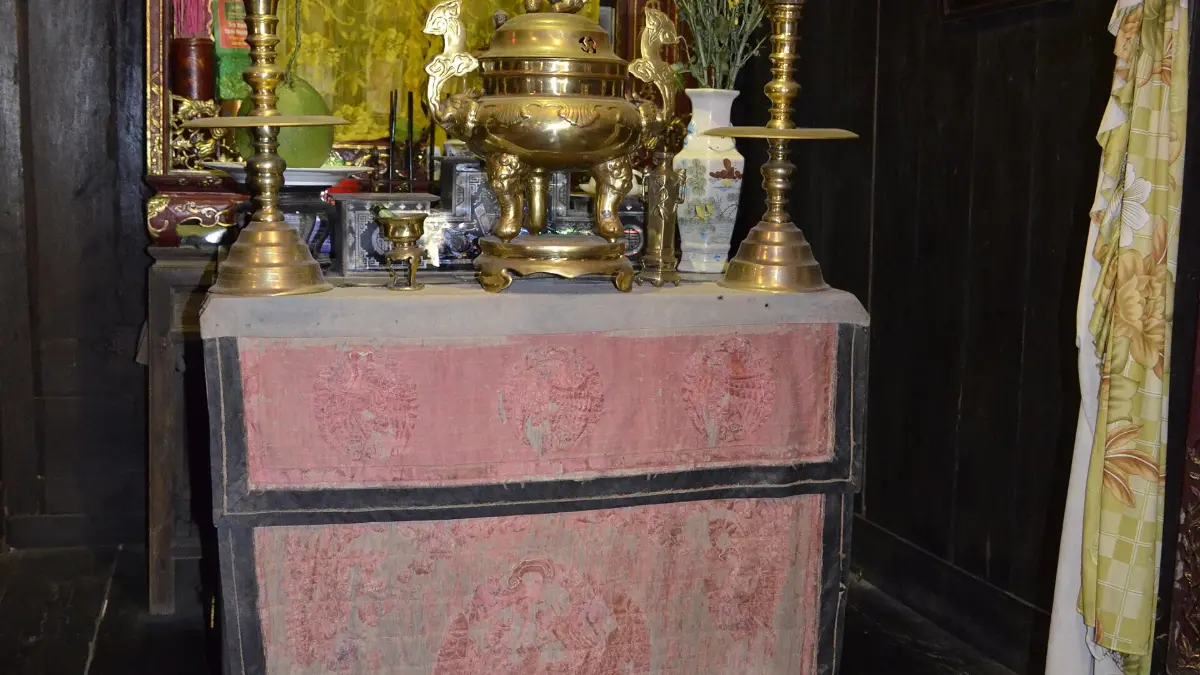
A few steps beyond the bridge at 4 Nguyen Thi Minh Khai Street, this large two-storey house dates from the late 18th century and is held up by around 80 ironwood columns. An upper-floor hatch was used to lift goods away from floods. More in our Phung Hung house guide.
4. Fujian Assembly Hall (Phuc Kien)
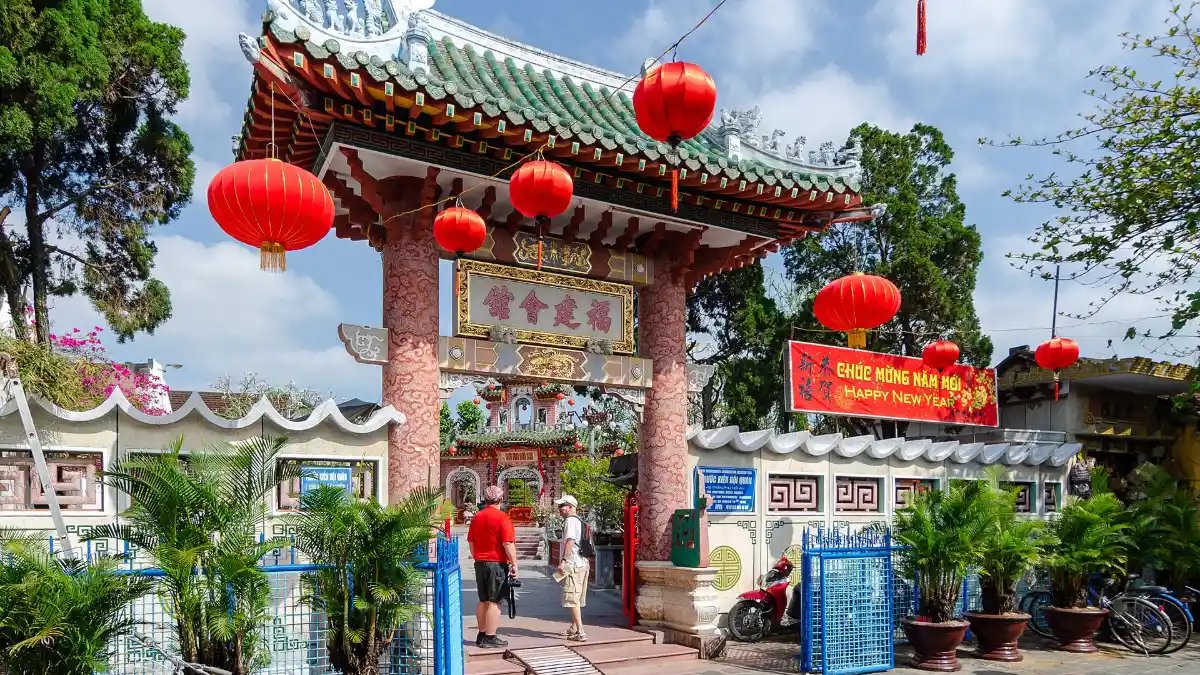
The largest and most colourful of Hoi An’s Chinese halls, at 46 Tran Phu Street, is dedicated to Thien Hau, goddess of the sea. Look for the triple gate, the dragon fountain and the giant incense coils hanging from the roof.
5. Cantonese Assembly Hall (Quang Trieu)
At 176 Tran Phu Street, close to the bridge, this hall was built by Cantonese merchants in the 1880s and honours Quan Cong (Guan Yu). Its courtyard dragon fountain decorated with ceramic shards is one of the most photographed spots in town.
6. Quan Cong Temple and the museums
The Quan Cong Temple on Tran Phu Street is one of the two “historical sites” on the ticket (the other is the bridge). The ticket also includes one museum: the Museum of Trade Ceramics, the Museum of Folk Culture, the Sa Huynh Culture Museum or the Hoi An Museum of History and Culture.
7. The riverside and the Hoai River at night
Bach Dang Street and An Hoi islet across the An Hoi Bridge are the places for sunset. From dusk, small wooden boats take visitors along the Hoai River, and vendors sell paper lanterns to float on the water.
8. Hoi An Market
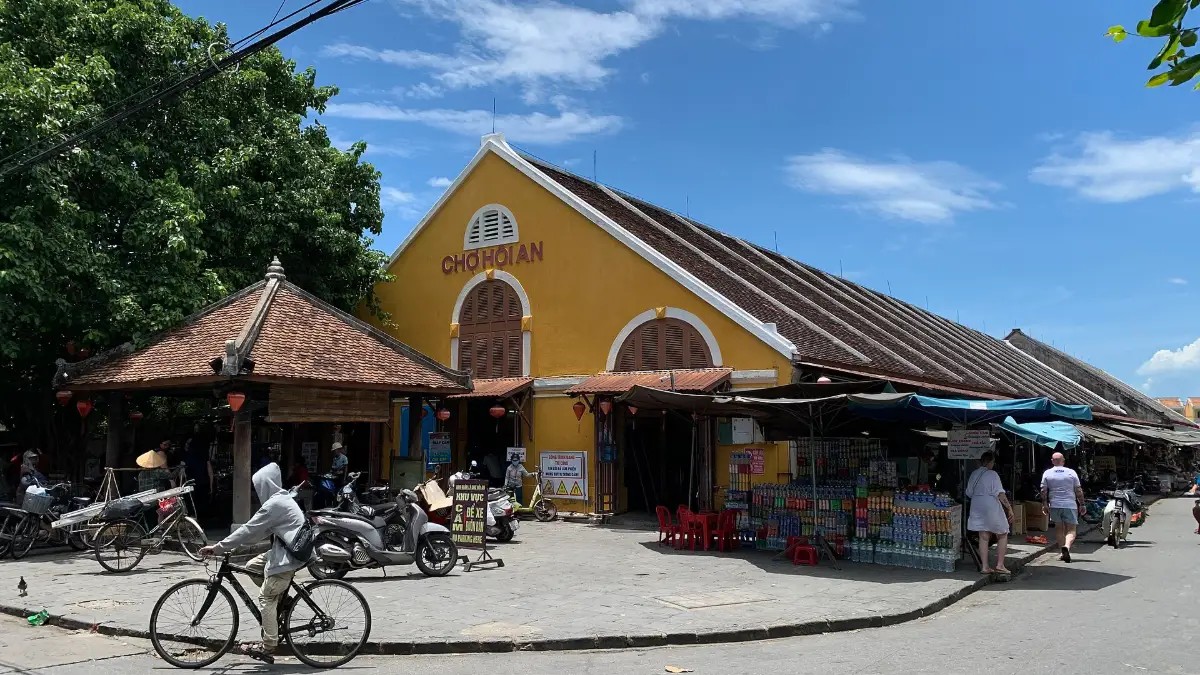
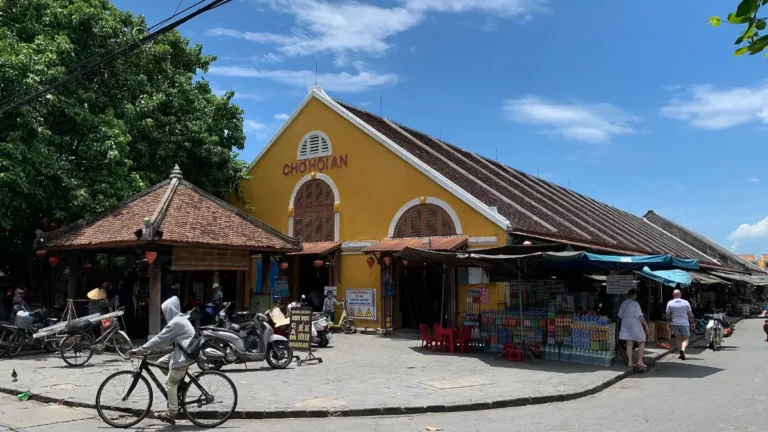
At the east end of Tran Phu Street, the central market is busiest in the morning, with a fish market on the riverbank and a food hall serving cao lau and mi Quang. See our Hoi An Market guide and what to eat in Hoi An.
9. The lantern night on the 14th lunar day
On the 14th day of every lunar month (the night before the full moon) shops in the core are encouraged to switch off electric lights, and the town glows with lanterns, folk games and traditional music. It is the busiest evening of the month.
10. Tailors, lantern makers and night market
Hoi An is famous for made-to-measure clothes, often ready in 24–48 hours, and for silk lanterns. The Nguyen Hoang night market on An Hoi islet opens every evening.
Hoi An Ancient Town Tickets and Opening Hours (2026)
| Item | Price / hours | Notes |
|---|---|---|
| Ticket for foreign visitors | 120,000 VND (about US$4.50–5) | Old-town access plus 5 sites: the Japanese Covered Bridge or Quan Cong Temple, 1 museum and 3 other heritage sites of your choice |
| Ticket for Vietnamese citizens | 80,000 VND | Old-town access plus a smaller choice of sites |
| Car-free hours (summer) | 9:00–21:30 | Phan Chau Trinh Street car-free from 17:30–21:30 |
| Car-free hours (winter) | 9:00–21:00 | Phan Chau Trinh Street car-free from 17:30–21:00 |
| Heritage houses, halls, museums | About 8:00 to late afternoon/evening | Family-run houses may close earlier or for private events |
| Japanese tea ceremony | 9:30 and 16:30 daily | Japanese Culture House, 6 Nguyen Thi Minh Khai (not included in the ticket) |
| Boat on the Hoai River | From about 150,000–200,000 VND per boat | Agree the price and duration before boarding |
Ticket prices and rules are set by the Hoi An heritage authorities of Da Nang city; check the official Hoi An heritage tourism information before you go. Buy tickets at the booths on the edge of the old town and keep the ticket with you, as each site tears off a coupon and staff may ask to see it when you re-enter.
How to Explore Hoi An Ancient Town, Step by Step
- Arrive early (6:30–7:30) when the lanes are quiet and the light is soft.
- Buy your ticket at a booth on the edge of the old town.
- Start at the Japanese Covered Bridge, then visit Phung Hung Old House next door.
- Walk east along Tran Phu Street to the Cantonese Assembly Hall, the Quan Cong Temple and the Fujian Assembly Hall.
- Turn to the river on Nguyen Thai Hoc Street for Tan Ky Old House and the Museum of Trade Ceramics.
- Finish at Hoi An Market for a late breakfast or early lunch.
- Rest in the heat of the day, then return after 17:30 for lanterns, the river and the night market.
Rules and Etiquette in Hoi An Ancient Town
- Cover shoulders and knees inside temples, assembly halls and family chapels.
- Many old houses are private homes: speak quietly and ask before photographing people.
- Do not ride motorbikes or drive in the car-free zone during its hours; bicycles and walking are best.
- Do not sit or climb on altars, furniture or the bridge railings.
- Agree prices before boat rides, cyclos and tailoring.
How to Get to Hoi An Ancient Town
| From | How | Time |
|---|---|---|
| Da Nang International Airport | Private car, taxi or ride-hailing app (Grab, Xanh SM) | About 40–50 minutes (around 30 km) |
| Central Da Nang / My Khe Beach | Car, taxi or motorbike along the coastal road | About 40–50 minutes |
| Da Nang railway station | Train to Da Nang, then car or taxi (Hoi An has no station) | About 45 minutes from the station |
| Hue | Private car or tourist bus via the Hai Van Tunnel or Hai Van Pass | About 3–4 hours |
| Hotels in Hoi An | Walk, bicycle (most hotels lend them free) or electric buggy | 5–20 minutes |
For all the options and typical prices, see our Hoi An transport guide, and for neighbourhoods read where to stay in Hoi An.
Best Time to Visit Hoi An Ancient Town
| When | What to expect |
|---|---|
| February–April | Best weather: dry, sunny and pleasantly warm; Tet (late January or February) brings decorations and big crowds |
| May–August | Hot and humid (often 35°C or more at midday); good beach weather; sightsee early and late |
| September–December | Rainy season; typhoons and floods are most likely in October and November, when riverside streets may flood |
| Early morning (6:00–8:00) | Quietest time for photos and the market |
| Evening (17:30–21:30) | Lanterns, boats and the night market, but the busiest time of day |
| 14th day of each lunar month | Lantern night: magical but very crowded |
Local Expert Tips for Hoi An Ancient Town
These tips come from years of arranging Hoi An tours for international travellers.
- Choose your five sites wisely: the bridge, Tan Ky or Phung Hung house, the Fujian and Cantonese halls and the Museum of Trade Ceramics make a balanced set.
- Sleep in or near the old town for at least one night, so you can see it at dawn and after the day-trippers leave.
- Rent a bicycle to reach Tra Que Vegetable Village and An Bang Beach in 15–20 minutes.
- Order clothes from a tailor on your first day so there is time for a second fitting.
- In flood season, check the forecast and keep your plans flexible; floods usually recede within a day or two.
- Bring small notes for lanterns, boats and snacks; card payment is common in shops but not on the street.
- Read our Hoi An travel tips for scams, money and etiquette.
Hoi An Ancient Town vs Hue Imperial City
| Feature | Hoi An Ancient Town | Hue Imperial City |
|---|---|---|
| What it is | A merchant port town of shophouses, halls and temples | The walled capital of the Nguyen dynasty (1802–1945) |
| UNESCO | 1999 (Hoi An Ancient Town) | 1993 (Complex of Hue Monuments) |
| Atmosphere | Lively, commercial, lantern-lit evenings | Grand, spacious and calmer |
| Time needed | Half a day to 3 days | Half a day for the citadel; a full day with tombs |
| Ticket | 120,000 VND for 5 sites | Separate ticket for the Imperial City |
Our view: they complement each other rather than compete. Hoi An shows how ordinary merchants lived; the Imperial Citadel in Hue shows how emperors ruled. With four or five days in Central Vietnam, see both.
Nearby Attractions
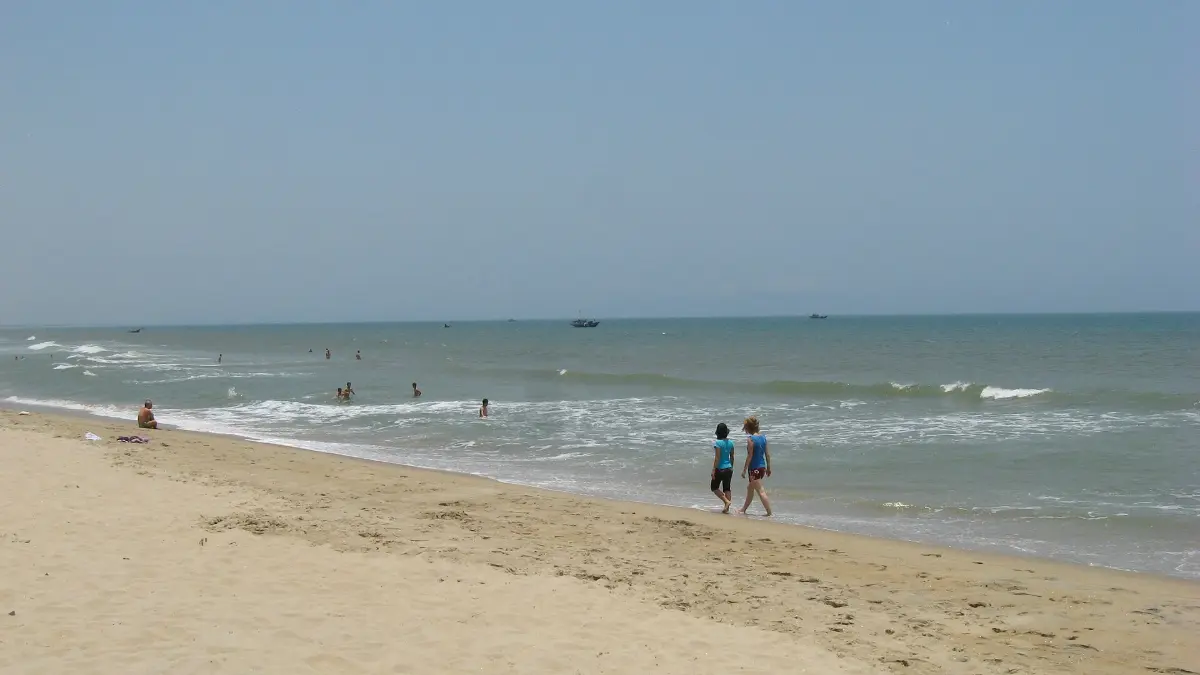
- An Bang Beach: a relaxed beach about 5 km north of the old town.
- Cua Dai Beach: the beach at the mouth of the Thu Bon, and the departure point for boats to the islands.
- Cham Islands: a UNESCO biosphere reserve for snorkelling, about 20 minutes by speedboat.
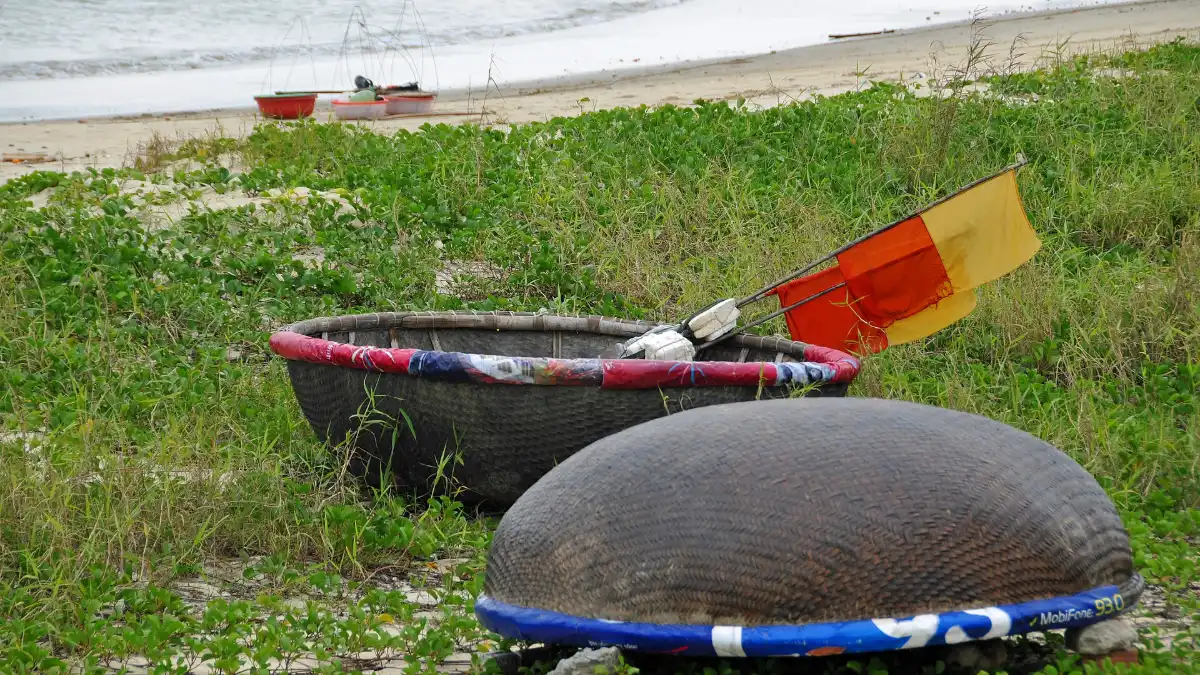
- Bay Mau Coconut Forest: basket-boat rides through water coconut palms.
- Tra Que Village: organic herb gardens and cooking classes.
- Thanh Ha Pottery Village: a 500-year-old potters’ village on the river.
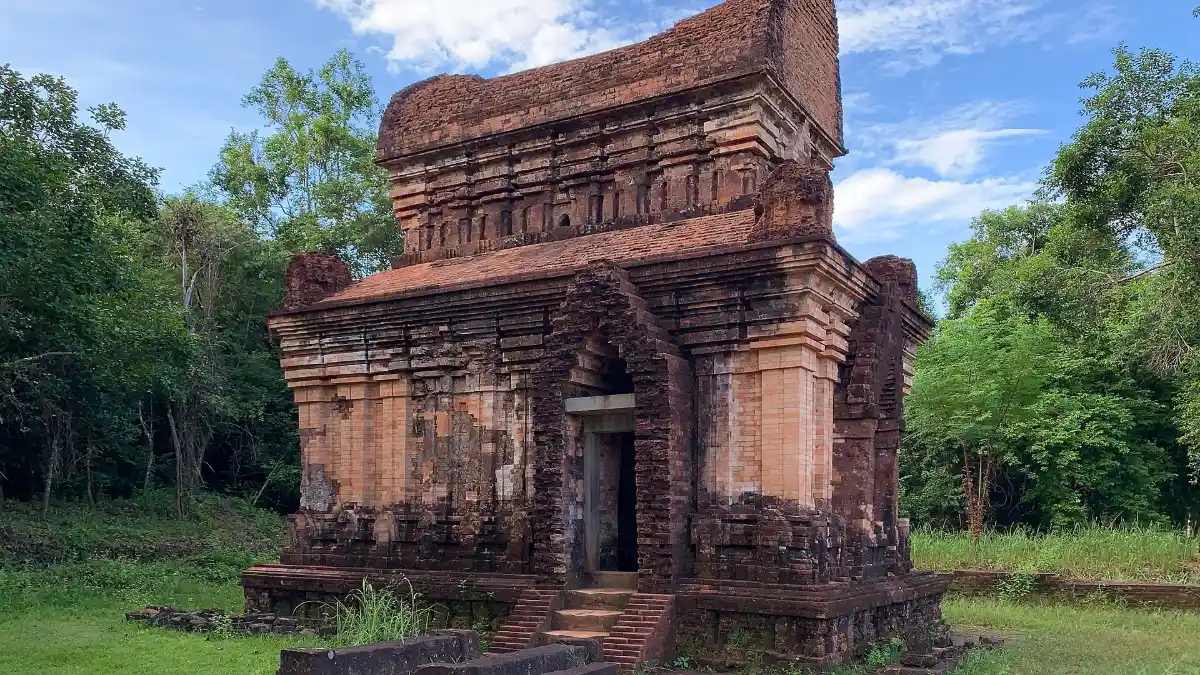
- My Son Sanctuary: Cham temple ruins and a second UNESCO site, about an hour’s drive.
- Marble Mountains: limestone hills with caves and pagodas on the way to Da Nang.
Sightseeing in Hoi An for First-Time Visitors: Where the Ancient Town Fits
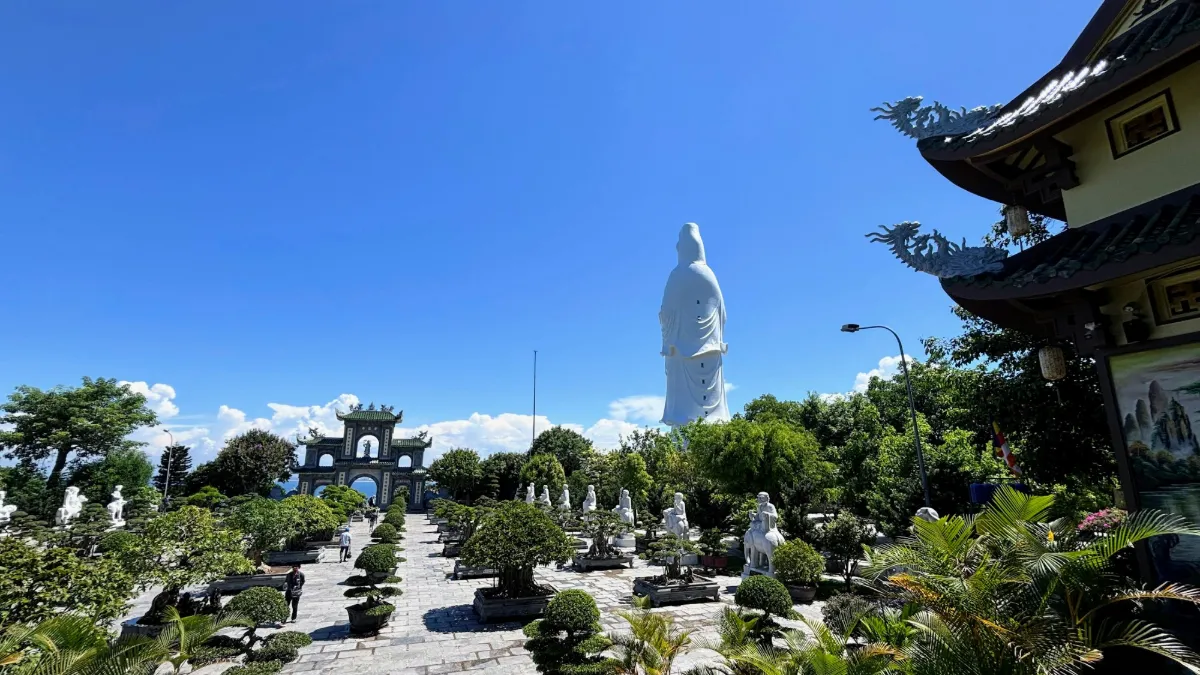
One day in Hoi An? Spend the morning in the Ancient Town, cycle to Tra Que or An Bang Beach in the afternoon, and come back for the lanterns. Two or three days? Add the My Son temples at sunrise, the coconut forest or a cooking class, and a day on the Cham Islands. Coming from Da Nang, many travellers also visit Ba Na Hills and the Dragon Bridge before driving south.
Plan your trip with our Hoi An travel guide and Hoi An tours. Contact Vietnam Tour Expert Team for a free custom itinerary.
Frequently Asked Questions about Hoi An Ancient Town
1. What is Hoi An Ancient Town famous for?
Hoi An Ancient Town is famous for its well-preserved 15th–19th-century trading port, the Japanese Covered Bridge, Chinese assembly halls, merchant houses, silk lanterns and tailors.
2. Is Hoi An Ancient Town a UNESCO World Heritage Site?
Yes. UNESCO inscribed Hoi An Ancient Town in 1999 as an exceptionally well-preserved Southeast Asian trading port.
3. How much is the Hoi An Ancient Town ticket in 2026?
The ticket costs 120,000 VND for foreign visitors and 80,000 VND for Vietnamese citizens. The foreign ticket covers five sites: the Japanese Covered Bridge or Quan Cong Temple, one museum and three other heritage sites.
4. Do I need a ticket to walk around Hoi An Ancient Town?
The ticket is the entrance fee for the old town and is checked at entry points and at every ticketed house, hall, museum and the Japanese Covered Bridge. Buy one before you go in and keep it with you.
5. What are the opening hours of Hoi An Ancient Town?
The streets of Hoi An Ancient Town are open all day; the car-free hours are 9:00–21:30 in summer and 9:00–21:00 in winter. Most heritage sites open from about 8:00 until late afternoon or evening.
6. Which province is Hoi An Ancient Town in now?
Since 1 July 2025, Hoi An Ancient Town has been part of Hoi An Ward in Da Nang city, after the former Quang Nam province was merged into Da Nang.
7. How far is Hoi An Ancient Town from Da Nang?
Hoi An Ancient Town is about 30 km from central Da Nang and Da Nang Airport, a 40–50-minute drive. See our Hoi An transport tips.
8. How much time do I need in Hoi An Ancient Town?
Allow half a day for the main sights of Hoi An Ancient Town, and stay at least one night to see it at dawn and after dark.
9. When is the lantern festival in Hoi An Ancient Town?
Hoi An Ancient Town holds a lantern night on the 14th day of every lunar month, the eve of the full moon, when electric lights are dimmed and lanterns light the streets.
10. What is the best time to visit Hoi An Ancient Town?
February to April has the best weather in Hoi An Ancient Town. Early morning is quietest and the lanterns look best from about 17:30.
11. Does Hoi An Ancient Town flood?
Yes, riverside streets of Hoi An Ancient Town can flood during the rainy season, most often in October and November. Floods usually recede within a day or two.
12. Can you ride a motorbike in Hoi An Ancient Town?
No, the core of Hoi An Ancient Town is closed to motor vehicles during the car-free hours. Walking and cycling are the best ways to explore.
13. Which sites should I choose with my Hoi An Ancient Town ticket?
A good set in Hoi An Ancient Town is the Japanese Covered Bridge, Tan Ky or Phung Hung Old House, the Fujian and Cantonese Assembly Halls and the Museum of Trade Ceramics.
14. Is Hoi An Ancient Town good for families with children?
Yes, Hoi An Ancient Town is flat, compact and car-free, and children enjoy the boats and lanterns. Bring a hat and water in the hot months.
15. What should I wear to visit Hoi An Ancient Town?
Wear light clothing that covers shoulders and knees for temples and assembly halls in Hoi An Ancient Town, plus comfortable walking shoes.
16. How much is a boat ride in Hoi An Ancient Town?
A short evening boat ride on the Hoai River in Hoi An Ancient Town usually costs from about 150,000–200,000 VND per boat; agree the price first.
17. What food should I try in Hoi An Ancient Town?
In Hoi An Ancient Town try cao lau, banh mi, white rose dumplings, com ga (chicken rice) and mi Quang. Our Hoi An food guide lists more.
18. Where should I stay near Hoi An Ancient Town?
Stay inside or within walking distance of Hoi An Ancient Town for evenings, or near An Bang Beach for a quieter stay. See our accommodation guide.
19. Is Hoi An Ancient Town worth visiting at night?
Yes, Hoi An Ancient Town is at its most atmospheric at night, with lanterns, boats and the night market, though it is also at its busiest.
20. Can I visit My Son Sanctuary from Hoi An Ancient Town?
Yes, My Son Sanctuary is about 45 km from Hoi An Ancient Town, around an hour by car, and makes an easy half-day trip.
Related Posts
Hoi An Travel Tips 2026: Best Time, Lantern Nights & Tickets

Where to Stay in Hoi An: Best Areas & Hotels by Budget
Hoi An Transportation: Da Nang Airport, Hue & Getting Around

Hoi An Food Guide: Cao Lau, Banh Mi & Where to Eat
Hoi An Market: Local Life & Street Food in the Old Town