Phung Hung Old House Hoi An: 1780 Merchant House Guide
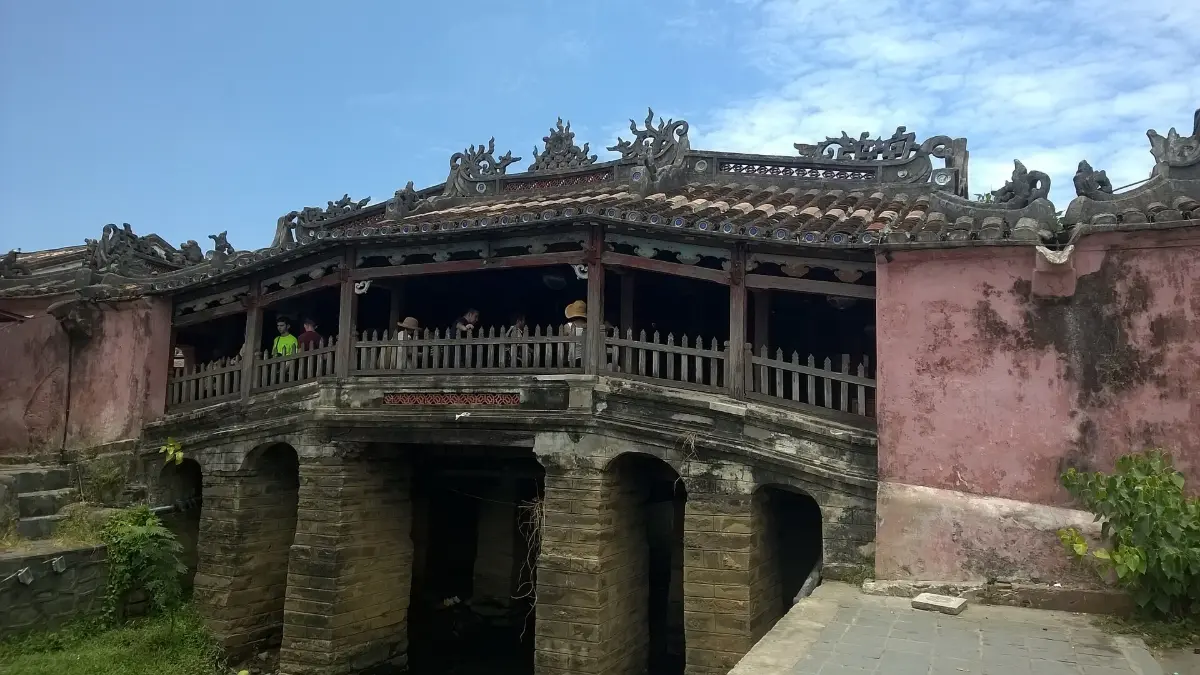
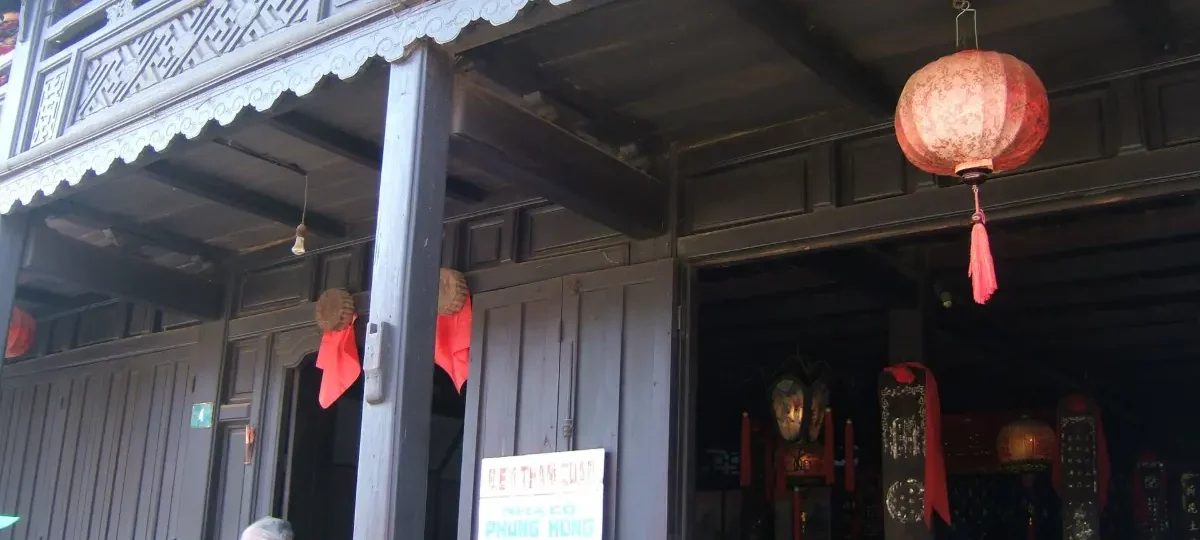
Phung Hung Old House (Nhà cổ Phùng Hưng) is a two-storey merchant house built in 1780 at 4 Nguyen Thi Minh Khai Street, a few steps from the Japanese Covered Bridge in Hoi An Ancient Town, Da Nang. Still lived in by the eighth generation of the founding family, it is famous for its forest of about 80 wooden columns and mixed Vietnamese, Chinese and Japanese design. Entry uses one coupon of the 120,000 VND old-town ticket.
Status (checked October 2026): open daily as normal during daytime hours. As a family home it may close briefly for private events, and the street can flood in October–November. The house is now in Hoi An Ward, Da Nang city, after the July 2025 merger of Quang Nam into Da Nang.
Why Phung Hung Old House is worth seeing:
- More than 240 years old: built in 1780 by a Vietnamese merchant during Hoi An’s trading peak.
- Eight generations: descendants still live here and look after the house.
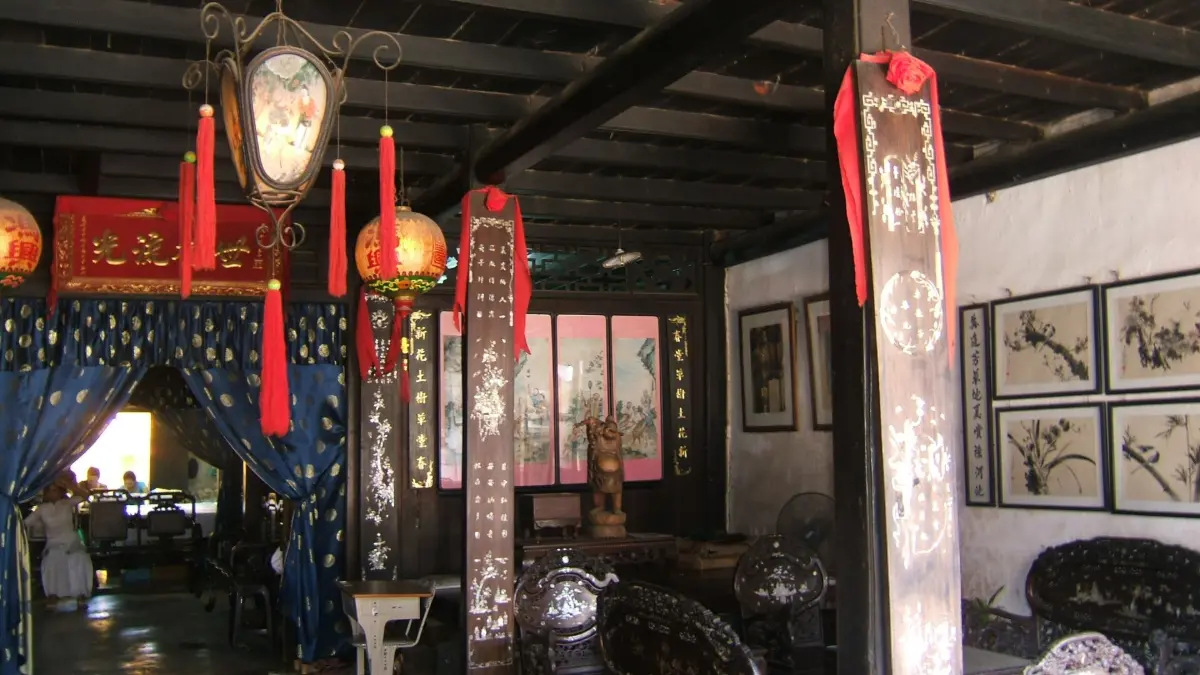
- A forest of columns: about 80 carved wooden pillars hold up the spacious interior.
- Three architectural traditions: Vietnamese beams, a Japanese-style layered roof frame and Chinese shutters and balcony.
- Clever flood design: a trapdoor in the upper floor was used to lift goods away from rising water.
Phung Hung Old House at a Glance
| Vietnamese name | Nhà cổ Phùng Hưng |
|---|---|
| Address | 4 Nguyen Thi Minh Khai Street, Hoi An Ancient Town, Hoi An Ward, Da Nang |
| Distance | About 50 metres west of the Japanese Covered Bridge; about 30 km from central Da Nang |
| Built | 1780, by a Vietnamese merchant family |
| Known for | About 80 wooden columns, upstairs altars, flood trapdoor, balcony and shutters |
| Recognition | National relic (1993); part of the UNESCO Hoi An Ancient Town World Heritage Site (1999) |
| Opening hours | Daily during daytime (from about 8:00); hours can vary |
| Entrance fee | One coupon of the Hoi An Ancient Town ticket (120,000 VND for foreigners, 5 sites) |
| Time needed | 15–30 minutes |
| Best time | Morning, right after the Japanese Covered Bridge |
| Nearby | Japanese Covered Bridge, Japanese Culture House, Cantonese Assembly Hall, Tan Ky Old House |
| Find it | Google Maps · Official ticket information · UNESCO |
Is Phung Hung Old House Worth Visiting?
Yes, it is one of the two best merchant houses in Hoi An, and the easiest to combine with the bridge. It is larger and airier than Tan Ky Old House, so it feels less cramped when groups arrive, and the upstairs floor gives a rare look at an ancestral altar room.
- Best for: visitors who want to see a real merchant home, architecture fans, families.
- Skip if: you have already used your coupons on Tan Ky and other houses and prefer temples or museums.
- Short on time: cross the Japanese Covered Bridge, step into Phung Hung for 15 minutes, then head down Tran Phu Street.
History of Phung Hung Old House
A Vietnamese merchant built the house in 1780, when Hoi An was one of the busiest ports in Southeast Asia. The family traded cinnamon, pepper, salt, silk, porcelain and glassware, using the ground floor as a shop and warehouse. The name Phung Hung expresses a wish for a prosperous family and thriving business.
The house has survived floods, wars and the town’s long decline, passing down through eight generations. It was recognised as a national relic in 1993 and is one of the monuments protected within the UNESCO-listed Hoi An Ancient Town.
Architecture of Phung Hung Old House
Phung Hung is a showcase of how Hoi An builders mixed traditions:
- Vietnamese: a timber frame of horizontal and vertical beams resting on about 80 wooden columns, all set on stone bases to resist damp.
- Japanese: a layered “stacked beam” roof structure over the central space, letting in light and air.
- Chinese: wooden shutters, yin-yang tiled roofs and a second-floor veranda with a curved ceiling carved with carp.
- The “four-sided” roof: the reception area has a higher roof that spreads out on four sides for ventilation.
What to See at Phung Hung Old House
1. The column hall
Step inside and look up: the ground floor is a hall of dark carved columns and beams, with display tables and old furniture. It is one of the most atmospheric interiors in town.
2. The flood trapdoor
Look for the square trapdoor in the ceiling. During floods the family hauled goods and furniture upstairs through it, a reminder that the Thu Bon River regularly enters the old town.
3. The upstairs altar room
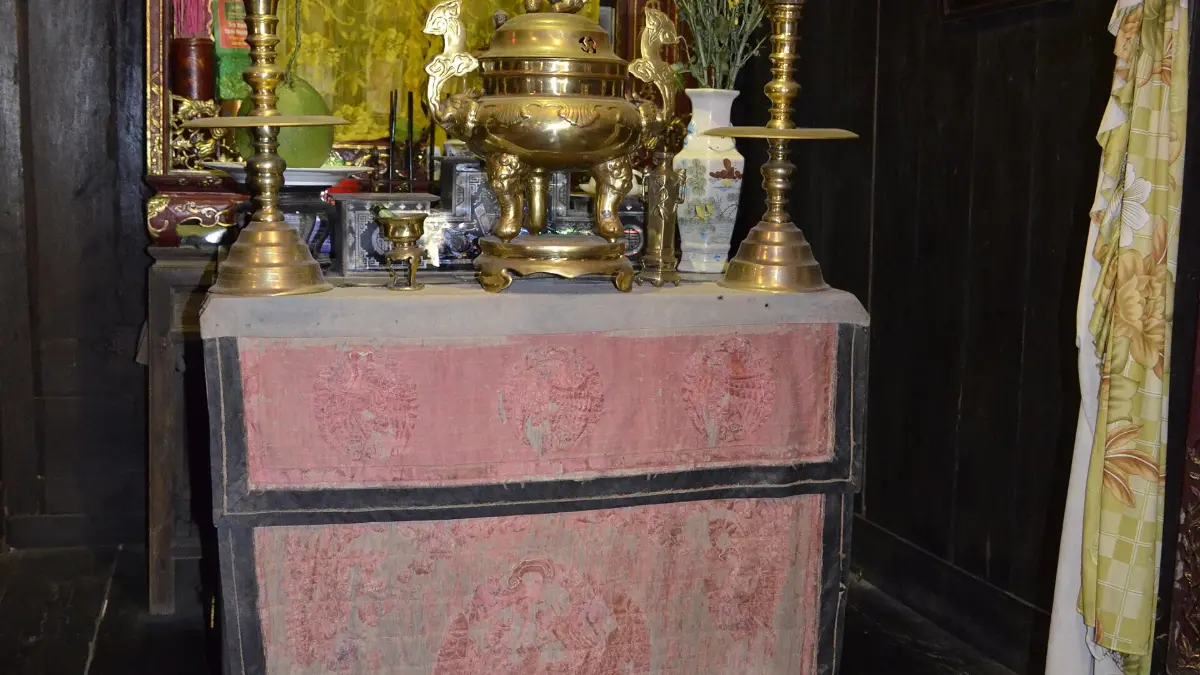
The upper floor holds the family’s ancestral altar and an altar to Thien Hau, the sea goddess who protected merchants and sailors.
4. The balcony and shutters
A wooden railing runs around the upper floor, and the front veranda has wooden shutters and a carved ceiling. From here you look down on Nguyen Thi Minh Khai Street.
5. Handicrafts
Family members may display and sell small handicrafts and souvenirs; browsing is optional.
Phung Hung Old House Tickets and Opening Hours (2026)
| Item | Price / hours | Notes |
|---|---|---|
| Hoi An Ancient Town ticket (foreigners) | 120,000 VND | Phung Hung counts as one of the 3 “heritage site” choices |
| Hoi An Ancient Town ticket (Vietnamese) | 80,000 VND | Smaller selection of sites |
| Opening hours | Daily, daytime (from about 8:00) | May close briefly for family events or high water |
Buy the ticket at an old-town booth before you go in. Ticket rules are set by the Hoi An heritage authorities; check the official tourism information page for updates.
Etiquette at Phung Hung Old House
- It is a private home with family altars: dress modestly and keep your voice down.
- Take the steep wooden stairs carefully and do not lean on old railings.
- No flash photography near the altars; ask before photographing residents.
How to Get to Phung Hung Old House
| From | How | Time |
|---|---|---|
| Japanese Covered Bridge | Cross the bridge westwards; the house is just beyond it | 1 minute |
| Hoi An Market | Walk west along Tran Phu Street and through the bridge | About 10 minutes |
| Hotels near the old town | Walk or bicycle | 5–15 minutes |
| Da Nang | Car, taxi or Grab to the old-town edge, then walk | 40–50 minutes |
See our Hoi An transport guide for details.
Best Time to Visit Phung Hung Old House
| When | What to expect |
|---|---|
| Morning (8:00–9:30) | Quiet, soft light through the shutters |
| Midday | Tour groups, but the large interior absorbs them better than smaller houses |
| February–April | Best season in Hoi An |
| October–November | Flood season; check before you go |
Local Expert Tips for Phung Hung Old House
These tips come from years of arranging Hoi An tours for international travellers.
- Visit Phung Hung straight after the bridge, before the groups that follow the same route.
- Go upstairs: many visitors miss the altar room and balcony.
- Pair it with Tan Ky to compare a narrow tube house with a wide two-storey home.
- Walk on to Thanh Ha Pottery Village by bicycle along the river road west of the bridge.
- More advice in our Hoi An travel tips.
Phung Hung Old House vs Tan Ky Old House
| Feature | Phung Hung Old House | Tan Ky Old House |
|---|---|---|
| Built | 1780 | Over 200 years ago (exact date unknown) |
| Layout | Wide, two storeys, upstairs altar room and balcony | Long and narrow, from street to river |
| Highlights | About 80 columns, flood trapdoor | Fine carvings, courtyard, flood marks |
| Location | Next to the Japanese Covered Bridge | 101 Nguyen Thai Hoc, near the river |
Our view: Phung Hung is more spacious and convenient; Tan Ky Old House has more refined carving. Both are worth a coupon.
Nearby Attractions
- Japanese Covered Bridge: right next door.
- Cantonese Assembly Hall: 2–3 minutes’ walk east.
- Tan Ky Old House: the old town’s most famous merchant home.
- Fujian Assembly Hall: the grandest Chinese hall.
- Hoi An Ancient Town: full guide to tickets and sights.
Sightseeing in Hoi An for First-Time Visitors: Where Phung Hung Old House Fits
Phung Hung is the natural second stop of a morning walk that starts at the bridge and runs east along Tran Phu Street to the market. In the afternoon, cycle to Tra Que or An Bang Beach, then return for dinner; our Hoi An food guide lists where to eat.
Plan your trip with our Hoi An travel guide and Hoi An tours. Contact Vietnam Tour Expert Team for a free custom itinerary.
Frequently Asked Questions about Phung Hung Old House
1. Where is Phung Hung Old House?
Phung Hung Old House is at 4 Nguyen Thi Minh Khai Street, just beyond the Japanese Covered Bridge in Hoi An Ancient Town.
2. When was Phung Hung Old House built?
Phung Hung Old House was built in 1780 by a Vietnamese merchant, making it more than 240 years old.
3. How much does it cost to enter Phung Hung Old House?
Phung Hung Old House uses one coupon of the Hoi An Ancient Town ticket, which costs 120,000 VND for foreigners and covers five sites.
4. Does a family still live in Phung Hung Old House?
Yes, the eighth generation of the founding family still lives in and cares for Phung Hung Old House.
5. How many columns does Phung Hung Old House have?
Phung Hung Old House is supported by about 80 carved wooden columns.
6. What did the Phung Hung Old House family trade?
The merchants of Phung Hung Old House traded goods such as cinnamon, pepper, salt, silk, porcelain and glassware.
7. What does the name Phung Hung mean?
The name Phung Hung expresses a wish for a prosperous family and thriving trade.
8. What is the trapdoor in Phung Hung Old House for?
The trapdoor in Phung Hung Old House was used to lift goods and furniture to the upper floor during floods.
9. How long should I spend at Phung Hung Old House?
Allow 15–30 minutes for Phung Hung Old House, including the upstairs floor.
10. Can I go upstairs in Phung Hung Old House?
Yes, visitors can usually climb to the upper floor of Phung Hung Old House to see the altar room and balcony; the stairs are steep.
11. Is Phung Hung Old House a national relic?
Yes, Phung Hung Old House was recognised as a national relic in 1993 and is part of the Hoi An UNESCO site.
12. Which is better, Phung Hung Old House or Tan Ky Old House?
Phung Hung Old House is more spacious, while Tan Ky has finer carvings; the old-town ticket lets you see both.
13. Is Phung Hung Old House near the Japanese Covered Bridge?
Yes, Phung Hung Old House is about 50 metres from the Japanese Covered Bridge.
14. Can I take photos inside Phung Hung Old House?
Photos are generally allowed in Phung Hung Old House; avoid flash near the altars and ask before photographing residents.
15. Does Phung Hung Old House flood?
Yes, Phung Hung Old House can flood in the rainy season, which is why it has a trapdoor for moving goods upstairs.
Related Posts
Hoi An Travel Tips 2026: Best Time, Lantern Nights & Tickets
Where to Stay in Hoi An: Best Areas & Hotels by Budget
Hoi An Transportation: Da Nang Airport, Hue & Getting Around
Hoi An Food Guide: Cao Lau, Banh Mi & Where to Eat
Hoi An Market: Local Life & Street Food in the Old Town