Call or WhatsApp Us: +84 88 626 1368

North Vietnam
Thousand-year-old Hanoi, the karst seascapes of Halong Bay, the river valleys of Ninh Binh and the rice terraces of Sapa
North Vietnam is the region most first-time visitors fall in love with. In one compact area you get the thousand-year-old capital Hanoi, the limestone seascapes of Halong Bay and Lan Ha Bay, the river valleys of Ninh Binh, and the rice terraces of Sapa and Ha Giang. It is home to five of Vietnam’s nine UNESCO World Heritage Sites, almost all reachable within a few hours of Hanoi. This guide covers the top tourist destinations in North Vietnam, the best time to visit, how to get around and sample itineraries for first-time visitors.
Why North Vietnam is a must-visit region:
- Vietnam’s richest concentration of World Heritage. Halong Bay–Cat Ba Archipelago, Trang An, the Imperial Citadel of Thang Long, the Ho Dynasty Citadel and the Yen Tu complex are all in the north.
- Iconic landscapes in a small area. Karst seascapes, river caves, terraced mountains and misty passes all lie within 2–6 hours of Hanoi.
- Hanoi’s living history. Visit the Ho Chi Minh Mausoleum, the Temple of Literature and the 36 streets of the Old Quarter, then eat some of the best street food in Asia.
- Overnight cruises. Sleep on a boat among thousands of limestone islands in Halong, Lan Ha or Bai Tu Long Bay.
- Ethnic minority cultures. Meet Hmong, Dao, Tay and Thai communities on treks, homestays and colourful highland markets.
- Four distinct seasons. Each has its own character: golden rice in autumn, cool misty winters, spring festivals and lush green summers.
North Vietnam at a Glance
| Main gateway | Hanoi – Noi Bai International Airport (HAN); also Van Don (VDO, for Halong) and Cat Bi (HPH, Hai Phong) |
|---|---|
| Top destinations | Hanoi, Halong Bay, Lan Ha Bay & Cat Ba, Bai Tu Long Bay, Ninh Binh, Sapa, Ha Giang, Mai Chau & Pu Luong, Cao Bang |
| UNESCO World Heritage | 5 of Vietnam’s 9 sites: Ha Long Bay–Cat Ba Archipelago, Trang An Landscape Complex, Imperial Citadel of Thang Long, Citadel of the Ho Dynasty and Yen Tu–Vinh Nghiem–Con Son, Kiep Bac |
| Climate | Four seasons: cool, dry winter (Dec–Feb, 10–20°C); warm spring (Mar–Apr); hot, humid, rainy summer (May–Sep, 30–35°C); mild autumn (Oct–Nov) |
| Best time to visit | October–December and March–May for clear skies and comfortable temperatures |
| Ideal trip length | 5–7 days for Hanoi, Halong Bay and Ninh Binh; 8–12 days to add Sapa or Ha Giang |
| Getting around | Private car or limousine van, overnight sleeper train (Hanoi–Lao Cai for Sapa), cruise boats, short domestic flights |
| Provinces (since July 2025) | Hanoi, Quang Ninh, Hai Phong, Ninh Binh, Lao Cai, Tuyen Quang, Phu Tho, Cao Bang, Lang Son and others, following Vietnam’s 2025 provincial merger |
Top Tourist Destinations in North Vietnam
These are the places that belong on any North Vietnam itinerary, roughly in order of how often first-time visitors choose them. Each one links to a detailed guide where we have one.
1. Hanoi – Vietnam’s thousand-year-old capital
Founded as Thang Long in 1010, Hanoi is the cultural heart of the country and the natural starting point for any trip to North Vietnam. Spend at least two days here:
- Walk the Old Quarter’s 36 streets and circle Hoan Kiem Lake.
- Pay your respects at the Ho Chi Minh Mausoleum, then see the One Pillar Pagoda nearby.
- Visit the Temple of Literature, Vietnam’s first national university.
- Explore the UNESCO-listed Imperial Citadel of Thang Long.
In the evening, catch a water puppet show and dive into the street food: phở, bún chả, bánh mì and egg coffee.
2. Halong Bay – Vietnam’s most famous natural wonder
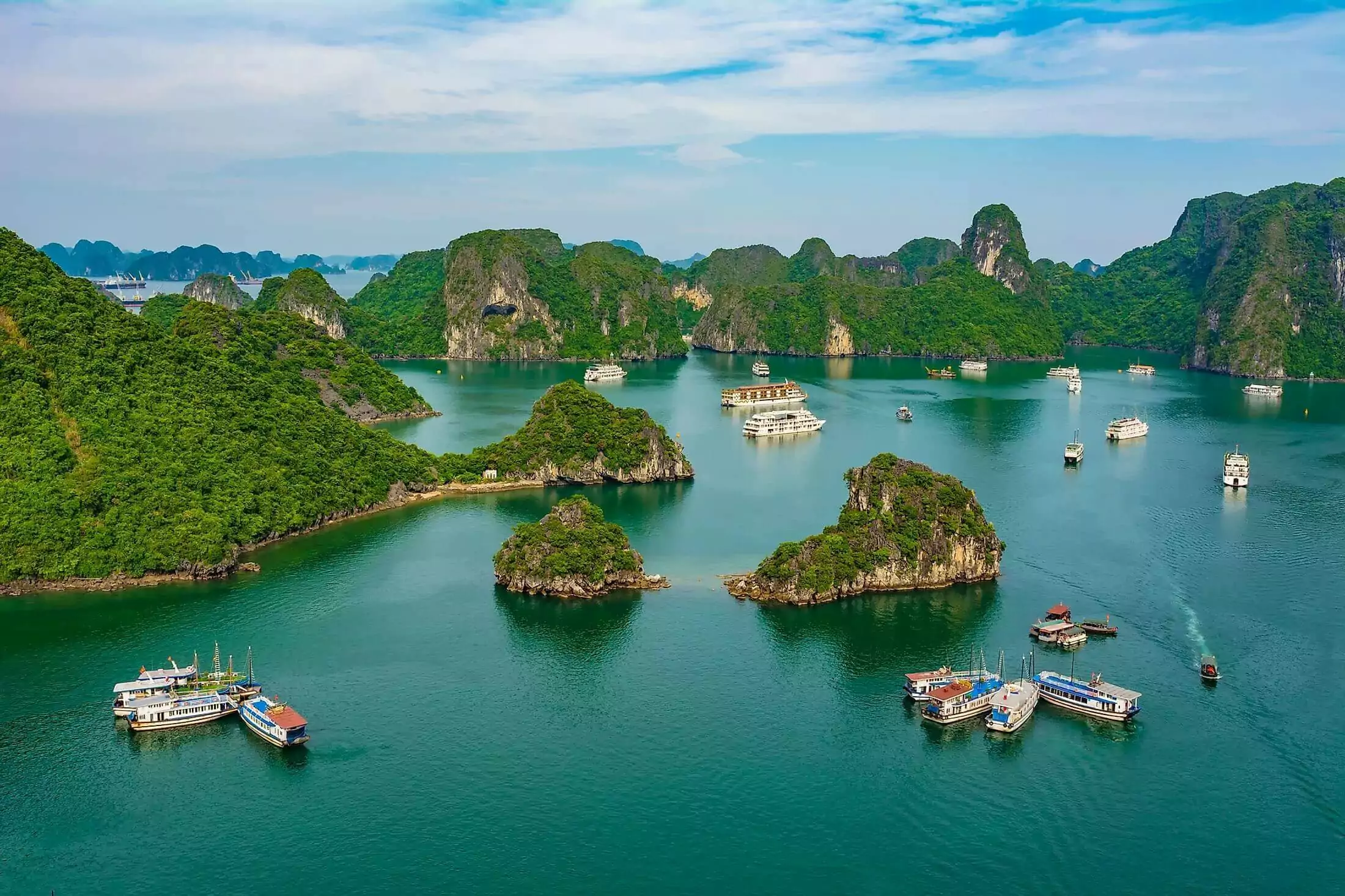
Halong Bay is a UNESCO World Heritage Site of almost 2,000 limestone islands and islets rising from emerald water in Quang Ninh province, about 2.5 hours from Hanoi by expressway. The classic way to see it is on an overnight cruise:
- Kayaking among the islets and swimming from the deck.
- Exploring caves such as Sung Sot Cave.
- Climbing Ti Top Island for a panoramic view.
- Watching sunrise over the karsts.
Browse our Halong Bay cruises to compare boats and routes.
3. Lan Ha Bay and Cat Ba Island
South of Halong Bay, Lan Ha Bay offers the same dramatic scenery with fewer boats, small white-sand beaches and floating fishing villages. It belongs to Hai Phong and borders Cat Ba Island, whose national park is part of the Ha Long Bay–Cat Ba Archipelago World Heritage Site since 2023. Lan Ha is the choice for travellers who want quieter kayaking and more time on the water.
4. Bai Tu Long Bay
Northeast of Halong, Bai Tu Long Bay is the most unspoiled of the three bays. Cruises here visit the Vung Vieng Fishing Village and Thien Canh Son Cave, with far less boat traffic. It suits travellers who prefer a slower, more authentic bay experience.
5. Ninh Binh – “Halong Bay on land”
About 100 km south of Hanoi, Ninh Binh is the best day trip from the capital.
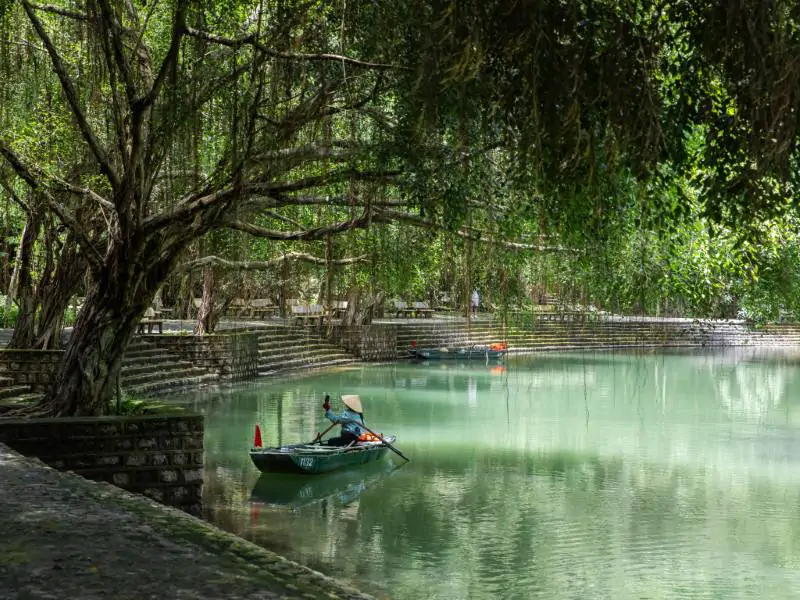
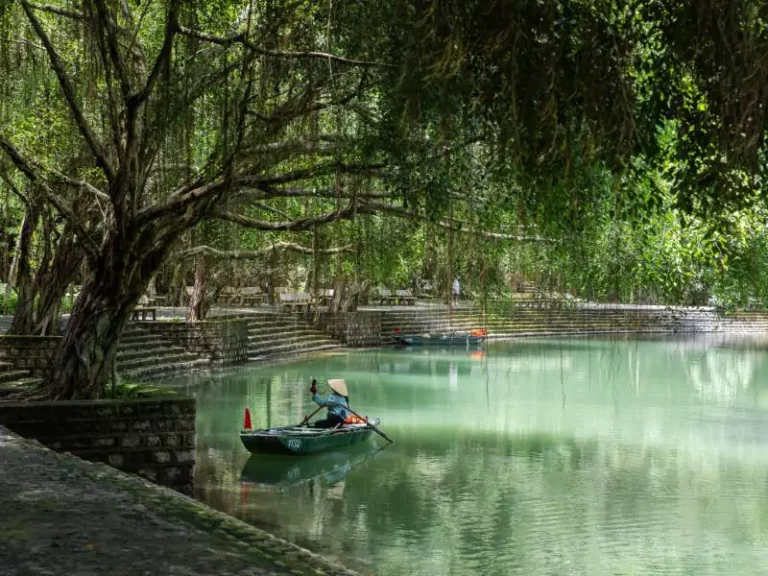
- Trang An Landscape Complex (UNESCO, 2014): row through limestone caves and rice fields by sampan.
- Tam Coc: a quieter river trip through rice paddies and karst.
- Hoa Lu: the 10th-century ancient capital.
- Bai Dinh Pagoda: Vietnam’s largest Buddhist complex.
- Hang Mua viewpoint: about 500 steps to a panorama over the valley.
Late May to early June brings golden rice harvests; summer brings lotus season.
6. Sapa – rice terraces and hill-tribe villages
In Lao Cai province near the Chinese border, Sapa sits at about 1,500 m among some of the most beautiful rice terraces in Asia. Trek through the Muong Hoa Valley to Hmong and Dao villages, stay overnight in a homestay, or ride the cable car to the summit of Fansipan (3,143 m), the highest peak in Indochina. The terraces are greenest in June–July and golden in September–early October.
7. Ha Giang Loop
The far-northern Ha Giang area, now part of Tuyen Quang province, is Vietnam’s most spectacular road trip. The loop runs over the Ma Pi Leng Pass above the Nho Que River and through the Dong Van Karst Plateau Geopark (a UNESCO Global Geopark), past the markets of Dong Van and Meo Vac. Most travellers ride it over 3–4 days with an experienced local “easy rider” driver rather than driving themselves.
8. Mai Chau and Pu Luong
For a gentler taste of the mountains, Mai Chau valley (3.5 hours from Hanoi) and the Pu Luong Nature Reserve offer White Thai stilt-house villages, bamboo bridges, cycling through rice fields and some of the best eco-lodges in the north. Both pair well with Ninh Binh.
9. Cao Bang and Ban Gioc Waterfall
On the Chinese border, Ban Gioc is one of the largest waterfalls in Southeast Asia, a series of cascades on the Quay Son River. Combine it with Nguom Ngao Cave and the Pac Bo historical site, where Ho Chi Minh returned to Vietnam in 1941. It is a 6–7 hour drive from Hanoi, so allow at least two nights.
10. Yen Tu and the Truc Lam Zen heritage
Yen Tu Mountain in Quang Ninh is the birthplace of the Truc Lam Zen school founded by King Tran Nhan Tong in the 13th century. In July 2025 the Yen Tu–Vinh Nghiem–Con Son, Kiep Bac complex became Vietnam’s ninth UNESCO World Heritage Site. Pilgrims climb, or take the cable car, to the Dong Pagoda at the summit, especially during the spring festival season.
UNESCO World Heritage Sites in North Vietnam
| Site | Type | Inscribed | Location |
|---|---|---|---|
| Ha Long Bay–Cat Ba Archipelago | Natural | 1994 (extended 2000, 2023) | Quang Ninh & Hai Phong |
| Imperial Citadel of Thang Long | Cultural | 2010 | Hanoi |
| Citadel of the Ho Dynasty | Cultural | 2011 | Thanh Hoa |
| Trang An Landscape Complex | Mixed | 2014 | Ninh Binh |
| Yen Tu–Vinh Nghiem–Con Son, Kiep Bac | Cultural | 2025 | Quang Ninh, Bac Ninh & Hai Phong |
See the full list on the UNESCO World Heritage Centre.
Best Time to Visit North Vietnam
Unlike the tropical south, North Vietnam has four real seasons, and the right time depends on what you want to see.
| Season | Weather | Good for |
|---|---|---|
| Autumn Sep – Nov |
Mild, dry, clear skies; 22–28°C | Best overall: Halong cruises, Hanoi, golden terraces in Sapa and Ha Giang (Sep–Oct) |
| Winter Dec – Feb |
Cool to cold, often grey; 10–20°C in Hanoi, near freezing in Sapa | City sightseeing, Tet festivities (late Jan–Feb), buckwheat flowers in Ha Giang (Oct–Dec) |
| Spring Mar – Apr |
Warm, some drizzle and haze; 20–28°C | Festivals, Ninh Binh, trekking, Halong Bay with fewer crowds |
| Summer May – Aug |
Hot, humid, heavy showers; 30–35°C; typhoon risk Jul–Sep | Lush green rice terraces, lotus season, swimming in the bays |
Tip: from July to September, typhoons can occasionally cancel Halong Bay cruises at short notice. Book with an operator that offers free date changes, and keep a flexible day in your plan.
How to Get to and Around North Vietnam
Almost every international visitor arrives through Noi Bai International Airport in Hanoi, with direct flights from across Asia, the Middle East and Europe. From Hanoi, the main destinations are within easy reach:
| Route from Hanoi | Best option | Travel time |
|---|---|---|
| Halong Bay | Cruise shuttle or private car via expressway | 2.5 hours |
| Lan Ha Bay / Cat Ba | Shuttle via Hai Phong + boat | 2.5–3 hours |
| Ninh Binh | Private car or train | 1.5–2 hours |
| Sapa | Limousine bus, or overnight train to Lao Cai + 1 hour by road | 5–6 hours (bus), 8–9 hours (train) |
| Ha Giang | Sleeper bus or private car | 6–7 hours |
| Mai Chau | Private car | 3.5 hours |
| Ban Gioc Waterfall | Private car | 6–7 hours |
Hanoi also has fast domestic flights to Hue, Da Nang, Ho Chi Minh City and Phu Quoc, which makes it easy to continue your journey south.
Suggested North Vietnam Itineraries for First-Time Visitors
3 days: Hanoi and Halong Bay
- Day 1: Hanoi city tour – Ho Chi Minh Mausoleum, Temple of Literature, Old Quarter, water puppets.
- Day 2: Transfer to Halong Bay or Lan Ha Bay for an overnight cruise.
- Day 3: Sunrise on the bay, cave visit, return to Hanoi.
5 days: The northern highlights
- Days 1–2: Hanoi.
- Day 3: Ninh Binh – Trang An or Tam Coc boat ride, Hoa Lu, Hang Mua.
- Days 4–5: Overnight Halong Bay or Lan Ha Bay cruise.
8–10 days: Mountains, bays and the capital
- Days 1–2: Hanoi.
- Days 3–5: Sapa trekking with a homestay, or the Ha Giang Loop.
- Day 6: Ninh Binh.
- Days 7–8: Halong, Lan Ha or Bai Tu Long Bay cruise.
- Days 9–10: Mai Chau or Pu Luong, or fly south to Hue and Hoi An.
These are starting points. Our North Vietnam tours follow the same logic, and every itinerary can be tailored to your dates, pace and budget. Contact Vietnam Tour Expert Team for a free custom itinerary.
Food and Culture in North Vietnam
Northern cuisine is subtle and herb-driven, and many of Vietnam’s best-known dishes were born here:
- Phở: Hanoi’s beef noodle soup, best eaten for breakfast.
- Bún chả: grilled pork with rice noodles and dipping sauce.
- Chả cá Lã Vọng: turmeric fish with dill, a Hanoi classic.
- Egg coffee (cà phê trứng): a Hanoi invention.
- Seafood in Halong and Cat Ba: squid, clams and grilled fish.
- Thắng cố and corn wine at highland markets in Sapa and Ha Giang.
Culturally, the north is the cradle of the Viet nation. It is home to ancient temples, water puppetry, ca trù singing and more than 30 ethnic minority groups in the northern mountains. Their weekly markets in Bac Ha, Dong Van and Meo Vac are among the most colourful sights in Asia.
Practical Travel Tips for North Vietnam
- Visa: most visitors use Vietnam’s e-visa (valid up to 90 days), and citizens of several countries can enter visa-free for a limited stay. Check the latest rules before you fly.
- Pack layers: Hanoi can be 15°C in January while Sapa drops close to freezing. A light jacket is useful from November to March.
- Book cruises early for October–December and public holidays, especially for good-value boats.
- Dress respectfully at the Ho Chi Minh Mausoleum, pagodas and temples, with shoulders and knees covered.
- Cash and cards: cards work in Hanoi hotels and restaurants, but carry Vietnamese dong for markets, villages and small shops.
- SIM or eSIM: buy one on arrival at Noi Bai for maps and ride-hailing apps like Grab.
- Do not ride a motorbike in the mountains without proper experience, a licence and insurance. Hire an experienced driver instead.
Show More
Show Less
Popular Attractions

North Vietnam Travel Guide
Frequently asked questions
1. What are the top tourist destinations in North Vietnam?
The most popular are Hanoi, Halong Bay, Lan Ha Bay and Cat Ba Island, Bai Tu Long Bay, Ninh Binh (Trang An and Tam Coc), Sapa, the Ha Giang Loop, Mai Chau and Pu Luong, and Ban Gioc Waterfall in Cao Bang.
2. What is the best time to visit North Vietnam?
October to December and March to May offer the most comfortable weather, with mild temperatures and clearer skies. September to early October is ideal for golden rice terraces in Sapa and Ha Giang.
3. How many days do I need in North Vietnam?
Five to seven days covers Hanoi, Ninh Binh and an overnight Halong Bay cruise. Allow eight to twelve days if you also want to trek in Sapa or ride the Ha Giang Loop.
4. Is Halong Bay or Lan Ha Bay better?
Both share the same limestone scenery. Halong Bay has the most famous caves and the widest choice of cruises. Lan Ha Bay is quieter, with more beaches and better kayaking. Many cruises now combine both.
5. How far is Halong Bay from Hanoi?
About 170 km, or roughly 2.5 hours by the Hanoi–Hai Phong–Ha Long expressway. Most cruises include a shuttle from Hanoi’s Old Quarter.
6. Can I visit Ninh Binh as a day trip from Hanoi?
Yes. Ninh Binh is 1.5–2 hours from Hanoi, and a full day is enough for a boat ride at Trang An or Tam Coc, the ancient capital of Hoa Lu and Hang Mua viewpoint. An overnight stay lets you enjoy it at a slower pace.
7. How do I get from Hanoi to Sapa?
Take a limousine bus or private car (5–6 hours by expressway), or an overnight sleeper train to Lao Cai followed by a 1-hour drive up to Sapa.
8. Is the Ha Giang Loop safe for tourists?
It is safe if you travel with an experienced local driver, an “easy rider”, and avoid riding yourself without mountain experience. Roads are steep and winding, and weather can change quickly.
9. What is the weather like in North Vietnam in winter?
From December to February, Hanoi averages 15–20°C and often has grey, drizzly days. The mountains around Sapa and Ha Giang can drop near freezing, and Sapa occasionally sees frost or snow.
10. Are Halong Bay cruises cancelled because of typhoons?
Occasionally, mainly between July and September. The authorities close the bay when a storm approaches, and reputable operators then reschedule or refund.
11. How many UNESCO World Heritage Sites are in North Vietnam?
Five: Ha Long Bay–Cat Ba Archipelago, the Imperial Citadel of Thang Long, the Citadel of the Ho Dynasty, Trang An Landscape Complex and the Yen Tu–Vinh Nghiem–Con Son, Kiep Bac complex, inscribed in 2025.
12. What food should I try in North Vietnam?
Do not miss phở, bún chả, chả cá Lã Vọng, bánh cuốn, egg coffee in Hanoi, and fresh seafood in Halong and Cat Ba.
13. Is North Vietnam good for families with children?
Yes. Halong Bay cruises, boat rides in Ninh Binh, water puppet shows and cycling in Mai Chau are all family-friendly. Choose cruises and hotels with family cabins or connecting rooms.
14. Do I need a tour to visit North Vietnam?
Not necessarily, but a private or small-group tour saves a lot of time on transfers, cruise bookings and logistics in the mountains. A local guide also explains the history and culture behind each site.
15. Which provinces are in North Vietnam after the 2025 merger?
Since 1 July 2025, the main tourist provinces in the north include Hanoi, Quang Ninh, Hai Phong, Ninh Binh, Lao Cai (with Sapa), Tuyen Quang (with Ha Giang), Phu Tho (with Mai Chau), Cao Bang and Lang Son. The destinations themselves have not changed.
16. How do I combine North Vietnam with the rest of the country?
Fly from Hanoi to Hue or Da Nang (about 1 hour 15 minutes) for Central Vietnam and Hoi An, then on to Ho Chi Minh City and the Mekong Delta. A two-week north-to-south itinerary covers the highlights.