Cantonese Assembly Hall Hoi An: Dragon Fountain & History
The Cantonese Assembly Hall (Hội quán Quảng Triệu) is a Chinese clan hall at 176 Tran Phu Street in Hoi An Ancient Town, Da Nang, a short walk from the Japanese Covered Bridge. Built around 1885 by merchants from Guangdong, it honours Quan Cong (Guan Yu) and is famous for its carved granite columns and a colourful dragon fountain. Entry uses one coupon of the 120,000 VND old-town ticket.
Status (checked October 2026): open daily as normal during daytime hours. The hall is still an active place of worship, so parts may be busy during clan festivals. Since July 2025 it lies in Hoi An Ward, Da Nang city, after Quang Nam was merged into Da Nang.
Why the Cantonese Assembly Hall is worth seeing:
- Two minutes from the Japanese Covered Bridge: the easiest assembly hall to fit into any walk.
- Stone and wood craftsmanship: granite columns, carved stone walls and finely worked timber beams.
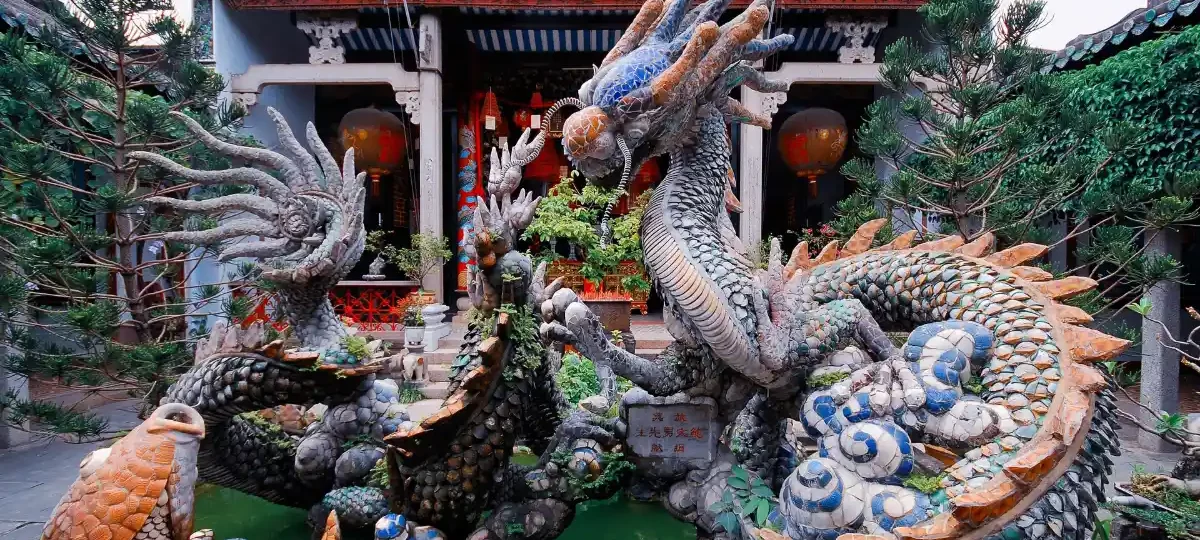
- The dragon fountain: a dragon covered in coloured ceramic pieces in the rear garden, a favourite photo spot.
- Quan Cong altar: the red-faced general of the Three Kingdoms, symbol of loyalty and honour.
- Living community: Cantonese descendants still gather here for festivals.
Cantonese Assembly Hall at a Glance
| Vietnamese name | Hội quán Quảng Triệu (Hội quán Quảng Đông, also called Chùa Ông) |
|---|---|
| Address | 176 Tran Phu Street, Hoi An Ancient Town, Hoi An Ward, Da Nang |
| Distance | About 100 metres east of the Japanese Covered Bridge; about 30 km from central Da Nang |
| Built | Around 1885 (the date most sources give), by Cantonese merchants |
| Dedicated to | Quan Cong (Guan Yu); originally Thien Hau and Confucius |
| Recognition | Part of the UNESCO Hoi An Ancient Town World Heritage Site (1999) |
| Opening hours | Daily, daytime (from early morning to late afternoon; hours vary) |
| Entrance fee | One coupon of the Hoi An Ancient Town ticket (120,000 VND for foreigners, 5 sites) |
| Time needed | 15–30 minutes |
| Best time | Early morning, before tour groups |
| Nearby | Japanese Covered Bridge, Phung Hung Old House, Tan Ky Old House, Fujian Assembly Hall |
| Find it | Google Maps · Tripadvisor · Official ticket information |
Is the Cantonese Assembly Hall Worth Visiting?
Yes, it is one of the most rewarding coupons on the Hoi An ticket. It is compact, beautifully crafted and right on the main walking route of Hoi An Ancient Town. If you can see only two halls, choose this one and the larger Fujian Assembly Hall.
- Best for: lovers of Chinese art and architecture, photographers, families (children love the dragon).
- Skip if: you have already seen several temples and prefer houses or museums.
- Short on time: go straight to the rear garden for the dragon fountain, then the main altar.
History of the Cantonese Assembly Hall
From the 17th century, Chinese merchants settled in Hoi An and formed communities according to their home regions. Each built an assembly hall (hoi quan) to worship its gods, honour ancestors and support members. The Cantonese community, from Guangzhou and Zhaoqing in Guangdong (the name Quang Trieu combines the two), built this hall in the late 19th century; most sources give 1885.
The hall first honoured Thien Hau, the sea goddess, and Confucius. After 1911 the main altar was dedicated to Quan Cong, the Three Kingdoms general admired for loyalty and integrity. Today it is still managed by the Cantonese community and protected as part of the UNESCO World Heritage Site.
What to See at the Cantonese Assembly Hall
1. The entrance gate and front courtyard
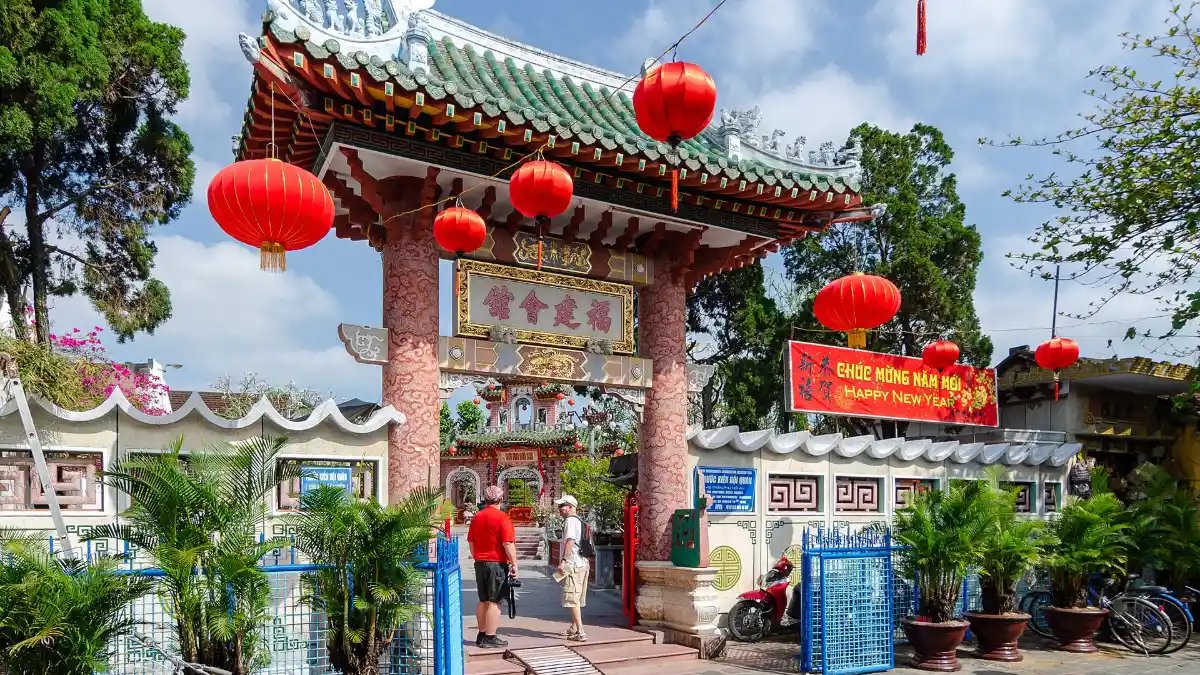
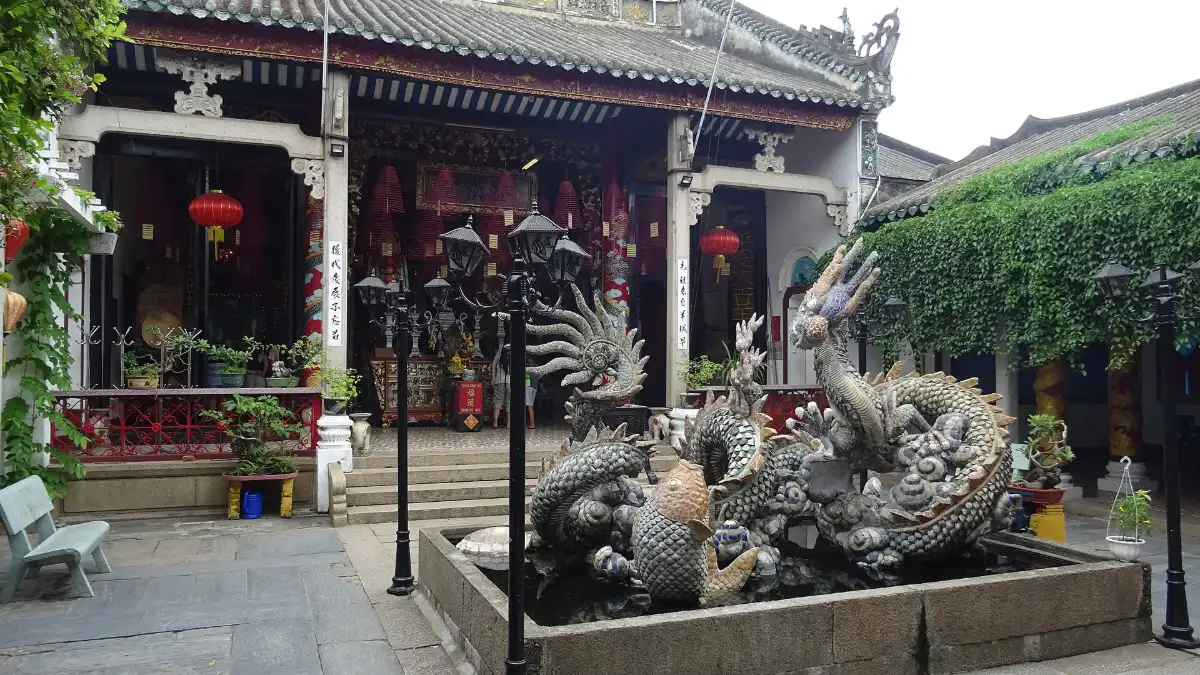
The gate on Tran Phu Street opens onto a small courtyard. Above the doors, carved and painted panels set the tone for the craftsmanship inside.
2. Granite columns and carved stone walls
The hall combines timber with stone: columns cut from granite and carved stone walls in the front hall show a level of masonry rarely seen in Hoi An’s wooden town.
3. The wooden roof frame
Look up at the beams and brackets: they are carved with flowers, animals and mythical creatures, with multi-tiered roofs above.
4. The Quan Cong altar
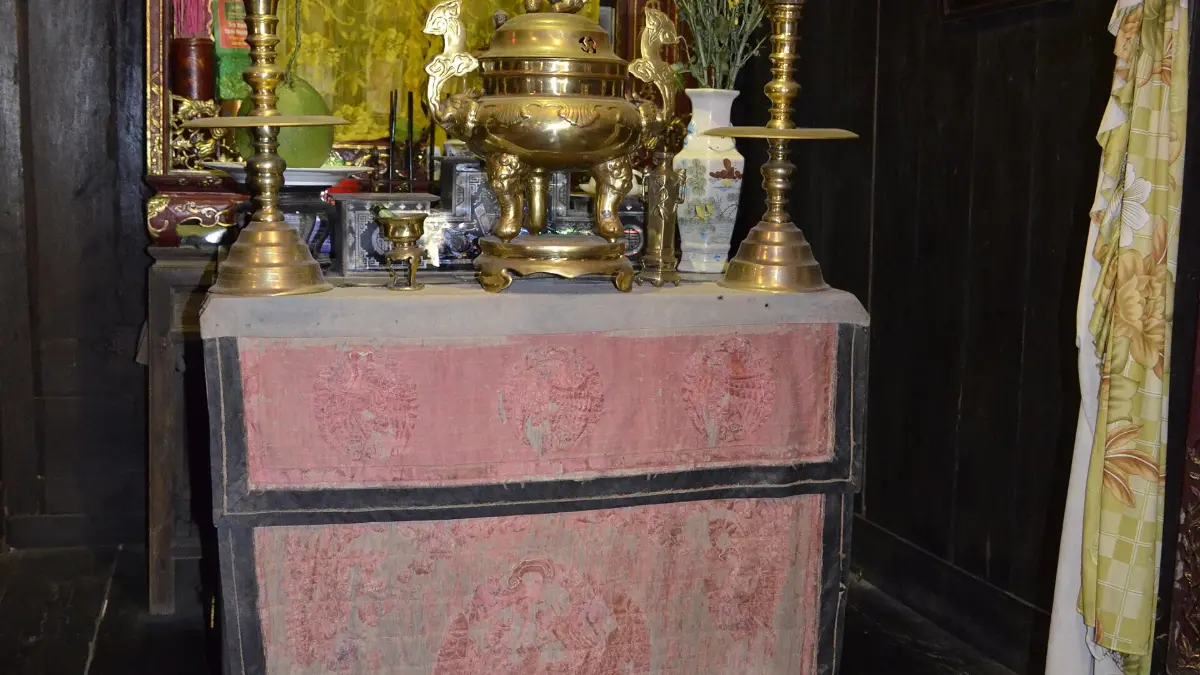
The central altar holds a statue of Quan Cong, flanked by deities of fortune and prosperity. Paintings of Quan Cong with his sworn brothers Liu Bei and Zhang Fei hang near the entrance. Look also for the large bronze incense burner and glazed porcelain jars.
5. The dragon fountain
The rear garden holds a dragon sculpture decorated with colourful ceramic pieces, its body coiling over a pool. It is one of the most photographed spots in Hoi An.
6. The back gate to Nguyen Thai Hoc Street
Leave by the back of the garden to reach Nguyen Thai Hoc Street, close to Tan Ky Old House.
Festivals at the Cantonese Assembly Hall
- Nguyen Tieu Festival: around the full moon of the first lunar month.
- Quan Cong’s festival: the 24th day of the sixth lunar month, with offerings and ceremonies.
Cantonese Assembly Hall Tickets and Opening Hours (2026)
| Item | Price / hours | Notes |
|---|---|---|
| Hoi An Ancient Town ticket (foreigners) | 120,000 VND | The hall counts as one of the 3 “heritage site” choices |
| Hoi An Ancient Town ticket (Vietnamese) | 80,000 VND | Smaller selection of sites |
| Opening hours | Daily, daytime | Arrive before mid-afternoon to be safe; hours can change for ceremonies |
Tickets are sold at the old-town booths. Ticket rules are set by the Hoi An heritage authorities; check the official Hoi An tourism page for the latest details.
Etiquette at the Cantonese Assembly Hall
- It is an active temple: cover shoulders and knees and speak quietly.
- Do not climb on the dragon fountain or touch altars and offerings.
- Small donations for incense are welcome but optional.
How to Get to the Cantonese Assembly Hall
| From | How | Time |
|---|---|---|
| Japanese Covered Bridge | Walk east along Tran Phu Street | About 2 minutes |
| Fujian Assembly Hall | Walk west along Tran Phu Street | About 5–7 minutes |
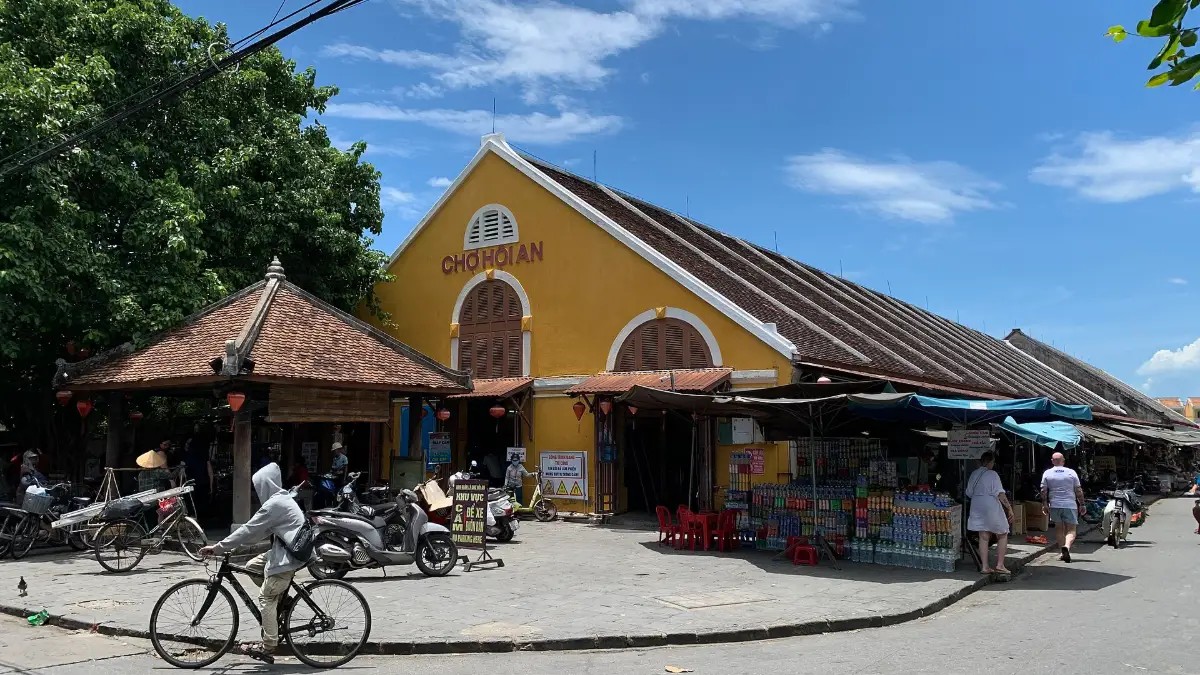
| Hoi An Market | Walk west along Tran Phu Street | About 8–10 minutes |
| Da Nang | Car, taxi or Grab to the old-town edge, then walk | 40–50 minutes |
More in our Hoi An transport guide.
Best Time to Visit the Cantonese Assembly Hall
| When | What to expect |
|---|---|
| Early morning | Quiet, incense smoke in soft light |
| Late morning to afternoon | Tour groups heading to and from the bridge |
| February–April | Best weather in Hoi An |
| Festival days | Colourful ceremonies, but more crowded |
Local Expert Tips for the Cantonese Assembly Hall
These tips come from years of arranging Hoi An tours for international travellers.
- Visit right after the Japanese Covered Bridge and Phung Hung house; the three are within 200 metres.
- Use the back gate to shortcut to Nguyen Thai Hoc Street and the riverside.
- Compare it with the Fujian hall: one is intimate and refined, the other grand and colourful.
- See our Hoi An tips for dress and etiquette.
Cantonese Assembly Hall vs Fujian Assembly Hall
| Feature | Cantonese Assembly Hall | Fujian Assembly Hall |
|---|---|---|
| Address | 176 Tran Phu | 46 Tran Phu |
| Founded | Around 1885 | 1697 (as a temple), a guild hall from 1757 |
| Main deity | Quan Cong | Thien Hau, goddess of the sea |
| Size | Compact | The largest hall in Hoi An, about 120 m deep |
| Highlights | Granite columns, ceramic dragon fountain | Triple gate, ship model, giant incense coils |
Our view: see both if you can. The Cantonese hall is the finer piece of craftsmanship, the Fujian Assembly Hall the most impressive in scale.
Nearby Attractions
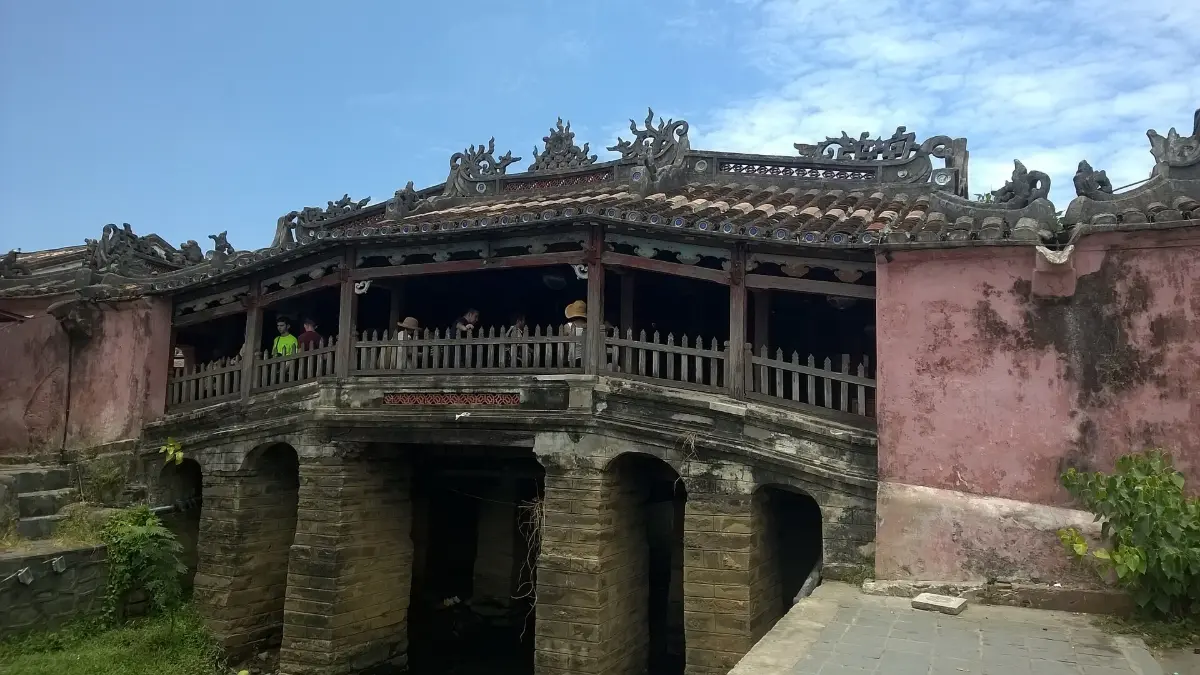
- Japanese Covered Bridge: Hoi An’s landmark, 2 minutes away.
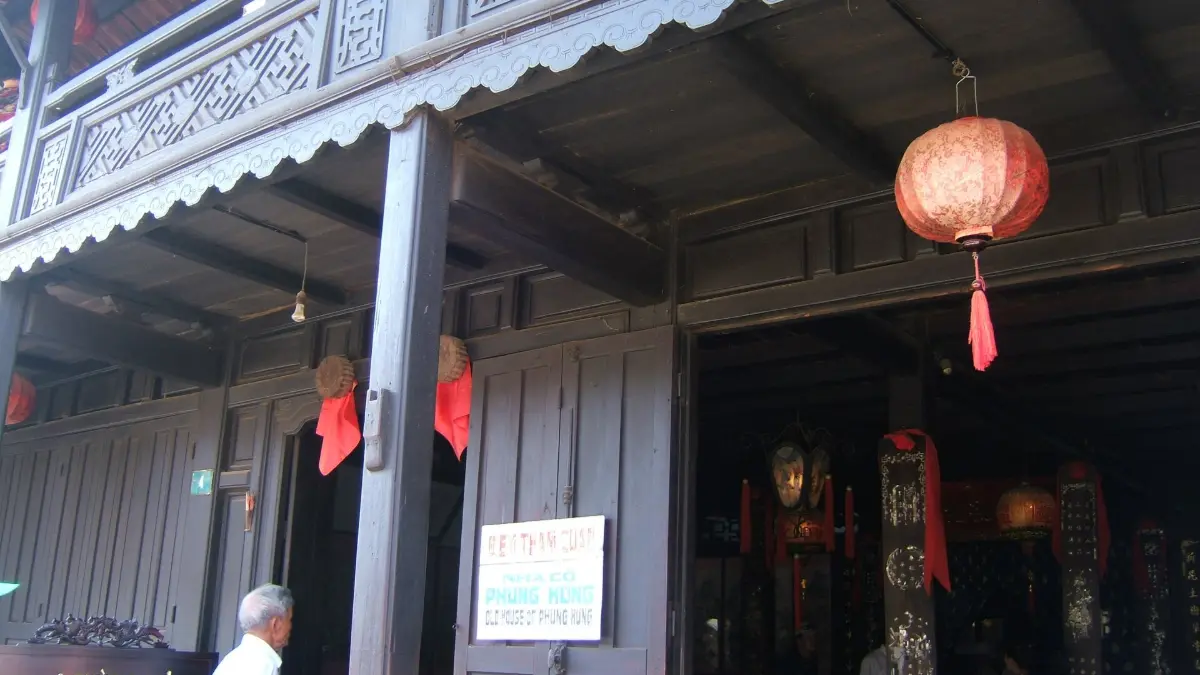
- Phung Hung Old House: 1780 merchant house.
- Tan Ky Old House: behind the hall on Nguyen Thai Hoc Street.
- Fujian Assembly Hall: further east on Tran Phu.
- Hoi An Market: for lunch after your walk.
Sightseeing in Hoi An for First-Time Visitors: Where the Cantonese Assembly Hall Fits
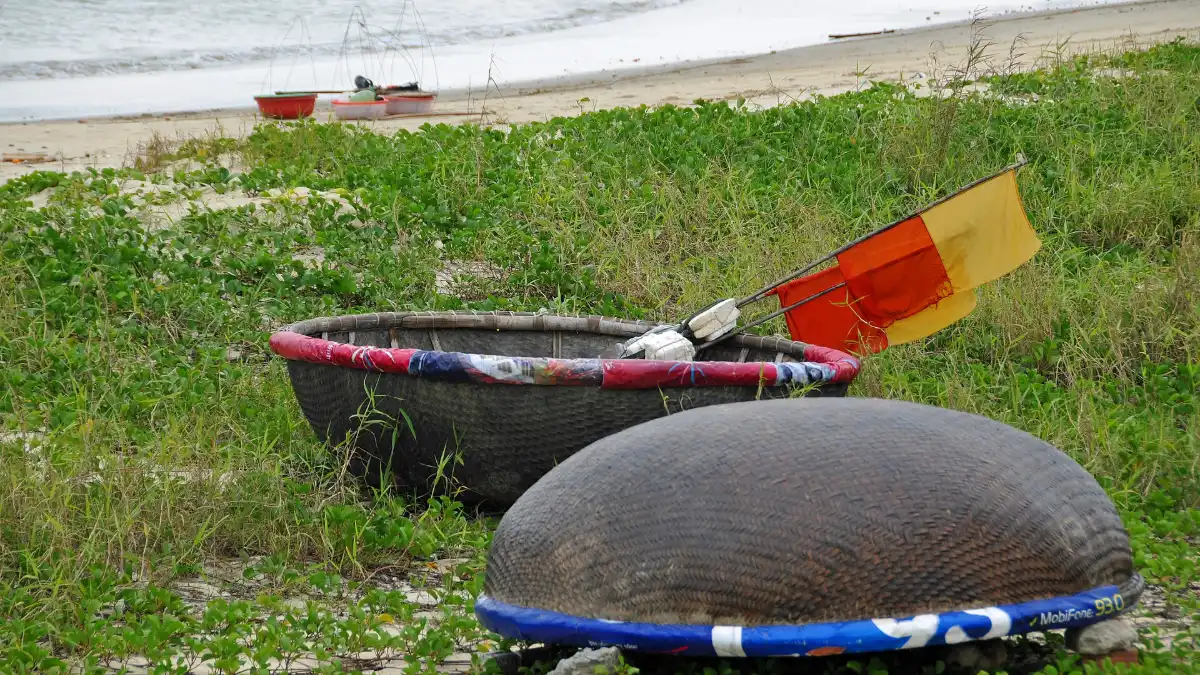
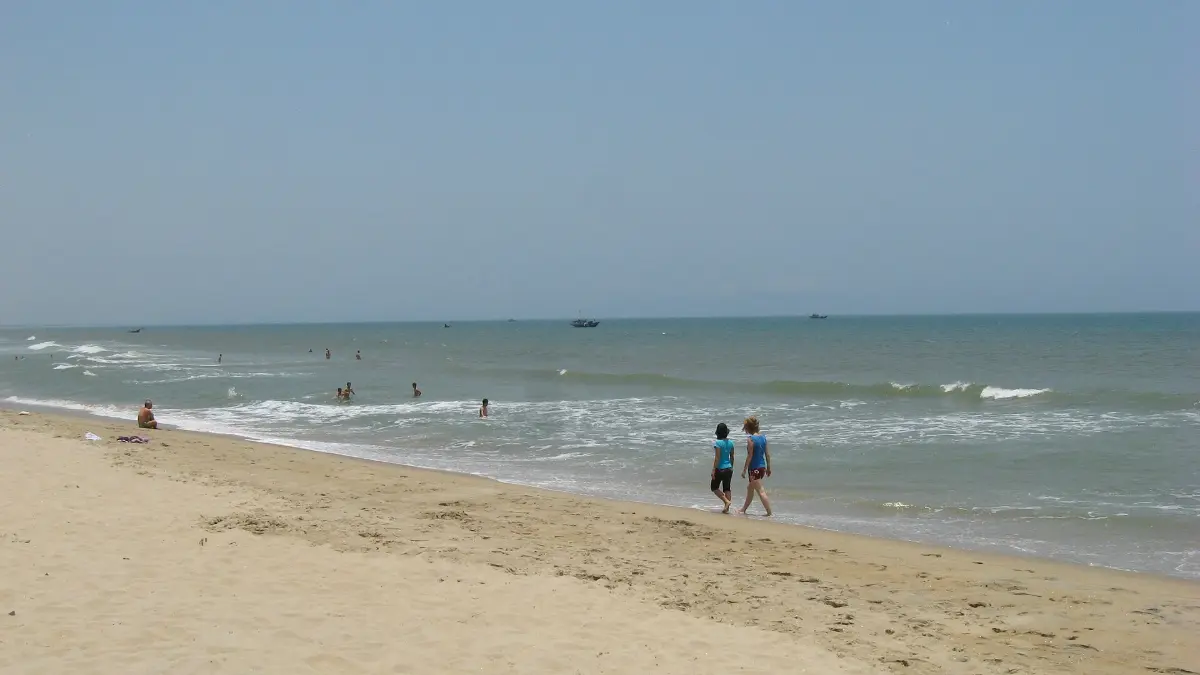
Start at the bridge, see Phung Hung house and this hall, slip out the back gate to Tan Ky, then continue east to the Fujian hall and the market. Spend the afternoon on a basket boat at Bay Mau Coconut Forest or at the beach, and try our picks from the Hoi An food guide in the evening.
Plan your trip with our Hoi An travel guide and Hoi An tours. Contact Vietnam Tour Expert Team for a free custom itinerary.
Frequently Asked Questions about the Cantonese Assembly Hall
1. Where is the Cantonese Assembly Hall in Hoi An?
The Cantonese Assembly Hall is at 176 Tran Phu Street, about 100 metres east of the Japanese Covered Bridge.
2. When was the Cantonese Assembly Hall built?
The Cantonese Assembly Hall was built in the late 19th century; most sources give 1885.
3. Who is worshipped at the Cantonese Assembly Hall?
The Cantonese Assembly Hall is dedicated to Quan Cong (Guan Yu); it originally honoured Thien Hau and Confucius.
4. How much does the Cantonese Assembly Hall cost?
The Cantonese Assembly Hall uses one coupon of the Hoi An Ancient Town ticket, 120,000 VND for foreigners for five sites.
5. What is the Vietnamese name of the Cantonese Assembly Hall?
The Cantonese Assembly Hall is called Hoi quan Quang Trieu, also Hoi quan Quang Dong or Chua Ong.
6. What does Quang Trieu mean in the Cantonese Assembly Hall’s name?
Quang Trieu combines Guangzhou (Quang Chau) and Zhaoqing (Trieu Khanh), the home regions of the merchants who founded the Cantonese Assembly Hall.
7. Is the dragon fountain at the Cantonese Assembly Hall worth seeing?
Yes, the ceramic-decorated dragon fountain in the rear garden is the highlight of the Cantonese Assembly Hall.
8. How long should I spend at the Cantonese Assembly Hall?
Fifteen to thirty minutes is enough for the Cantonese Assembly Hall.
9. What are the opening hours of the Cantonese Assembly Hall?
The Cantonese Assembly Hall opens daily during the daytime; arrive before mid-afternoon, as hours can change for ceremonies.
10. What is the dress code at the Cantonese Assembly Hall?
The Cantonese Assembly Hall is an active temple, so cover shoulders and knees and speak quietly.
11. Which festivals are held at the Cantonese Assembly Hall?
The Cantonese Assembly Hall celebrates the Nguyen Tieu Festival in the first lunar month and Quan Cong’s festival on the 24th day of the sixth lunar month.
12. Is the Cantonese Assembly Hall better than the Fujian Assembly Hall?
The Cantonese Assembly Hall is smaller but finely crafted, while the Fujian hall is larger and grander; both are worth seeing.
13. Is the Cantonese Assembly Hall good for children?
Yes, children usually love the dragon fountain at the Cantonese Assembly Hall; keep them off the sculpture.
14. How many Chinese assembly halls are there in Hoi An besides the Cantonese Assembly Hall?
Besides the Cantonese Assembly Hall, Hoi An has the Fujian, Chaozhou, Hainan and Trung Hoa (Five Communities) halls.
15. Can I take photos in the Cantonese Assembly Hall?
Photography is generally allowed in the Cantonese Assembly Hall; avoid flash at the altars and be respectful of worshippers.
Related Posts
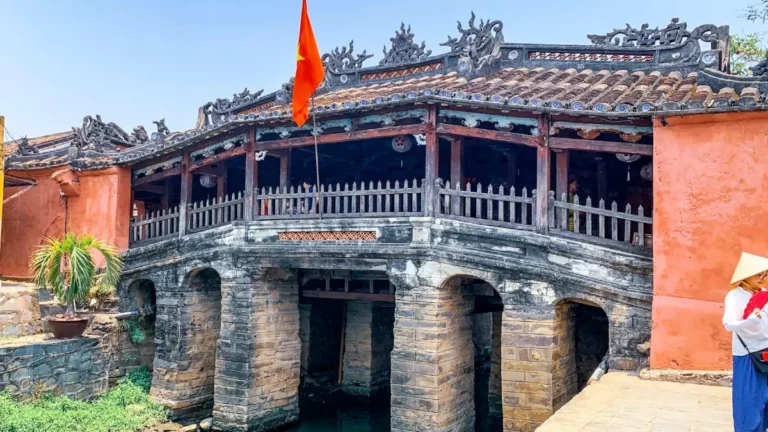
Hoi An Travel Tips 2026: Best Time, Lantern Nights & Tickets

Where to Stay in Hoi An: Best Areas & Hotels by Budget
Hoi An Transportation: Da Nang Airport, Hue & Getting Around

Hoi An Food Guide: Cao Lau, Banh Mi & Where to Eat
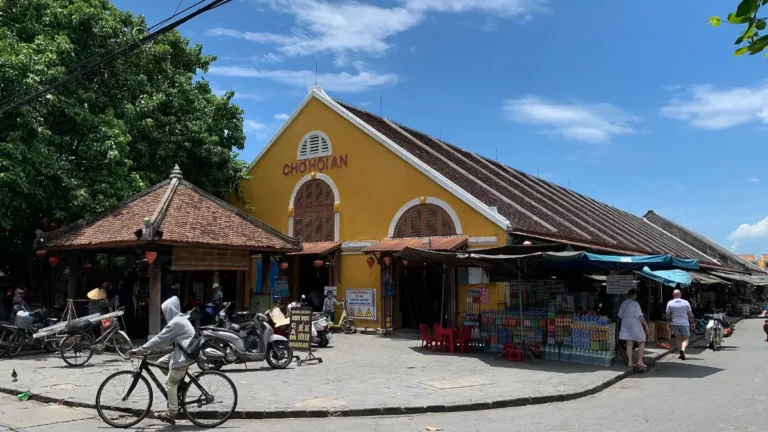
Hoi An Market: Local Life & Street Food in the Old Town